
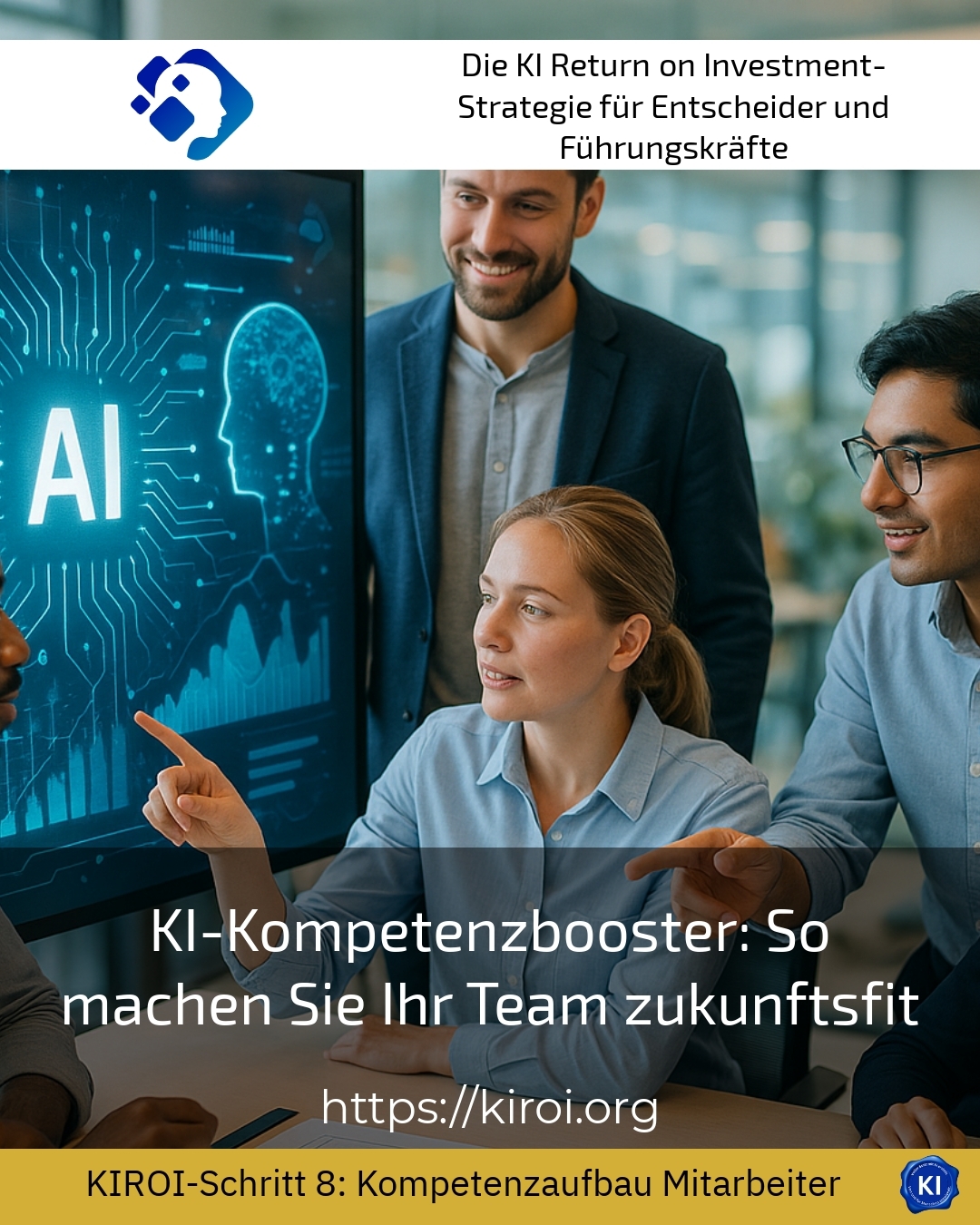
The digital revolution does not wait for those who hesitate; it rewards those who act proactively and equip their workforce with the right skills. In a time when algorithmic systems increasingly influence decision-making processes and automated solutions transform entire business models, a central question arises for leaders: How do I prepare my team for these fundamental changes? AI Skills Booster offers a systematic approach to equipping employees not only with technical knowledge but also to sustainably developing their strategic understanding of intelligent technologies. Many companies report that through targeted training measures, they not only were able to increase productivity but also positively influenced the innovation culture. This article shows you practical ways to make your organization future-proof.
The change starts in the mind: Why competence development is crucial
Technological tools only reach their full potential when people understand and use them meaningfully. This does not mean training every employee to become a programmer. Rather, the focus is on developing a fundamental understanding. This understanding enables the recognition of opportunities and the assessment of risks. In retail, for example, sales advisors today use intelligent systems for inventory forecasting. They analyze purchasing patterns and adapt their advisory behavior accordingly. Logistics companies rely on automated route planning, but the final decision lies with the human being. Similarly, in healthcare, algorithmic analyses support diagnostics. The interpretation, however, remains in the hands of the physician. These examples illustrate that technical systems serve as tools and complement human expertise.
The challenge lies in establishing a learning culture that promotes continuous improvement. Clients often report initial resistance within their teams. These resistances often stem from uncertainty or fear of change. A structured approach can help address this issue. It not only imparts knowledge but also builds trust. Financial service providers have recognized that trained advisors conduct better customer conversations. Manufacturing companies experience fewer downtime due to competent operators. In the marketing sector, more creative campaigns are generated through data-driven insights. These positive developments demonstrate that investments in employee capabilities yield measurable results.
The AI Skills Booster as a Strategic Instrument
A well-thought-out qualification program takes into account different starting points and learning needs. Not every employee needs the same knowledge. A differentiated approach is therefore essential. Sales employees benefit from different focuses than developers in the IT department. Human resources managers, in turn, require specific knowledge for recruiting processes. In the construction industry, intelligent planning tools significantly support project management. Architects use generative design systems for innovative designs. Tradesmen optimize their bid calculation through automated calculations. These industry-specific applications illustrate the diversity of application possibilities.
Best practice with a AIROI customer
A medium-sized mechanical engineering company faced the challenge of qualifying its service technicians to handle predictive maintenance systems. The previous approach was based on reactive repair interventions and regular inspection intervals. The introduction of sensor-based monitoring fundamentally changed the requirements. Transruptive coaching accompanied the company in designing a customized training program. First, the existing competencies were systematically captured and documented. Subsequently, the team developed modular learning modules together with external experts. These units combined theoretical knowledge with practical exercises on real machines. The technicians learned to interpret sensor data and derive actionable recommendations. After six months, the company reported a significant reduction in unplanned outages. Employee satisfaction also increased, as the new skills were perceived as valuable and future-proof. The example shows how structured guidance can support transformation processes.
Practical implementation: From concept to lived reality
The successful implementation of a qualification program requires careful planning and consistent implementation. Several factors play a crucial role in this process. First, a needs analysis should clarify the current situation. What skills already exist? What will be needed in the future? These questions form the foundation for all further steps. In the insurance industry, for example, officers can detect fraud patterns more quickly through trained analytical skills [1]. Banks rely on competent employees to explain automated credit decisions. In tourism, qualified travel consultants also help with the use of personalized recommendation systems.
The delivery of knowledge should combine different formats. In-person training allows for direct exchange and practical exercises. Online modules offer flexibility and an individual learning pace. Workshops promote the exchange of experience between colleagues from different departments. This diversity of methods significantly increases the likelihood of sustainable learning outcomes. Pharmaceutical companies train their field sales representatives in the interpretation of market analyses. Energy providers train customer advisors to explain intelligent electricity meters. Media companies train editors in handling automated text generators. Every industry finds specific application areas.
Success factors for sustainable competence development with the AI Competency Booster
Several aspects contribute significantly to the success of training initiatives. The support provided by management signals importance and creates resources. Clear learning objectives provide guidance and enable measurement of success. Regular feedback helps in adapting the approach. Furthermore, integration into the work routine promotes the transfer of knowledge into practice. Telecommunications providers integrate learning units into their team routines. Automotive suppliers link training with concrete projects. Food manufacturers use quality assurance data as learning material. These connections make abstract concepts tangible and relevant.
The role of multipliers should not be underestimated. Engaged employees who act as internal experts accelerate the transfer of knowledge. They speak the language of their colleagues and are familiar with the specific challenges. Aerospace companies rely on experienced pilots as trainers for new cockpit systems [2]. Hospitals train nursing staff to become contact points for digital documentation. Retail chains are establishing store managers as the first point of contact for technical questions. This decentralized structure promotes acceptance and speed.
Best practice with a AIROI customer
A large tax advisory firm recognized early on the need to prepare its employees for the changes in work processes. Automated filing and intelligent auditing routines fundamentally changed the professional image. The partnership with transruptions-Coaching enabled a structured approach to this transformation. Together, a multi-stage program was developed that addressed different hierarchical levels. Partners received strategic workshops for business model development. Team leaders received leadership training in the digital context. Clerks completed practical training on new systems. Particularly valuable was the accompanying moderation of change processes within the teams. Resistance was not ignored but actively addressed. The company now reports a significantly higher client satisfaction due to faster processing times. At the same time, employees were able to focus on value-adding advisory activities. This development shows how professional guidance can positively influence transformation projects.
Cultural aspects: Shaping the change together
Technical competence alone is not enough for a successful transformation. The corporate culture must encourage experimentation and continuous learning. Mistakes should be viewed as learning opportunities, not as failures. This attitude often requires a change of mindset at all levels. Software companies foster this culture through agile working methods. Consulting firms establish internal knowledge networks for the exchange of experience. Industrial companies establish innovation labs for practical experiments. Such measures create spaces for development.
Communication about changes deserves special attention. Transparency about goals and progress builds trust. Regular updates keep all involved informed and involved. Success stories motivate and demonstrate practical benefits. Insurance companies share positive experiences from pilot projects across the company. Retail chains publicly celebrate innovative solutions from individual branches. Logistics service providers present efficiency gains achieved through new work methods. This visibility fosters imitation and commitment.
The AI Competence Booster in the Context of Strategic Corporate Management
Qualification initiatives should not be viewed in isolation. They are part of a comprehensive strategy for future-proofing. Linking them to business goals increases their relevance and secures resources. Executives must actively communicate and demonstrate these connections. Chemical companies link training programs with sustainability goals [3]. Publishing houses integrate competence development into their digital strategies. Sport apparel manufacturers link employee qualification with innovation initiatives. This strategic integration significantly increases the probability of success.
Measuring learning outcomes enables continuous improvement. Key performance indicators provide valuable insights into the application of new skills. Employee surveys capture satisfaction and identify potential for improvement. Business metrics show the economic benefits of investments. Telecommunications companies measure the processing time of customer inquiries before and after training. Manufacturing companies compare rejection rates between trained and untrained teams. Financial service providers analyze advisory quality through customer feedback. This data supports informed decisions.
My AIROI Analysis
The systematic development of employee competencies in the field of intelligent technologies represents a crucial competitive factor. Organizations that invest early in the qualification of their workforce reap lasting benefits. They can deploy new tools more productively and respond better to market changes. Experience from numerous projects shows that a structured approach yields significantly better results than an unplanned approach. The combination of strategic planning, methodological diversity, and cultural guidance forms the foundation for successful transformations.
The recognition that technical training alone is not sufficient is particularly important. The human being with their needs, fears, and motivations must be at the center. Only when employees recognize the personal benefits and develop confidence in their abilities do qualification measures achieve their full effect. transruptions-Coaching positions itself here as a competent partner for companies in all industries. The support in complex projects enables a professional implementation with measurable results. Impulse from the outside can break through stagnant structures and open up new perspectives. Often clients report surprising insights through external moderation. The future viability of organizations depends largely on the learning ability of its members. Those who make the right decisions today will benefit tomorrow from competent and motivated teams.
Further links from the text above:
[1] McKinsey: The Economic Potential of Generative AI
[2] World Economic Forum: The Future of Jobs Report
[3] Gartner: Beyond ChatGPT – The Future of Generative AI for Enterprises
For more information and if you have any questions, please contact Contact us or read more blog posts on the topic Artificial intelligence here.







 Deutsch
 English (UK)