
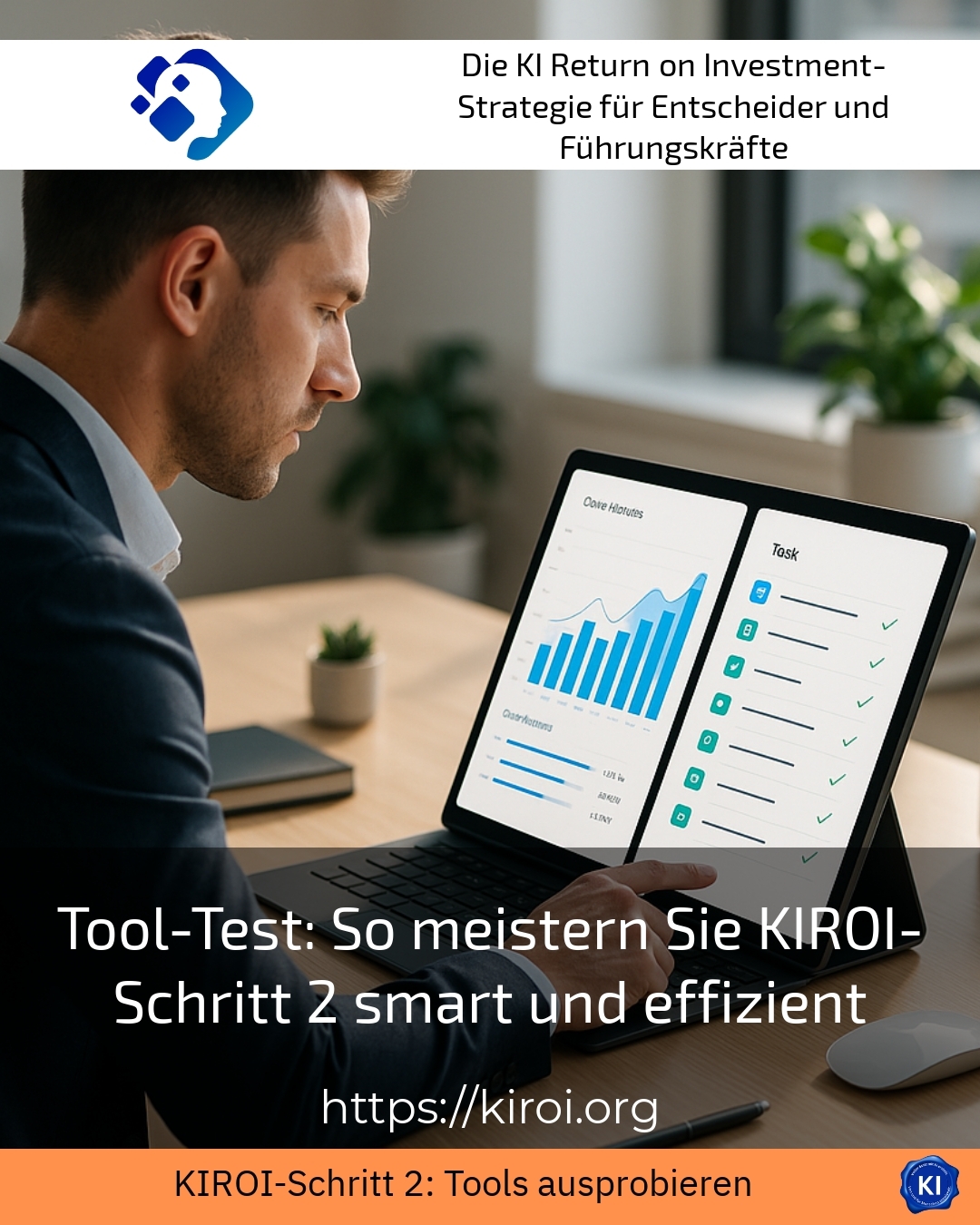
The tool test represents an essential building block in the AIROI Step 2, for effectively selecting suitable digital tools and integrating them into corporate processes. Decision-makers receive valuable impulses here on how to identify the right software using a structured approach. The key phrase Tool test This post will guide you and provide practical insights on how the process can be mastered smartly and efficiently.
Systematic approach to tool testing
At the beginning of a successful tool test lies the precise analysis of requirements and a clear definition of use cases. Only when the concrete benefit in the company context has been determined can a suitable selection be made. For example, a medium-sized technical service company has specifically improved its digital strategy by focusing on an SEO tool with competitive analysis features. The tool test helped the team to identify relevant weaknesses in the market and to develop further in a targeted manner.
Even in the manufacturing industry, companies benefit from tool tests for early detection of malfunctions. Automated systems for error diagnosis have been successfully tested there and are now helping to significantly reduce downtime. In everyday office life, test phases facilitate the integration of automation tools, which neatly link routine tasks with existing programmes and guarantee data security.
An open and iterative approach is essential, as tool testing is not a one-off event, but a dynamic process that grows and evolves with experience.
Key success factors for tool testing in the AIROI Step 2
Success in tool testing largely depends on incorporating various perspectives from an early stage. Many companies report that involving specialist departments and end-users ensures that the tool subsequently meets the requirements. Clear objectives support a focus on the truly relevant functions.
A valuable example from media production shows how a service provider tested various AI writing tools to compare quality, adaptability, and workflow compatibility. The structured support made it easier to get started with automated text creation, as specific criteria were established for evaluation.
A third success factor is transparent documentation. This is the only way to clearly compare strengths, weaknesses, integration effort, and costs. This overview not only provides a basis for decision-making but also promotes acceptance within the team.
Practical implementation and industry examples
Logistics companies use tool testing, for example, to try out AI-powered demand forecasting and route optimisation. This often leads to better resource utilisation and optimised supply chains. In marketing too, automated tools for personalised campaign management also serve to increase efficiency. In these tests, teams determine which software reacts flexibly and adaptively to customer requirements.
In customer service, bot solutions allow for faster processing of requests. Through continuous testing, the systems are constantly improving in terms of accuracy and user-friendliness. Thus, tool testing here is also an iterative process with a sustainable impact.
BEST PRACTICE with a client (name withheld due to NDA): A manufacturing company evaluated various AI solutions for quality control during coaching. Images were used to detect defects. The support helped select the most functional tools and successfully integrate them into the production process, which significantly reduced the error rate.
Tips for smart and efficient tool testing
To make the tool test as efficient as possible, a clear structure is recommended: at the beginning, determine which functions or features absolutely need to be checked. This could include automation potential, integration capability, or usability.
Test tools with real-life tasks from your company – this way, you'll gain authentic insights into their practical applicability. An open culture of error reporting is equally important to recognise the limitations of tools. Only by openly naming weaknesses can you assemble the appropriate toolkit.
Even after the initial selection, tools should be regularly reviewed in use and further developed. Clients often report that continuous adaptation, in particular, brings the greatest added value and noticeably eases daily work.
My analysis
The Tool test In the AIROI Step 2, an elementary component for the successful digitisation and automation in companies. Through a structured approach, early involvement of relevant stakeholders and transparent documentation, perfectly tailored solutions can be efficiently identified. Practical examples from various industries confirm the value of this method. Decision-makers can thus support projects in a targeted manner and thereby make optimal use of digital tools.
Further links from the text above:
[1] Tool Test in AIROI Step 2: How Decision-Makers Find the Best
[2] How decision-makers master AI tools in the AIROI Step 2
[3] AIROI - Step 2 - Trying out AI tools efficiently
[4] The Artificial Intelligence Strategy KAIROI
[5] Tool Tests for Decision Makers: How to Succeed with AIROI Step 2
For more information and if you have any questions, please contact Contact us or read more blog posts on the topic Artificial intelligence here.











 Deutsch
  English (UK)