
Why do so many promising ideas fail in companies even before they ever see the light of day?
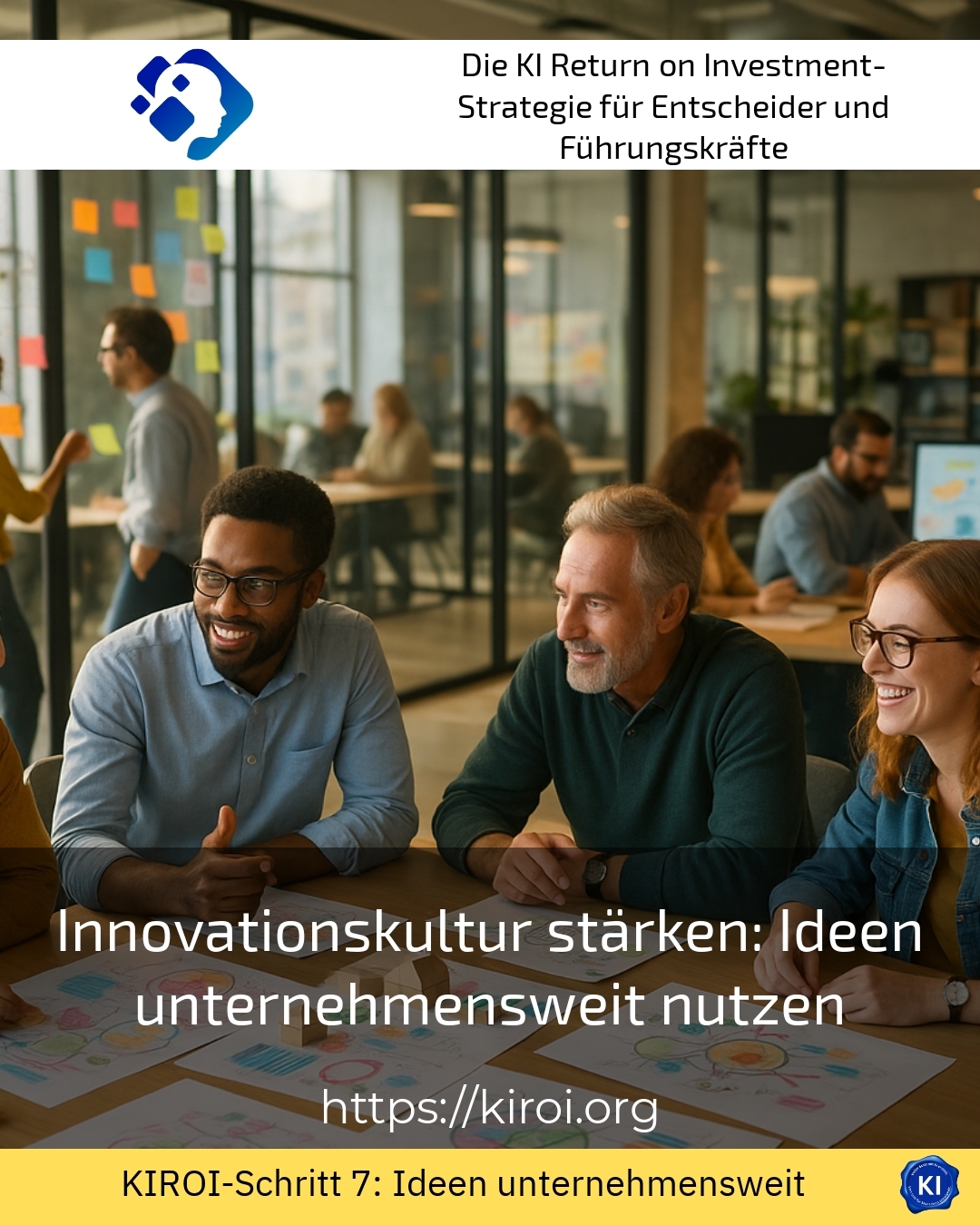
This question concerns leaders, HR professionals and business owners alike, because they experience daily how valuable creative potential goes unutilised. The topic Strengthening innovation culture: exploiting ideas company-wide is therefore increasingly gaining in importance. Employees carry brilliant thoughts with them, but the right structures and frameworks are often lacking. In an era of permanent change, the ability to continuously renew oneself determines long-term success. Companies that manage to activate the collective knowledge of their workforce secure decisive competitive advantages. This is not just about sporadic suggestions for improvement. Rather, a fundamental cultural shift is at the heart of the consideration.
Understanding the fundamentals of a vibrant culture of ideas
Before organisations Strengthen innovation culture must first understand which factors foster creative thinking. For example, a manufacturing SME from the Stuttgart region realised that its production employees made small optimisations every day. However, these remained undocumented and never reached the decision-making level. A logistics company, whose drivers knew practical route improvements, experienced a similar situation. However, the existing reporting structures prevented their systematic recording and implementation. A retail company with several branches discovered that sales staff collected valuable customer feedback. However, this never made it into product development.
The causes of such blockages are diverse and often deeply rooted in the corporate culture. Hierarchical structures considerably hinder the free flow of ideas between different levels. In addition, psychological safety that encourages employees to express even unpolished thoughts is frequently lacking. Many staff members fear negative consequences if their proposals are criticised. Therefore, they prefer to remain silent and keep their insights to themselves. This self-censorship costs companies enormous sums in untapped innovation potential every year.
Best practice with a AIROI customer
A medium-sized mechanical engineering company with around three hundred employees turned to transruptions coaching because innovative impulses regularly came to nothing. The initial situation was typical for many manufacturing businesses of this size. Engineers in development worked in isolation from the insights of service technicians in the field. At the root, feedback from assembly rarely reached the design department. As part of the accompaniment, we jointly developed a low-threshold system for capturing ideas. From then on, employees could submit observations and suggestions for improvement via a simple app. However, the crucial factor was the cultural component of the change. Managers were trained to receive every contribution with appreciation. Monthly feedback sessions made the progress of submitted ideas transparent. Within a year, the company recorded over four hundred documented suggestions. More than sixty of these led to measurable process improvements. Employee satisfaction rose significantly because the workforce felt heard and taken seriously. This example impressively demonstrates how transruptions coaching can support organisations in such transformation projects.
Create structures that allow ideas to flow company-wide
Mere willingness to be open is not enough to bring about genuine change. Organisations require concrete structures that systematically promote and facilitate the exchange of ideas. For example, a software development company introduced weekly cross-departmental creative sessions. There, programmers met customer advisors and exchanged perspectives. A pharmaceutical company established so-called innovation labs in which researchers collaborated with production experts. A financial service provider set up anonymous suggestion boxes that were regularly evaluated by a panel.
However, these structural measures only take effect under certain conditions. Management must credibly demonstrate the importance of idea management through their own actions. Resources for the further development of promising proposals should be budgeted. Furthermore, transparent criteria are needed by which ideas are evaluated. Employees want to understand why certain proposals are implemented. They also want to be able to comprehend why other thoughts are not pursued further. This transparency significantly strengthens trust in the entire system.
Utilise digital tools to support the culture of innovation
Modern technologies offer diverse opportunities to facilitate and accelerate the exchange of ideas. Collaboration platforms enable employees to share and develop thoughts across locations. For example, a construction company used a cloud-based solution for its geographically dispersed building sites. As a result, site managers were able to document their experiences with complex construction projects. An insurance group implemented an internal social network for the exchange of knowledge. There, administrative staff shared successful solution strategies for difficult customer cases. A hospital introduced a digital platform on which nursing staff collected practical everyday tips.
However, caution is advised when introducing such tools. Technology alone does not solve cultural problems within an organisation. If employees fear that their contributions will be used against them, they will remain silent digitally too. Therefore, the technical implementation must be accompanied by cultural measures. Managers should actively participate on the platforms themselves and show appreciation. This is the only way to build the trust necessary for open communication.
The role of leadership in building a strong culture of innovation
Through their behaviour, leaders shape significantly whether creative thinking is promoted or suppressed. An automotive supplier reported that its innovation programme only became successful when the executive management took part personally. An energy supply company experienced a breakthrough after departmental heads publicly admitted their own mistakes. A media company increased participation in idea competitions when managers literally kept their doors open. These examples illustrate just how much role models can influence the behaviour of the entire workforce.
The development of an innovation-friendly leadership culture often requires targeted accompanying measures and spaces for reflection. Many leaders were socialised in traditional management methods that prioritise control over creativity. Overcoming these influences takes time, patience and professional support. Coaching formats can help in recognising and changing one's own behavioural patterns. Clients in such processes frequently report surprising insights about themselves. They discover how unconscious fears restricted their openness to new ideas.
Best practice with a AIROI customer
A traditional family-run business in the food industry sought support in modernising its corporate culture. The third generation had taken over management and wanted to bring in a fresh perspective. However, their attempts at change met with considerable resistance in middle management. Long-serving heads of department perceived new forms of participation as a threat to their authority. As part of transruption coaching, we initially worked intensively with this leadership tier. We created safe spaces in which fears could be openly expressed. In the process, it became apparent that much of the resistance was based on uncertainty and a lack of understanding. The managers feared they would become obsolete through greater employee participation. Through targeted impulses, we were able to address these concerns and open up new perspectives. The heads of department realised that their role was evolving, not disappearing. They became enablers and facilitators of creative processes. After six months of intensive guidance, the atmosphere had fundamentally changed. The company successfully established quarterly innovation workshops with broad participation. The managers actively took on moderating roles and encouraged exchange.
Leveraging ideas company-wide through cross-departmental networking
Silo mentality is one of the greatest obstacles to the free flow of creative impulses in organisations. Departments develop their own subcultures and isolate themselves from one another. A telecommunications company discovered that technical support and product development barely communicated with one another [1]. A hotel group recognised that experiences from different properties were not shared systematically. A retail company noticed that its buyers and sellers had completely different market assessments.
Overcoming such barriers requires the deliberate design of spaces for interaction and formats for exchange. Job rotation programmes allow employees to get to know other areas and build understanding [2]. Interdisciplinary project teams bring together diverse expertise and foster mutual learning. Informal formats such as joint lunches or after-work events strengthen personal relationships across departmental boundaries. These social bonds subsequently facilitate professional exchange considerably.
Appreciation and recognition as drivers of creative engagement
People are more engaged when they experience that their contributions are seen and appreciated. A chemical company introduced a recognition programme for particularly valuable suggestions for improvement. An educational institution regularly honoured innovative teachers publicly in team meetings. A craft business awarded a monthly symbolic prize for the most creative idea from the workforce. These forms of appreciation cost little, but have a significant motivational effect.
This is not primarily about material rewards, but about genuine recognition of individual contribution. Employees want to feel that their thoughts are taken seriously. They want to experience that the organisation is interested in their ideas. Clients frequently report that even a sincere thank you significantly boosts their motivation. The certainty of being heard has a more lasting effect than any financial bonus.
My AIROI Analysis
The examination of various organisations and their efforts towards greater creative participation reveals clear patterns and success factors. Companies that their Strengthen innovation culture must be implemented on several levels simultaneously. Structural measures alone are not enough if the cultural foundations are lacking. Conversely, cultural appeals come to nothing without concrete implementation mechanisms.
Crucial is the role of leaders as role models and enablers. Through their daily behaviour, they shape whether openness and a willingness to experiment are promoted or suppressed. The development of a genuine culture of ideas takes time, patience and continuous attention. Quick fixes do not exist in this area, as one honestly has to admit.
Digital tools can facilitate communication, but they do not replace the human factor. Trust is built through positive experiences and credible leadership behaviour. Organisations should start small and make early successes visible before scaling. These success stories act as catalysts for broader cultural change.
Transruption coaching can effectively support organisations in such transformation processes. External impetus generates new perspectives on entrenched patterns. The combination of strategic consulting and individual leadership development has proven effective. The aim is to initiate sustainable change rather than achieve short-term effects [3]. Who Leverage ideas company-wide wishing to do so will find valuable support through professional guidance.
Further links from the text above:
[1] Harvard Business Review: Innovation Topics
[2] McKinsey: The Eight Essentials of Innovation
[3] Forbes: Innovation News and Insights
For more information and if you have any questions, please contact Contact us or read more blog posts on the topic Artificial intelligence here.








 Deutsch
  English (UK)