
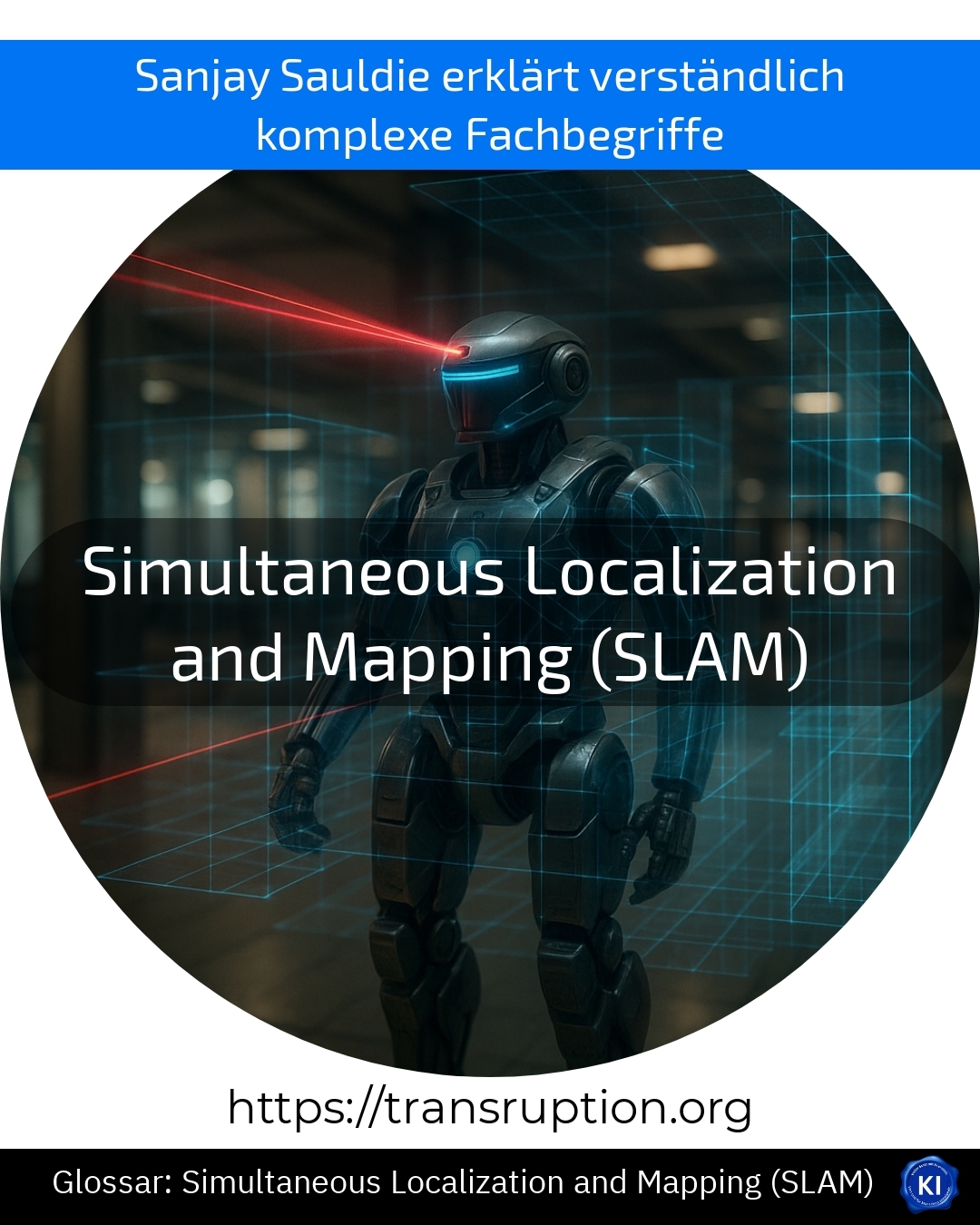
Simultaneous Localisation and Mapping (SLAM) is a term from the fields of automation, robotics, and artificial intelligence. SLAM describes the ability of machines to simultaneously orient themselves in an unknown environment and create a map of that environment – all in real-time.
Imagine a robot vacuum cleaner navigating your flat for the first time. Using SLAM, it determines its exact location and creates a digital map of your rooms as it goes. This way, it knows which areas it has already cleaned and which are still missing. The same principle is also used in autonomous vehicles, drones, or in industry when machines need to find their way around in new environments independently.
Thanks to Simultaneous Localisation and Mapping (SLAM), robots are becoming significantly more efficient and flexible in their work. They can detect obstacles, adapt to changes, and complete tasks more reliably – without pre-installed sensors or predefined maps.
SLAM is therefore a key technology on the path to the fully automated factory, intelligent domestic robots, and more advanced, autonomous artificial intelligence in everyday life.











 Deutsch
  English (UK)