
Sim-to-Real Transfer is an important term in the fields of Artificial Intelligence, automation, and robotics. It describes the transfer of skills or solutions that a system – for example, a robot – has first learned in a computer simulation into the real world.
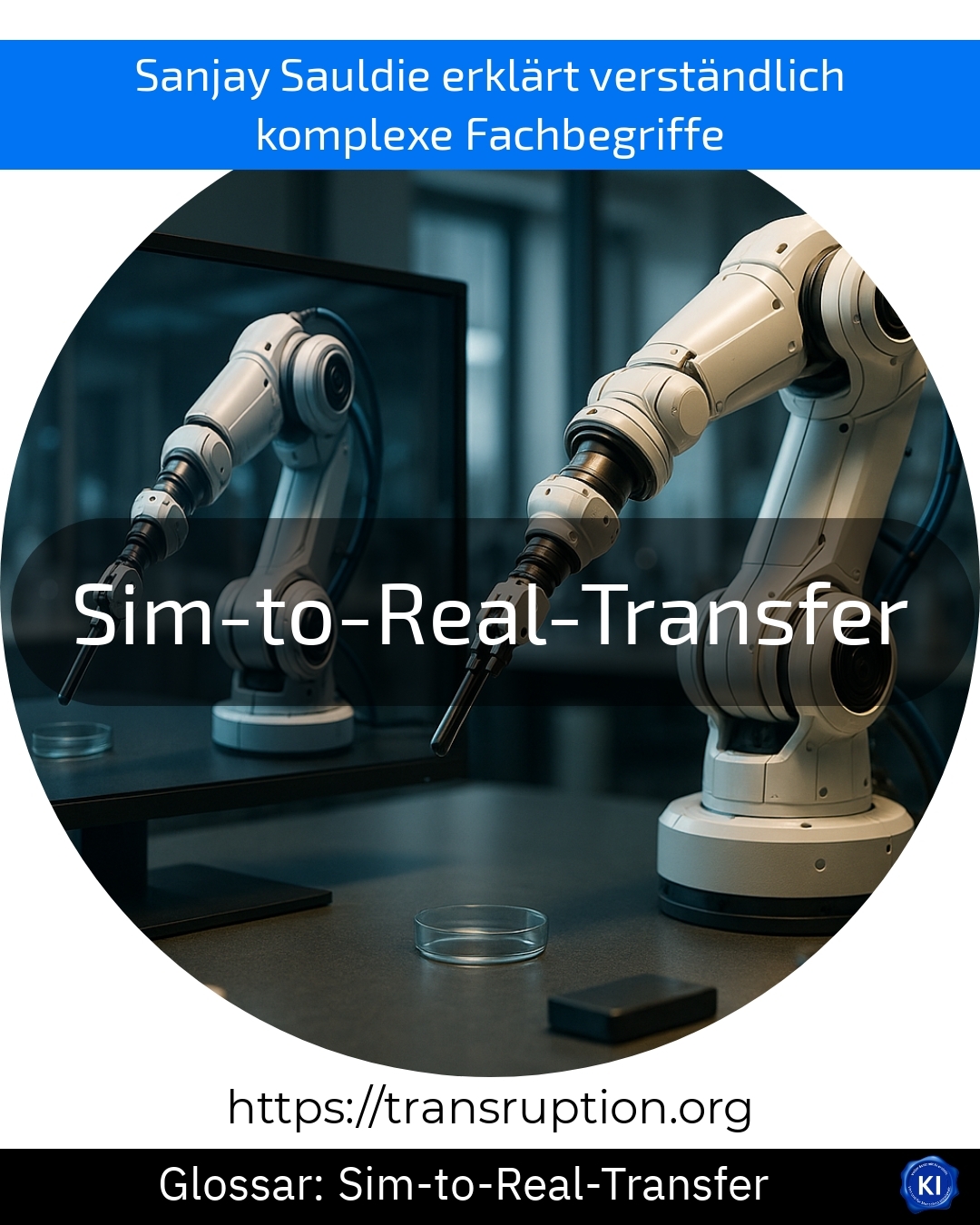
Imagine a robot is tasked with moving goods from one place to another in a factory. Instead of months of training directly on the expensive robot, it is taught everything it needs to know in a safe, virtual environment. There, it can practise thousands of times without the risk of breaking anything. Subsequently, what it has learned is transferred to the real robot using sim-to-real transfer.
The major advantage: Training in simulation saves time and money, while also reducing risks. Furthermore, situations that would be too dangerous in reality can be practised. Sim-to-real transfer thus helps to automate processes more quickly and to safely test innovative AI solutions before they are deployed in real life – for example, in self-driving cars, industrial robots or drones.











 Deutsch
  English (UK)