
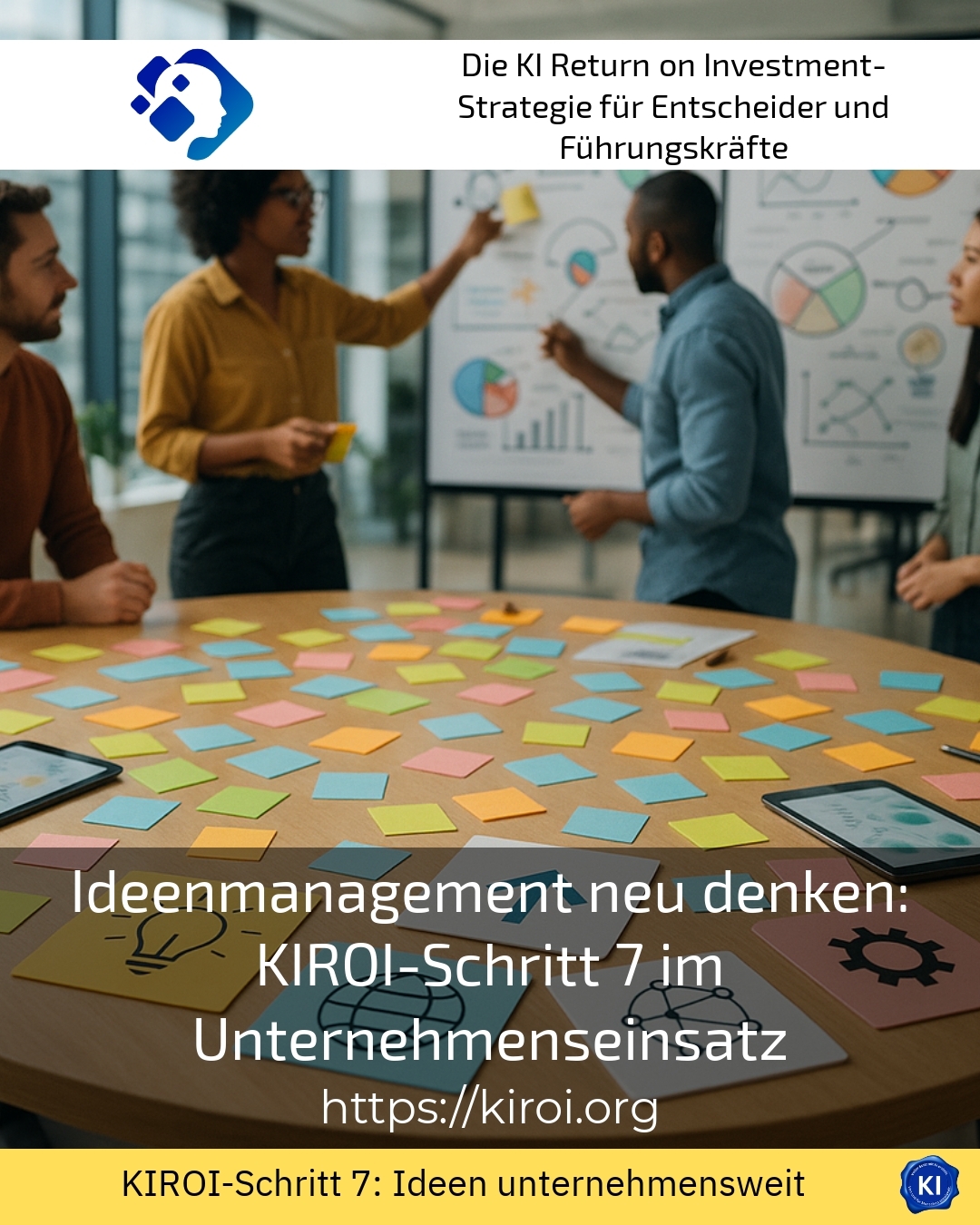
Ideas management is no longer a niche topic, but a central success factor for innovation within a company[1]. Many organisations today are wondering how to turn traditional suggestion schemes into a real engine for innovation. The goal is not just to collect ideas, but to design ideas management as a continuous process that involves all levels and has a lasting impact[1]. This is where Step 7 of the AIROI approach comes in: the focus is not on individual actions, but on facilitated dynamics, regular exchange, and targeted coaching[1].
Rethinking Idea Management – Step 7 in Corporate Application
Those who only collect ideas sporadically miss out on the full potential. Idea management in the spirit of AIROI Step 7 thrives on dialogue, reflection, and the ability to recognise and overcome blockages, thereby turning suggestions into real innovations. Companies that adopt this approach report increased agility, higher employee satisfaction, and faster implementation of new solutions [1]. Transruption coaching supports teams in developing new perspectives and taking concrete steps, thus creating sustainable change.
Classic methods are often no longer sufficient because they appear rigid or leave too little room for genuine exchange[1]. Modern companies therefore rely on flexible processes, digital tools, and an open communication culture. Idea management thus becomes a dynamic, ongoing process that continuously provides impetus for innovation.
Clients often report that suggestions go nowhere or that there is no feedback. This is demotivating and stifles innovation. That's why it's important not only to collect ideas but also to support, reflect on, and coach them. This is the core of AIROI Step 7: Dynamic, dialogical, sustainable[1].
Real-world examples: How to make idea management successful in your company
Innovation starts in the team. A mechanical engineering company introduced regular innovation workshops to shorten development cycles. This resulted in practical solutions that were directly adopted into production. Involving all stakeholders ensured greater acceptance and faster implementation. Transruption coaching helped to identify blockages and forge new paths.
In software development, the active involvement of teams strengthened collaboration and accelerated the implementation of new features. Employees were encouraged not only to report problems but also to develop solutions. Regular reviews and open feedback sessions ensured transparency and motivation.
A retail company implemented a digital platform to transparently document suggestions and foster exchange between stores. This allowed good ideas to be quickly adopted and further developed. Continuous support from experienced coaches was crucial for sustainable success.
BEST PRACTICE with one customer (name hidden due to NDA contract) and then the example with at least 50 words.
An international medium-sized manufacturing company launched a pilot project on idea management. The aim was to optimise production processes and increase employee engagement. The company opted for a mix of a digital platform and in-person workshops. Every idea submitted was assessed promptly, and the best suggestions were transferred to agile project teams. Transruption coaching supported the teams during implementation and helped overcome resistance. The result: Significantly more ideas submitted, faster implementation, and a noticeably higher identification of the workforce with the company. The innovation topics ranged from small process improvements to the development of new product variants that are now successfully on the market.
Recommendations for action for modern idea management
Anyone wanting to successfully embed ideas management within a company should establish clear structures and communicate openly. Goals must be specific, measurable, and achievable – the SMART method provides good guidance here [3]. Involving all employees is just as important as providing the necessary resources [2].
Digital tools support the process, but humans remain at the centre. Workshops, feedback rounds, and regular reviews ensure transparency and motivation. Ideas management thrives on dialogue and the willingness to try new things. Failure is allowed, as the best solutions often emerge from it.
Clients often report that the biggest challenge is turning collected ideas into actual projects. It helps here to define clear responsibilities, set milestones, and make progress visible. This keeps the process alive and motivation high[6].
Customer examples: From gathering to implementation
An automotive supplier established an ideas committee that regularly reviews and evaluates submitted suggestions. The best ideas are selected and implemented through a transparent process. Employees receive timely feedback – even if an idea is not implemented. This promotes acceptance and the willingness to continue contributing.
A service company relies on a combination of a digital platform and monthly innovation days. On these days, all employees can present their own projects and develop them further together. This strengthens team spirit and the innovation culture. Transruption coaching supports in providing new impetus and overcoming blockages.
A technology company uses an agile roadmap to plan and manage the implementation of ideas. Each project team is given clear tasks and milestones. Regular reviews ensure transparency and flexibility. This is how good ideas quickly turn into tangible results[6].
BEST PRACTICE with one customer (name hidden due to NDA contract)
A logistics company launched an initiative to improve delivery processes. All employees were able to submit suggestions via a digital platform. The best ideas were further developed in interdisciplinary teams and tested in pilot projects. Transruption coaching supported the entire process and helped to overcome resistance. The result: Significantly faster delivery times, higher customer satisfaction, and a measurable increase in efficiency. The initiative was awarded and now serves as a role model for other areas within the company.
My analysis
Innovation management is not a given, but a dynamic process that requires clear objectives, open communication, and continuous support. Companies that adopt this approach strengthen their innovative capacity and sustainably engage their employees. The focus is not on collecting ideas once, but on vibrant exchange and targeted implementation of ideas[1].
Transruptions-Coaching helps teams to break new ground and overcome blockages. This creates a culture of innovation that changes the company sustainably. Rethinking idea management creates the conditions for real change and long-term success.
Further links from the text above:
Understanding ideation management in the context of AIROI Step 7[1]
Practical tips for successful idea management in companies[2]
Step-by-step guide to implementing idea management[3]
For more information and if you have any questions, please contact Contact us or read more blog posts on the topic Artificial intelligence here.










 Deutsch
  English (UK)