kiroi.org

KIROI - Artificial Intelligence Return on Invest
The AI strategy for decision-makers and managers

Business excellence for decision-makers & managers by and with Sanjay Sauldie

KIROI - Artificial Intelligence Return on Invest: The AI strategy for decision-makers and managers

KIROI - Artificial Intelligence Return on Invest: The AI strategy for decision-makers and managers

Start » Rethinking ideas management: KIROI step 7 company-wide
24 October 2025

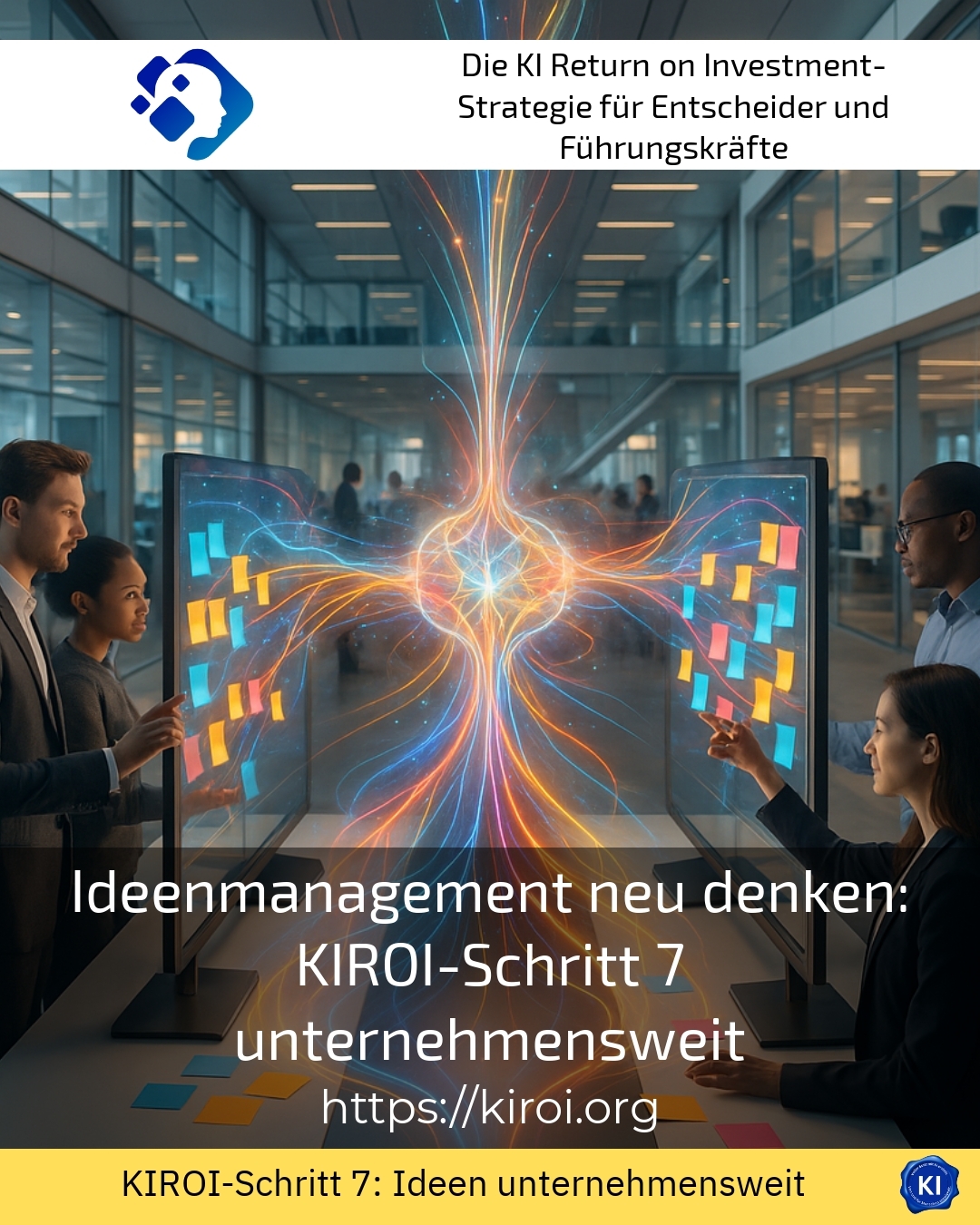
Rethinking ideas management: KIROI step 7 company-wide

5
(1637)

Ideas management is no longer a niche topic, but a central lever for successful innovation within companies. But how can ideas management be designed today to be truly sustainable and involve all employees? This is exactly where KIROI Step 7 comes in – as a holistic approach to rethinking and specifically guiding ideas management company-wide. Classic methods such as operational suggestion schemes are often no longer sufficient today because they are too rigid or leave too little room for genuine dialogue. Modern companies therefore rely on flexible processes, digital tools, and a culture of open communication.

Why idea management means more than just collecting today

Many organisations face the challenge of ideas being collected but not truly lived. Clients often report that suggestions are dropped or that there is no feedback. This is demotivating and hinders innovation. Idea management in the sense of KIROI Step 7 is therefore understood as a dynamic support process: it is not about one-off actions, but about continuous exchange, targeted coaching, and the development of an innovation culture that involves all levels of the company [1][3]. Transruption coaching supports teams in recognising blockages, developing new perspectives, and taking concrete implementation steps.

Examples from practice

A mechanical engineering company introduced regular innovation workshops to shorten development cycles. This resulted in practical solutions that were directly adopted into production. In software development, active team involvement strengthened collaboration and accelerated the implementation of new features. A retail company relied on a digital platform to transparently document suggestions and promote exchange between branches. In all cases, continuous support from experienced coaches was crucial for sustainable success[4].

Ideas management process: From impulse to innovation

A structured idea management process begins with the systematic collection of suggestions – regardless of whether they originate from employees, customers, or partners[2]. Modern tools such as Jira Product Discovery or Q-ideate help to bundle ideas centrally and make them transparent. In the next step, an interdisciplinary team evaluates the submissions according to clear criteria, for example using scoring models or SWOT analyses[2][5]. The best ideas are prioritised and implemented, with clear responsibility defined. Accompanying workshops and regular feedback rounds ensure that the process remains dynamic and that all stakeholders remain engaged.

Concrete measures for greater participation

To motivate employees, it is worthwhile to use idea campaigns, innovation competitions, or hackathons[6]. These formats create attention, promote team spirit, and often bring forth surprising solutions. One example: A service company introduced quarterly „Innovation Sprints“ where cross-functional teams worked on specific challenges. The results were presented immediately afterwards, and the best ideas were quickly implemented. Another example: A manufacturing company established a digital idea platform where all employees could submit and comment on suggestions. This led to a lively exchange across departmental boundaries.

BEST PRACTICE with one customer (name hidden due to NDA contract) In the healthcare sector, the focus was on the challenge of establishing a culture that is open to suggestions for improvement. Targeted coaching within the framework of idea management helped to break down communication barriers and introduce motivating feedback. Regular discussion rounds were introduced, allowing employees to present their ideas and develop them collaboratively. Management took on a more active role as facilitators and idea generators. As a result, participation in idea management noticeably increased, and innovative solutions were implemented more quickly. The support of experienced coaches was a key factor in success because they provided impetus, moderated, and continuously adapted the process[1].

Recognising and mastering challenges in idea management

The biggest hurdle in idea management is often not a lack of good ideas, but their implementation. Many companies fail due to internal resistance, unclear processes, or a lack of transparency. Transruption coaching helps to identify and specifically address these stumbling blocks early on. Proven methods include setting up independent innovation teams, introducing standardised evaluation criteria, and creating exchange platforms where ideas can be collaboratively developed further. It is important that the process remains flexible and adapts to the specific needs of the company.

Examples of typical stumbling blocks and solutions

A technology company found that many ideas failed due to a lack of resource planning. The introduction of a clear prioritisation framework and the appointment of responsible individuals helped to significantly increase the implementation rate. An industrial company recognised that communication barriers between departments were slowing down the flow of innovation. Moderated workshops and regular fixed meetings broke down these barriers and fostered knowledge sharing. Another example: A retail company implemented a digital idea platform to make the process more transparent and increase employee motivation. In all cases, continuous support from coaches was crucial for success.

Idea management in digital transformation

Digitalisation opens up completely new possibilities for idea management. Modern platforms make it possible to submit, comment on and rate ideas anytime and anywhere. Digital tools support not only the capture and evaluation but also the implementation and monitoring of results[2][5]. The integration of artificial intelligence can help to recognise trends early on and to provide targeted innovation impulses. At the same time, people remain at the centre: because only when employees feel heard and valued can idea management and innovation unfold their full potential.

Examples from the digital world

A software house used an AI-based platform to automatically identify and prioritise the most promising ideas from thousands of employee suggestions. This allowed the innovation portfolio to be strategically expanded and ROI to be increased. A manufacturing company relied on a digital idea community where employees, suppliers and customers worked together on solutions. A retail group introduced a mobile idea management tool that enabled suggestions to be submitted directly on-site in the store and to receive quick feedback. In all cases, digital support helped to increase the speed of innovation and boost participation.

My analysis

Idea management is more crucial than ever for sustainable business success today. KIROI step 7 demonstrates the importance of continuous support, flexible processes, and an open innovation culture. Companies that actively shape and purposefully manage their idea processes benefit from higher employee retention, faster innovation cycles, and increased competitiveness. Transruption coaching supports organisations in overcoming obstacles, developing new perspectives, and consistently implementing innovative solutions. Rethinking idea management lays the foundation for lasting business success in a changing world.

Further links from the text above:

Idea management system: KIROI Step 7 for company-wide innovation [1]
Structured idea management with Jira Product Discovery [2]
Unleashing ideas management: KIROI step 7 company-wide [3]
Idea management 2.0: KIROI Step 7 for Company-Wide Ideas [4]
What is idea management and what contribution can it make? [5]
Idea Management: Methods & Implementation in the Company [6]

For more information and if you have any questions, please contact Contact us or read more blog posts on the topic Artificial intelligence return on investment here.
How useful was this post?

Click on a star to rate it!

Average rating 5 / 5. Vote count: 1637

No votes so far! Be the first to rate this post.

Spread the love

transruption.org

The digital toolbox for
the digital winners of today and tomorrow

Business excellence for decision-makers & managers by and with Sanjay Sauldie

transruption
transruption

transruption: The digital toolbox for
the digital winners of today and tomorrow

Start » Rethinking ideas management: KIROI step 7 company-wide
24 October 2025

Rethinking ideas management: KIROI step 7 company-wide

5
(1637)

Ideas management is no longer a niche topic, but a central lever for successful innovation within companies. But how can ideas management be designed today to be truly sustainable and involve all employees? This is exactly where KIROI Step 7 comes in – as a holistic approach to rethinking and specifically guiding ideas management company-wide. Classic methods such as operational suggestion schemes are often no longer sufficient today because they are too rigid or leave too little room for genuine dialogue. Modern companies therefore rely on flexible processes, digital tools, and a culture of open communication.

Why idea management means more than just collecting today

Many organisations face the challenge of ideas being collected but not truly lived. Clients often report that suggestions are dropped or that there is no feedback. This is demotivating and hinders innovation. Idea management in the sense of KIROI Step 7 is therefore understood as a dynamic support process: it is not about one-off actions, but about continuous exchange, targeted coaching, and the development of an innovation culture that involves all levels of the company [1][3]. Transruption coaching supports teams in recognising blockages, developing new perspectives, and taking concrete implementation steps.

Examples from practice

A mechanical engineering company introduced regular innovation workshops to shorten development cycles. This resulted in practical solutions that were directly adopted into production. In software development, active team involvement strengthened collaboration and accelerated the implementation of new features. A retail company relied on a digital platform to transparently document suggestions and promote exchange between branches. In all cases, continuous support from experienced coaches was crucial for sustainable success[4].

Ideas management process: From impulse to innovation

A structured idea management process begins with the systematic collection of suggestions – regardless of whether they originate from employees, customers, or partners[2]. Modern tools such as Jira Product Discovery or Q-ideate help to bundle ideas centrally and make them transparent. In the next step, an interdisciplinary team evaluates the submissions according to clear criteria, for example using scoring models or SWOT analyses[2][5]. The best ideas are prioritised and implemented, with clear responsibility defined. Accompanying workshops and regular feedback rounds ensure that the process remains dynamic and that all stakeholders remain engaged.

Concrete measures for greater participation

To motivate employees, it is worthwhile to use idea campaigns, innovation competitions, or hackathons[6]. These formats create attention, promote team spirit, and often bring forth surprising solutions. One example: A service company introduced quarterly „Innovation Sprints“ where cross-functional teams worked on specific challenges. The results were presented immediately afterwards, and the best ideas were quickly implemented. Another example: A manufacturing company established a digital idea platform where all employees could submit and comment on suggestions. This led to a lively exchange across departmental boundaries.

BEST PRACTICE with one customer (name hidden due to NDA contract) In the healthcare sector, the focus was on the challenge of establishing a culture that is open to suggestions for improvement. Targeted coaching within the framework of idea management helped to break down communication barriers and introduce motivating feedback. Regular discussion rounds were introduced, allowing employees to present their ideas and develop them collaboratively. Management took on a more active role as facilitators and idea generators. As a result, participation in idea management noticeably increased, and innovative solutions were implemented more quickly. The support of experienced coaches was a key factor in success because they provided impetus, moderated, and continuously adapted the process[1].

Recognising and mastering challenges in idea management

The biggest hurdle in idea management is often not a lack of good ideas, but their implementation. Many companies fail due to internal resistance, unclear processes, or a lack of transparency. Transruption coaching helps to identify and specifically address these stumbling blocks early on. Proven methods include setting up independent innovation teams, introducing standardised evaluation criteria, and creating exchange platforms where ideas can be collaboratively developed further. It is important that the process remains flexible and adapts to the specific needs of the company.

Examples of typical stumbling blocks and solutions

A technology company found that many ideas failed due to a lack of resource planning. The introduction of a clear prioritisation framework and the appointment of responsible individuals helped to significantly increase the implementation rate. An industrial company recognised that communication barriers between departments were slowing down the flow of innovation. Moderated workshops and regular fixed meetings broke down these barriers and fostered knowledge sharing. Another example: A retail company implemented a digital idea platform to make the process more transparent and increase employee motivation. In all cases, continuous support from coaches was crucial for success.

Idea management in digital transformation

Digitalisation opens up completely new possibilities for idea management. Modern platforms make it possible to submit, comment on and rate ideas anytime and anywhere. Digital tools support not only the capture and evaluation but also the implementation and monitoring of results[2][5]. The integration of artificial intelligence can help to recognise trends early on and to provide targeted innovation impulses. At the same time, people remain at the centre: because only when employees feel heard and valued can idea management and innovation unfold their full potential.

Examples from the digital world

A software house used an AI-based platform to automatically identify and prioritise the most promising ideas from thousands of employee suggestions. This allowed the innovation portfolio to be strategically expanded and ROI to be increased. A manufacturing company relied on a digital idea community where employees, suppliers and customers worked together on solutions. A retail group introduced a mobile idea management tool that enabled suggestions to be submitted directly on-site in the store and to receive quick feedback. In all cases, digital support helped to increase the speed of innovation and boost participation.

My analysis

Idea management is more crucial than ever for sustainable business success today. KIROI step 7 demonstrates the importance of continuous support, flexible processes, and an open innovation culture. Companies that actively shape and purposefully manage their idea processes benefit from higher employee retention, faster innovation cycles, and increased competitiveness. Transruption coaching supports organisations in overcoming obstacles, developing new perspectives, and consistently implementing innovative solutions. Rethinking idea management lays the foundation for lasting business success in a changing world.

Further links from the text above:

Idea management system: KIROI Step 7 for company-wide innovation [1]
Structured idea management with Jira Product Discovery [2]
Unleashing ideas management: KIROI step 7 company-wide [3]
Idea management 2.0: KIROI Step 7 for Company-Wide Ideas [4]
What is idea management and what contribution can it make? [5]
Idea Management: Methods & Implementation in the Company [6]

For more information and if you have any questions, please contact Contact us or read more blog posts on the topic Artificial intelligence return on investment here.

How useful was this post?

Click on a star to rate it!

Average rating 5 / 5. Vote count: 1637

No votes so far! Be the first to rate this post.

Spread the love

Other content worth reading:

Rethinking ideas management: KIROI step 7 company-wide

written by:

Keywords:

#compliance #DigitaleTransformation #Ethikrichtlinien #Ideenmanagement #Mitarbeiterbeteiligung #Sustainability #TransruptionsCoaching #Unternehmenskultur #Verantwortungsketten Innovation culture

Follow me on my channels:

Questions on the topic? Contact us now without obligation

Contact us

[wpforms id="331781" title="false"]

More articles worth reading

    Leave a comment