
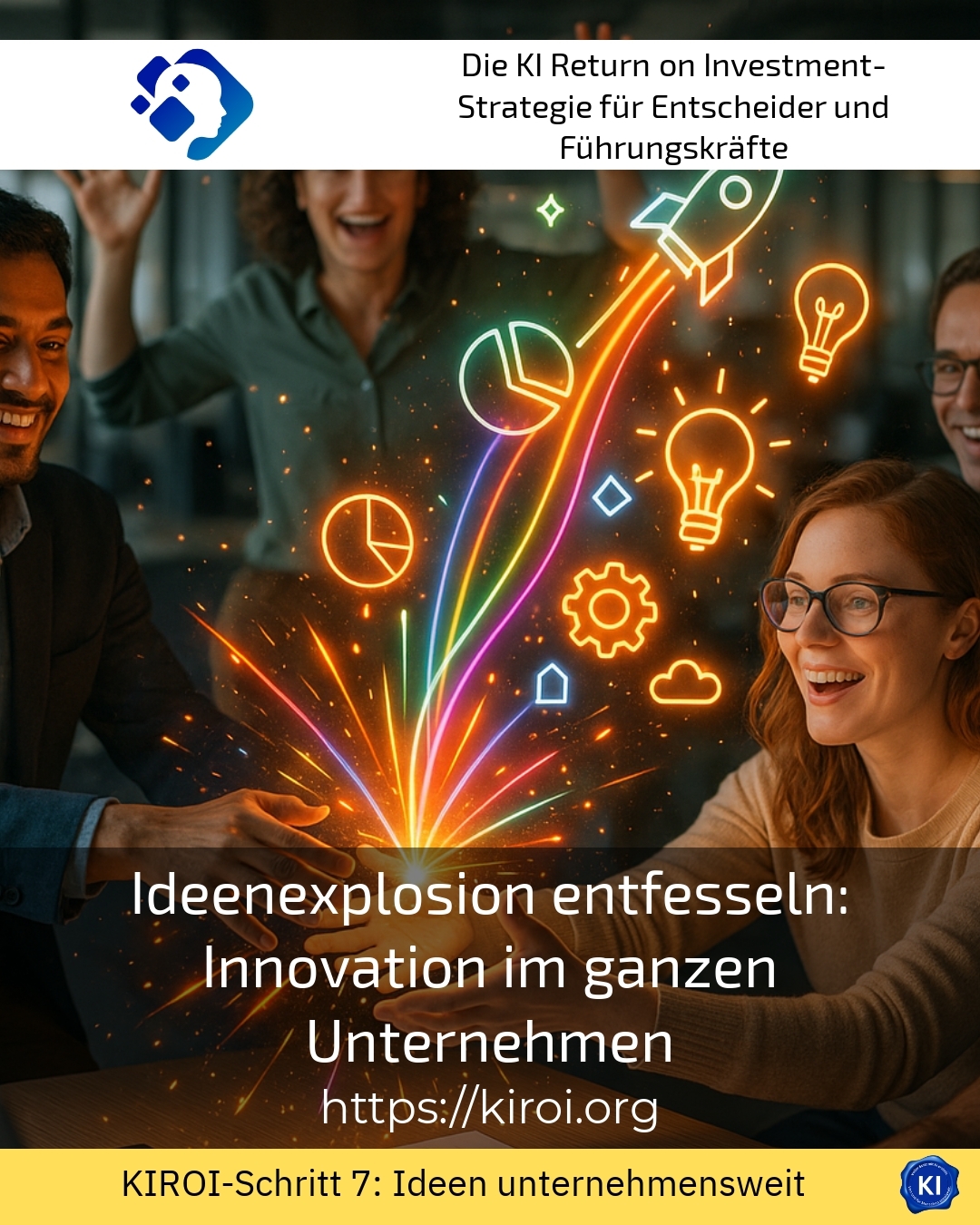
Imagine every employee in your company developing creative solutions every day that revolutionise your competitive position. This vision sounds utopian, but it is closer than you think. The Unleashing the explosion of ideas: Innovation throughout the business means awakening dormant potential. Many managers come to coaching with precisely this concern. They sense that their teams are capable of more. At the same time, they lack the tools to channel this energy. In this article, you will learn how to systematically establish a culture of creativity. In doing so, transruptions-Coaching accompanies companies from a wide variety of industries in precisely such transformation projects.
Why traditional innovation approaches often fail
Traditional methods of generating ideas are reaching their limits in modern organisations. Many companies rely on isolated innovation departments. These silos separate creative minds from the operational business. As a result, solutions are created that miss the mark in practice. For example, a mechanical engineering company developed a state-of-the-art sensor. However, production was unable to integrate it because nobody had asked the manufacturing employees. We regularly experience similar situations at automotive suppliers. Brilliant concepts are created there in development departments. Purchasing only finds out about them when supplier contracts have long since been signed. In the chemical sector, managers report comparable challenges. Laboratory teams develop innovative formulations. Sales cannot communicate their benefits because there is a lack of collaboration.
These structural problems are reinforced by cultural barriers. Employees do not dare to voice unconventional ideas. They fear negative reactions from supervisors or colleagues. In steelworks, for example, a hierarchical mindset often dominates. Experienced shift supervisors hold back their knowledge to secure their position. At electronics manufacturers, we observe similar patterns. Young engineers remain silent in meetings, even though they could bring in fresh perspectives. Textile companies struggle with the fear of change. Long-standing employees block new production processes because they see their competence threatened.
Best practice with a AIROI customer
A medium-sized precision tool manufacturer faced a significant challenge, as its rate of innovation had been declining for years. The management team turned to our transruptions coaching team to explore new approaches together. During the analysis phase, we identified several bottlenecks that were hindering the creative flow within the company. The design department was working completely in isolation from production, even though both areas depended on each other daily. Furthermore, there was no structured way to submit suggestions for improvement. We implemented weekly cross-functional workshops bringing together employees from all areas. In addition, we introduced a digital ideas platform that enabled anonymous suggestions. After six months, the number of submitted improvement ideas had quadrupled. Three of these proposals led to patentable innovations in the field of surface treatment. Employee satisfaction increased measurably because people felt listened to for the first time. This example shows how systematic guidance can unlock hidden potential.
Unleashing an explosion of ideas through structured creative spaces
Real innovation requires protected spaces where experimentation is encouraged. These spaces can exist physically or virtually. What is crucial is the psychological safety they provide. In the food industry, several companies have set up so-called innovation kitchens. There, production staff develop new recipes together with marketing experts. A baked goods manufacturer reported astonishing results from such sessions. The best proposal for a gluten-free bread variety came from a warehouse worker. He had listened to customer complaints for years and knew exactly which properties were missing. Pharmaceutical companies use similar formats under the term „innovation labs“. Laboratory technicians, quality inspectors and logistics staff work on joint projects there. The combination of different perspectives regularly leads to surprising breakthroughs.
The time component also plays a central role in fostering creativity. Employees need dedicated time for reflection and experimentation. Some electronics manufacturers grant their teams half a day per week for independent projects. This investment pays off measurably, as internal evaluations show. An industrial sensor manufacturer introduced this practice and recorded surprising results. Within a year, three market-ready product variants emerged from such independent projects. Comparable approaches can be found in plastics processing, where machine operators developed optimised tool holders.
The role of leaders in unleashing the explosion of ideas
Leaders decisively shape the culture of innovation through their daily behaviour. Their reactions to new ideas send strong signals to the entire team. A dismissive comment can stifle creativity for months. Conversely, genuine interest encourages further suggestions. In metal processing, we often observe patriarchal leadership styles. These inhibit the willingness to propose unconventional paths. Successful transformation therefore frequently begins with leadership development. Plant managers learn to ask questions instead of dictating answers. They practise viewing mistakes as learning opportunities and talking about them openly. In plant engineering, a company has systematically trained its project managers. Since then, team members have been reporting a completely changed atmosphere in meetings.
Leading by example reinforces the desired culture much more sustainably than any policy. When managing directors put their own ideas up for discussion, it encourages others. The CEO of a packaging manufacturer presents a half-baked idea to the workforce every month. He explicitly asks for critical feedback and shows vulnerability. This practice has noticeably increased the willingness to innovate throughout the entire company. Employees now dare to share even half-formed thoughts. In the paper industry, a competitor copied this approach with similarly positive results.
Digital tools as catalysts for company-wide creativity
Modern technologies can significantly accelerate and democratise the innovation process. Idea management platforms make it possible to collect and evaluate suggestions in a structured way. They create transparency regarding ongoing initiatives and avoid duplication of effort. In the chemical industry, a corporation uses such software group-wide. Over three thousand employees have access to the platform and use it actively. The best idea of the past financial year came from an apprentice in logistics. He proposed a modified packaging sequence that enabled substantial savings. Similar successes are being recorded by glass manufacturers that have introduced digital collaboration tools. Shift workers there document observations that later lead to process improvements.
Artificial intelligence opens up additional possibilities in idea evaluation and development. Algorithms can cluster large quantities of suggestions and recognise patterns. They identify connections between seemingly unrelated ideas from different departments. An automotive supplier has been using such systems productively for some time. The AI discovered synergies between a suggestion from engine production and one from prototype construction. Together, both ideas led to a patented manufacturing process with considerable market potential. Textile manufacturers are experimenting with generative AI systems for product design. The combination of human creativity and machine support is showing promising results.
Best practice with a AIROI customer
A traditional industrial pump manufacturer was looking for ways to boost its innovative strength, even though the company was already considered a technological leader. Collaboration with our transruptions coaching team began with a comprehensive culture analysis that yielded surprising insights. Although excellent engineers worked at the company, many of their ideas went unheard because formal channels were lacking. Field sales staff gathered valuable customer feedback that was never systematically evaluated. Together, we developed a multi-stage programme for idea capture and evaluation that involved all hierarchy levels. Monthly innovation cafés brought sales, R&D and production together, fostering informal exchange. A rapid assessment matrix helped to identify and follow up on promising proposals within two weeks. After a year of guidance, the company had shortened its product development cycles by almost a third, significantly increasing its competitiveness. Particularly remarkable was the increased initiative shown by employees, who now actively demanded improvements instead of waiting for instructions.
Embedding innovation across the entire company through systematic processes
A sustainable culture of creativity is not created through one-off initiatives, but through continuous nurturing. Regular rituals embed the desired behaviour in everyday work and make it second nature. In foundries, short morning catch-ups where improvement ideas are shared have proven effective. These five-minute meetings create space for spontaneous ideas with little effort. Printing works use similar formats at the end of each shift to record observations. A manufacturer of medical technology introduced quarterly innovation days, which are now an established part of the corporate calendar. On these days, mixed teams work on predefined challenges and present their results.
Incentive systems can further promote the willingness to innovate if they are cleverly designed. However, monetary rewards alone rarely provide sustainable motivation and can even have a counterproductive effect. Recognition and visibility often have a stronger impact on intrinsic motivation. A battery manufacturer presented a monthly internal innovation award with symbolic value. The winners were given the opportunity to present their idea personally to the board of management. As surveys showed, this appreciation motivated more strongly than any financial bonus. Similar programmes exist among manufacturers of industrial electronics with comparable results. At the same time, fairness and transparency in the selection criteria are important so that all participants accept the system.
My AIROI Analysis
The ability to unleash company-wide creativity is increasingly determining the future viability of organisations in a dynamic market environment. My experience from numerous support projects shows that three factors are particularly critical to success and time and again make the difference. Firstly, companies need a clear innovation strategy that all employees can understand and support. Without this shared alignment, creative energies fizzle out in different directions and generate frustration. Secondly, leaders must internalise their role as enablers and live it out every day. They create the safe space in which ideas can flourish without fear of sanctions. Thirdly, pragmatic processes are needed that help evaluate and implement proposals quickly.
The AIROI methodology helps organisations to systematically develop and strengthen these elements [1]. It combines technological possibilities with people-centred approaches to form a coherent overall concept. The combination of analytical tools and practical implementation support, which delivers tangible results, is particularly valuable. Clients often report that it was only the external perspective that brought hidden obstacles to light – obstacles that nobody within the organisation had noticed. transruptions coaching provides long-term support for such transformation projects and continuously adapts its interventions. This intensive support significantly increases the likelihood of sustainable change compared with one-off measures. Ultimately, unleashing an explosion of ideas means activating and systematically harnessing the full potential of the people within an organisation. Those who consistently pursue this path create genuine competitive advantages that are difficult to replicate [2].
Further links from the text above:
[1] The AIROI Methodology for Sustainable Innovation
[2] transruptions coaching for businesses
For more information and if you have any questions, please contact Contact us or read more blog posts on the topic Artificial intelligence here.








 Deutsch
  English (UK)