
Will your teams still be relevant in a few years when intelligent systems take on more and more tasks?
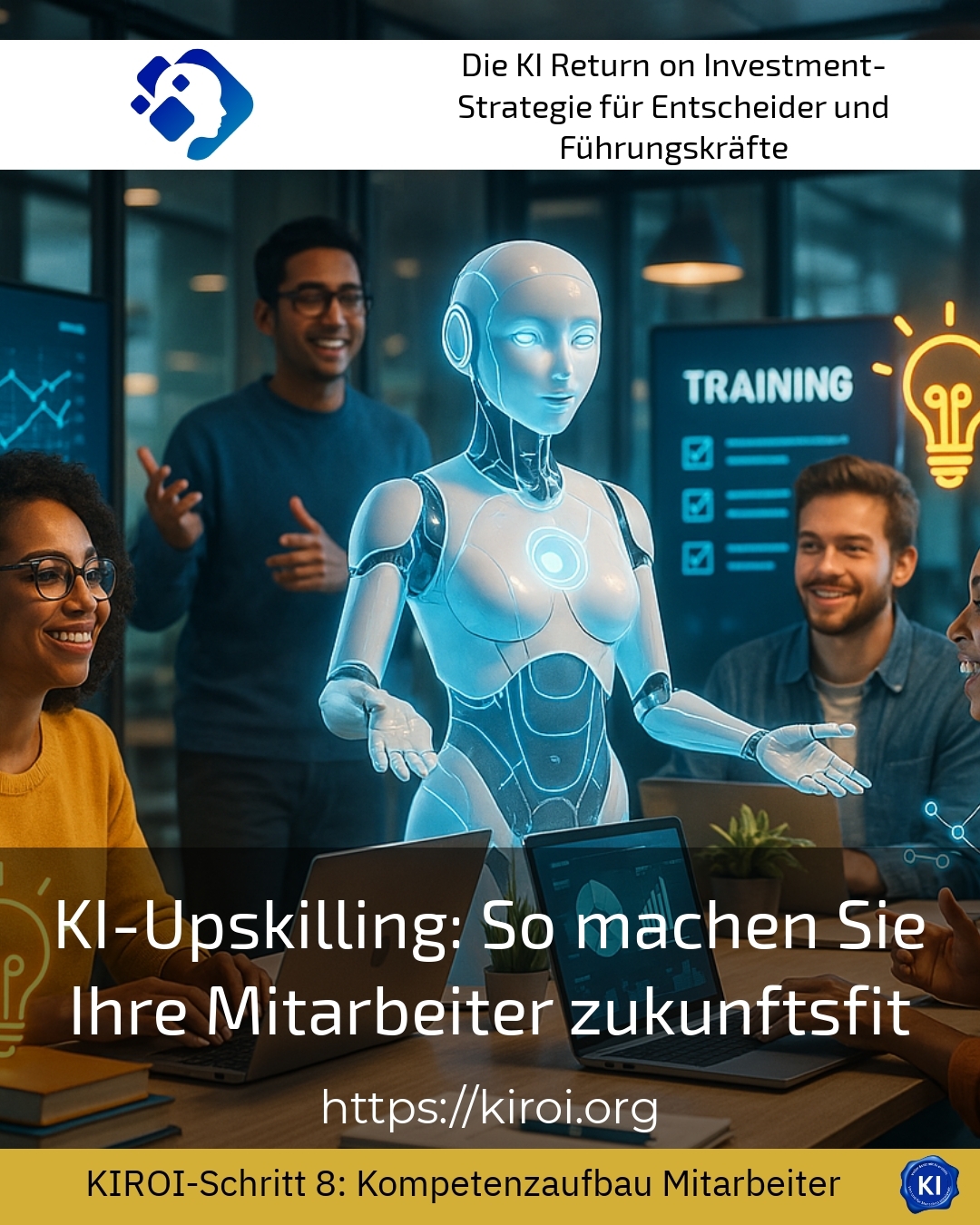
This question currently concerns executives in almost all sectors of the economy, as technological development is advancing at a speed that poses significant challenges for many companies. Targeted AI Upskilling Your workforce represents a crucial success factor because only competent employees can effectively utilize the new tools and thus create real added value for your organization. Clients often report that they were initially unsure how to begin this transformation process, which is why structured guidance from experienced partners is often the decisive difference. In this article, you will receive valuable insights and practical tips that can help you systematically prepare your team for the upcoming changes.
Why traditional further education concepts are no longer sufficient today
The classic training programs of many organizations are based on outdated assumptions about learning processes and competency development. In the past, it was sufficient to send employees to a multi-day seminar every few years. Today, the working environment is changing so rapidly that continuous learning has become a prerequisite. A retailer that offered training to its sales representatives five years ago is now faced with the task of qualifying the same people to handle intelligent inventory management systems. At the same time, customer advisors need to understand how automated recommendation systems work so that they can integrate them meaningfully into their consultation sessions. The employees in the logistics department also need new skills because predictive analytics increasingly control the flow of goods.
Transruptions coaching supports companies in systematically guiding these complex change processes and developing individual learning paths. The goal is not to train every employee to become a data expert, but rather to create a fundamental understanding of the new technologies. For example, a branch manager does not need to be able to program algorithms himself, but he should understand why the system suggests certain personnel plans. The cashier benefits from knowing how automatic price optimization works so that she can answer customer inquiries competently. Warehouse employees work more effectively with picking robots when they can understand their functionality.
AI Upskilling Starts with an Honest Inventory
Before planning training measures, you should first determine what competencies already exist within your organization. Many companies significantly underestimate the informal knowledge of their workforce. The young trainee who is experimenting with chatbots privately may possess valuable practical knowledge. The experienced purchasing manager may have already started independently by providing spreadsheets with simple automations. The warehouse manager may already have been using digital tools for route optimization for their forklift drivers for a long time. Identifying and systematically incorporating these existing resources can benefit your entire organization. AI Upskilling-Give the program significant momentum.
Best practice with a AIROI customer
A medium-sized retail company with several branches faced the challenge of preparing its approximately two hundred employees for the deployment of new intelligent systems. The management had initially contacted external training providers and found that the standard programs offered did not meet the company’s specific requirements. As part of the transruptive support, we first conducted a comprehensive competency analysis, which revealed surprising findings. It turned out that seventeen employees already possessed advanced digital skills that were previously unknown. These internal experts were trained to become so-called technology ambassadors, who subsequently supported their colleagues in the individual branches. This peer-learning approach proved particularly effective because the learners were able to ask questions in their familiar working environment. Within six months, the acceptance of the new systems increased significantly, and the error rates in usage decreased by more than half. The management also reported a noticeably improved mood in the teams, because the employees felt taken seriously and included in the change process.
Practical approaches for sustainable AI upskilling in different business areas
The qualification needs vary significantly between the different departments and levels of an organization. While the strategic management level requires an understanding of the broader possibilities and limitations of technology, operational employees need concrete application knowledge for their respective work areas. For example, a sales manager must be able to assess how reliable the system’s sales forecasts are and when human experience should correct the predictions. His field staff, on the other hand, need practical skills in handling mobile assistance systems that support them during customer visits. The back office team, in turn, works daily with automated order processing systems and must understand how to recognize and manually process exceptions.
In the area of customer support, the effects of technological changes are particularly evident. Chatbots increasingly handle standardized inquiries, thereby relieving human service agents. However, they must learn to seamlessly handle them when the automated system reaches its limits. At the same time, they should understand what information the system has already collected so that customers do not have to repeat themselves. Furthermore, the requirements for interpersonal skills are evolving as the remaining human interactions tend to become more complex and emotionally demanding. A comprehensive qualification program therefore takes into account both technical and social competencies equally.
Understanding and constructively addressing resistance
Clients often report significant resistance within their workforce when new technologies are to be introduced. These reservations are by no means irrational but often an expression of legitimate concerns about their own workplace or personal competence. Experienced employees who have been successfully performing their duties for many years may feel challenged by intelligent systems. A long-time buyer whose expertise is suddenly supplemented by algorithmic recommendations needs time and support to process this change. The same applies to the experienced salesperson who observes customers increasingly shopping via digital channels and wonders what role they will play in the future.
Transruptional coaching provides guidance during these sensitive transition phases and offers insights into how leaders can deal with their employees’ fears. It has been shown that open communication and genuine participation are the most effective means against resistance. When employees understand why certain changes are necessary and how they can personally benefit from them, their willingness to actively participate increases significantly. For example, a large retailer early on involved its warehouse employees in the selection of a new picking system. The employees were able to test different systems and contribute their experiences. This created a sense of co-ownership that significantly facilitated the subsequent implementation.
Best practice with a AIROI customer
A traditional family business in the wholesale sector faced considerable resistance when the management announced a comprehensive modernization program. In particular, the older employees, many of whom had been working in the company for more than twenty years, reacted with skepticism and sometimes open rejection. The management approached us because they did not know how to deal with this situation without losing the valuable knowledge of these employees. Together we developed a tandem concept in which an experienced employee worked alongside a younger colleague. The older employee brought his expertise in products, customers, and processes, while the younger employee contributed his digital skills. This combination proved extremely fruitful because both sides learned from each other and valued each other. The older employees experienced that their expertise was still in demand while at the same time they were able to acquire new skills in a protected environment. After a year, the human resources department reported that the turnover in this age group had significantly decreased and the satisfaction levels in the employee surveys had increased.
Design learning formats in a contemporary way and adapt them individually
The way people learn has changed fundamentally in recent years, and successful AI Upskilling- Programs consistently take this development into account. Multi-day presence seminars, in which participants listen to lectures for hours, no longer correspond to the learning habits of many working professionals. Instead, many people prefer short, practical learning units that they can integrate flexibly into their work routine. For example, a store manager can watch a ten-minute video during a quiet phase to interpret sales forecasts. The cashier might take a short interactive module on using the new payment system during their break. The warehouse worker learns how to operate the automated conveyor system directly at the machine under the guidance of an experienced colleague.
At the same time, personal interaction remains essential, especially when it comes to more complex topics or the processing of change experiences. Regular reflection rounds in which employees can share their experiences with the new technologies foster mutual learning and strengthen team cohesion. For example, a grocery retailer established weekly short meetings where each team member presented a helpful tip on how to use the new systems. This practice not only led to faster knowledge transfer but also increased the motivation of the employees, as they were able to actively contribute to the success of the company. Furthermore, these meetings created informal networks where employees also supported each other outside of the official scheduled meetings.
The role of leaders in AI upskilling
Leaders play a crucial role in the success of qualification initiatives because they act as both role models and facilitators. If a department head does not show an openness to engaging with new technologies, his or her employees are unlikely to be motivated to do the same. Conversely, leaders who are open about their own learning processes and also their difficulties can foster a culture of continuous development. A regional manager who admits to her team that she initially had problems with the new analysis tool signals that learning difficulties are normal and acceptable.
Furthermore, leaders must create the necessary frameworks for learning, which often means adapting work processes and allocating time resources. In a hectic daily routine where every minute counts, it is difficult for employees to focus on further training. Smart leaders integrate learning time firmly into personnel planning, signaling that qualification is not an additional task but part of the core business. For example, a home improvement retailer reserved the first hour before opening time every Wednesday morning for joint training sessions. These regular appointments quickly became a valuable routine that the entire team appreciated.
Best practice with a AIROI customer
A drugstore chain with over fifty stores wanted to prepare its management team specifically for the upcoming technological changes and turned to us for long-term support. The challenge was that many store managers had risen through the ranks in the operational business and had little formal training in digital technologies. We developed a modular program that spanned nine months and combined various learning formats. Monthly presence workshops were alternated with online learning modules and individual coaching sessions. A simulation game was particularly valuable, allowing the managers to play through different scenarios of technology implementation without having to fear real consequences. This gave them confidence in dealing with typical challenges such as employee resistance or technical problems. After completing the program, the participants felt significantly better prepared for their role as change managers in their respective branches. The management subsequently observed that the implementation of new systems in the branches of the trained management personnel went more smoothly than in a control group without this preparation.
Measuring success and continuously adapting qualification programs
A common mistake in training initiatives is that companies invest significant resources in training, but fail to systematically evaluate its effectiveness. Simply conducting training does not mean that the desired competencies are actually being built. Successful AI Upskilling- Programs therefore define clear success criteria from the outset and regularly collect data to measure progress. For example, a fashion retailer could track and analyze the usage rates of its new styling assistant systems to see which employees actively use the technology and which ones avoid it. An electronics retailer could measure how many customer inquiries its employees can answer with the new knowledge database without having to ask colleagues.
In addition to quantitative metrics, qualitative feedback should also be systematically collected, as it often provides valuable insights into potential areas for improvement. Regular feedback discussions with employees and managers help to identify and address weaknesses in the qualification program early on. Perhaps it becomes apparent that certain training modules are too theoretical and need more practical application. It may also be revealed that the learning times were chosen poorly and are perceived as disruptive by many employees. Such insights enable continuous development of the program and sustainably increase its effectiveness.
My AIROI Analysis
After years of experience in guiding transformation projects, a recurring pattern emerges that is crucial to the success or failure of qualification initiatives. Companies that understand and treat their employees as active agents of change achieve consistently better results than those that view training as mere mandatory events. The investment in the human side of technology implementation pays off in the long run because motivated and competent employees can only unlock the full potential of the new tools [1].
At the same time, I often observe a discrepancy between the expectations of management and the reality on the ground. Leaders often underestimate how much time and support employees need to truly internalize and integrate new skills into their work routine. Sustainable competence development is not a sprint, but a marathon that requires patience and continuous commitment [2]. Organizations that embrace this insight and build their programs accordingly over the long term often report positive side effects such as increased employee engagement and improved employer attractiveness.
The AIROI-methodology emphasizes the importance of a holistic approach that takes into account both technical, organizational, and human factors. Isolated training measures without integration into a comprehensive transformation strategy regularly fail to achieve their goal [3]. Only when qualification, process adaptation, and cultural change go hand in hand do the new technologies fully realize their potential. The role of transruptive coaching consists in bringing these different strands together and guiding companies in finding their individual path to a successful future.
Further links from the text above:
[1] McKinsey – Upskilling and Reskilling as Critical Components of Transformation
[2] World Economic Forum – Future of Jobs Report: Skills needed
[3] Harvard Business Review – Reskilling in the Age of Intelligent Systems
For more information and if you have any questions, please contact Contact us or read more blog posts on the topic Artificial intelligence here.







 Deutsch
 English (UK)