
Data analysis as the basis for successful decisions
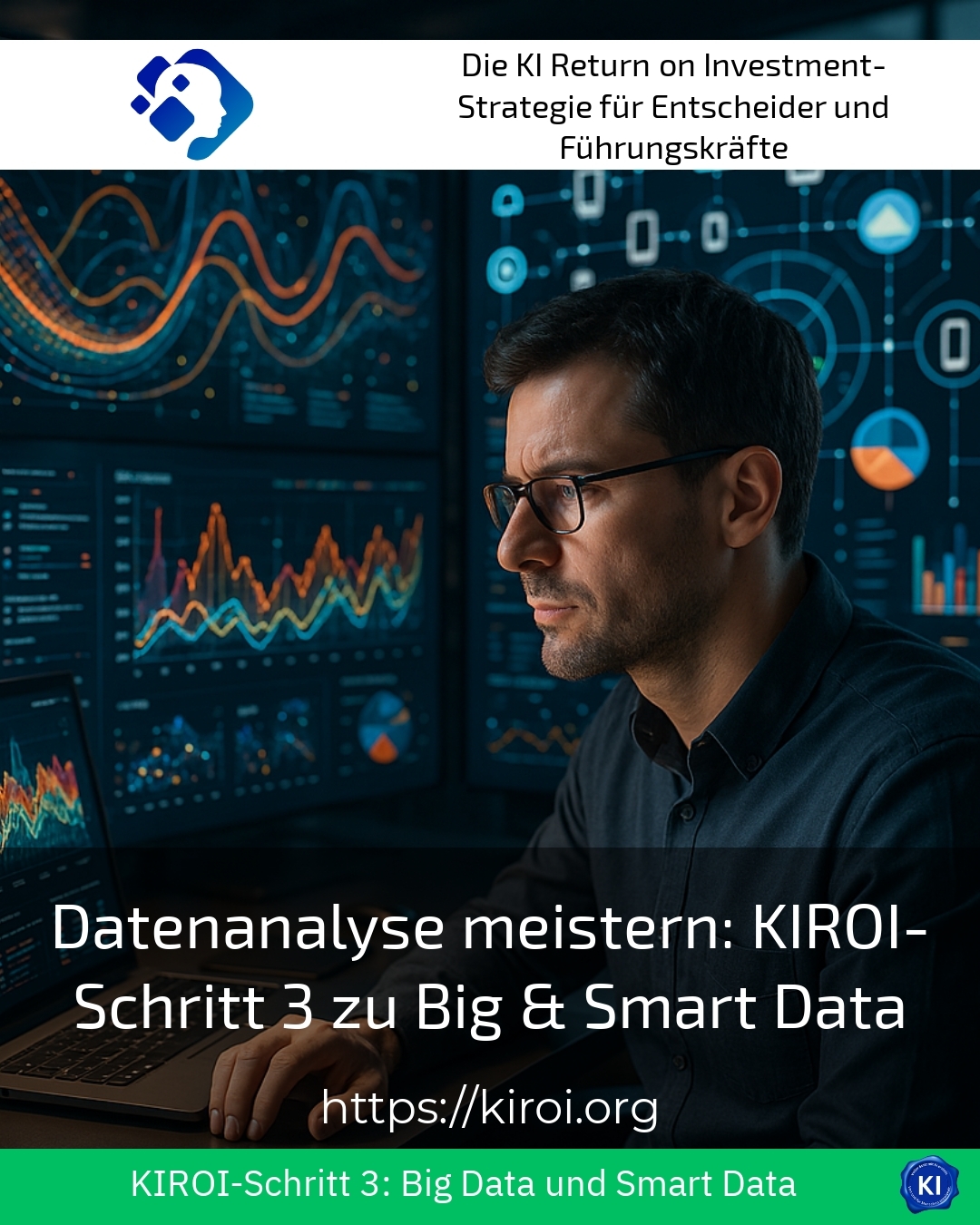
Data analysis forms the foundation for targeted decisions and innovative strategies in modern companies. More and more managers and teams are looking for ways to extract relevant information from the flood of big data and to integrate it purposefully into their business model. This is precisely where AIROI Step 3 comes in: it provides a structured approach for how large volumes of data can be turned into smart, practical insights.
Many clients find data analysis difficult at first because they are faced with unmanageable mountains of data, a lack of structure and a missing systematic approach. The difficulty often lies not in accessing data, but in processing and evaluating it meaningfully. However, those who successfully master this step can sustainably strengthen their organisation and unlock new potential.
From Big Data to Smart Data: The core idea
Big Data refers to enormous, unstructured quantities of raw data originating from a wide variety of sources – from sensors and customer transactions to social media posts[6][8]. This data has little value in itself unless it is specifically analysed. Only through structured data analysis does it become what is known as Smart Data, meaning processed, high-quality datasets with direct benefit for the company[1][2][5].
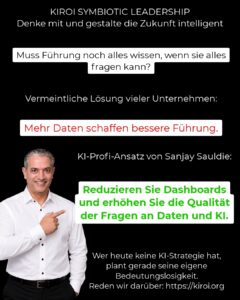
In coaching, I often support teams who have a lot of material but have little idea how to ask the right questions and select appropriate algorithms. A crucial impetus here is to not just collect data, but to align it with the most important questions. Those who simply try out data science often get lost in collecting rather than applying. Therefore, the principle is: clarify objectives first, then analyse data, not the other way around.
The transition from Big Data to Smart Data happens in several stages. First, data is consolidated and checked for quality, then relevant patterns and connections are identified, for example, through machine learning algorithms. The result is information that can be specifically used for business decisions, product development, or customer retention[4][5].
Practical application examples for data analysis
The applications of data analysis are diverse and affect every sector – from industry and the service sector to public administration. I will explain three typical fields of application below with concrete examples.
BEST PRACTICE with one customer (name hidden due to NDA contract)A company in the consumer goods industry faced the challenge of connecting vast amounts of POS data, online tracking, and social media feedback. Together, we analysed which products suited which customers, identified cross- and upselling potentials, and developed targeted offers. The data analysis led to a 12 % increase in customer loyalty within a year, as we strategically leveraged Smart Data for targeted marketing.
In the manufacturing sector, companies are successfully using data analysis in predictive maintenance. Sensors on machines continuously measure operational data, and algorithms detect anomalies early, warning of breakdowns. This reduces downtime and optimises production processes[3].
Financial service providers benefit from data analysis by consolidating transaction data, market movements, and customer behaviour. This allows them to identify risks early on, personalise advisory services, and develop tailor-made products for different target groups.
Step-by-step implementation guide
How to get started with data analysis and how AIROI can specifically support Step 3. The following impulses will help to make the process a success:
First, objectives and research questions must be clearly formulated. Only those who know what they want to know can analyse data purposefully. A common mistake is to collect too much data without questioning its usefulness. In consulting, I support teams in finding the right questions and aligning the analysis accordingly.
In the second step, data quality should be checked. Not all data is meaningful – duplications, gaps or errors are common. Careful data cleansing is essential so that the analysis delivers valid results. Data scientists use special tools and methods for this, such as data profiling or automated plausibility checks.
In the third step, the actual data analysis takes place. Algorithms, statistics, and visualisations are used here. Companies that integrate machine learning and advanced analytics can recognise patterns that would not be visible with classical methods[2][3]. A continuous review of the results ensures that the insights gained are actually put into practice.
BEST PRACTICE with one customer (name hidden due to NDA contract)A logistics service provider wanted to optimise its fleet utilisation. We structured driving times, maintenance intervals and routes in a central data lake, analysed the data with algorithms and derived concrete suggestions for vehicle scheduling and maintenance. The transparency led to a reduction in unnecessary empty runs and costs.
Mastering challenges and stumbling blocks
Translating a successful data analysis is not always easy. Many companies report that while they collect a lot, actual usage stalls. Common reasons include poor data quality, unclear responsibilities, or a lack of skills within the team.
Another problem is the IT infrastructure. Data is often distributed across different systems, which makes consistent analysis difficult. A sensible recommendation is to build a central platform where all relevant data can be consolidated and made available for analysis.
Data analysis also requires the protection of sensitive information. Data protection and IT security should be considered from the outset. Companies that neglect these aspects risk legal consequences and loss of trust from customers and partners[1][5].
My analysis
Data analysis is far more than just collecting numbers and facts. It is the key to creating usable knowledge from complex datasets and enabling companies to act. Those who approach this process in a structured way ensure transparency, recognise opportunities early, and can specifically reduce risks.
The transformation of Big Data into Smart Data is most successful when teams ask the right questions, ensure data quality, and use modern analytical methods. Continuous development is essential because technologies and requirements are constantly changing.
As a transruption coach, I support organisations in professionalising their analysis processes, integrating new tools, and making smart decisions. Those who make data analysis a firm part of their strategy can assert themselves in the long term against competitors and develop innovative solutions.
Further links from the text above:
b2bsmartdata – What is Smart Data? [1]
HubSpot – Smart Data: Definition, Application and Benefits [2]
Appvizer – Smart Data or the intelligent use of data [3]
O2 Magazine – Smart Data: Definition, Application, and Difference to Big Data [4]
Kobold – What is Smart Data? Definition and explanation of the term [5]
Datavance – What is Big Data? Simply Explained [6]
expedition.digital – Glossary Big Data and Smart Data [7]
MFR – Big Data: Definition, Application, Tips [8]
sauldie – Mastering Data Analysis: AIROI Step 3 with Big & Smart Data [9]
For more information and if you have any questions, please contact Contact us or read more blog posts on the topic Artificial intelligence here.









 Deutsch
  English (UK)