
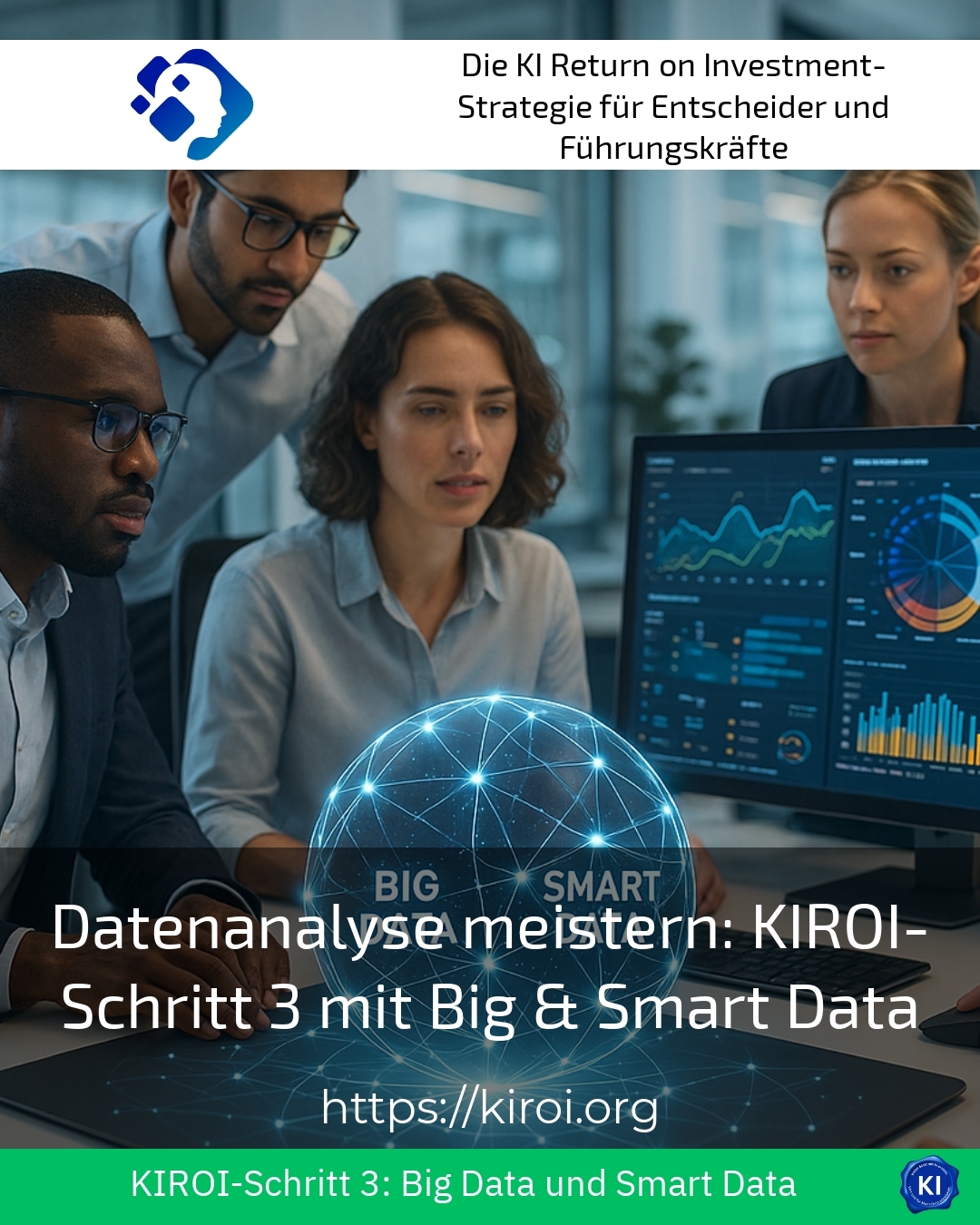
**Data analysis** is a key process today for gaining valuable insights from large and complex datasets. Particularly in the third phase of the AIROI approach, the combination of Big Data and Smart Data plays a central role. These two aspects complement each other ideally, because Big Data offers comprehensive information through its sheer volume of data, while Smart Data provides the relevant, filtered, and high-quality data. This enables companies to make better decisions and design operational processes more efficiently.
Data Analysis – Big Data and Smart Data working together
Big Data refers to very extensive and diverse datasets, which mostly originate from the most varied sources and at high speed. Smart Data, on the other hand, is the result of targeted processing and filtering of this raw data. It focuses on quality and relevance in order to enable well-founded analysis. This significantly increases the efficiency of data analysis.
A practical example from logistics shows how Smart Data improves the analysis of sensor data from vehicle fleets. By intelligently filtering only relevant data points, routes can be optimised, which reduces fuel costs and shortens delivery times. This also allows for a faster response to changes in traffic or environmental influences.
In healthcare, precise **data analysis** using smart data supports the individual tailoring of therapies. Clinics specifically analyse selected patient data to optimise treatment processes and reduce costs. This enables patient-centred care, which is gaining increasing importance.
BEST PRACTICE with a client (name redacted due to NDA agreement): For an industrial company, we collected data from machines, processes, and the environment and processed it using Smart Data. This improved production capacity, significantly reduced downtime, and increased efficiency. Through the targeted combination of Big and Smart Data, the company was able to operate more resource-efficiently and economically.
Smart Data as a crucial lever in data analysis
Smart data is created by intelligent algorithms that extract only the truly important information from large datasets. This data quality is essential, as an analysis is only as good as the data it is based upon. Companies across various industries frequently report significant challenges in ensuring data quality.
For example, manufacturers use smart data to predict the maintenance requirements of their machines and avoid unplanned downtime. Financial institutions benefit from precise transaction analyses that help to detect fraud attempts earlier. Retailers also use smart data by filtering sales data to precisely control stock levels and anticipate demand trends.
In transport systems, authorities analyse sensor data for real-time traffic light control, thereby improving traffic flow and reducing waiting times. These examples illustrate that smart data, as part of data analysis, is driving efficiency gains and innovations across industries.
Practical tips for the successful implementation of data analysis with Big & Smart Data
For companies aiming to master data analysis, finding the right balance between data volume and data quality is essential. The following insights can help with this:
- Start with a clear objective: What specific questions should the data answer?
- Ensure data quality through continuous checking and cleansing of errors and duplicates.
- Utilise modern algorithms and machine learning to automatically filter big data and transform it into smart data.
- Incorporate expert knowledge from your industry to better understand and interpret data contexts.
- Visualise results using understandable representations such as heatmaps, box plots, and network diagrams.
Industrial companies, for example, can plan maintenance measures with the help of intelligent data analysis; in the financial sector, smart data help to make risks more calculable; and in retail, they significantly improve inventory management.
Why a trustworthy database is essential as a foundation
A reliable database is essential for data analysis. Companies are therefore increasingly relying on automated checking mechanisms to ensure the currency, completeness and correctness of data. Only in this way can data analysis models deliver precise forecasts and effectively support decision-making processes.
An insurer, for example, can create more precise risk analyses and calculate precisely tailored premiums using valid customer data. In retail, accurate inventory management prevents shortages and overstocking, which both reduces costs and improves the customer experience.
Trusted data and transparent provenance also secure the necessary trust of stakeholders in analysis results and the strategies built upon them.
My analysis
**Data analysis** is a key component for extracting actionable insights from the wealth of information available. The combination of Big Data and Smart Data, as taught in AIROI Step 3, supports companies on their journey towards data-driven decision-making. Intelligent filtering of large amounts of data, supplemented by a trustworthy data foundation, ensures relevant and reliable results. This allows for process optimisation, cost savings, and the realisation of innovative approaches. The practical examples from logistics, industry, healthcare, and other sectors demonstrate how diverse and valuable well-conceived data analysis is today.
Further links from the text above:
Data analysis with Big, Smart & Trusted Data for success
What does smart data mean and what are the application scenarios?
Big and smart data - from statistics to data analysis
Big data: definition, application and future outlook
Smart + Big Data | Artificial Intelligence
For more information and if you have any questions, please contact Contact us or read more blog posts on the topic Artificial intelligence here.











 Deutsch
  English (UK)