
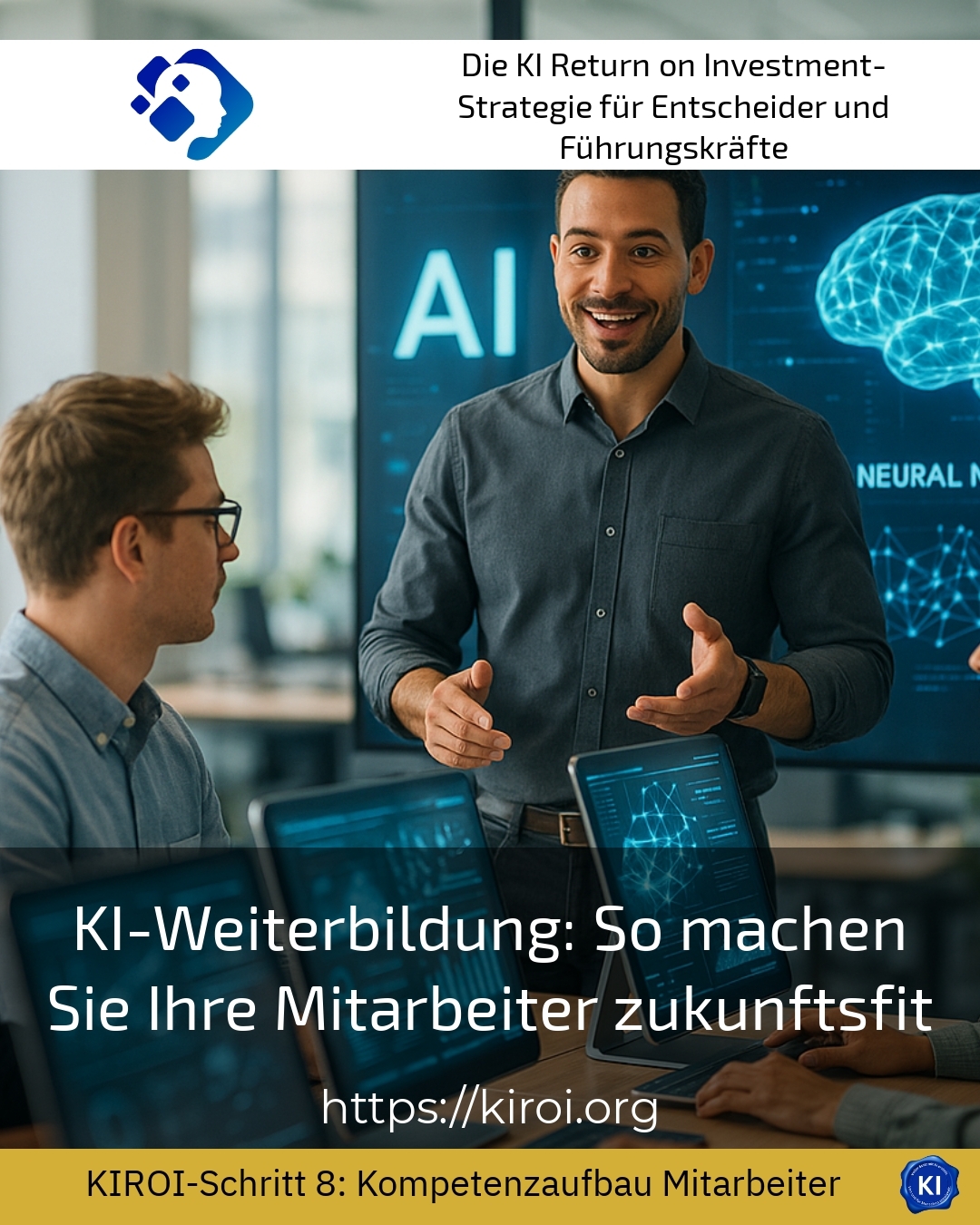
Will your workforce still be competitive in five years if you don't invest today? AI Further Education invest?
This question currently concerns countless executives and HR managers in Germany. The rapid development of intelligent technologies is fundamentally changing work processes. Companies face the challenge of preparing their teams for this transformation. It is not just a matter of technical knowledge. Rather, employees must understand how to become more productive with new tools. The AI Further Education Therefore, it is becoming the decisive success factor for forward-thinking organizations. Many companies are already reporting positive experiences. They are systematically investing in the development of their employees’ skills. This investment often pays off many times over.
Why traditional training concepts are no longer sufficient
Traditional forms of continuing education are reaching their limits in the face of technological changes. One-time seminars may provide basic knowledge, but rarely lead to lasting behavioral changes. The integration of new technologies requires continuous learning. Employees must be given opportunities to put what they have learned into practice. Only through regular practice can real competencies be developed. That is why advanced companies rely on blended learning concepts. These combine in-person training with digital learning modules. This allows employees to progress at their own pace. Proof-based learning success is demonstrated by this flexibility.
In the manufacturing industry, this change is particularly evident. Production workers are learning how intelligent assistance systems support quality control. Maintenance teams are using predictive maintenance tools to prevent errors. Logistics departments are optimizing supply chains with algorithmic support. These practical applications make abstract technology tangible. This significantly increases the acceptance among employees. At the same time, fear of job loss is decreasing. Employees realize that they become more valuable through new skills.
Best practice with a AIROI customer
A medium-sized machine engineering company from southern Germany approached our transruptive coaching team with a challenging situation. The management had recognized that the workforce was reacting skeptically to the introduction of intelligent manufacturing systems. Many experienced professionals feared being replaced by automation. First, we jointly analyzed the existing competence profiles of all departments. It turned out that there was enormous knowledge in place. However, this knowledge could not be used systematically. We developed a multi-stage qualification program over twelve months. Experienced employees were trained to become internal multipliers. They passed on their knowledge to younger colleagues and at the same time learned about new technological approaches. The mutual exchange of knowledge significantly strengthened the team cohesion. After completing the program, the participants reported increased confidence in using digital tools. Productivity in manufacturing improved noticeably. Fluctuation also decreased significantly, as employees became more clear about their development prospects.
Developing the right strategy for sustainable AI training
A successful qualification initiative begins with an honest assessment of the current situation. Companies should first analyze which skills already exist. Then it is necessary to determine the future skills needs. The difference between the current state and the desired state forms the basis for the training program. Structured analysis methods and external guidance support this process. Transruptive coaching provides valuable insights for strategic planning. Together with experienced consultants, customized concepts are created. These take into account industry-specific requirements and the individual corporate culture.
In healthcare, for example, there are very specific requirements. Caregivers need to understand how intelligent documentation systems can facilitate their work. Female doctors benefit from support systems in diagnosis. Administrative staff optimize billing processes through automated assistance. The ethical aspects play a particularly important role in this area. Patient data require the utmost care and data protection expertise. Training programs must convey this sensitivity and practice it practically. Acceptance among healthcare workers increases significantly through practical examples.
Leaders as role models in AI training
The success of any qualification program depends significantly on the support provided by supervisors. Leaders significantly shape the learning culture in the company. When they themselves participate in training, they set important examples. Employees closely observe how seriously management takes the transformation. An open culture of error encourages the experimentation spirit of the workforce. People feel more confident when mistakes are viewed as learning opportunities. This mindset can be fostered through targeted leadership development. In this way, a learning organization is created at all levels.
In retail, the importance of engaged leadership is particularly evident. Store managers shape their teams’ attitude towards digitalization. When they themselves are competent with business management systems, the employees willingly follow suit. Sales staff uses recommendation algorithms for better customer service. Cashiers work efficiently with automated billing systems. Warehouse management benefits from intelligent inventory optimization. All these changes are only possible with leaders acting as active supporters.
Best practice with a AIROI customer
A large retail chain from northern Germany faced a complex challenge in personnel development. The workforce consisted of several thousand employees of various ages and skill levels. Many long-standing employees had had little exposure to digital tools until now. At the same time, younger employees were demanding more modern working methods and faster processes. The transruptive coaching accompanied the human resources department in developing a cross-generational learning concept. We relied on tandem learning, where younger and older employees worked together on tasks. The younger generation brought technical expertise, while the more experienced contributed industry knowledge. This combination proved exceptionally fruitful for both parties. After six months, more than eighty percent of the workforce had acquired basic digital skills. Customer satisfaction improved measurably through faster and more precise advice. Particularly pleasing was the increased employee satisfaction, which was clearly reflected in internal surveys. The company has now made this program a permanent part of its human resources development program.
Practical implementation of AI training in everyday work
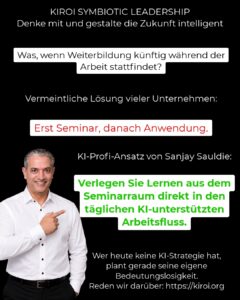
Integrating learning time into the regular work flow presents many companies with challenges. Employees often feel torn between daily work and further training. Clear structures and binding learning times help here. Some organizations introduce fixed training days. Others rely on short learning units during working hours. Microlearning formats with units of fifteen minutes often prove particularly effective. Concentration remains high, and the learned knowledge can be directly applied. Regular short impulses often achieve better results than rare all-day seminars.
In the financial sector, digital learning platforms have proven particularly effective [1]. Bank employees undergo compliance training on automated testing systems. Insurance advisors learn how intelligent risk analyses support their work. Clerks use automated decision-making tools for application review. The high regulatory requirements make continuous training necessary anyway. Intelligent learning systems adapt the content to the individual’s knowledge level. This prevents employees from getting bored with already familiar topics. At the same time, they specifically fill in existing knowledge gaps.
Measurable success through systematic evaluation
Without clear measurement of success, training investments remain a blind alley. Companies should define from the outset what goals they want to achieve. Possible metrics include increases in productivity, reduction of errors, or employee satisfaction. Regular feedback loops enable the continuous improvement of the programs. Participants provide valuable feedback on the practical applicability of the content. Executives observe behavioral changes in the workplace. The human resources department evaluates data on learning activity and progress. This information feeds into the development of future measures.
In the field of logistics and transportation, successes can be measured particularly well [2]. Dispatchers optimize routes with algorithmic support and save fuel. Warehouse workers find goods more quickly through intelligent localization systems. Fleet managers predict maintenance needs more precisely and avoid breakdowns. The savings in time and costs are directly quantifiable. End customer satisfaction also increases through more punctual deliveries. These measurable improvements clearly justify the investments in training measures. They also create acceptance among skeptical decision-makers within the company.
Typical obstacles and how to overcome them
Many companies come to us with similar challenges in competence development. Often, human resources managers report a lack of motivation among older employees. Others complain of insufficient time for training during the day’s business activities. Some organizations fail due to unclear responsibilities between the HR and IT departments. The transruptions coaching accompanies companies in systematically overcoming these obstacles. Together, we develop individual solutions for the specific situation. In doing so, we draw on insights from successful projects in comparable industries. The support includes both strategic advice and operational implementation support.
In the construction industry, reservations about digital learning formats are particularly common. Construction workers and tradespeople often prefer practical on-site instructions. However, intelligent construction site management tools require new skills in using tablets. Drone-based surveying technologies are fundamentally changing the work of surveying technicians. Planning software with algorithmic optimization functions supports construction managers in complex decisions. For all these applications, tailored training concepts are needed. They must take into account the practical working reality on the construction site. Mobile learning formats and video tutorials prove particularly helpful here.
Best practice with a AIROI customer
A long-established construction company from the Rhineland had long been reluctant to adopt technological innovations. The experienced polishers and construction managers had been working with proven methods for decades and had little interest in change. When the management decided to invest in intelligent project management software, we encountered considerable resistance. The transruptive coaching began with detailed individual interviews to understand the concerns of the employees. It turned out that many feared embarrassment because they perceived themselves as technically unskilled. We subsequently developed a training concept with small homogeneous learning groups of a maximum of five people. The atmosphere was deliberately designed to be informal in order to remove barriers. Experienced employees received additional time and personal support in learning new skills. After just a few weeks, even initially skeptical polishers were reporting positive experiences. They recognized how the software facilitated their administrative work and created more time for actual site management. Project documentation improved significantly, which also resonated positively with clients. Today, some of the former biggest critics are acting as internal ambassadors for digital tools.
Long-term perspectives for employees and companies
The investment in employee training only fully manifests itself over the course of several years. In the short term, training, labor loss, and external consulting incur costs. In the medium term, the company’s productivity, quality, and innovation capabilities increase. In the long term, a competent team ensures competitiveness in changing markets. Qualified employees develop a stronger sense of belonging to the organization. They change employers less often and bring their knowledge with them for the long term. The employer attractiveness increases, which facilitates the recruitment of new talent. All of these effects justify the initial investments many times over.
In the media industry, the importance of continuous training is particularly evident [3]. Journalists use intelligent research tools for in-depth analysis. Editors work with automated translation systems for international reporting. Graphic designers create visualizations with algorithmic support in no time at all. The media landscape is changing rapidly, and only adaptable teams remain successful. Training is not a one-time measure here, but a constant companion in professional development. Media companies that have understood this ensure their relevance in a fragmented information landscape.
My AIROI Analysis
After many years of supporting companies in various industries, I draw a nuanced assessment of competence development for intelligent technologies. The willingness to transform varies significantly between organizations and is largely dependent on the corporate culture. Successful qualification programs are characterized by clear strategic integration and consistent implementation. They begin with an honest analysis of the current situation and define realistic development goals. The involvement of all levels of the hierarchy proves to be a critical success factor for sustainable change. Leaders must take the lead and demonstrate genuine commitment to learning. Employees need safe spaces where they can experiment and even make mistakes. The technical infrastructure must enable and facilitate learning in the workplace. External support from experienced partners such as transruptive coaching significantly accelerates the process. We bring outside perspectives and help identify blind spots. The investment in people pays off in the long run, even if it incurs short-term costs. Companies that act today secure their future viability in a changing working world. Waiting is not an option, because technological change continues to accelerate. Those who get their priorities right will benefit from the changes rather than be overwhelmed by them. The time to act has arrived, and competent support is available.
Further links from the text above:
[1] Bitkom – Artificial Intelligence in Business
[2] BMAS – Digitalization of the working world
[3] IAB – Research on digitalization and the labor market
For more information and if you have any questions, please contact Contact us or read more blog posts on the topic Artificial intelligence here.







 Deutsch
 English (UK)