
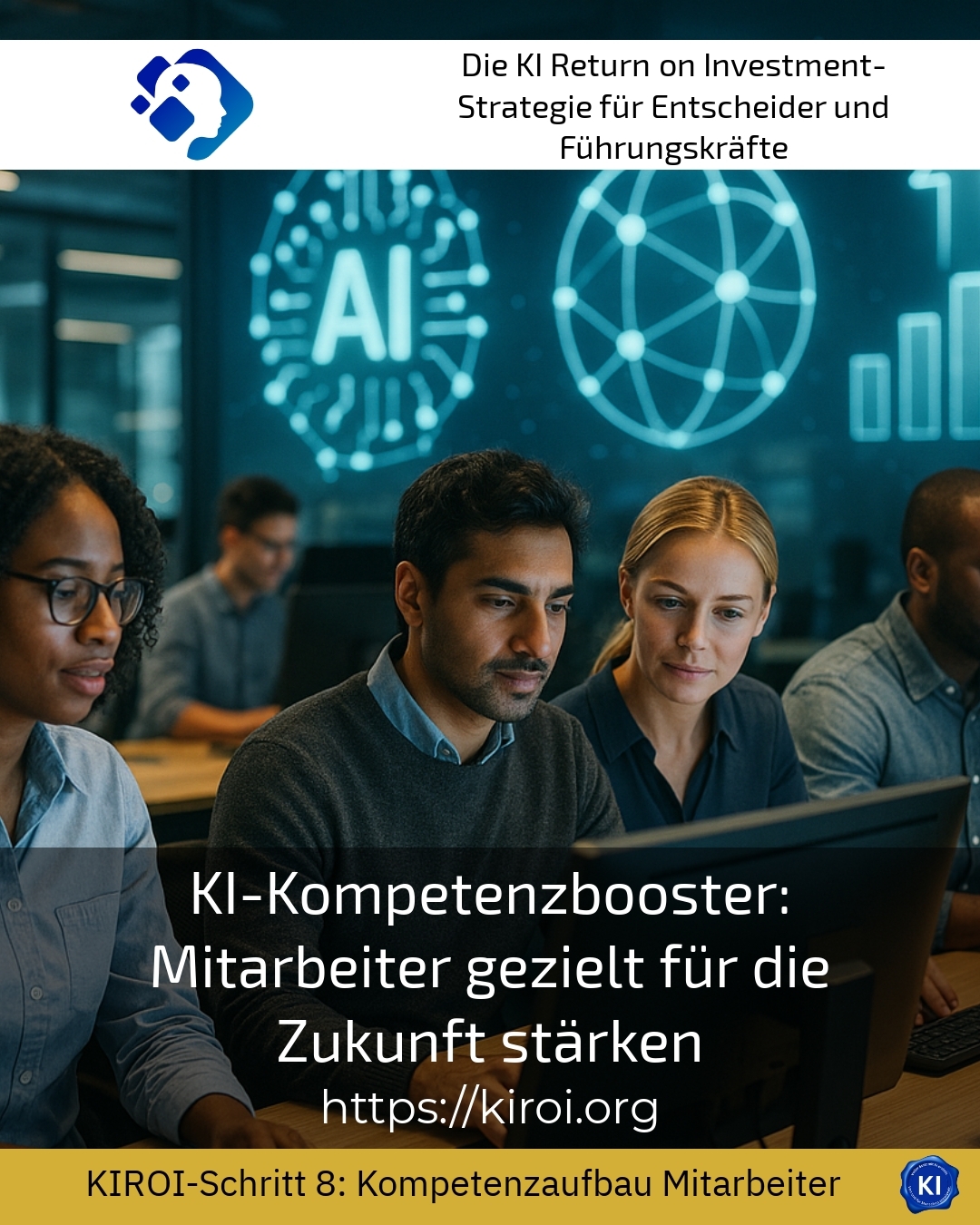
Digital transformation is changing workplaces at a rapid pace. Many companies face the challenge of preparing their workforce for new requirements. The AI Skills Booster: Targeted Employee Development for the Future becomes the decisive success factor in the process. But how do you successfully empower teams for the long term? Which strategies actually lead to success? And why do so many initiatives fail right at the initial stage? This article provides practical answers and outlines concrete paths forward.
Why traditional further education is no longer sufficient today
Traditional training concepts are increasingly reaching their limits. They were developed for a working world that changed only slowly. Today, however, new technologies and methods emerge at ever-shorter intervals. Employees therefore require continuous learning opportunities rather than one-off seminars. This is particularly evident in the logistics sector. Warehouse specialists now work with automated systems and intelligent assistants. Requirements have changed fundamentally. The job profile is also changing dramatically in retail. Cashiers are becoming customer advisors equipped with digital tools. Sales assistants use tablets for personalised product recommendations. The hospitality industry is experiencing similar upheavals. Service staff operate digital ordering systems and coordinate delivery services in parallel.
These developments require a AI Skills Booster: Targeted Employee Development for the Future as a strategic approach. Companies frequently report feeling overwhelmed when it comes to long-standing employees. Fear of change often blocks the necessary openness to new ideas. At the same time, younger talent specifically looks for employers with modern training offers. The skills shortage further exacerbates this situation. Organisations simply cannot afford to lose valuable accumulated expertise.
The AI Skills Booster as a Strategic Instrument
A well-thought-out skills development programme begins with an honest stocktake. Which skills are available today? Which will be needed tomorrow? Where are the biggest gaps? Managers need to answer these questions together with their teams. The answers will vary depending on the department and function. In accounting, for example, the focus is on working with intelligent bookkeeping systems. Employees learn to monitor automated processes and handle exceptions. In human resources, on the other hand, it is about dealing with data-driven selection procedures. Recruiters need new competencies in interpreting analysis results. Production, in turn, demands an understanding of networked machinery and predictive maintenance.
Best practice with a AIROI customer
A medium-sized mechanical engineering company faced a complex challenge. The workforce showed significant reservations towards new digital tools. Many experienced specialists feared becoming redundant. The management recognised the need for a structured accompaniment process. Together with our transruptions coaching, we developed an individual roadmap. First, we held discussions with employees at all levels. This open communication built trust and reduced anxieties. Subsequently, we identified key individuals who acted as internal multipliers. These so-called digital ambassadors received intensive training and accompanied their colleagues. The approach proved extremely effective. Within six months, acceptance of new technologies increased measurably. At the same time, productivity and employee satisfaction improved. Fluctuation dropped significantly because employees recognised new perspectives within their organisation. This example illustrates the importance of empathetic support during change processes.
Practical implementation strategies for different company sizes
Small businesses often have limited resources for further training. However, they can benefit from their flexibility. A craft enterprise, for example, integrates digital learning units into the working day. Employees watch short explanatory videos during quieter phases. Practical exercises take place directly on the new systems. In commercial cleaning, teams use mobile apps for route planning and quality documentation. Induction happens playfully and without formal training rooms. Small catering businesses rely on peer learning between experienced and new staff.
Medium-sized organisations can adopt more systematic approaches. They often establish internal academies or learning platforms. For example, an automotive supplier set up regular learning circles. There, employees exchange views on new tools and methods. The human resources department coordinates external trainers for specialised topics. At the same time, internal knowledge databases are created for self-study. Care facilities introduce digital care documentation step by step. Employees support each other in learning the new systems. Logistics companies create practice environments for warehouse management software.
AI Skills Booster: targeted empowerment of employees for the future in a corporate environment
Large enterprises face special challenges when scaling up training measures. They have to reach thousands of employees at various locations. Global corporations therefore rely on hybrid learning formats. Central online courses impart foundational knowledge consistently. Local face-to-face workshops deepen practical application. Mentoring programmes connect experienced digital pioneers with learners. An international retail group, for example, developed a comprehensive training programme. Branch managers initially received intensive training in new sales technologies. Afterwards, they passed on their knowledge to their teams. This cascade approach reached tens of thousands of employees in a short space of time. Banks use simulation environments for complex advisory meetings with intelligent assistants. Insurance companies train the collaboration between humans and automated claims processing systems.
Best practice with a AIROI customer
A large insurance company wanted to fundamentally modernise its administration. Intelligent systems were to take over routine processes and relieve the burden on employees. The workforce initially reacted with scepticism and resistance. Many feared the loss of their jobs due to the new technologies. Transruptions coaching accompanied the transformation process from the very beginning. We conducted intensive workshops to address fears and expectations. The employees gradually recognised the opportunities presented by the change. They understood that repetitive tasks would be eliminated, but more demanding activities would be created. Qualification took place in small, building blocks. Each module included practical exercises with the new system. Regular feedback sessions enabled the exchange of experiences regarding progress and difficulties. After one year, all affected departments were working successfully with the new tools. Processing times fell significantly, while customer satisfaction increased. The continuous support provided by our coaching team proved particularly valuable. This assistance helped to constructively overcome setbacks and maintain motivation.
The human dimension of competence development
Technical skills alone are not enough for a successful transformation. Employees also need emotional and social competencies. The ability for self-reflection is gaining in importance. Those who know their own strengths and areas for development learn more effectively. Communication skills are becoming more important because human-machine interactions are increasing. Creativity and critical thinking complement automated processes. In the advertising industry, creatives now work together with generative tools. They must be able to evaluate and refine their results. Journalists use automated research assistants and need new verification skills. Architects use algorithmic design tools and curate their proposals.
Psychological safety in the workplace significantly influences learning success [1]. Employees must be allowed to make mistakes without fearing negative consequences. Only in this way does a genuine enthusiasm for experimenting with new technologies emerge. Managers play a key role here as role models. If they themselves demonstrate a readiness to learn, their teams follow. A hospital reported significantly better results after management training. The department heads first learned the new documentation systems themselves. Afterwards, they supported their nursing staff with the transition. Hotels train receptionists in dealing with automated check-in systems. Personal care is shifting towards more complex guest enquiries.
Sustainable embedding of a learning culture
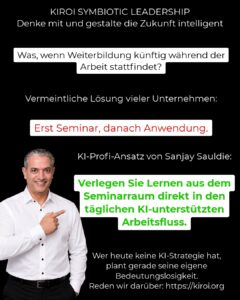
One-off training sessions usually fizzle out without effect. True competence development requires continuous effort. Organisations should establish learning as an integral part of work. Regular times for reflection support the embedding of new skills. Learning partnerships between employees foster mutual support. Incentive systems can reward participation in qualifications. A technology company introduced learning time as a fixed part of working time. Every week, four hours are available for further training. Employees choose for themselves which topics they want to delve into. Supermarkets use short learning sessions before the start of shifts. Pharmacies integrate further training into quieter afternoon hours. Craft businesses organise monthly exchanges of experience between different trades.
Measuring learning outcomes poses challenges for many organisations [2]. Traditional tests often capture only superficial knowledge. More important is the actual application in everyday working life. Behavioural observations and self-assessments provide valuable insights. Key performance indicators such as error rates or processing times also show developments. A call centre, for example, measures the usage intensity of new assistance systems. At the same time, it records customer satisfaction and first-contact resolution rates. This combination enables differentiated insights into training success.
The role of leaders in the transformation process
Leaders must actively shape and drive change processes. They create the framework in which learning can take place. Their own attitude significantly shapes the entire team culture. Openness to new things and tolerance of mistakes begin at management level. At the same time, they must communicate realistic expectations. Not every employee develops at the same pace. Individual learning paths deserve recognition and support. In the construction industry, foremen accompany their teams through the introduction of digital construction diaries. They demonstrate usage and help with difficulties. Chief physicians demonstrate new diagnostic support systems themselves. Headteachers show how to use digital learning platforms.
Communicating change requires special care. Employees want to understand why new skills are necessary. They are interested in how their role will change in concrete terms. Transparency about goals and timelines creates orientation. Regular updates keep all participants informed. A manufacturing company installed digital information screens in the production hall. Brief messages on the progress of the transformation appear there daily. At the same time, employees can submit questions and give feedback.
My AIROI Analysis
Empowering employees for future demands determines long-term business success. Organisations that invest in skills development today sustainably secure their competitiveness. The AI Skills Booster: Targeted Employee Development for the Future however requires more than technical training. It is about a fundamental cultural shift towards continuous learning.
From my experience with numerous transformation projects, I draw clear conclusions. Successful qualification strategies always take the human dimension into account. They take fears seriously and create psychological safety. They respect individual learning paces and offer tailored support. The technical component is only one part of the overall picture.
The role of managers seems particularly important to me. They must model a willingness to learn themselves and support their teams. Without this role model function, even the best programmes remain ineffective. At the same time, organisations need patience and perseverance. True skills development does not happen overnight. It requires continuous effort over months and years.
Transruption coaching can effectively support companies on this journey. We provide impetus, assist with strategy development and help with setbacks. Clients frequently report significantly accelerated progress through external support. The combination of internal expertise and an external perspective regularly proves to be particularly fruitful. Ultimately, it is about empowering people to use technology with confidence. This goal is worth every effort.
Further links from the text above:
[1] Harvard Business Review: Psychological Safety at Work
[2] McKinsey: Insights into People and Organisational Performance
For more information and if you have any questions, please contact Contact us or read more blog posts on the topic Artificial intelligence here.







 Deutsch
  English (UK)