
Have you ever wondered why some leaders seem to navigate the digital future effortlessly, while others, despite enormous efforts, fall behind and lose their grip on things?
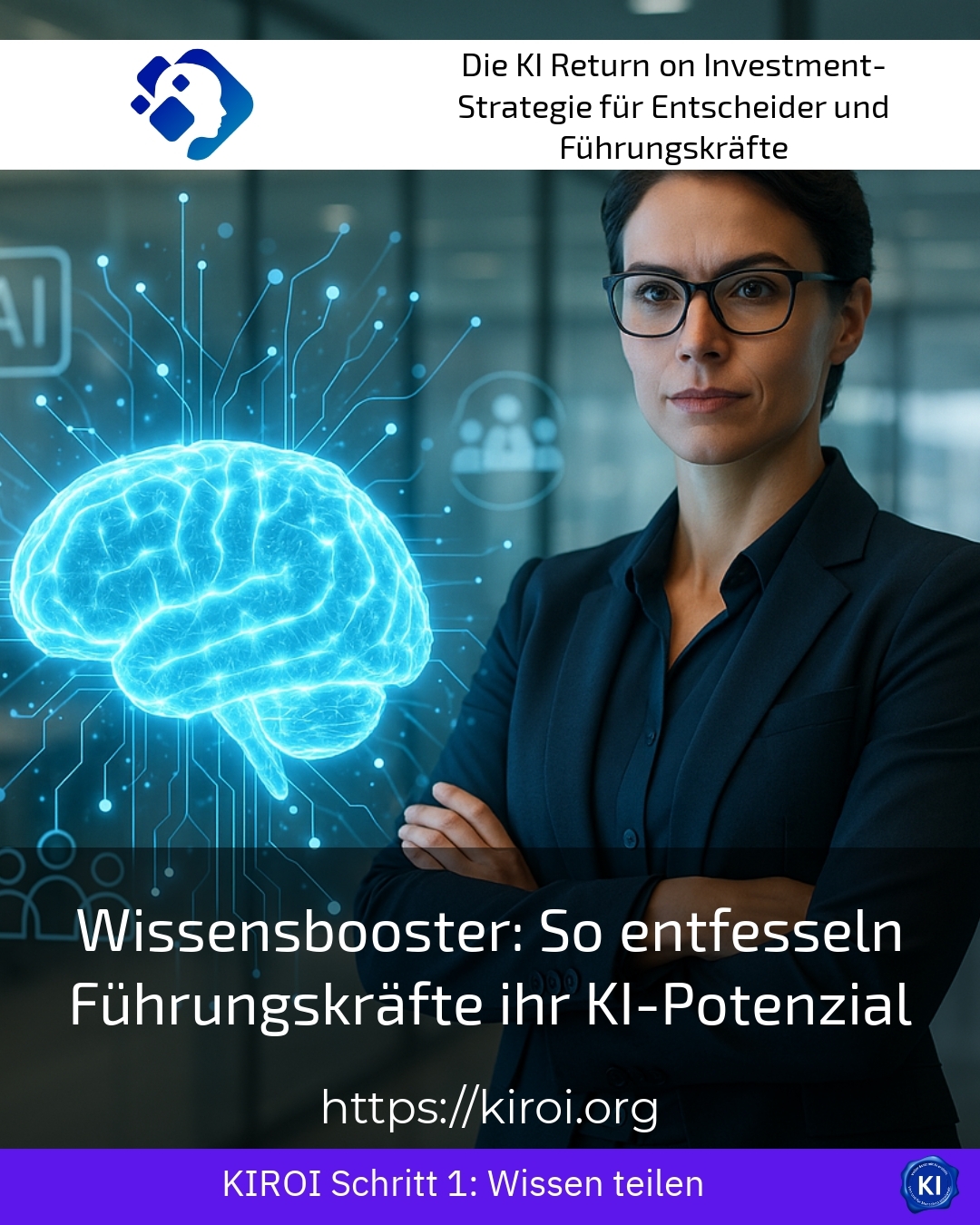
The answer often lies not in a lack of intelligence or a lack of commitment, but in a crucial factor: the systematic building of knowledge about intelligent technologies. Knowledge booster For modern decision-makers, the key is to continuously develop new competencies and strategically employ them. Especially in the field of corporate management, many clients report uncertainties when dealing with data-based systems. At the same time, the pressure from markets and competitors is growing. Therefore, transruptions coaching accompanies executives precisely in these challenges. The following sections provide impulses and show practical ways forward.
Why the knowledge booster for executives is indispensable
Business is changing at an astonishing pace, and leaders face the monumental task of not only keeping pace but actively setting the direction. Intelligent systems are now permeating almost every aspect of a company. They optimize supply chains, analyze customer behavior, and support strategic decision-making. Anyone who does not understand these tools gradually loses the ability to act. For example, a manufacturing company used predictive maintenance systems. This reduced downtime by significant percentages. Another company in the service sector implemented automated customer communication. Response times improved significantly. Moreover, a trading company relied on data-based inventory optimization. The result was a noticeable reduction in excess inventory. These examples vividly illustrate the potential lurking in intelligent applications. Nevertheless, the crucial question remains: How do leaders systematically acquire the necessary knowledge?
The role of the knowledge booster in personal transformation
Many decision-makers come to coaching with similar issues. They report feeling overwhelmed by the technological complexity. Others speak of uncertainty in investment decisions in the digital sector. Some feel technologically outdated by their younger employees. These feelings are understandable and widespread. The first step to change is to acknowledge this situation. Next comes structured competency building. One CEO from the logistics industry, for example, initially learned the basics of machine learning. Subsequently, he became better able to understand which projects were realistically feasible. A sales manager from the pharmaceutical sector focused intensively on natural language processing. This enabled her to communicate more effectively with her IT team. A financial director, in turn, deepened his understanding of automated analytical tools. His strategic recommendations thus gained significantly in quality.
Best practice with a AIROI customer
A medium-sized company in the manufacturing industry faced a complex challenge. The management recognized the enormous potential of intelligent automation, but felt uncertain about the strategic direction. In the context of the transruptive coaching, we developed an individual learning path together. This included initially fundamental concepts of data analysis and machine pattern recognition. Subsequently, we developed concrete use cases for the specific production environment. The management invested three hours per week in structured self-study. In addition, monthly reflection sessions took place, where we discussed progress and set new impulses. After six months, the management was able to independently assess which projects were realistic and which resources were needed. Communication with internal IT experts and external service providers improved noticeably. Ultimately, this systematic knowledge building led to the successful implementation of a quality assurance system that detects and reports production errors early on.
Strategies for unleashing the technological potential
The path to technological competence requires a structured approach. First, leaders should honestly identify their current knowledge gaps. Subsequently, the selection of suitable learning formats is recommended. Online courses offer flexibility and enable an individual learning pace. Professional books deepen understanding and provide theoretical foundation. Practical workshops provide immediate application experience. A board member from the insurance industry, for example, combined all three formats. He began with an online basic course on intelligent algorithms. In parallel, he read relevant professional literature on industry applications. Finally, he attended a multi-day workshop on practical implementation. A marketing manager from the consumer goods sector took a different approach. She regularly hosted development staff in her company. This gave her practical insights into ongoing projects. A human resources management team, in turn, used external mentoring programs. The exchange with experienced technology experts significantly expanded his horizons [1].
Activate knowledge boosters through targeted networking efforts
In addition to individual learning, exchange with like-minded peers plays a central role. Industry associations regularly organize events on technological topics. There, executives meet colleagues with similar challenges. One CEO from the mechanical engineering industry reported on valuable contacts at a professional conference. There he learned about alternative implementation approaches that benefited his own planning. A clinical director made connections at a sector meeting with innovative technology providers. These contacts later facilitated the selection of suitable partners for a digitalization project. A hotel director, in turn, joined an informal exchange group of executives. The monthly meetings provided space for open discussions about successes and failures. Such networks serve as a collective knowledge booster and significantly accelerate the individual learning process [2].
Transruptions coaching specifically guides executives through these diverse opportunities. Together, we identify appropriate learning resources and networks. We develop individual strategies for integrating learning time into the demanding daily routine of leadership. Clients often report that even small, consistently implemented steps have a significant impact.
Best practice with a AIROI customer
The sales management of an internationally operating trading company was looking for ways to better understand and control data-driven decision-making processes. In coaching, we first developed an inventory of the existing competencies within the leadership team. It became apparent that fundamental concepts such as algorithms, data models, and machine learning were largely unknown. Subsequently, we developed a tailored learning program that was tailored to the specific needs of the sales department. This program included short video units that could be consumed during business trips. Additionally, we organized monthly lunch-and-learn sessions with internal data experts. The leadership team took on an active role as moderator, thus also fostering knowledge sharing within the team. After about eight months, the leadership team was able to independently formulate requirements for data-driven sales tools. The collaboration with the IT department improved significantly because there was now a common language.
Cultural transformation as the key to success
Technological knowledge alone is not enough. Leaders must also understand and shape the cultural aspects of digital transformation. Employees react differently to technological changes. Some show enthusiasm and curiosity, others skepticism or even fear. A successful knowledge booster approach takes these human factors into account. For example, a production manager from the automotive supply industry recognized the importance of communication early on. He regularly explained the background of new technological initiatives to his team. This increased understanding and acceptance of change. A bank director specifically invested in training programs for her staff. She understood that her own development of skills had to go hand in hand with that of the team. A retailer, on the other hand, established an internal innovation lab. There, employees of all hierarchical levels could experiment and learn [3].
Redefining leadership in times of technological change
The role of the leader is fundamentally changing. Instead of being all-knowing decision-makers, modern leaders are now facilitators and coaches. They create the framework in which teams can fully realize their potential. A chief operating officer from the aviation industry described his transformation aptly. Previously, he made all important decisions himself; today, he empowers his teams to independently solve problems. A chief physician changed her leadership style in a similar way. She is now delegating more responsibility to specialized employees and focuses on strategic decisions. A startup founder, on the other hand, established flat hierarchies and continuous learning from the very beginning as core values. This approach attracted talented employees and fostered innovation. All three examples illustrate that knowledge building and cultural change are inextricably linked.
Transruptions coaching supports executives precisely in these multifaceted transformation processes. We not only provide knowledge sharing, but also accompany the personal development towards a new understanding of leadership. Clients often report that this holistic approach makes the crucial difference.
Practical implementation in day-to-day management
Theory and practice must come together for real progress to be achieved. Concrete implementation steps help in translating acquired knowledge into action. A proven approach consists of starting with manageable pilot projects. For example, a logistics company initially tested intelligent route optimization in a limited geographical area. The insights gained were then incorporated into the roll-out across the entire company. A retailer initially implemented personalized product recommendations only in its online store. After successful testing, it expanded the system to its physical stores. An insurance company, in turn, started with automated claims processing in a specific segment. The positive results convinced skeptics within the company and paved the way for further projects [4].
The knowledge booster only fully takes effect through consistent application in practice. Therefore, leaders should regularly seek opportunities to apply and deepen their new knowledge.
My AIROI Analysis
The systematic analysis clearly shows that the success of modern leaders depends significantly on their willingness to continuously learn. Intelligent technologies will not disappear, but will continue to spread into all business areas. Those who invest today will gain crucial competitive advantages tomorrow. The presented examples from a wide range of industries impressively demonstrate that structured knowledge building works. It is not about becoming a technology expert yourself. Rather, it involves understanding the possibilities, limitations, and strategic implications. Leaders need a solid foundation to make informed decisions. They must be able to communicate with experts in their field on an equal footing. At the same time, they must lead their teams through change and provide guidance. Transruptive coaching offers exactly this holistic support. We support leaders in systematically building their technological knowledge. We help them implement this knowledge into concrete actions. We accompany them in the cultural transformation of their organizations. The future belongs to those who are ready to continuously learn and develop themselves. The first step begins with the decision to become active. The strategies and examples presented offer diverse suggestions for this path. Every leader can start today to unleash their full potential and lead their organization successfully into the digital future.
Further links from the text above:
[1] Harvard Business Review – Leadership Resources
For more information and if you have any questions, please contact Contact us or read more blog posts on the topic Artificial intelligence here.








 Deutsch
 English (UK)