
Why do so many companies fail in their digital transformation, even though they invest heavily in new technologies?
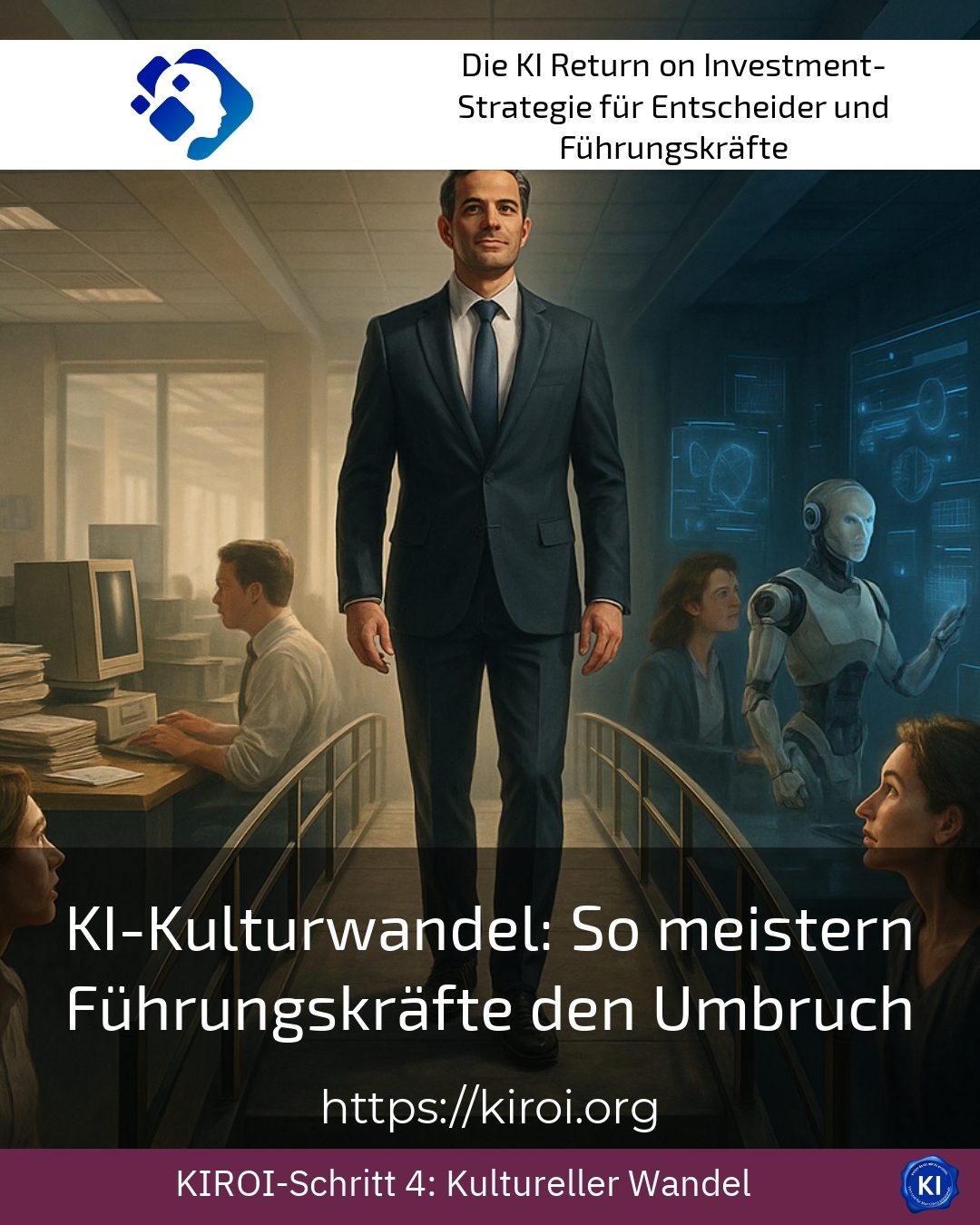
The answer rarely lies in the technology itself. It lies rather in the minds and hearts of the people who are tasked with working on these innovations on a daily basis. AI cultural change It presents leaders with completely new challenges. They must not only optimize processes but also reduce fears. At the same time, it is necessary to inspire enthusiasm and build competencies. This fundamental transformation affects every industry and every company. It fundamentally changes working methods, communication patterns, and decision-making processes. Anyone who wants to successfully manage this change needs more than technical expertise. They need emotional intelligence, strategic foresight, and the courage to change.
Understanding the hidden resistances in the transformation of AI culture
Many leaders underestimate the emotional reactions of their teams. They focus on training and forget the human component. Employees fear for their jobs. They worry about their relevance in an automated world. These fears often manifest as passive resistance.
For example, a medium-sized machine engineering company implemented an intelligent maintenance system. The technicians initially boycotted it. They preferred to rely on their own experience. Only intensive discussions revealed their real concerns. They feared that their decades of expertise would be undermined. A automotive supplier experienced a similar situation when introducing automated quality control. The experienced inspectors felt devalued. A logistics company had to learn that warehouse workers sabotaged new picking systems. They feared being replaced by robots.
These examples show a recurring pattern. Resistance rarely targets the technology itself. It stems from deeper needs for security and appreciation. Leaders must take this emotional level seriously. They should actively listen and engage in genuine dialogue. Only then can they build trust.
Best practice with a AIROI customer An internationally operating manufacturer of precision tools faced the challenge of introducing intelligent manufacturing systems. The management had already invested considerable sums in the technology. However, the acceptance among the skilled workers remained shockingly low. As part of the transruptive support, we jointly identified the true causes. The employees felt excluded from the decision. They had the feeling that their expertise no longer mattered. We developed a multi-stage engagement concept with regular feedback rounds. The most experienced professionals were trained to become internal ambassadors. They tested new features first and provided valuable feedback. After six months, the acceptance rate rose from initially twenty to over eighty percent. Productivity improved measurably and the turnover rate dropped significantly. What was crucial in this case was not the technology itself, but the consistent involvement of the people.
Re-defining leadership competencies
The AI cultural change it requires a completely new understanding of leadership. Classic hierarchies only work to a limited extent in dynamic environments. Leaders become facilitators and coaches. They create spaces for experimentation and learning. In doing so, they must also be able to admit their own uncertainties.
A chemical company completely redesigned its leadership team. Managers learned to delegate decisions more effectively. They trusted their teams with more responsibility. A packaging manufacturer introduced so-called innovation sprints. During these, management and employees worked together on an equal footing. A textile manufacturer established regular learning circles. Department heads exchanged their experiences in these. They also openly shared their failures with each other.
These changes require personal development. Many leaders report on internal conflicts. They are accustomed to providing answers. Now they are expected to ask more questions. This is at first confusing, but leads to better results. Teams become more creative and engaged. The identification with decisions increases significantly.
Communication as the Key to AI Culture Change
Successful transformation begins with clear and honest communication. Leaders must be able to communicate the vision in an understandable way. They should explain why changes are necessary. Specific examples from everyday work can help here.
An electronics manufacturer used storytelling for its communication. It told stories about employees who had positive experiences. A furniture manufacturer regularly invited open question sessions. The management also answered uncomfortable questions there. A food processor relied on visual communication. It showed in short videos how new systems make working life easier.
Transparency creates trust. Leaders should also talk about setbacks. They are allowed to admit when something doesn’t work as planned. This openness encourages employees to express their own concerns. This leads to valuable dialogues that drive change forward.
Strategically design competence development
Technological change requires new skills at all levels. Companies must systematically invest in further training. This involves more than just technical skills; soft skills such as adaptability are also becoming increasingly important.
A pharmaceutical company developed a comprehensive competency model. It defined what skills would be needed in five years. An equipment manufacturer implemented an internal mentoring program. Experienced employees supported colleagues in their learning process. A cosmetics manufacturer collaborated with universities for customized continuing education. It offered its teams professional certificate courses in parallel with their work schedules.
Learning must become a habit. Leaders should lead by example themselves. They can make their own learning processes transparent. This motivates teams to invest in their own development as well. Small learning units in everyday work support this process effectively.
Best practice with a AIROI customer A traditional metalworking company sought support in developing competencies. The workforce was predominantly over fifty years old and had a skeptical attitude towards technology. Traditional training formats had little effect in the past. In transruptive coaching, we developed a completely new approach. We first identified the informal opinion leaders within the teams. These were trained to become so-called learning mentors and received special appreciation. They supported their colleagues directly in the workplace. The learning content was divided into small, digestible units. Every week there was a new micro-training of a maximum of fifteen minutes. The learning mentors regularly collected feedback and adapted the content. After one year, the vast majority of the workforce mastered the new systems with great ease. The initial skepticism gave way to genuine enthusiasm for the new possibilities. What was crucial was the combination of personal guidance and practice-oriented learning offerings.
Adapting organizational structures to the changes
Rigid structures significantly hinder change processes. Companies need to become more agile and flexible. This applies equally to decision-making processes, team compositions, and processes. Leadership plays a central role in this process.
A plastics manufacturer partially broke through traditional departmental boundaries. He formed cross-functional project teams for important initiatives [1]. A building material manufacturer introduced flexible work models. Employees could switch between different projects. A beverage producer established an internal innovation incubator. There, small teams tested new ideas under protected conditions.
These structural changes require patience and perseverance. Not all experiments will be successful. Leaders should foster a constructive culture of error. From setbacks, much can be learned. The most important thing is to stay persistent and continuously improve.
Anchor sustainable change
True transformation takes time and perseverance. Rapid successes motivate, but long-term change requires more. Leaders must create systems that support change on a lasting basis. Clear goals and regular reflection [2] help with this.
A home appliance manufacturer introduced quarterly culture pulse measurements. It regularly surveyed how employees were experiencing the change. A steel manufacturer linked transformation goals to the remuneration system. Management was also measured on soft factors. A paper processor established a permanent transformation unit. This methodically and supportively accompanied all change projects.
The AI cultural change It is not a one-time project. It is a continuous process with no fixed end. Companies must become learning organizations. They should be able to continuously develop themselves. This ability becomes the decisive competitive advantage.
My AIROI Analysis
From my experience in guiding numerous transformation projects, I draw important insights. Technological change rarely fails due to the technology itself. It often fails due to a lack of cultural preparation and poor leadership skills. Executives regularly underestimate the emotional dimension of change processes. They invest a lot of money in hardware and software, but too little in people.
The most successful transformations are characterized by certain characteristics. They begin with honest communication and genuine participation by those affected. They take the concerns and fears of employees into account from the very beginning. They create safe spaces for experimentation and learning. They celebrate small successes and learn constructively from setbacks.
Leaders themselves must be willing to change. They cannot demand what they themselves do not practice. This role of role models is crucial for success. At the same time, they should seek support when necessary. Professional guidance can uncover blind spots and provide new impulses.
The change will not stop but will accelerate. Companies that invest in their transformation capabilities today will be successful tomorrow. Investing in people pays off in the long run. AI cultural change It is an opportunity for development at all levels.
Further links from the text above:
[1] Harvard Business Review: Organizational Transformation
[2] McKinsey: Insights into People and Organisational Performance
For more information and if you have any questions, please contact Contact us or read more blog posts on the topic Artificial intelligence here.








 Deutsch
 English (UK)