
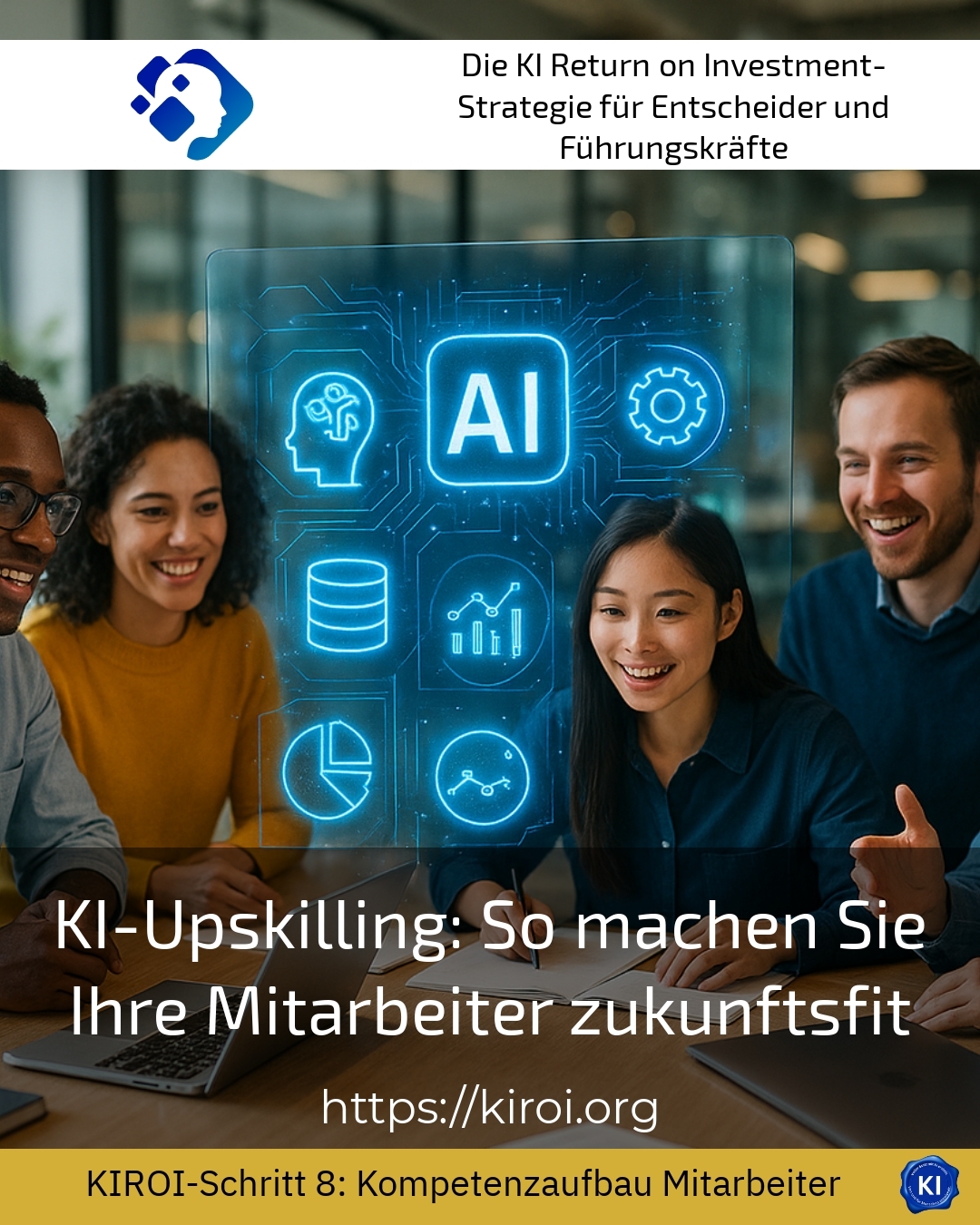
Digital transformation is changing workplaces at a rapid pace. Companies face the challenge of preparing their workforce for new demands. AI Upskilling: How to Make Your Employees Future-Ready – this question occupies managers in almost all economic sectors. Those who do not invest in the further development of their teams today risk losing out tomorrow. But how can change be achieved in concrete terms, and which steps lead to success?
Why competency development is becoming indispensable in the digital age
The world of work is undergoing a fundamental transformation. Automated systems are increasingly taking over repetitive tasks independently. At the same time, entirely new fields of activity and job profiles are emerging. Employees must continuously develop themselves. The ability for lifelong learning is becoming a key competency. Studies show that companies with a strong learning culture operate more successfully economically [1]. They attract talented professionals and retain them long-term. Furthermore, they react more flexibly to market changes.
The need for further training is growing exponentially, particularly in the field of intelligent technologies. Many employees feel overwhelmed by the changes. They require structured support and practical learning formats. This is where transruption coaching comes in, supporting teams in their digital transformation. Leaders often report uncertainty within their departments. They are looking for ways to reduce anxiety and build motivation. The right strategy makes the crucial difference.
Typical challenges with the introduction of new technologies
Many organisations underestimate the human factor in change processes. They invest in modern tools but neglect the training of their workforce. This leads to frustration and resistance at all levels. Production employees wonder if their jobs are at risk. Administrative staff worry about their relevance. Creative minds in marketing departments doubt their right to exist.
For example, a logistics company introduced automated route planning. Initially, the dispatchers felt overlooked and undervalued. It was only through intensive workshops that they understood the new possibilities. A financial service provider implemented intelligent analysis tools for credit checks. The clerks learned to critically question the recommendations. A retail company used chatbots for customer service. The service employees took on more complex consulting tasks and developed further.
AI Upskilling: How to make your employees future-ready with structured programmes
Successful qualification measures follow a well-thought-out concept. They begin with a thorough analysis of the current situation. What skills are already present, and where are there gaps? This inventory forms the basis for all further steps. Companies then define clear learning objectives and development paths. They take into account both technical and soft skills. This is because critical thinking and ethical reflection are gaining importance.
The learning formats should be diverse and practical. Online courses allow for flexible, self-paced learning. In-person workshops encourage direct exchange and collaboration. Mentoring programmes connect experienced experts with learners. Project-based work embeds learning into everyday tasks. A mechanical engineering company established internal learning circles on the topic of data analysis. An insurance company set up a digital skills laboratory for its employees. An energy provider created opportunities for experimental learning and innovation.
Best practice with a KIROI customer
A medium-sized production company with around 800 employees was faced with a major challenge. The management wanted to introduce intelligent systems for quality control. However, the workforce was highly sceptical about the changes. The employees feared for their jobs and did not feel involved. transruptions coaching supported the company over a period of nine months. Firstly, we conducted individual interviews with managers and team leaders. We identified the specific fears and resistance within the company. We then developed a customised training programme for various target groups. The production employees received practical training directly on the machines. The quality inspectors learnt to understand the new systems as support. Managers were trained and supported in change management techniques. After completing the programme, the participants reported increased self-confidence. Acceptance of the new technology increased significantly. Productivity improved by around fifteen per cent. The open communication culture that we established together was particularly important.
The role of leaders in the transformation process
Leaders significantly shape a company's learning culture. They must lead by example and demonstrate curiosity. Their attitude influences teams' willingness to change. Therefore, every successful transformation begins at the leadership level. Managers in retail companies learn to make data-driven decisions. Department heads in hospitals engage with digital patient records. Team leaders in agencies explore creative applications of intelligent tools.
Clients frequently report uncertainties when delegating tasks. They don't know which activities can be automated. They wonder how to motivate their teams. Transruption coaching provides impetus for constructively addressing these questions. It supports the development of individual leadership strategies. It assists leaders in communicating changes. This leads to viable solutions for complex situations.
Practical learning formats for different target groups
Not all employees have the same learning needs and backgrounds. Some prefer structured courses with clear guidelines. Others learn better through experimentation and trial and error. Still others need group interaction. Successful programmes consciously take these differences into account. They offer various entry points and opportunities for deeper learning. They enable individual learning paths within a common framework.
A pharmaceutical company developed a modular curriculum for various professional groups. The research department received training in data analysis and pattern recognition. Production learned how to handle predictive maintenance. Sales used intelligent tools for customer support. A telecommunications provider established an in-house academy with certified learning paths. An automotive supplier introduced regular innovation days for all employees. These examples demonstrate the diversity of possible approaches.
AI Upskilling: How to Future-Proof Your Employees with Measurable Results
The effectiveness of training measures should be regularly reviewed. Clear key figures help to make progress visible. They motivate learners and justify investments to management. Possible indicators include the number of completed learning modules and acquired certificates. The practical application of what has been learned in daily work also counts. Employee satisfaction with the offerings provides valuable insights.
A media company introduced quarterly skills reviews for all teams. A construction group linked learning progress to career development and remuneration. A management consultancy integrated further training into project work. These companies understood that learning is not a one-off measure. It is, rather, a continuous process. It requires attention, resources, and strategic direction.
Best practice with a KIROI customer
A service company in the financial sector approached us with a specific request. The HR department had noticed that many employees were avoiding new digital tools. The utilisation rates of the systems introduced fell far short of expectations. At the same time, pressure was growing from competitors who were digitising faster. The transruptions coaching initially analysed the reasons for this reluctance. We conducted focus groups with employees from various departments. It turned out that the original training courses were too abstract. The employees did not understand how the tools could improve their day-to-day work. Together, we developed a new concept with concrete use cases. Each department received customised workshops with real work examples. We established a system of internal ambassadors and multipliers. These supported their colleagues with questions in day-to-day business. After six months, the utilisation rate had tripled. Employees reported time savings and greater job satisfaction. The management was able to demonstrate the return on investment of digitalisation for the first time.
Overcoming resistance and establishing a learning culture
Change naturally elicits resistance, and that is completely normal. People cling to the familiar and shy away from the unknown. Successful transformations take these concerns seriously. They create safe spaces for questions and doubts. They celebrate small successes and make progress visible. A food manufacturer introduced regular exchange formats on the topic of digitalisation. A logistics service provider rewarded employees for completed further training. A bank established an internal innovation forum for new ideas.
Communication plays a crucial role in overcoming resistance. Transparency about goals and expectations builds trust. Honest information about potential impacts on jobs reduces anxiety. Transruption coaching supports organisations in developing suitable communication strategies. It assists with difficult conversations and helps to build bridges. This way, change succeeds together rather than against each other.
Long-term prospects for sustainable organisations
Staff qualification is not a one-off task, but an ongoing one. Technologies are constantly evolving, and new requirements are continually emerging. Companies must continuously adapt and develop their learning programmes. They need flexible structures that allow for rapid responses. One chemical group revises its curricula annually. A technology company integrates learning directly into everyday work. A retail group collaborates with universities for up-to-date content.
Investing in people pays off in the long term. Qualified employees are more motivated and productive. They identify more strongly with their employer. They bring in innovative ideas and drive improvements forward. AI Upskilling: This is how you make your employees future-proof – this approach secures competitiveness. It strengthens the employer brand and makes recruitment easier. It creates the foundation for sustainable business success.
My KIROI Analysis
The support provided to numerous organisations in their transformation projects has yielded important insights. The success of upskilling measures is significantly dependent on corporate culture. Technical training alone is not sufficient to bring about sustainable change. A holistic perspective that places people at the centre is required. The KIROI analysis shows that companies with a strong learning culture perform significantly better. They react more quickly to market changes and utilise new technologies more effectively. Their employees demonstrate higher engagement and lower turnover.
Organisations that treat learning as a strategic priority are particularly successful. They provide sufficient resources and create time to learn. They link skills development with career prospects and recognition. Leaders act as learners themselves and share their experiences. Transruption coaching can provide valuable impetus and structure processes. It helps to develop individual solutions and identify stumbling blocks. It supports implementation and ensures sustainable embedding.
The future belongs to organisations that see their workforce as their most valuable resource. The ability for continuous development will become the decisive competitive advantage. Companies that invest in the training of their employees today will be the winners tomorrow. The KIROI methodology offers a proven framework for this, with concrete recommendations for action.
Further links from the text above:
[1] McKinsey – Insights on Learning Culture and Company Success
For more information and if you have any questions, please contact Contact us or read more blog posts on the topic Artificial intelligence here.











 Deutsch
  English (UK)