
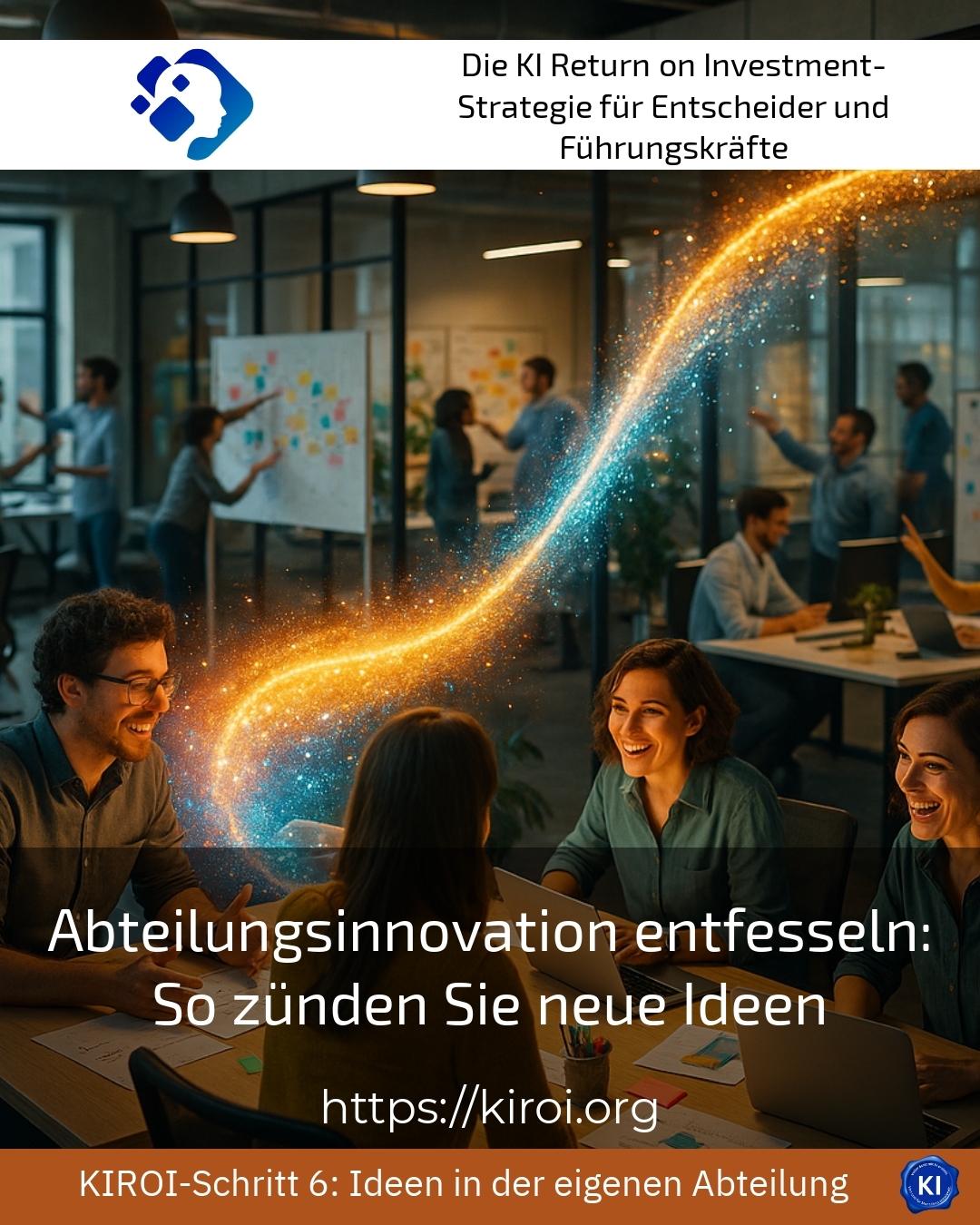
Imagine your department transforming overnight into an innovation hub, generating groundbreaking concepts. This scenario sounds like a dream, but it can become reality. Unleashing departmental innovation means releasing and systematically utilising hidden creative potential. Many leaders report similar challenges in their daily work. Employees possess enormous knowledge, but this knowledge often remains untapped. In this post, you will learn how to change this. You will discover tried-and-tested methods and concrete approaches for your organisation.
Unleashing the Fundamentals of Departmental Innovation
Innovation rarely arises by chance or spontaneous flashes of inspiration from individuals. It requires fertile ground, which must be systematically prepared. This ground consists of psychological safety, open communication, and clear structures. Leaders play a crucial role as enablers in this process. They create spaces where creativity can flourish.
A medium-sized manufacturing company introduced weekly idea sessions. Initially, participants were hesitant to submit their suggestions. After a few weeks, trust within the team grew significantly. Today, this department generates over twenty viable improvement suggestions per month. Another example comes from the financial sector, where a credit institution actively involved its clerks in process optimisation. The results exceeded all expectations of management. In the logistics sector, a shipping company implemented a digital suggestion system. Employees could submit their ideas anonymously and have them rated.
Overcoming cultural barriers
Many organisations struggle with deeply ingrained cultural obstacles. Hierarchical thinking blocks the free flow of ideas between levels. Fear of criticism prevents employees from voicing unconventional thoughts. However, these barriers can be dismantled step by step.
An insurance company established a mentoring programme between executives and rising talents. The younger employees brought fresh perspectives to established processes. At the same time, the experienced leaders learned to appreciate new viewpoints. In the healthcare sector, a clinic group opened its strategy meetings to nurses. The practical experience of these professionals significantly enriched strategic planning. A technology company conducted so-called reverse mentoring sessions. In these, younger employees coached their superiors on digital topics.
Best practice with a AIROI customer
An established company from the manufacturing sector faced a unique challenge. The innovative capacity of individual departments had been noticeably stagnating for several years. Management decided to seek guidance through transruptions coaching. In several workshops, we thoroughly analysed the existing communication structures together. It became apparent that valuable ideas were getting lost at middle management level. Employees had indeed developed creative solutions for existing problems, but clear channels were missing to transfer these ideas upwards. Together, we developed a three-stage escalation model for promising suggestions. Additionally, we implemented monthly cross-functional meetings between different specialist areas. The results became measurable within just a few months. The number of implemented improvement suggestions increased significantly by over sixty percent. Of particular note was the increased motivation of employees across all departments. Clients often report similar positive changes after our support.
Methods and tools to unleash departmental innovation
Creativity requires structure in order to be effective. This statement may sound paradoxical, but it reflects reality. Proven methods provide a framework that enables innovation. At the same time, they leave enough room for unconventional ideas.
The Design Thinking method has proven extremely effective across many industries [1]. An automotive supplier used this approach to develop new production processes. The interdisciplinary teams developed solutions that no one had expected. In retail, a department store chain relied on customer journey mapping. The insights led to fundamental improvements in the customer experience. A pharmaceutical company successfully implemented agile working methods in its research departments. As a result, development cycles were noticeably reduced by almost a third.
Using digital tools intelligently
Modern technologies offer numerous opportunities to support innovation processes. Collaboration platforms enable exchange across departmental and geographical boundaries. Artificial intelligence can provide valuable impetus for idea evaluation and prioritisation [2]. Nevertheless, humans remain at the centre of all creative processes.
A group of insurers introduced a digital innovation platform for all employees. Within a year, over three thousand ideas were submitted and evaluated. In mechanical engineering, a traditional company used virtual reality applications for prototyping. The teams were able to visualise new concepts before physical models were created. A telecommunications provider relied on AI-powered trend analyses for its product development. The results were directly incorporated into the strategic planning of the departments.
Putting people at the centre
Technology and methods alone do not create sustainable innovation in organisations. The crucial factor remains the human being with their skills. Employees bring different perspectives, experiences, and talents. This diversity needs to be harnessed and specifically promoted.
An energy provider launched an internal innovation programme for all employees, without exception. Everyone from administration to the technical department was able to participate. The best ideas received resources for implementation as pilot projects. In the banking sector, an institution established so-called innovation ambassadors in each department. These individuals collected ideas and networked creative minds. A chemical company introduced sabbaticals for particularly committed innovators. These individuals were able to concentrate fully on their project ideas for several months.
Best practice with a AIROI customer
A facility management services company was seeking new impetus. The sector is traditionally considered to be uninnovative and conservative. Transruption coaching worked intensively with the management team for a period of six months. We began by systematically analysing the existing skills and interests of the employees. In doing so, we discovered hidden talents that had not been utilised until then. For example, a caretaker with an affinity for IT developed an app for building management. A cleaner with organisational skills fundamentally optimised the deployment planning. We established regular innovation workshops in which all hierarchical levels participated. The atmosphere was deliberately informal, in order to lower inhibitions. The management team participated as equal partners and listened actively. After the coaching phase, the company culture had changed sustainably. Employees were more actively involved and identified more strongly with the company. Staff turnover decreased, while customer satisfaction measurably increased.
Unleashing Leadership as a Catalyst for Departmental Innovation
Leaders largely determine whether innovation thrives or withers in their department. Their behaviour sends daily signals to employees about desired conduct. An open, curious attitude is contagious to the entire team. Conversely, excessive control can suffocate any creative spark.
The managing director of a medium-sized plant engineering company holds monthly breakfast meetings. During these meetings, he has informal discussions with employees from various departments, gaining valuable insights into potential improvements of all kinds. A department head at a health insurance company established a culture of learning from mistakes in her department. Failed experiments are analysed but not punished or stigmatised. In retail, a branch manager introduced daily ten-minute stand-up meetings. The brief sessions encourage the quick exchange of ideas and observations.
Ensuring the sustainability of innovation processes
One-off innovation initiatives often fizzle out after a short time without sustainable impact. Lasting changes require systematic integration within the organisation. Processes, incentive systems, and evaluation criteria must be adapted. Only then can a genuine, self-sustaining innovation culture emerge.
A construction company integrated innovation goals into annual employee appraisals. Since then, the achievement of these goals has been incorporated into the variable remuneration of all employees. In the grocery retail sector, a supermarket chain consistently linked career development with innovation engagement. Employees with successful improvement suggestions are preferentially offered development opportunities. A software company reserves twenty percent of working time for independent projects [3]. This so-called "Freetime" has already resulted in several market-ready products.
Measurement and continuous improvement
What is not measured is difficult to improve or optimise. Key figures help to make progress visible and to communicate it. However, they must not become an end in themselves and limit creativity. The balance between measurement and freedom requires the tact of those in charge.
An electronics manufacturer systematically records the number of ideas submitted per department. In addition, the implementation rate and economic impact are documented. In the hospitality sector, a hotel chain measures the time from an idea to its implementation. This lead time was halved within a year. A logistics service provider conducted regular innovation audits with external consultants. The results feed into the company's strategic development.
Best practice with a AIROI customer
A family firm in the metal processing sector wanted to professionalise its innovation processes. Up until then, improvements had arisen rather by chance and had not been systematically encouraged. As part of the transruption coaching, we jointly developed a tailor-made key performance indicator (KPI) system. This system takes into account both quantitative and qualitative aspects of innovation. The number of suggestions submitted only represents part of the overall picture. The quality of the ideas and the involvement of different departments are equally important. We implemented a quarterly review, during which the results are communicated transparently. The best ideas receive recognition in the form of small bonuses and attention. Even more important was the introduction of a structured feedback process for all those who submitted ideas. Every employee finds out what is happening with their idea and why. This transparency enormously increased the motivation and commitment of all those involved. The company management is enthusiastic about the positive development in all areas.
My AIROI Analysis
Accompanying numerous organisations on innovation projects has given me valuable insights. Innovation is not a matter of chance, but the result of systematic work and conscious decisions. Leaders must create the framework in which creativity can flourish. At the same time, they must not make this framework too narrow or control it excessively.
The greatest successes I observe are where people are truly at the centre. Technology and methods are important tools, but not panaceas for innovation. The attitude of leaders and their readiness to rethink things are crucial. Unleashing departmental innovation only succeeds if all involved parties want to pull together.
Executives often come to me struggling with similar challenges and seeking support. They report stagnant processes and a lack of creativity within their teams. Transruption coaching offers guidance that can support sustainable change. We provide inspiration and assist with the implementation of concrete measures in everyday work.
Experience shows that cultural change takes time and patience. Quick successes are possible, but sustainable transformation requires perseverance. Organisations that consistently pursue this path will benefit enormously in the long term. They will become more adaptable, more attractive to talent, and more economically successful.
Further links from the text above:
[1] IDEO Design Thinking
[2] McKinsey Digital Insights on AI and Innovation
[3] Harvard Business Review – Innovation
For more information and if you have any questions, please contact Contact us or read more blog posts on the topic Artificial intelligence here.









 Deutsch
  English (UK)