
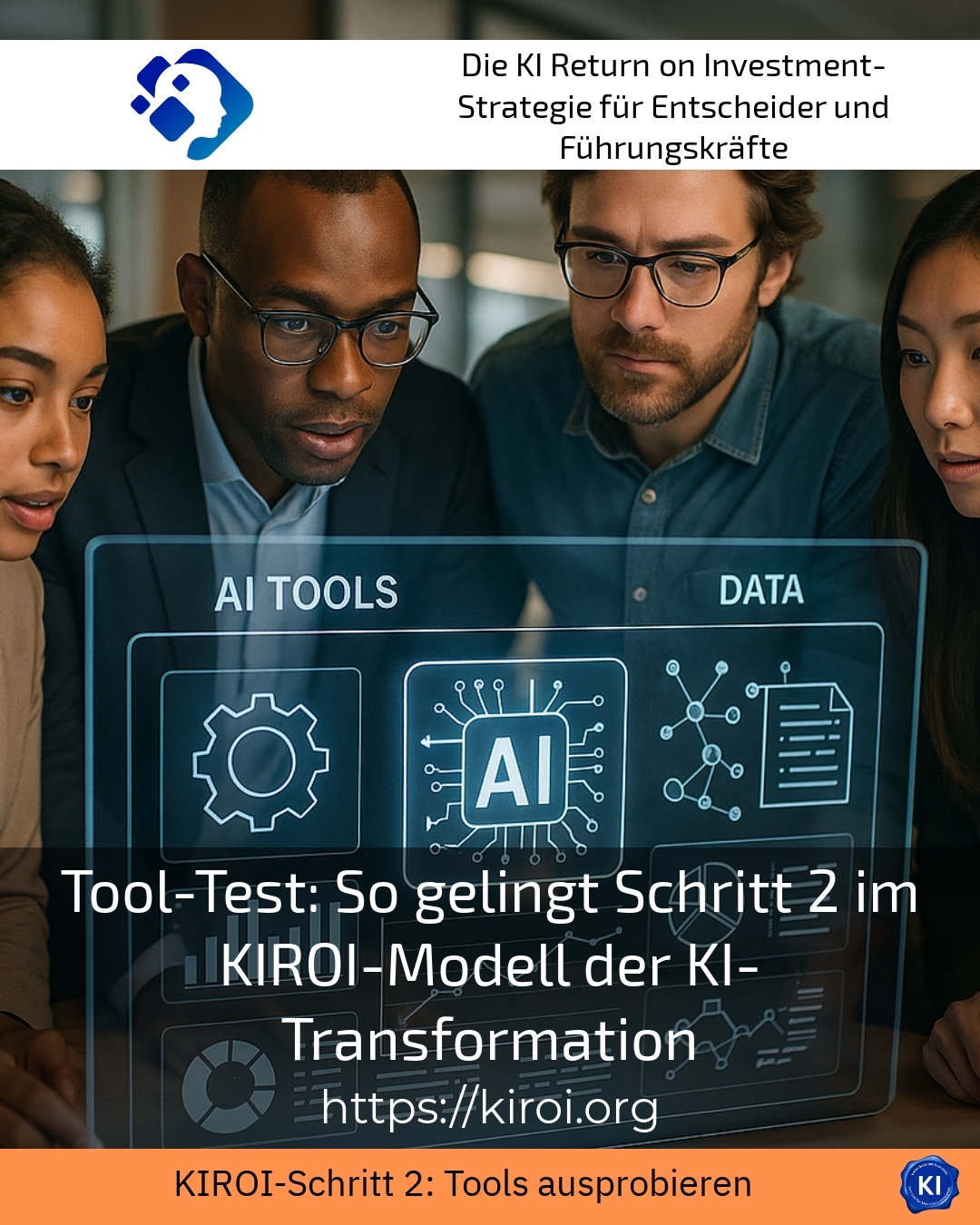
The term Tool test describes a central phase in numerous transformation processes, particularly within the KIROI model. Step 2, the tool test, focuses on the targeted testing and evaluation of technologies to ascertain which tools can effectively support the company. This process represents an essential decision-making stage and forms the basis for the later scaling and integration of innovations.
The meaning of tool tests in the KIROI model
The tool test is not just a technical test – it combines practical application with strategic reflection. In companies across a variety of industries, such as mechanical engineering, energy supply, or the service sector, this phase is used to ascertain which solutions prove to be pragmatic and effective. Pilot projects and proof-of-concepts are important methods for making technological innovations tangible.
For example, a manufacturer of automation technology used various sensor solutions in tool testing to assess their data quality and reliability in actual operation. In property management, companies experimented with AI-powered software tools for automated energy consumption analysis. Service organisations, on the other hand, tested chatbots and virtual assistants to improve customer communication.
Concrete steps for a successful tool test
The execution of a tool test follows a clearly structured process that ensures all relevant aspects are considered:
- Selection of suitable tools The selection is guided by the goals defined in the first step. For example, a logistics company tested various tracking systems for their compatibility with existing processes.
- Practical testing Tools used must be tested under realistic conditions, such as a marketing agency applying new automation tools for campaign planning directly within a client project.
- Gather feedback Employee experience is crucial. For example, training workshops in the healthcare sector allowed for valuable feedback concerning both usability and integration.
- Review and Adjustment Results are systematically evaluated and the tools are adjusted or replaced with alternatives as needed.
Case studies for tool testing in various industries
The tool test supports diverse industries in their digital advancement. The following examples demonstrate its practical relevance:
BEST PRACTICE with one customer (name hidden due to NDA contract) A medium-sized IT company conducted a tool test for collaborative platforms. The result was the introduction of a system that significantly improved cross-departmental communication and advanced projects agilely. The early involvement of all stakeholders was crucial in creating acceptance and reducing inhibitions.
In the automotive industry, tool testing is often used to evaluate new software for vehicle integration. An OEM tested various AI-powered diagnostic tools to make maintenance processes more efficient. In parallel, a plant constructor used test runs with digital twins to simulate production lines and visualise potential improvements.
The tool test is also used in the financial services sector to test compliance tools and risk management systems under real-world conditions. This gave employees the opportunity to test innovative solutions first-hand and to assess their contribution to process security.
Tips for a successful tool test
- Key persons early on AI Champions or involve project ambassadors who convey technical expertise and enthusiasm.
- Transparent communication about goals, progress, and challenges builds trust and fosters acceptance.
- The tests should not occur in isolation but be embedded within coordinated governance structures in order to minimise risks and ensure data quality.
- Regular reflections and adjustments help to dynamically adapt tool testing to changing requirements and insights.
Tool-Tests as a bridge to sustainable transformation
The tool test is more than a technical phase. It creates a common basis of experience within the company and supports the transformation of culture and working methods. This forms the foundation for the further steps in the KIROI model, where innovations are scaled and sustainably anchored.
Companies that carefully plan this step create momentum for a culture that embraces new ideas. Through tool testing, employees discover new possibilities and gain confidence in using digital tools. This allows the AI transformation to be experienced as a continuous process that is accompanied and supported.
My analysis
The Tool test The KIROI model represents a crucial stage that makes technological innovations tangible and assessable. Through practical pilot projects and the involvement of all stakeholders, valuable insights and a shared understanding of the way forward are generated. The active involvement of employees and a clear communication strategy are key factors for success. Companies benefit from a systematic tool test, which not only checks tools but also supports the culture of change. This step guarantees a well-founded basis on which further innovations can be sustainably designed.
Further links from the text above:
[1] AI for Digital Transformation (IBM)
[2] A Small Guide to AI Transformation (SpringerProfessional)
[3] Shaping KI Transformation Successfully
[4] AI Strategy and Culture: How to Succeed with Your AI Transformation (MHP)
[5] AI Strategy and Culture: Transformation Starts with People (Handelsblatt)
For more information and if you have any questions, please contact Contact us or read more blog posts on the topic Artificial intelligence here.











 Deutsch
  English (UK)