
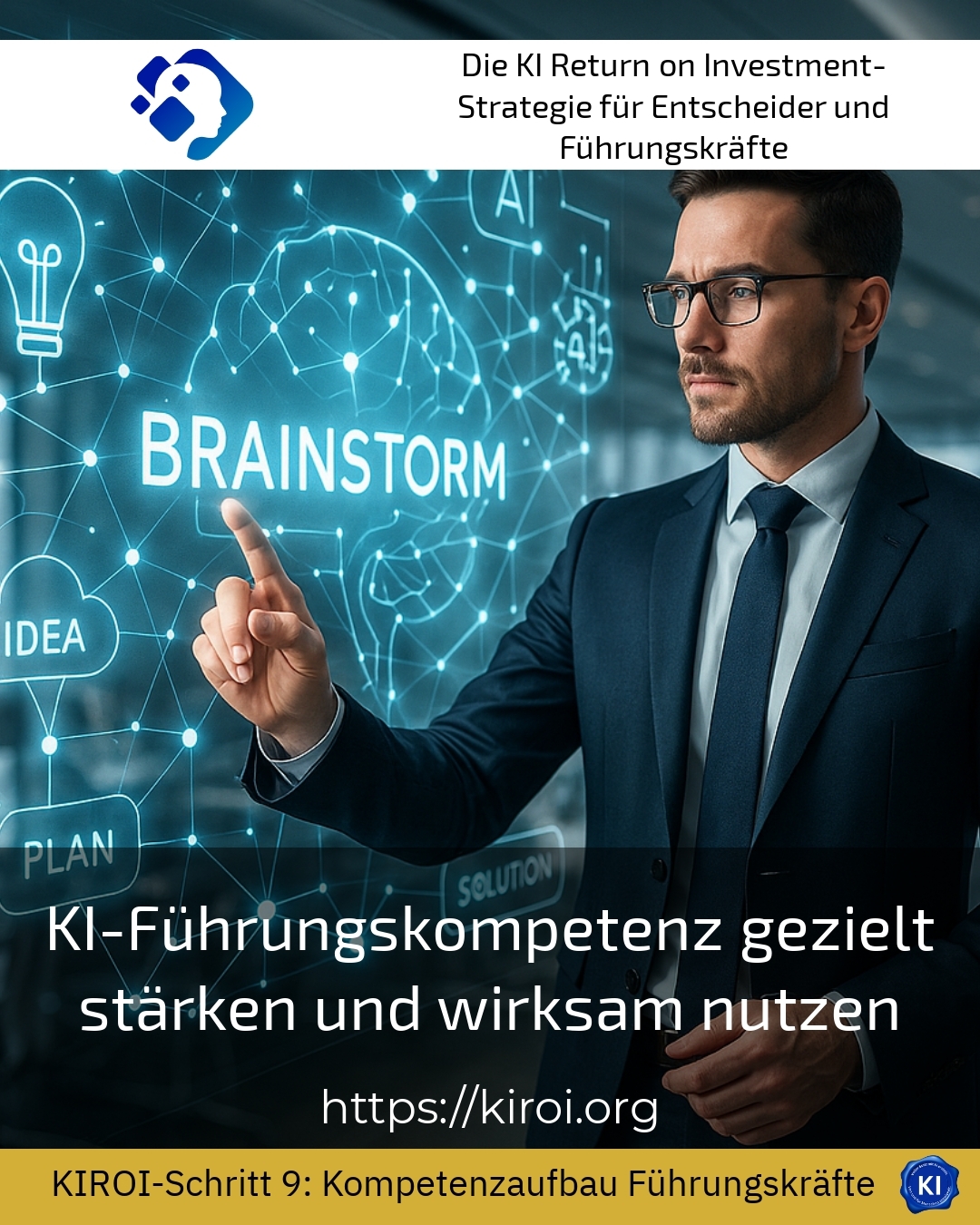
Imagine walking into your office tomorrow and all decision-making processes have fundamentally changed. The way teams collaborate, how strategies are developed, and how leadership is practised follow entirely new rules. This reality is no longer a thing of the future. Today, leaders are faced with the challenge of, Strengthening AI leadership skills deliberately to have to. At the same time, they are looking for ways to deploy these newly acquired skills effectively. The question is no longer whether intelligent systems will permeate everyday working life. Rather, the crucial question is who will actively shape the transformation and who will be passively at its mercy.
Why traditional leadership approaches are reaching their limits
The classical management methods were developed for a world that no longer exists in that way. Hierarchical decision-making paths and long-term planning cycles no longer fit the dynamic reality. Many decision-makers report increasing overload in the face of the flood of information. They have to process volumes of data daily that previously would have taken weeks. This often creates uncertainties because tried and tested leadership tools no longer work.
A medium-sized engineering company recognised this problem early on. The management board had difficulty identifying relevant market trends in good time. At the same time, the heads of department complained about a lack of transparency in communication. Another example shows a family-owned business in the logistics sector. There, outdated decision-making structures led to considerable losses in efficiency. The executives spent more time procuring information than on strategic tasks. A regional energy supplier experienced a similar situation. The complexity of the energy transition clearly overwhelmed the established management processes.
Targeted strengthening of AI leadership skills through systematic further development
The targeted development of new leadership skills requires a structured approach. It is not enough to attend individual workshops or read professional articles. Rather, it requires a continuous engagement with the possibilities and limitations of intelligent systems. Transruption coaching supports leaders in shaping this transformation sustainably. This guidance encompasses both the technological and human aspects of change.
A sales director from the consumer goods industry sought support with the integration of new analytics tools. He wanted to understand how data-driven insights could improve his leadership decisions. A human resources manager from the healthcare sector came with similar questions. She needed inspiration for redesigning recruitment processes. A production manager from the automotive supply industry, in turn, focused on quality management. He was looking for ways to incorporate predictive analytics into his leadership routines.
Best practice with a AIROI customer
A medium-sized manufacturer of industrial components was facing significant challenges in the field of strategic planning. The executive board had recognised that traditional forecasting methods were increasingly delivering unreliable results. Market fluctuations had become too complex to capture with conventional approaches. As part of the support provided by transruptions coaching, the management team developed a new understanding of data-driven decision-making processes. The leaders learned how to use intelligent analysis tools to support their strategic considerations. The aim was not to replace human expertise, but to complement it sensibly. The team gradually implemented new routines for weekly strategy meetings. The quality of discussions improved significantly because sound data was available. Decision-making speed increased, whilst at the same time the error rate in important strategic decisions decreased. Today, the managers report increased confidence in their own competencies. They view the technology as a tool that supports their leadership strength.
The human dimension at the heart of change
Despite all technological momentum, humans remain the decisive factor. Leadership continues to mean inspiring, developing and guiding people. Interpersonal skills are actually gaining in importance in an increasingly technological working world. Empathy, communication skills and emotional intelligence cannot be automated. This is precisely where the great opportunity lies for leaders who are willing to evolve.
A team leader from the financial sector came with concerns regarding the motivation of his employees. He feared that technological changes would trigger anxiety. The coaching helped him to establish an open communication culture. A head of department from retail was looking for ways to lead her team through phases of change. She wanted input on how she could build trust and use resistance constructively. A managing director from the construction industry needed support in realigning his leadership culture. He realised that hierarchical structures had to give way to more flexible models.
Targeted strengthening and practical application of AI leadership skills
The path to advanced leadership skills begins with an honest stocktake. Where do you currently stand in your understanding of intelligent systems? What points of contact do you already have in your daily work? This self-reflection forms the basis for targeted development steps. In the next step, it is important to create spaces for experimentation. Pilot projects make it possible to test new ways of working with low risk and to gather valuable experience.
A marketing director in the tourism industry started with a small analysis project. He wanted to understand customer behaviour better and used simple analysis tools for this purpose. The insights gained fundamentally changed his perspective on data-driven leadership. A call centre manager began by optimising call scripts. She used text analytics to identify successful communication patterns. An IT project manager experimented with automated status reports for his team. As a result, he gained valuable time for strategic tasks and personal conversations.
Best practice with a AIROI customer
A regional retail chain with multiple branches was looking for ways to better support its store managers in making strategic decisions. Head office had noticed that the quality of local decisions varied greatly. Some branches developed brilliantly, while others stagnated despite similar underlying conditions. Transruptions coaching initially accompanied an analysis phase in which the different management styles were examined. This revealed that successful store managers intuitively paid attention to certain data patterns that the others missed. On this basis, the company developed a support system for all managers. The store managers received weekly prepared key figures with concrete courses of action. The training courses focused on the interpretation of this information and the derivation of suitable measures. After six months, the performance gap between the branches had narrowed significantly. The store managers felt more confident in their decisions and independently developed further application possibilities. The project became an internal role model for further digitalisation initiatives.
Treating resistance as a development opportunity
Change processes naturally generate resistance, and that is completely normal. This resistance contains valuable information about the needs of those affected [1]. Managers who take objections seriously build trust and increase acceptance. It helps to talk openly about fears and uncertainties. Many employees fear becoming redundant through automation.
A head of department from the insurance industry experienced significant resistance when introducing new analysis systems. His long-serving employees felt their expertise was no longer valued. Through intensive one-to-one discussions and team meetings, he was able to defuse the situation. A nursing service manager encountered similar concerns within her team. The documentation requirements had changed, and many employees felt overwhelmed. She used the resistance as a starting point for comprehensive process optimisation. A plant manager from the chemical industry recognised valuable pointers regarding implementation problems in the objections raised by his shift supervisors.
How AI leadership skills can be targeted and sustainably strengthened
Sustainability is achieved through continuous learning and regular reflection [2]. It is not enough to acquire new knowledge just once. Technology is evolving rapidly, and with it, the requirements for leaders are also changing. Establish fixed learning routines in your daily work. Set aside time each week to engage with new developments and their implications.
A managing director from the trades established a monthly innovation breakfast with his leadership team. At this informal meeting, new technologies are discussed and potential applications are explored. A hospital director introduced a mentoring programme in which tech-savvy junior staff shadow experienced managers. A regional manager from the banking sector organises regular learning journeys to innovative companies [3]. These excursions provide valuable impetus while simultaneously strengthening team cohesion.
The role of transruption coaching in transformation
Transruptions-Coaching positions itself as continuous accompaniment for transformation projects relating to new technologies. The support goes beyond traditional consulting and incorporates the personal development of leaders. The focus is not on imparting ready-made knowledge. Rather, it is about developing individual solutions for specific challenges together.
Clients frequently report increased self-confidence when dealing with technological changes. They particularly appreciate the combination of a strategic perspective and practical implementation support. Working on concrete projects enables immediate experiences of success and sustainable learning. A board member from the energy sector used the support for a comprehensive transformation programme. A female managing director from the media sector received assistance with the realignment of her management team. An owner of several catering businesses received impetus for the digitalisation of his locations.
My AIROI Analysis
The systematic development of leadership competence in the context of intelligent systems is no longer an option. It is a strategic necessity for all those who wish to lead successfully in the future. The good news is that this competence can be learned and effectively built up through targeted guidance. The bad news for those who hesitate is that the competition will not wait and is already building advantages.
From my experience working with numerous leaders across various industries, certain patterns of success emerge. Those who approach the topic with openness and curiosity develop significantly faster. They understand technology as a tool rather than a threat to their position. At the same time, they do not lose sight of people and consciously strengthen their interpersonal skills. This combination of technological understanding and human leadership is what distinguishes successful transformation leaders from those who are left behind.
The AIROI methodology provides a structured framework for this development. It combines strategic planning with practical implementation and personal reflection. Managers who adopt this approach report sustained improvements in results. They make more informed decisions in less time and guide their teams through change with greater confidence. Investing in one’s own professional development pays off in many ways. It strengthens personal resilience and adds value to the organisation as a whole.
Further links from the text above:
[1] Harvard Business Review – Change Management
[3] World Economic Forum – Future of Work
For more information and if you have any questions, please contact Contact us or read more blog posts on the topic Artificial intelligence here.








 Deutsch
  English (UK)