
Culture transformation is a crucial process that helps organisations systematically and purposefully change their corporate culture. This change is essential to remain competitive in a rapidly changing world and to ensure long-term success. Ongoing digitalisation and agile transformations challenge organisations to realign their cultures in order to foster innovation and collaboration[2].
Why is cultural transformation important?
Companies that do not adapt their culture risk being left behind in a dynamic market environment. Successful cultural transformation not only promotes adaptability but also strengthens employee engagement and performance[2]. Values and behaviours that are lived within the organisation are crucial for the long-term balance between organisational and interpersonal actions[2].
Analysis of the current culture
The process of cultural transformation begins with an analysis of the current culture. A corporate culture audit is carried out to understand existing values and behaviours[2]. This step is crucial for defining objectives and values that should be closely aligned with the company's strategic goals[2].
BEST PRACTICE with one customer (name hidden due to NDA contract)A company from the technology sector conducted a comprehensive audit to understand existing values and behaviours. This helped to set clear objectives for cultural transformation and actively involve employees in the process.
Implementation of the new culture
The implementation of the new culture requires the active participation of leaders and employees. They must understand the goals and value of the change and actively contribute to it[2]. Good communication is key to successful culture transformation, as it fosters trust and collaboration within the team[5].
Culture transformation in practice
An important aspect of cultural transformation is the adaptation of HR processes such as employee selection, remuneration and performance appraisal systems, and promotion criteria. These processes must be reoriented to promote the desired values and competencies within the company.
BEST PRACTICE with one customer (name hidden due to NDA contract)A company from the finance sector adjusted its remuneration systems to focus more on teamwork and innovation. This led to a significant increase in employee satisfaction and innovation potential.
Leaders as role models
Leaders play a central role in cultural transformation. They must act as role models and actively demonstrate the new values and behaviours.[1] Through individual and team coaching, leaders can further develop their skills and reduce barriers that stand in the way of implementing the new culture.[1].
BEST PRACTICE with one customer (name hidden due to NDA contract)A company in the healthcare sector implemented a comprehensive leadership coaching programme. This helped to establish a culture of open communication and respect, which positively impacted patient care.
Continuous adjustment
A cultural transformation is not a one-off process, but requires continuous adjustments and reviews. Companies must be prepared to constantly reflect on and adapt their culture to meet changing market conditions[4].
My analysis
Overall, cultural transformation is a crucial step for companies to achieve long-term success. By actively involving leaders and employees, and continuously adapting the company culture, organisations can increase their competitiveness and adapt to changing market conditions.
Further links from the text above:
For further information on culture transformation, you can consult the following sources:
– Culture transformation – 4 steps and 4 interconnections
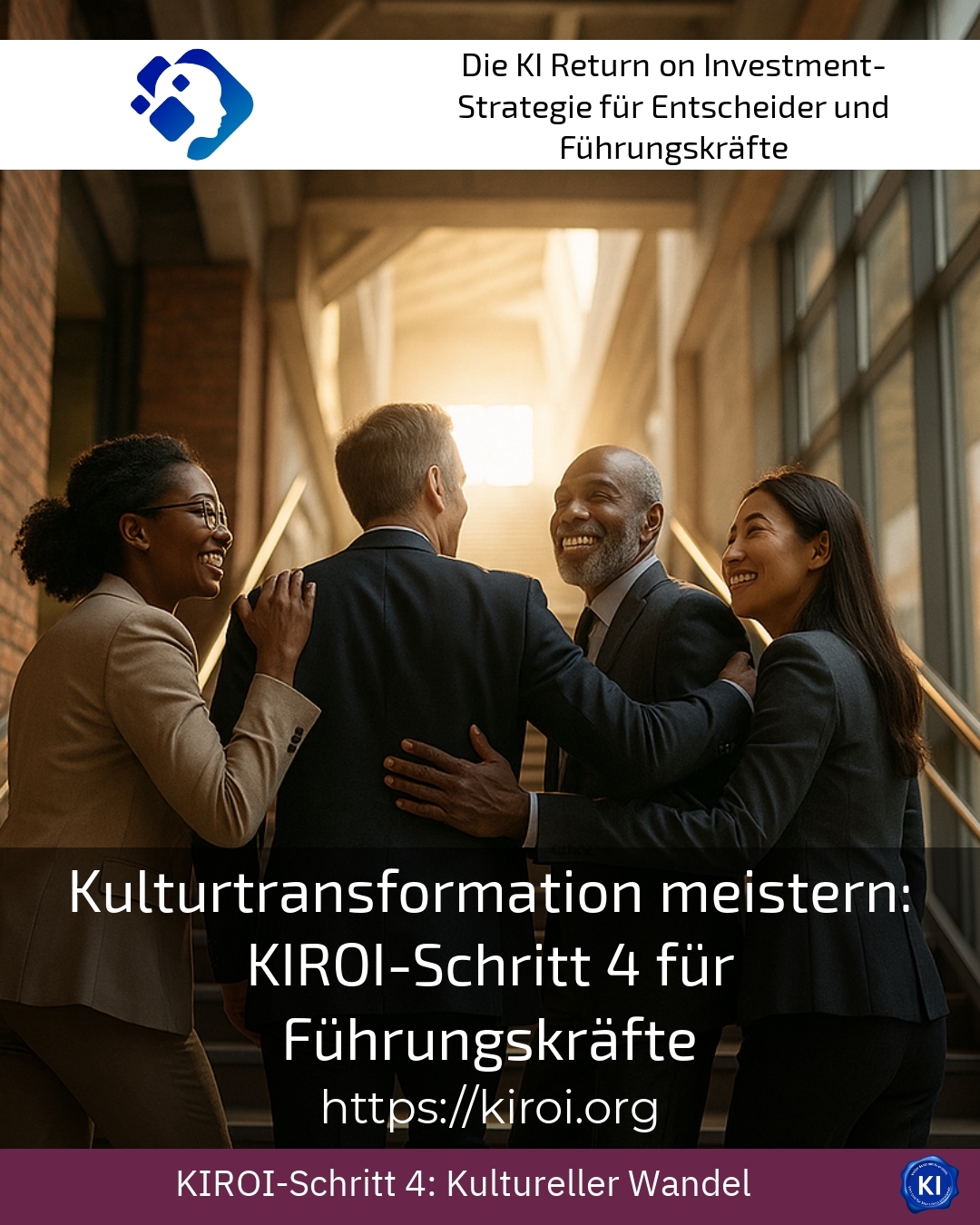
– Mastering Culture Transformation: KIROI Step 4 to Success
– Conscious culture transformation
For more information and if you have any questions, please contact Contact us or read more blog posts on the topic Artificial intelligence here.











 Deutsch
  English (UK)