
Why do 70 percent of transformation projects fail – and is it really the employees who are allegedly resisting change?
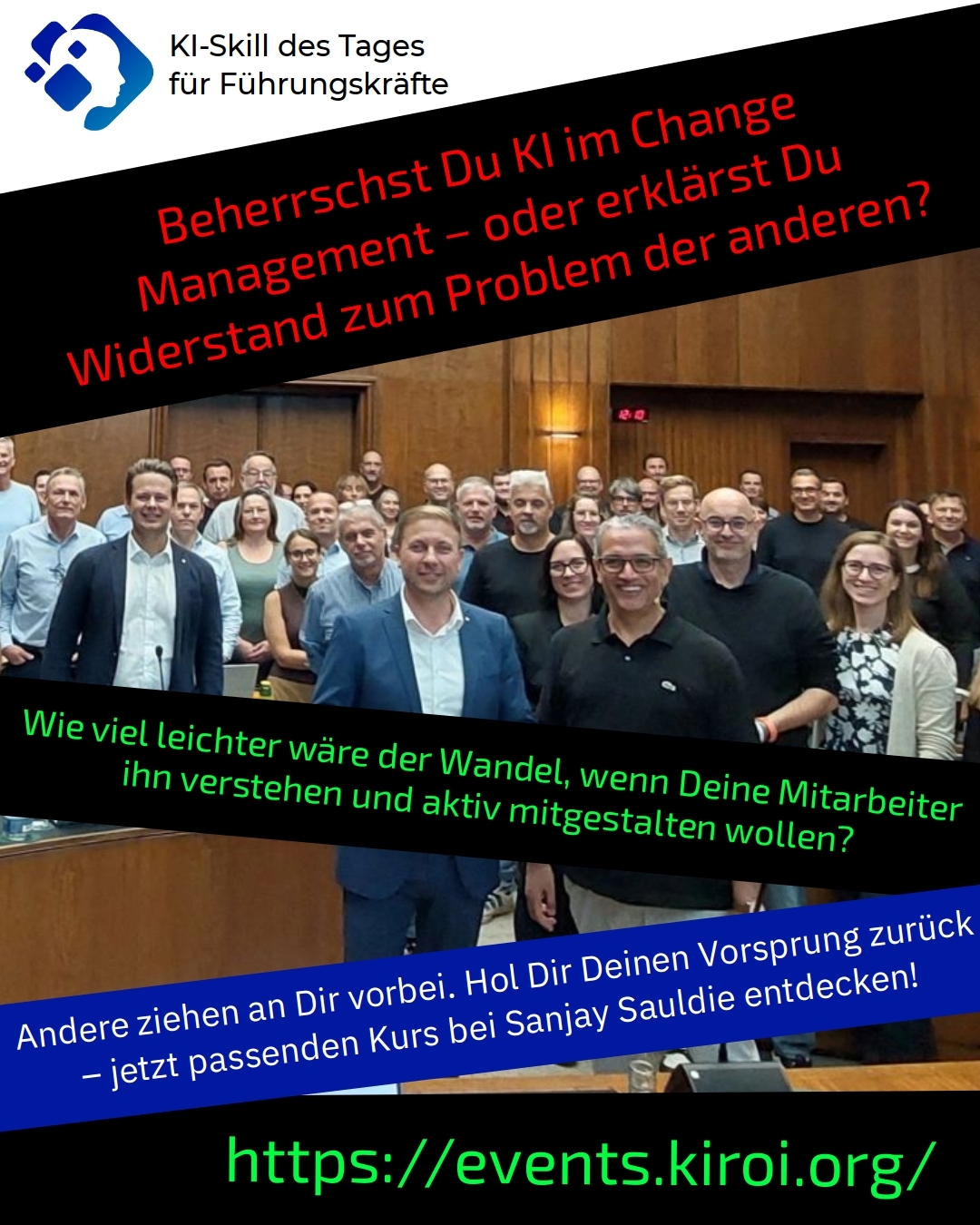
This provocative question concerns executives, project managers, and consultants alike, because it touches a sensitive point in almost every organization. If you’re wondering whether you AI in change management Whether you truly master it or simply explain resistance as the problem of the other party, you are exactly right here. The reality shows a frightening pattern: Many decision-makers blame the failure of change processes on a lack of readiness on the part of the workforce, instead of critically questioning their own approach. The key to successful transformation lies not in overcoming resistance, but in its intelligent use as a valuable source of information for better decisions.
The uncomfortable truth about resistance in organizations
In production companies, we witness daily how new technologies are to be introduced. For example, a machine manufacturer implements intelligent systems for predictive maintenance. The experienced technicians react skeptically and are quickly labeled as „resistant to change.“ While often expressing legitimate concerns regarding data quality or process integration, they often signal justified reservations regarding data quality or process integration. A logistics service provider implements automated route planning and faces rejection from dispatchers. Instead of incorporating their decades of experience, they are perceived as a brake. An automotive supplier fully digitalizes its quality control and ignores the objections of the inspectors.
These examples illustrate a fundamental misunderstanding that prevails in many industries and condemns transformation projects to failure. Resistance is not a shortcoming of the employees; it is often a symptom of inadequate communication, insufficient involvement, or actual weaknesses in the planned approach. If you AI in change management If you want to use intelligent systems successfully, you must first understand that intelligent systems only work as well as the people who use them and develop them.
View resistance as a resource instead of an obstacle
A chemical company wanted to completely automate its laboratory processes and encountered massive resistance from the lab workers. Instead of ignoring this, the management systematically analyzed the objections. It turned out that certain exceptional situations were not covered by the planned automation. Integrating this expert knowledge significantly improved the final result. A pharmaceutical manufacturer experienced a similar situation when introducing intelligent documentation systems. A steel manufacturer used the skepticism of its smelters to refine its quality forecasting system.
Best practice with a AIROI customer
A medium-sized manufacturing company with around 800 employees faced the challenge of modernizing its production planning. The first implementation phase failed miserably because management interpreted the resistance of the production managers as blocking behavior. In a transruptive coaching session, we jointly analyzed the actual reasons for the rejection. It turned out that the production managers possessed valuable knowledge about machine characteristics that was not reflected in the new system. We developed a structured process to integrate this expert knowledge into the intelligent algorithms. The production managers became active participants in the solution rather than passive recipients. After six months, the company achieved a planning accuracy of over 94 percent. Employee satisfaction increased measurably because people felt valued. This example impressively shows how resistance can become the most valuable resource in the transformation process.
Why classic change approaches fail in change management when it comes to AI
Traditional methods of change management date back to a time when technology cycles were significantly longer. A textile company could previously introduce a new web machine and had years to transition. Today, the technological landscape changes in months rather than in decades. A packaging manufacturer must continuously integrate new materials and processes. A plastics processor faces constantly changing requirements. A metal manufacturer sees customer expectations rapidly change.
This acceleration requires fundamentally new approaches to transformation. Linear models with defined phases are too limited because reality has become more complex and dynamic. Intelligent systems can support this by recognizing patterns in employee feedback, identifying potential resistance early on, and proposing customized communication strategies. For example, an electronics manufacturer uses sentiment analysis to capture the mood in teams. A furniture manufacturer relies on automated surveys with intelligent analysis. A food service company uses chatbots for anonymous feedback.
Re-defining the role of AI in change management
Intelligent technologies offer enormous potential for shaping change processes. They can analyze large amounts of data from employee surveys and uncover correlations. They enable personalized learning paths for different target groups within the organization. They support executives in identifying key individuals and opinion leaders. A construction company uses these opportunities to precisely identify training needs. An energy provider relies on intelligent systems for planning communication measures. A water treatment facility uses automated analyses for stakeholder management.
At the same time, we must guard against a dangerous illusion. No technology in the world can replace the human aspect of change. Trust is built through authentic communication, not through algorithms. Acceptance grows through genuine participation, not through optimized presentations. Engagement develops through appreciation, not through performance dashboards. Take your existing skills to the professional level – as 8,000 people from over 500 companies have already done with Sanjay Sauldie! events.airoi.org You can find further information and dates here.
Practical strategies for successful transformation
A mechanical engineering company developed an innovative approach for its digitization initiatives. It established so-called „resistance dialogues“ as a permanent component of each project phase. Leaders were trained to systematically document and evaluate objections. Critical voices received explicit recognition for their contributions to improvement. A toolmaker went one step further and established a „sceptic board“. This group of constructively critical employees examined all transformation initiatives for weaknesses. An equipment manufacturer integrated resistance analyses into its project management framework.
These examples show that successful transformation is a matter of attitude. Those who view resistance as a valuable signal gain insights that would otherwise be inaccessible. Those who take objections seriously build trust and increase acceptance. Those who involve critics become ambassadors for change. An equipment manufacturer reports significantly shorter implementation times since this changeover. A material handling equipment manufacturer records fewer repairs on new systems. A printing machine company reports higher utilization rates for its digital tools.
Best practice with a AIROI customer
An international supplier to the automotive industry wanted to introduce intelligent forecasting systems for its sales planning. The sales managers of various country organizations showed massive reservations about the project. In transruptive coaching, we identified that the fear of losing control and meaning was the real drivers of the resistance. Together, we developed a communication strategy that addressed these concerns without trivializing them. The sales managers were appointed as „AI coaches“ and were tasked with training the algorithms with their market knowledge. This role change transformed potential opponents into active supporters of the project. The company achieved its forecast targets three months earlier than originally planned. The collaboration between the country organizations improved significantly as a welcome side effect. Today, the project is considered internally as a benchmark for successful transformation.
Self-reflection as a key competence for AI in change management
The most important question that every leader should ask is not „How do I overcome resistance?“ but „What can I learn from the resistance?“ This shift in perspective requires considerable courage and self-criticism. A glass manufacturer conducts regular retrospectives in which failed initiatives are analyzed. A cement manufacturer has established a culture in which admitting mistakes is rewarded. A building materials manufacturer systematically documents which resistances were justified and which were not.
These organizations have understood that transformation is not a project with a defined end. It is a continuous process of learning and adapting to new circumstances. Intelligent systems can support and accelerate this process, but never replace it. For example, a paper company uses automated evaluations of lessons learned to identify patterns. A chemical fiber company relies on intelligent knowledge management systems to preserve experience. A plastic film manufacturer uses predictive analytics to predict potential problem areas.
My AIROI Analysis
The examination of numerous transformation projects in various industries reveals clear patterns of successful change. Organizations that use resistance as a source of information achieve their goals more often and more quickly than those that combat it. The integration of intelligent technologies into change management offers enormous opportunities for analyzing, communicating, and managing transformation processes. At the same time, there is a risk that technology will be misunderstood as a substitute for genuine human leadership.
My analysis shows that successful transformation rests on three pillars: first, the willingness of leadership to self-reflect; second, the systematic use of resistance as a resource; and third, the intelligent use of technology as a support tool. By combining these three elements, one significantly increases the probability of success of one’s change initiatives [1]. Transruptive coaching can accompany you in this process and provide you with insights based on years of experience. The question is not whether to use intelligent technologies, but how to use them in a way that makes people feel involved. Clients often report that this shift in perspective has made a crucial difference in their projects.
Further links from the text above:
[1] AIROI Events – Training and Coaching for Digital Transformation
For more information and if you have any questions, please contact Contact us or read more blog posts on the topic Artificial intelligence here.







 Deutsch
 English (UK)