
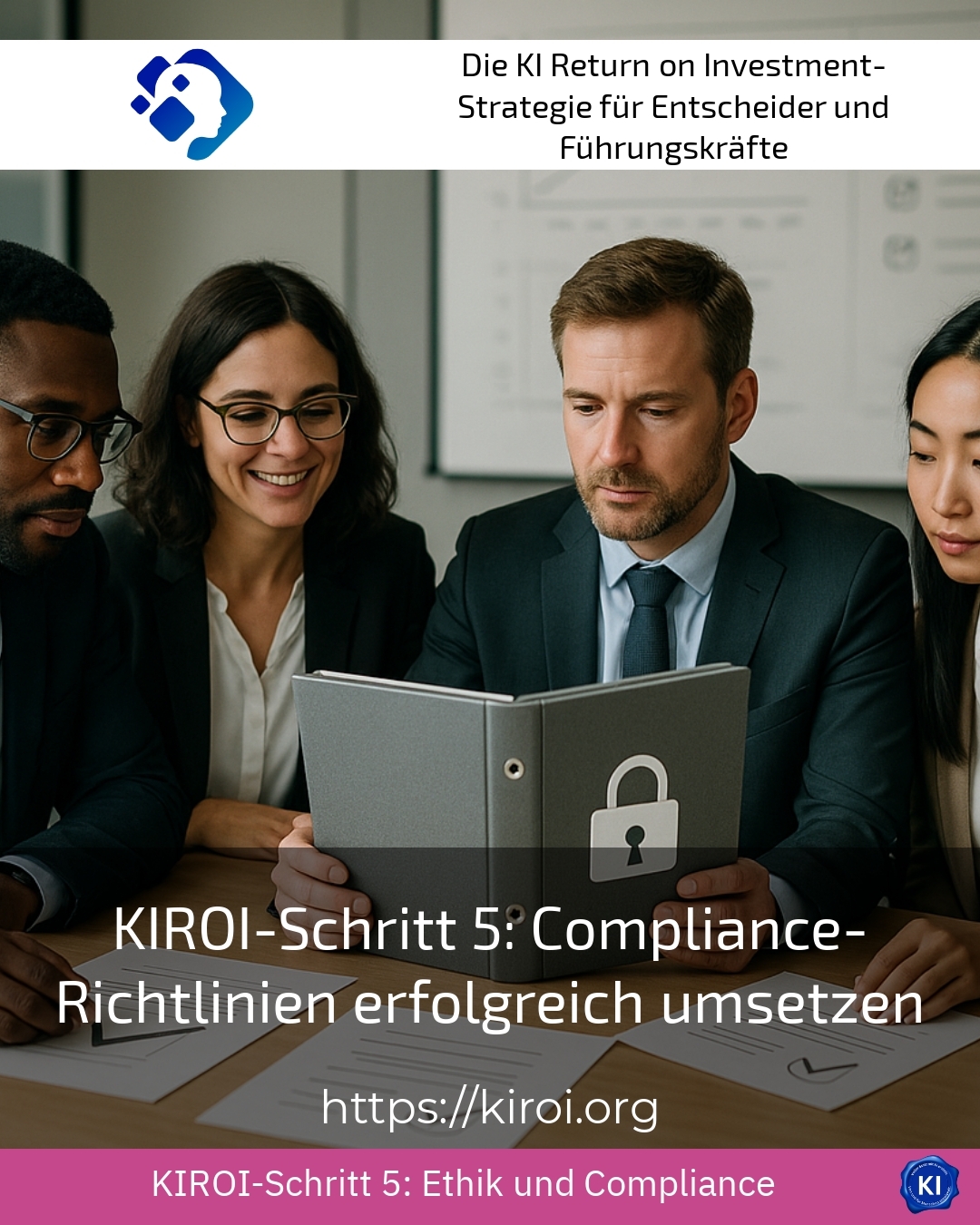
In today's business environment, the careful implementation of compliance policies is becoming increasingly important. It ensures that organisations not only meet legal requirements but also adhere to ethical standards. Compliance policies are far more than mere formalities: they form the basis for responsible action and sustainable business success. In this article, you will find practical insights and strategies on how to successfully embed compliance policies in your company. We will focus on concrete examples from different industries to highlight their particular challenges and approaches.
Compliance policies: the foundation for secure and transparent business practices
Compliance policies define binding requirements that align employee behaviour with legal and ethical standards. Companies in the financial services, manufacturing, and healthcare sectors frequently report that adherence to these policies minimises risks and strengthens trust with customers and partners. For example, a major bank ensures that all financial transactions comply with current regulations, thereby consistently preventing money laundering. In the manufacturing industry, compliance policies ensure adherence to environmental and occupational safety laws in order to prevent accidents and promote sustainable production. In healthcare, they guarantee the protection of sensitive patient data and the integrity of treatment processes.
Strategic Implementation of Compliance Policies
The successful introduction of compliance guidelines requires a structured approach. To begin, companies should analyse their corporate structure and critical risk areas in order to develop regulatory frameworks tailored to their needs. For example, an internationally active logistics group identified specific risks in its supply chain using this method and subsequently formulated precise specifications that must be included in supplier contracts.
It is important to involve all relevant stakeholders: executives, compliance officers, and employees should participate in the development process. This fosters acceptance and ensures that compliance guidelines are actively followed. A medium-sized IT service provider reported how regular workshops made employees more aware of the importance of data protection.
Concurrently, multi-stage communication and training measures are essential. A pharmaceutical company relied on digital learning platforms combined with in-person training to convey the complex requirements comprehensibly. Likewise, an open feedback system promotes the early identification and resolution of problems before infringements occur.
BEST PRACTICE with one customer (name hidden due to NDA contract)
The client from the mechanical engineering sector implemented a special compliance training that addressed practical scenarios from everyday work. This supported employees in specifically implementing compliance requirements within their area of responsibility. Regular evaluation of the training's success allowed for continuous adaptation of the programme to current challenges.
Tools and control mechanisms for ensuring compliance
Technological solutions can facilitate compliance with regulatory guidelines. For example, a large trading company uses automated monitoring systems to continuously check payment flows and stock levels. This allows irregularities to be identified and addressed early on. Checklists and standardised templates also help to ensure compliance with regulations for contracts and internal processes.
Continuous review is essential. Audits and internal controls document compliance and identify potential areas for improvement. An energy provider conducts quarterly audits that assess internal processes alongside the examination of environmental regulations. If any violations are discovered, a rapid root cause analysis and the development of measures are carried out to minimise risks. This consistent approach helps the company to achieve sustainable compliance.
BEST PRACTICE with one customer (name hidden due to NDA contract)
In the telecommunications sector, a digital whistleblowing system has been introduced. This allows employees to anonymously report potential breaches of regulations. This enhances transparency and enables a timely response from the compliance department, thereby increasing trust within the company.
Embedding compliance policies as part of the company culture
Compliance policies are most effective when they are part of the company's lived culture. Leaders must act as role models in this regard to foster a culture of integrity. For example, an international consulting firm has implemented measures to explicitly embed ethical leadership in leadership training.
Even in flat hierarchies like start-ups, it becomes clear that clear compliance guidelines provide impetus for responsible action. For example, one practice dictates that all team members must complete data protection courses and that regular feedback sessions on compliance topics are held.
BEST PRACTICE with one customer (name hidden due to NDA contract)
A retail company launched a monthly compliance newsletter. This newsletter clearly explains current regulations and features success stories from within the company. According to surveys, this noticeably increased awareness and acceptance of compliance topics.
My analysis
The implementation of compliance policies is an ongoing process that requires strategic action, transparent communication, and the use of modern tools. Companies from a wide range of industries benefit when they understand compliance as an integral part of their culture. In this way, they not only protect themselves from legal risks but also support ethically responsible working practices. Regular training, clear responsibilities, and an open communication culture are important building blocks on the path to sustainable compliance.
Further links from the text above:
Compliance Policy Development
Compliance Definition and Best Practices
Effective implementation of compliance policies
Policy management tips
Compliance management systems
Corporate Compliance: Fundamentals
Implementation of a compliance management system
For more information and if you have any questions, please contact Contact us or read more blog posts on the topic Artificial intelligence here.











 Deutsch
  English (UK)