
Will decision-makers in companies soon be replaced by intelligent systems, or is the true strength in a completely new form of collaboration between humans and machines?
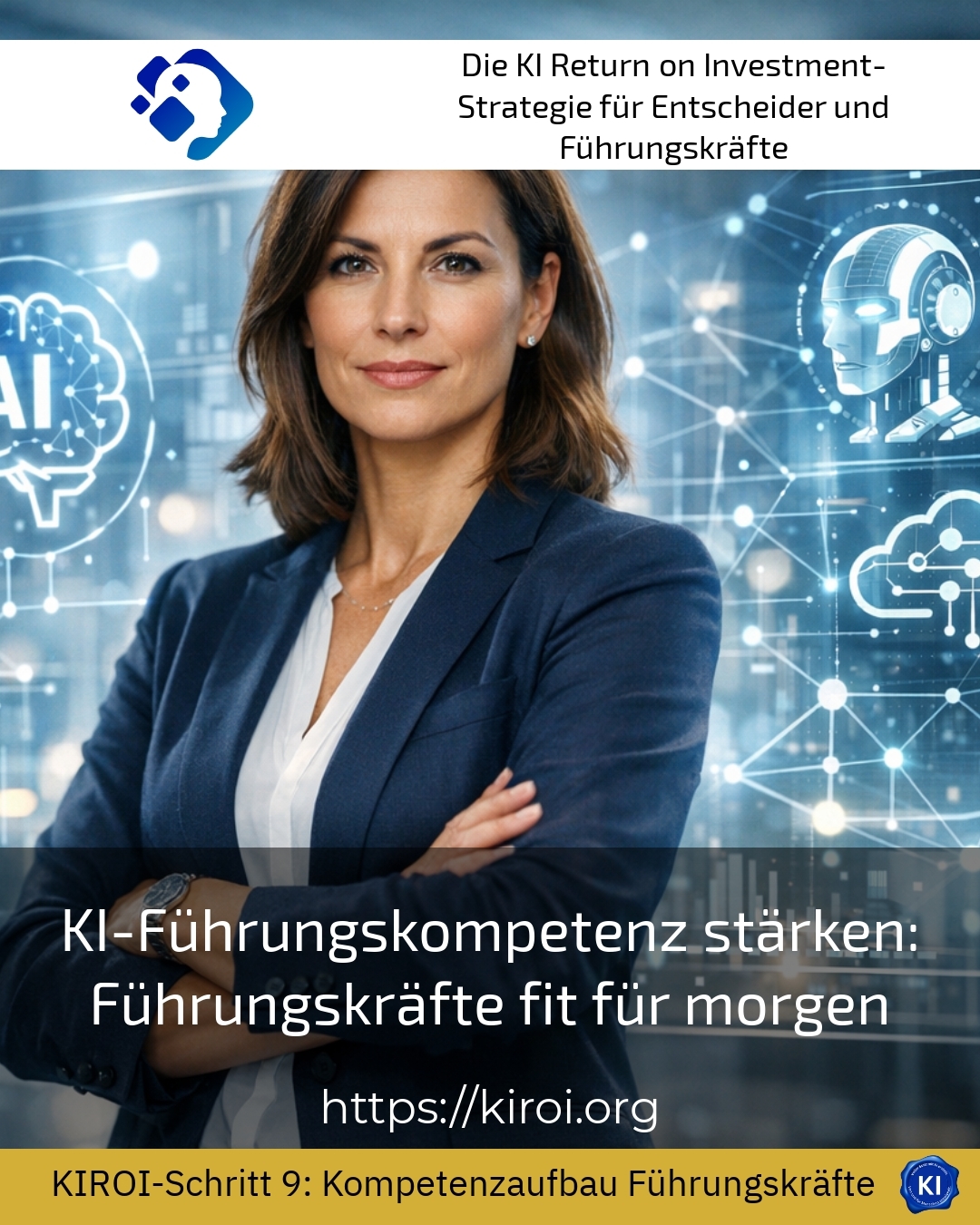
This question currently concerns countless decision-makers in organizations of all sizes, and it touches upon a core aspect of modern corporate management that goes far beyond technical implementations. The ability to, Strengthening AI Leadership Competence Being able to decide is increasingly determining which companies will flourish in the coming years and which will lose their momentum. Many executives report a certain degree of uncertainty in the face of rapid developments. At the same time, however, fascinating opportunities are opening up for all who are willing to redefine their role.
Understanding the new reality in boardrooms
The change is occurring faster than many would have expected. In numerous companies, algorithmic systems are already supporting decision-making processes at various levels today. For example, human resources departments use intelligent analytics tools to streamline the application process and reduce unconscious biases. Marketing teams rely on data-driven predictive models that can anticipate customer behavior and optimize campaigns in real time. Production managers work with predictive maintenance systems that predict machine failures before they occur.
These examples clearly show that the technology has long since become part of everyday working life. Leaders face the challenge of using these tools meaningfully. Clients often report initial overwhelm and a feeling of not being able to keep up with the development. This is exactly where professional support comes in: it provides guidance and shows concrete options for action.
Best practice with a AIROI customer
A medium-sized company in the manufacturing sector faced the challenge of preparing its senior management for the integration of intelligent systems. The management team recognized early on that technical training alone would not be enough to bring about the desired change. In the framework of the transruptive coaching, we developed, together with the leadership team, a comprehensive understanding of which tasks could be taken over by algorithms in the future and where human expertise remains indispensable. It became apparent that many managers initially had reservations about the loss of their own position. Through intensive coaching and the joint development of new role models, this concern turned into genuine enthusiasm for the emerging opportunities. The team learned to understand analytical tools as support and to use the time gained for strategic tasks and employee management. After several months of collaboration, the participants reported increased job satisfaction and measurable efficiency gains in their departments.
Strengthening AI leadership skills through strategic change
The ability to strategically employ technology distinguishes successful leaders from those who follow the changes behind them. It is not about becoming a programmer yourself. Rather, decision-makers need a fundamental understanding of what these systems can achieve and where their limits lie. For example, a sales manager must understand how predictive models work in order to critically assess their recommendations. A human resources manager should be aware of the ethical implications of automated selection processes and be able to develop appropriate guidelines.
In practice, it is repeatedly shown that technical knowledge alone is not enough. Successful leadership in the digital age requires emotional intelligence, ethical judgment, and the ability to guide people through change processes. As recently reported by a department manager in the financial sector, his most important task today is to provide his team with security while fundamentally changing work processes. He uses analytical tools for risk assessment, but the final decision is made by him himself, incorporating his long-standing experience.
Another example comes from the healthcare sector. There, intelligent systems support clinical management in personnel planning and resource allocation. However, the responsible parties report that human empathy and situational adaptability cannot be replaced by any technology. When unforeseen situations arise, it is the leaders who must react quickly and sensitively.
Develop new competence areas for executives
The requirements for leadership are fundamentally changing. In addition to classic management skills, new areas of expertise are gaining importance. These include the ability to communicate complex technical concepts to different target groups in an understandable manner. Equally important is the ability to recognize ethical issues and to make responsible decisions. Furthermore, leaders must learn to deal productively with uncertainty and constant change.
In the logistics industry, this change is particularly evident. Forwarders today work with highly advanced route optimization systems and autonomous vehicles. Their leadership role shifts from operational control to strategic planning and employee development. We are observing similar developments in retail, where store managers increasingly use automated inventory management systems and personalized customer engagement tools.
In the education sector as well, leaders are experiencing profound changes. School principals and university administrations are implementing adaptive learning systems that analyze the individual progress of learners. Educational leadership is now increasingly focused on creating inspiring learning environments and providing personal support for teachers and learners.
Leaders prepared for tomorrow: The path to new excellence
The development process for future-proof leadership differs individually. Some leaders already possess technical interest and primarily need support in the human aspects of change. Others have strong social skills and want to deepen their understanding of technology. Transruptive coaching supports leaders on this journey and provides insights for personal and professional development [1].
An important aspect is learning from and with others. Leaders benefit enormously from exchanging ideas with like-minded peers who face similar challenges. In the automotive industry, for example, informal networks have formed where plant managers share their experiences with automation and intelligent production systems. This form of collegial learning complements formal training programs in a valuable way.
In the banking sector, a similar pattern is evident. Executives from various institutions meet regularly to discuss regulatory requirements for algorithmic decision-making systems. Together, they develop best practices for the responsible use of these technologies and support each other in their implementation.
Best practice with a AIROI customer
A management figure from the insurance industry came to us with concerns about losing technological edge. The person had decades of industry experience and demonstrated outstanding leadership qualities, but felt overwhelmed by the rapid developments in intelligent claims processing and risk analysis. During the transruptive coaching, we first developed an understanding of which core competencies would remain essential in the future. It turned out that human expertise in complex claims cases remains indispensable. The algorithmic systems handle routine cases and provide decision-making templates, while experienced professionals handle the challenging situations. This realization fundamentally changed the management figure’s self-perception. She developed a vision for her team that optimally combines human strengths and technical capabilities. Today she reports increased motivation and new clarity about her role in the company. The team has achieved measurable improvements in customer satisfaction.
Strengthening AI leadership competencies in the corporate context
Organizations have an important responsibility in developing their leadership. It is not enough to offer individual training and then hope for independent development. Successful companies create structures and cultures that promote continuous learning and reward it. These include mentoring programs, experimentation spaces, and an open culture of mistakes.
In the technology sector, a leading company has established so-called innovation labs where executives can try out new tools without having to deliver immediate results. These protected spaces enable learning through experimentation and reduce the fear of making mistakes. Similar concepts can increasingly be found in the pharmaceutical industry, where research leaders experiment with new analytical methods [2].
Interesting approaches are also emerging in the public sector. Municipal administrations are specifically training their management staff to make citizen services more efficient and user-friendly. They are relying on intelligent chatbots for frequently asked questions, while complex issues are still handled by experienced staff.
An energy provider has launched a company-wide program that involves all levels of management. From team leadership to senior management, all responsible parties undergo a multi-stage development program that combines technical foundational knowledge with practical exercises and regular reflection sessions.
Retain the human dimension at the center
Despite all the enthusiasm for technological possibilities, the human dimension must not be overlooked. Leadership remains at its core a profoundly human task. It is about inspiring, developing, and guiding people through difficult times. These skills are even gaining in importance as more operational tasks are taken over by machines.
In the hotel industry, this development is particularly evident. Automated check-in systems and intelligent room controls relieve staff of routine tasks. The hotel management is now focusing more on creating special guest experiences and developing its employees. We see a similar trend in the restaurant industry, where ordering systems and kitchen planning are increasingly supported digitally.
Leadership roles are also changing fundamentally in creative industries. Agency leaders in the advertising industry are using generative tools for concept development and visualization. Their creative leadership role is transforming into curating, inspiring, and ensuring quality. The ability to combine human creativity with technical capabilities becomes a crucial competitive advantage [3].
My AIROI Analysis
After carefully examining the current developments and numerous accompanying projects, a clear picture emerges. Successful integration of intelligent technologies into leadership processes is only possible when the human being remains at the center. Leaders who focus exclusively on technical knowledge will fail just as much as those who ignore technological development. The key lies in a balanced development of both dimensions.
The willingness to learn throughout life is an essential attitude for all leaders. It is not about being perfect or knowing everything. Rather, it involves curiosity, openness, and the ability to learn together with others. Organizations should create spaces that promote this development and accompany leaders along their path.
Transruptions coaching positions itself as a professional accompaniment to these far-reaching transformation projects. We provide inspiration, offer spaces for reflection, and support both individual leaders and entire leadership teams in their development. Clients often report that this coaching helps them gain clarity about their future role and look to the future with renewed confidence. The combination of technological understanding and human leadership strength makes the crucial difference for sustainable success.
Further links from the text above:
[1] Leadership Transruptions Coaching
[2] Harvard Business Review: Artificial Intelligence
[3] McKinsey: The Economic Potential of Generative AI
For more information and if you have any questions, please contact Contact us or read more blog posts on the topic Artificial intelligence here.






 Deutsch
 English (UK)