
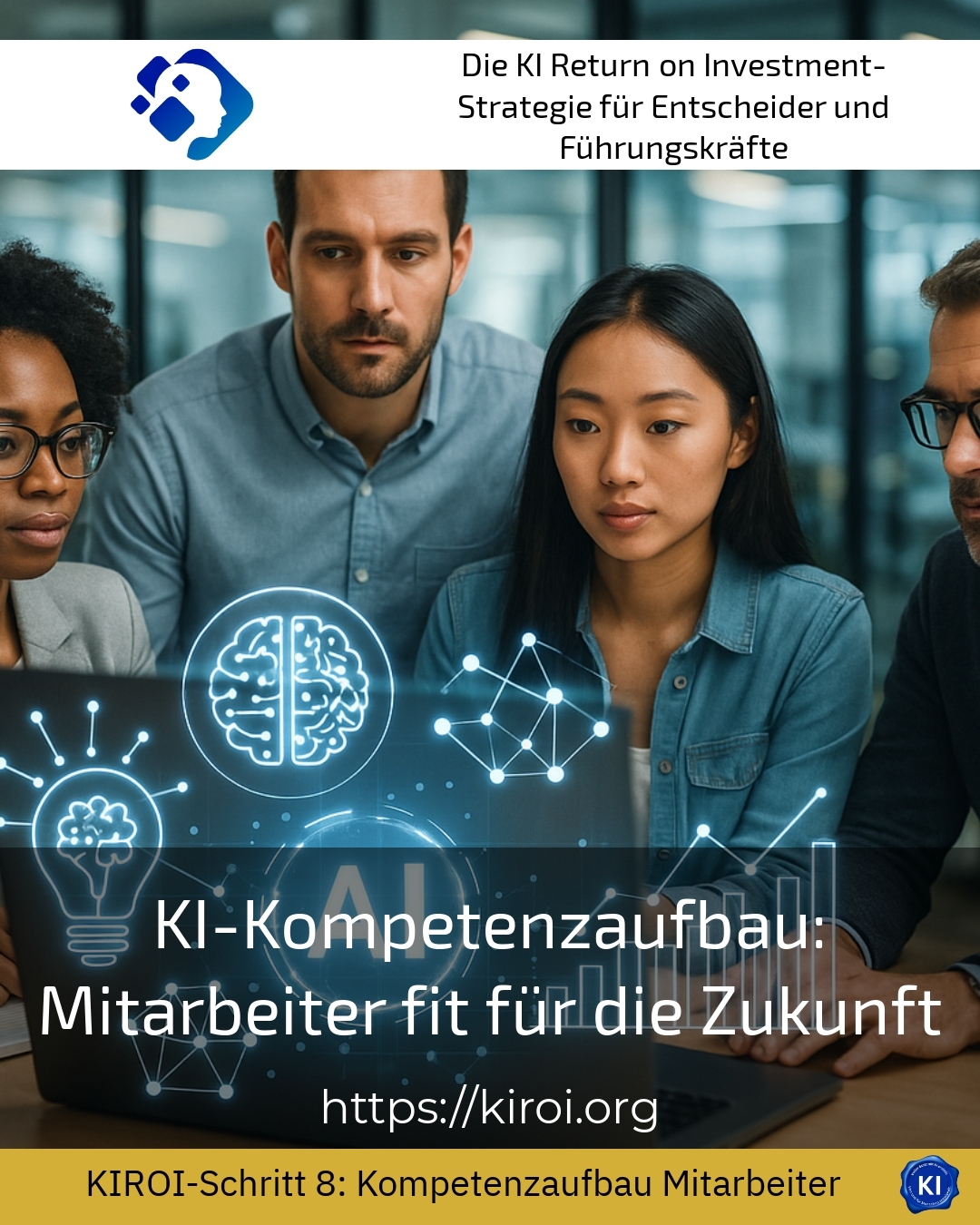
The digital transformation is changing virtually every industry at a rapid pace. Companies face a critical challenge. They must prepare their workforce for completely new ways of working. The AI skills development: making employees fit for the future becomes the central success factor. Those who don't invest today will lose out tomorrow. This isn't just about technical knowledge. Rather, a fundamental reorientation of corporate culture is at the heart of it. The following lines show practical approaches. You will learn how organisations can successfully support their teams.
Why the systematic development of future skills has become indispensable
The world of work is undergoing a fundamental transformation. Automation and intelligent systems are taking over more and more routine tasks. At the same time, entirely new fields of activity and job profiles are emerging. For example, companies in the financial sector are increasingly focusing on algorithmic analysis. Insurance companies are using automated claims processing for simple cases. Banks are implementing intelligent advisory systems for their customers' standard queries. These developments require new skills from all involved.
Many leaders report uncertainty within their teams. Employees are wondering what their future roles will be. These concerns are understandable and should be taken seriously. A structured approach to skills development can provide valuable impetus here. It helps people to see change as an opportunity. It is important not to leave anyone behind. Every person in the company deserves individual support on this journey.
The urgency is particularly evident in healthcare. Hospitals work with diagnostic imaging systems. Surgeries make use of automated appointment scheduling and patient communication. Care facilities are trialling assistive technologies to support their staff. All these applications demand new skills from employees. They must learn to collaborate with intelligent systems. At the same time, human contact remains at the core of their work.
Best practice with a AIROI customer
A medium-sized company in the mechanical engineering sector approached us with a specific challenge. The management had decided to introduce intelligent maintenance systems. These were intended to predict machine failures and enable preventive maintenance. However, significant resistance emerged within the workforce. Many experienced technicians felt threatened by the new technology, fearing that their years of acquired expertise could be devalued. As part of our disruptive coaching support, we developed a multi-stage programme. First, we conducted workshops where employees could openly express their concerns. Subsequently, we demonstrated concretely how their expertise can interact with the new systems. The technicians recognised that their experience remained indispensable. They became trainers for the new systems and gained in importance. After six months, over eighty percent of the participants reported increased job satisfaction. The project became a flagship initiative for the entire organisation.
AI Skills Development: Equipping Employees for the Future with Practice-Oriented Learning Formats
Theoretical knowledge alone is not enough for sustainable learning success. People learn best through practical experience and application. That is why successful companies rely on experience-oriented formats. In retail, for example, teams experiment with recommendation systems. They test how personalised product suggestions can improve the customer experience. In doing so, they gain valuable experience in direct interaction with the technology.
Logistics companies are following a similar path with their training programmes. Dispatchers work on a trial basis with intelligent route planning systems. They compare their own decisions with the software's suggestions, often discovering interesting differences and similarities in the process. This process promotes an understanding of how the technology works, while also strengthening confidence in their own judgement.
Innovative approaches to skills development are also emerging in the education sector. Teachers are trialling adaptive learning systems for their pupils. They are learning how individual learning paths can be created and supported. They critically reflect on the opportunities and limitations of their use. These experiences help them to integrate technology meaningfully into their teaching.
Gradual approach as the key to success
Changes rarely happen overnight. Instead, a careful and considered approach is needed. Many organisations report positive experiences with phased introductions. Initially, simple applications are introduced and practised. With growing confidence, more complex scenarios and tasks follow. This approach reduces overwhelm and creates positive learning experiences.
This principle is particularly evident in the media industry. Newsrooms often start with automated research tools for fact-checking. Journalists learn to use these as support for their work. Later, systems for text optimisation or image analysis are added. The gradual building of trust allows for organic integration. The quality of journalistic work increases without replacing humans.
Communication agencies follow similar paths when introducing new tools. Creative teams initially experiment with idea generators for brainstorming. They discover how machine suggestions can fuel their own creativity. Over time, they integrate further applications into their daily work. The process is accompanied and supported by regular reflection sessions.
Best practice with a AIROI customer
A large service company in the human resources sector was looking for ways to modernise its processes. Recruiters were to learn to work more efficiently with intelligent matching systems. However, there were concerns about potential discrimination due to algorithmic pre-selection. These critical questions were taken up and addressed in our transruption coaching programme. Together, we developed criteria for the ethically responsible use of the systems. Employees learned to critically question the system's suggestions. They understood where human judgment remains indispensable. At the same time, they recognised how the system can take over repetitive tasks. They are now using the time saved for more in-depth conversations with applicants. The company reports increased quality with higher efficiency. The recruiters feel strengthened in their professional identity and not threatened.
Leaders as pioneers of cultural change
Transformation processes are rarely sustainable without support from above. Leaders play a crucial role as role models and encouragers. They must themselves be willing to learn and try new things. They can also show uncertainty and communicate openly. This authenticity builds trust and encourages others to join in.
The impact of good leadership is particularly evident in manufacturing companies. Plant managers who personally experiment with production planning systems inspire their teams. They demonstrate that learning knows no age limits and is always possible. Their openness to mistakes and setbacks encourages others to try things out. This creates a culture of continuous learning throughout the entire operation.
Businesses are increasingly focusing on cross-mentoring programmes between different generations. Younger employees share their technical knowledge with more experienced colleagues. In return, the latter pass on their industry and customer knowledge. This mutual enrichment strengthens cohesion and promotes mutual understanding. Managers actively and enthusiastically initiate and support such exchange formats.
Strategic AI Competence Building: Making Employees Fit for the Future
A sustainable approach requires strategic planning and clear objectives. Companies should first analyse which skills will be particularly in demand in the future. Based on this, individual development paths can be designed for different employee groups. The AI skills development: making employees fit for the future Making requires long-term thinking. Short-term training alone is not sufficient for lasting success.
Energy suppliers face particularly complex challenges in this task. They must prepare their workforce for smart grid technologies and intelligent networks. At the same time, customer behaviour is changing due to new tariff systems and consumption control. Technicians are learning to work with and handle sensor data and forecasting systems. Customer advisors are developing skills to explain complex new offers.
Exciting new demands are also arising for employees in tourism. Travel agencies are using intelligent systems to create personalised offers for customers. Hotels are relying on automated guest communication and dynamic pricing based on demand. Airlines are optimising their processes with the help of comprehensive data analysis and forecasting models. All these developments require continuous further training for the employees concerned.
Best practice with a AIROI customer
A medium-sized municipal administration approached us with the request to modernise their citizen services. The administrative staff were to learn how to work with intelligent application processing systems. Initially, many were sceptical about the planned changes to their daily work routines, fearing job cuts and the devaluation of their many years of experience in citizen contact. Our transruption coaching addressed these fears and took them seriously. We facilitated intensive dialogue processes between management and administrative staff over several months. Together, we developed a vision in which technology supports people rather than replacing them. The employees realised that they would gain more time for complex consultations. Routine requests would be processed more quickly in the future, which would relieve and satisfy all involved. Citizens would benefit from shorter waiting times for simple matters. The administration would be perceived as more modern and service-oriented than before. The employees felt like agents of change, not victims.
Ethical reflection as an indispensable part of any qualification
Technical expertise alone is not sufficient for the responsible handling of new systems. Employees must also understand and be able to classify ethical questions. They should critically question where the limits of technology use should lie. This ability to reflect can be specifically encouraged and systematically developed. [1]
Insurance companies face particularly sensitive decisions in this area. Automated risk assessments can disadvantage or discriminate against people. Employees must learn to recognise and correct such tendencies. They need tools to critically review algorithmic decisions. These competencies have become part of a comprehensive training strategy.
Similar challenges are encountered in the legal system when introducing new technologies. Law firms use automated document analysis for due diligence and research. Judges are discussing the use of predictive tools in bail decisions and similar cases. These applications raise fundamental questions about justice and human responsibility. [2]
Establishing continuous learning as the new normal
The half-life of knowledge is shortening dramatically fast in many fields. What is considered innovative today may already be outdated tomorrow. Therefore, organisations must create and maintain structures for lifelong learning. Regular further training will become a matter of course in working life. This attitude requires a cultural shift in many companies.
Pharmaceutical companies recognised this necessity early on and acted accordingly. Researchers are constantly updating their knowledge of new analysis methods and simulation procedures. Sales representatives are learning to work with data-driven argumentation strategies. The entire value chain is characterised by continuous innovation and change.
Even traditional craft businesses are feeling the pressure to change and adapt. Carpentry workshops work with computer-controlled machines and digital design tools. Electricians need to understand and be able to professionally install smart home systems. Even in seemingly traditional trades, digital skills are becoming increasingly important. [3]
My AIROI Analysis
The support of numerous organisations with their transformation projects has provided valuable insights. The AI skills development: making employees fit for the future is best achieved with patience. Companies that introduce their workforce respectfully and gradually achieve better results. The emotional dimension plays at least as important a role as technical knowledge.
Clients often report initial resistance within their organisations. However, this dissipates when people recognise tangible benefits for their daily work. The key lies in individual support and open dialogue. Leaders must learn to listen and take concerns seriously. Only then can the trust necessary for successful change be established.
Transruptions coaching has proven to be a valuable approach in addressing these challenges. It combines strategic planning with people-centred process facilitation at all levels. Organisations benefit from an external perspective and tried-and-tested methods from other contexts. At the same time, this approach respects the unique culture of each company as a starting point. Experience shows that sustainable transformation takes time and is worthwhile. Those who invest in the development of their employees today lay the foundation for long-term success.
Further links from the text above:
[1] Federal Ministry for Economic Affairs and Climate Protection – Artificial Intelligence
[2] AlgorithmWatch – Monitoring algorithmic decision-making systems
[3] Platform for Learning Systems – Skills Development for AI
For more information and if you have any questions, please contact Contact us or read more blog posts on the topic Artificial intelligence here.








 Deutsch
  English (UK)