
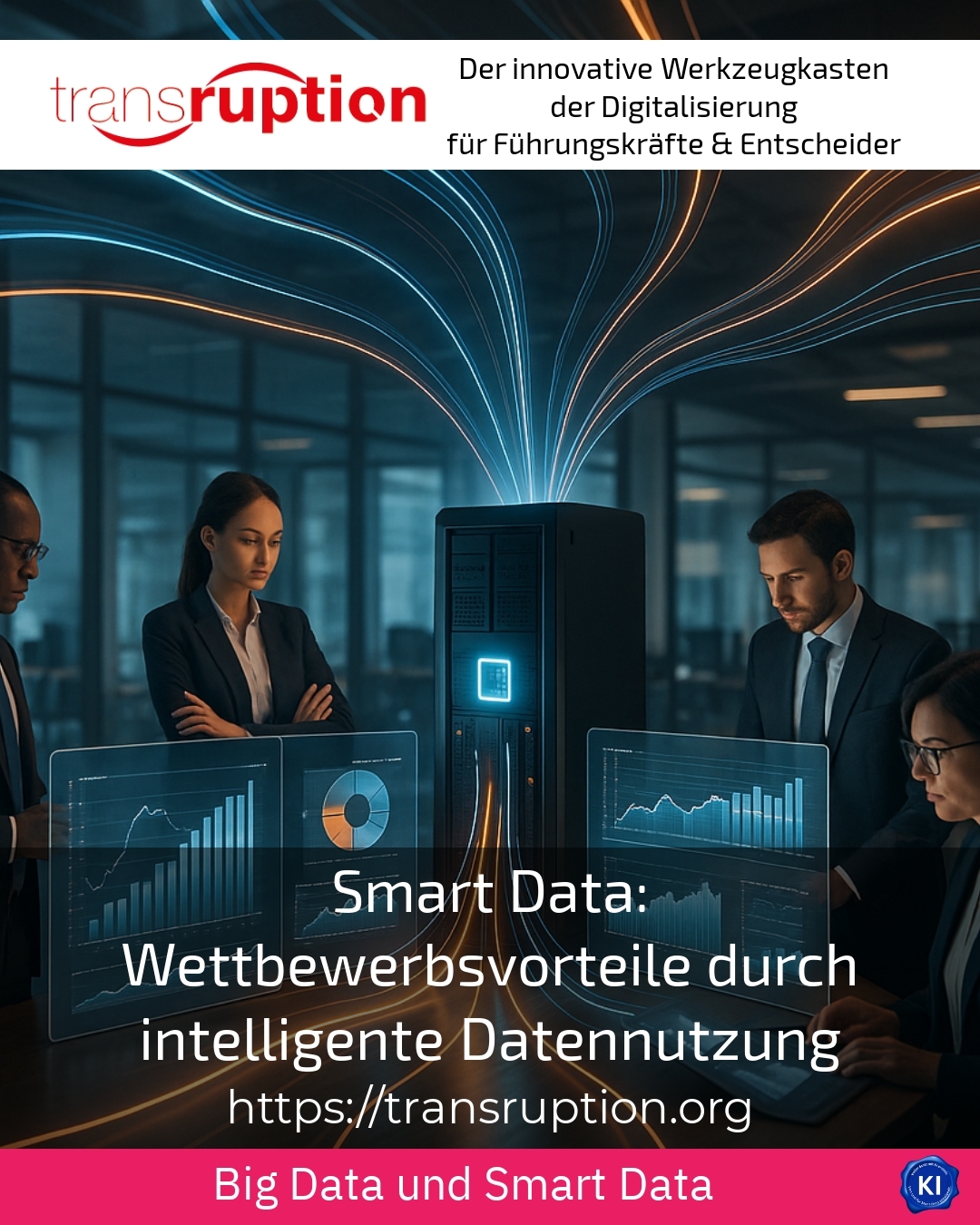
Smart data opens up new perspectives for businesses to intelligently utilise information and helps to achieve sustainable competitive advantages. This smartly prepared data makes it possible not only to search through large volumes of data but also to gain targeted, relevant insights that aid in project management and strategic decision-making.
Smart Data: The Foundation for Differentiated Competitive Advantages
In today's market, companies face the challenge of filtering through an overwhelming amount of information to find data that offers real added value. Smart Data supports this task by considering data quality, relevance, and context, transforming raw data into a valuable resource. For example, a manufacturing company can use Smart Data sensor data acquisition to precisely plan machine maintenance and reduce unplanned downtime. An energy provider, on the other hand, can smartly analyse consumption data to control grids more efficiently and better integrate renewable resources. A retail chain also benefits when customer data is smartly read and regional specificities are considered in promotional campaigns.
The targeted use of smart data allows companies to better adapt products and services to customer needs and to streamline operational processes. This not only saves costs but also increases customer satisfaction and loyalty. For example, insurers use smart data to assess risks more accurately and develop personalised offers. A telecommunications provider can proactively expand network capacities using smart analyses, based on real-time network usage data and customer feedback. In healthcare, intelligent data also aids in the development of personalised therapies by bringing together patient data in the correct context.
Practical implementation and application of Smart Data in companies
The implementation of Smart Data requires careful data curation and the use of modern technologies such as Artificial Intelligence or Machine Learning. For example, retail companies can use an intelligent platform to consolidate all relevant sales figures, market trends, and customer opinions in order to react dynamically to changing demand. HR managers in large organisations use smart analytics to identify employee motivation and flight risks early on and to counteract them. Logistics service providers also gain insights into supply chain bottlenecks and optimise routes in real-time through Smart Data.
BEST PRACTICE at the customer (name hidden due to NDA contract) An industrial company increased the efficiency of its maintenance planning by 20 percent with the help of smart data. The intelligent analysis of machine data made it possible to individually adjust maintenance intervals and significantly reduce downtime, which led to a considerable cost reduction.
BEST PRACTICE at the customer (name hidden due to NDA contract) In retail, smart data has enabled more precise customer engagement. Through data analysis, purchasing behaviour and preferences have been segmented, allowing for personalised marketing campaigns and better inventory management. Customers are reporting a more individually tailored shopping experience.
BEST PRACTICE at the customer (name hidden due to NDA contract) An energy supplier developed flexible load management using smart data analyses. The company thus reacted to peak consumption and specifically focused on sustainable energies to reduce costs and act ecologically. Customer acceptance increased significantly.
Tips for the successful integration of smart data
To fully leverage the benefits of Smart Data, companies should consider the following points:
- Select and carefully check data sources for quality to ensure reliable analyses.
- Ensure good data integration so that different systems, such as ERP, CRM, or IoT platforms, can pool their information.
- Empowering employees to work with smart data tools and make data-driven decisions.
- Creating a flexible, scalable IT infrastructure that supports growth and new use cases.
- Integrate data protection and compliance from the outset to strengthen trust with customers and partners.
Smart Data as the Key to Agile and Sustainable Business Management
Besides increasing efficiency and customer focus, Smart Data also opens up opportunities for sustainable business practices. In the area of Corporate Social Responsibility, intelligent data utilisation allows for precise measurement of resource consumption and CO2 emissions. This is evident, for example, with companies that use Smart Data to improve their building intelligence and thus adjust energy consumption in real-time. Or in the optimisation of logistical processes – fewer empty runs, fewer emissions.
Furthermore, Smart Data can support collaboration on transformative projects: executives gain data insights to strategically manage changes and minimise risks. Clients often report that such data-driven impulses have enabled them to react more nimbly to market changes. This not only creates economic advantages but also provides security in dynamic markets.
My analysis
Smart Data offers companies diverse opportunities to differentiate themselves in the market through intelligent data utilisation. The systematic preparation and analysis of relevant data facilitates well-founded decisions and optimises processes. Particularly in sectors with high data volumes or complex workflows, smart data enables new business models and sustainable economic practices. Thus, Smart Data is far more than a technical trend – it is a strategic success factor for future-oriented companies and valuable support for projects aiming to leverage data intelligence.
Further links from the text above:
[1] What is smart data? Definition, application and advantages
[2] Smart Data and IoT – GISA GmbH
[3] Smart Data Definition: Principles and Applications
[5] Smart Data: How Companies Can Make Better Decisions
[6] Smart Data: The solution for intelligent business management
[7] Smart data: How intelligent data is shaping our future
For more information and if you have any questions, please contact Contact us or read more blog posts on the topic TRANSRUPTION here.










 Deutsch
  English (UK)