
Have you ever wondered if your company will still be allowed to operate legally tomorrow because you ignored a European regulation that has already come into effect and has far-reaching consequences for almost every industry?
The reality looks frightening in many German companies. Managers and executives rely on the principle of hope. They assume that complex regulations will not affect them. Yet the Requirements of the EU AI Act They don’t stop at any industry. They penetrate production halls, office floors, and sales departments alike. The question is no longer whether this regulation applies to you. The only relevant question is how well prepared you are. As is well known, ignorance does not protect you from punishment. In the context of this European legislation, it can even become life-threatening.
Why ignorance does not constitute a viable compliance concept
Many decision-makers significantly underestimate the scope of this regulation. They view it as an abstract construct from Brussels. In doing so, they overlook the concrete implications for their day-to-day business practices. For example, a medium-sized machine engineering company uses predictive maintenance systems. These systems analyze sensor data and predict failure probabilities. Without proper documentation and risk classification, this company may already be operating in the illegal sector.
Another example comes from the logistics industry. Forwarding companies are optimizing their route planning with algorithmic systems. These systems make autonomous decisions about delivery routes and time windows. The Requirements of the EU AI Act Here, a careful assessment of the risk class is required. Is it a system with limited risk or do critical infrastructure decisions fall under it?
Retail is also facing enormous challenges. Personalized product recommendations, automated pricing, and customer analyses often rely on algorithm-based decision-making processes. For example, a major fashion retailer uses systems to predict purchase probabilities. These systems influence which products are displayed to which customers. Many decision-makers simply have no awareness of the legal implications of these seemingly harmless applications.
Best practice with a AIROI customer
A traditional industrial company from southern Germany came to us with a pressing question. The company had implemented various algorithmic systems in quality control over the years. However, no one had undertaken a systematic inventory of these systems. Together we developed a structured approach to capturing all relevant applications. We identified a total of twenty-three different systems that potentially fell under the new regulation. For each system, we prepared a detailed risk assessment and documented the technical specifications. Particularly challenging was the analysis of an image recognition system for error detection in production. This system had previously operated without any documentation of its decision logic. Within four months, we established a complete compliance framework. The company now has transparent processes for evaluating new technological implementations. Management reports a significantly increased level of legal certainty and a better understanding of its own technological landscape.
The hidden risks in everyday business processes
The complexity of this topic lies in its pervasive nature. Algorithmic systems permeate modern companies down to the smallest details. A staffing agency uses automated pre-selection when applying for jobs. A bank uses scoring models for credit decisions. An insurance company calculates premiums based on algorithmic risk assessments. All of these applications potentially fall under the new regulatory requirements.
The healthcare industry faces particularly sensitive challenges. Diagnostic support systems analyze patient data and provide treatment recommendations. These systems are classified into the highest risk category. They require extensive compliance assessments and continuous monitoring. A medium-sized hospital recently implemented such a system without fully considering the regulatory consequences.
The automotive industry is also under considerable pressure to adapt. Driver assistance systems, autonomous driving functions, and connected vehicle services are based on complex algorithmic decisions. Requirements of the EU AI Act This creates a completely new regulatory framework. Suppliers must re-evaluate and document their systems. Manufacturers bear responsibility for the conformity of the integrated components.
Concrete areas of action for your company
The first and most important measure is a complete inventory. You need to know which systems are in use in your company. This may sound trivial, but in practice it proves to be a complex task. Many systems have been implemented over the years without centralized documentation. Specialist departments have independently implemented solutions. External service providers operate systems on behalf of the company.
One telecommunications company discovered astonishing gaps during such an inventory. Seven different algorithmic systems were used in customer support. Only three of them were known to the IT department. The remaining four were independently procured by customer service using cloud services. These shadow systems posed a significant compliance risk.
The energy sector offers further insightful examples. Grid operators use predictive systems for load forecasting. Energy providers use algorithmic pricing for dynamic tariffs. Smart grid solutions make autonomous decisions about grid control. Each of these applications requires careful examination of regulatory requirements.
The Requirements of the EU AI Act understand it as a strategic opportunity
Progressive companies do not see this regulation as just a regulatory burden; they see it as an opportunity to differentiate themselves in the competition. Transparent and trustworthy systems create trust among customers and business partners. A solid compliance structure becomes a competitive advantage.
A financial services provider positioned itself early on as a leader in this field. The company actively communicates its compliance measures to customers. Transparency reports on algorithmic decision-making strengthen investor confidence. The marketing department has integrated this positioning into its communication strategy.
The pharmaceutical industry is experiencing similar developments. Research institutions are comprehensively documenting their algorithmic analysis processes. This documentation not only facilitates regulatory compliance; it also improves scientific reproducibility and strengthens the credibility of research findings.
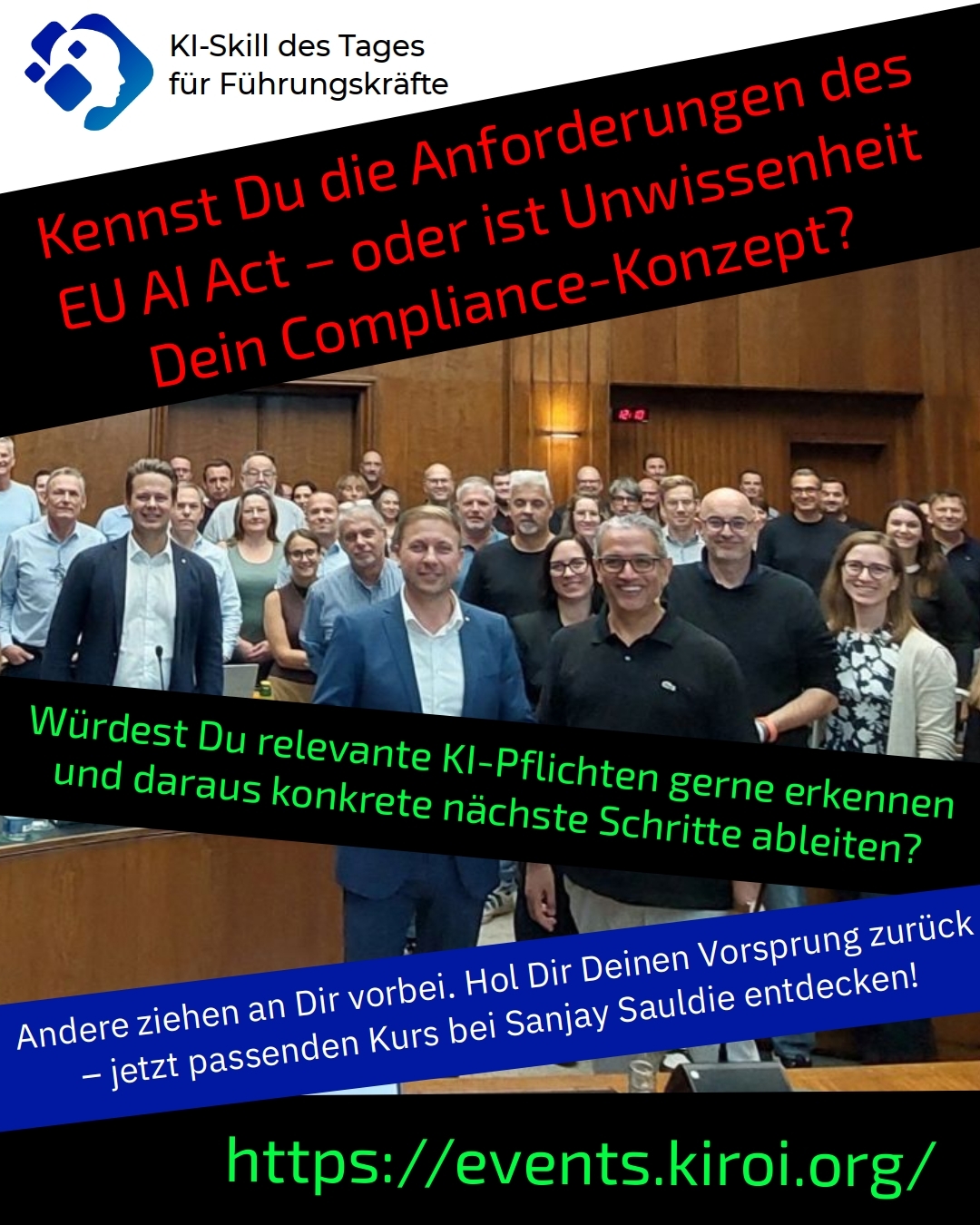
Take your existing skills to the professional level – just as over 8,000 people from over 500 companies have already done with Sanjay Sauldie! events.airoi.org find current events and training opportunities in this important field of study.
Best practice with a AIROI customer
An international retail chain faced the challenge of harmonizing its cross-border systems. The company operates algorithmic pricing optimization in twelve European markets. Each market had developed its own systems with different technical architectures. The new regulation required a uniform compliance strategy. Together with the management team, we developed a phased implementation plan. First, we categorized all systems according to their risk class. Next, we defined uniform documentation standards for all country-based subsidiaries. Particularly important was the training of local teams in the respective requirements. The employees had to understand why these measures were necessary and how to implement them in everyday life. After eighteen months of intensive support, the company now has a Europe-wide unified compliance framework. The centralized documentation enables quick adjustments in the event of regulatory changes. Management describes this project as one of the most important transformation initiatives of recent years.
Practical steps to prepare for the Requirements of the EU AI Act
The first step is to raise awareness among senior management. Without support from the top, compliance projects regularly fail. Management must understand the strategic importance of this topic. Only then will sufficient resources be allocated.
The formation of an interdisciplinary team is the second important step. Lawyers, technicians, data protection officers and experts in the field must work together. For example, a media company successfully implemented such a team. The members came from the editorial department, IT, legal and product management. This diversity enabled a comprehensive examination of all relevant aspects.
The development of internal evaluation criteria represents the third step. Every new system must be tested before implementation. A chemical company has developed a standardized questionnaire for this purpose. Project managers must fill out this form before algorithmic systems are deployed. The IT department then reviews the information and classifies the risk.
My AIROI Analysis
European regulation of algorithmic systems marks a turning point in corporate governance. Organizations that ignore this development run significant risks. Penalties can amount to up to six percent of global annual revenue. But the financial consequences are only part of the problem. Reputational damage, loss of trust among customers, and competitive disadvantages often weigh more in the long run.
My analysis clearly shows that proactive action makes the crucial difference. Companies that invest early in compliance report positive side effects. They gain a better overview of their technological landscape. They improve the quality of their documentation. They create structures that are also viable in the face of future regulatory developments.
The biggest challenge lies in the complexity of the subject matter. Many executives feel overwhelmed by the technical and legal depth of this topic. Professional guidance can provide valuable insights here. External expertise assists in structuring the tasks. It helps to set priorities correctly and to utilize resources efficiently.
Clients often report an initial sense of overwhelm. After structured support, this feeling transforms into confidence. The task appears manageable. The necessary steps become clear. The company regains its ability to act. This very transformation accompanies the transruptive coaching for projects involving regulatory adjustments and technological changes.
Further links from the text above:
[1] AIROI Events and Further Training
For more information and if you have any questions, please contact Contact us or read more blog posts on the topic Artificial intelligence here.










 Deutsch
 English (UK)