
Have you ever wondered why some traders seemingly navigate through economically turbulent times effortlessly, while others, despite decades of experience, suddenly stumble and lose their market position?
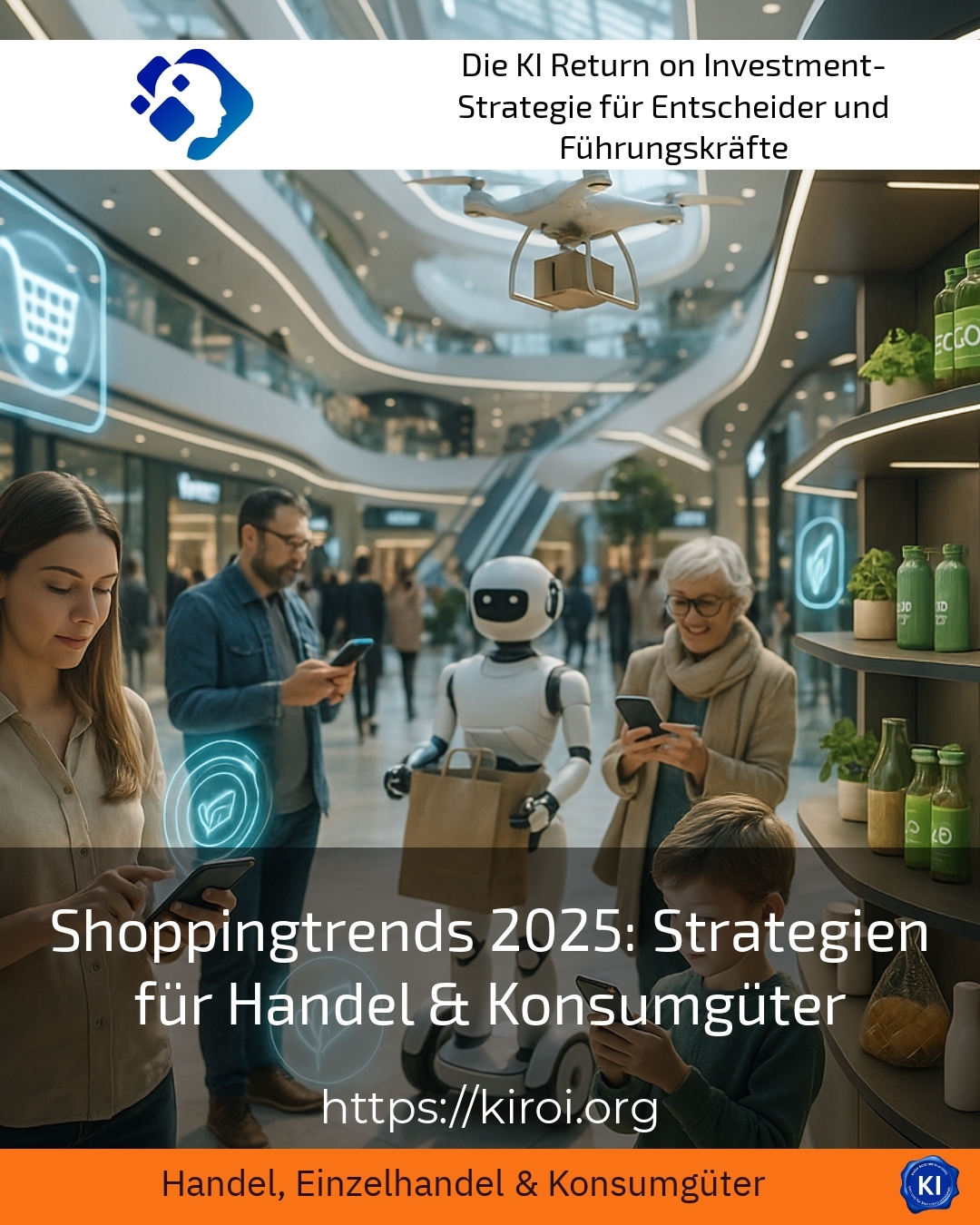
The answer lies in the ability to recognize changes in consumer behavior early on. Those who are able to spot the current trends are likely to be successful in their business. Shopping Trends 2025: Strategies for Retail & Consumer Goods Understands this, gaining a decisive advantage. Currently, we are experiencing a fundamental transformation of the entire industry. This transformation affects not only digital channels but the entire ecosystem. Traditional business models are being questioned and rethought. At the same time, innovative approaches are emerging that inspire and engage customers.
The fusion of the physical and digital shopping experience
Traditional retail is by no means on the verge of extinction. On the contrary, it is experiencing a renaissance through intelligent integration with digital elements. Major fashion chains like Zara are experimenting with interactive mirrors in changing rooms. These mirrors display matching accessories and alternative sizes. IKEA, however, relies on augmented reality applications. Customers can virtually place furniture in their own living rooms. Media Markt and Saturn have transformed their stores into experience centers. There, visitors can try out the latest technologies and experience them.
This development shows a clear change in the understanding of sales spaces. The mere showroom is giving way to the experience space. Here, consulting expertise and digital innovation come together. Today, customers expect seamless transitions between online research and in-person advice. They want to touch the products while simultaneously reading reviews on their smartphones.
Best practice with a AIROI customer
A medium-sized textile company from southern Germany faced the challenge of making its twelve stores future-proof. Customer traffic had been steadily declining for several years. Younger target groups were increasingly buying online from international competitors. As part of our transruptional coaching support, we developed a hybrid concept together. Each store initially received digital touchpoints for enhanced product displays. Customers could now order items that were not available in-store. Delivery was either home delivery or pickup at the store. Additionally, we implemented a loyalty program that combined online and offline purchases. Employees received tablets for consultations with access to customer histories. After nine months, the company reported an increase in the average cart size by fourteen percent. Customer retention improved measurably through personalized recommendations.
Personalization as the key to customer retention in current shopping trends
The era of mass marketing is coming to an end. Consumers today expect tailored offers and relevant communication. Amazon has set standards with its recommendation logic. Now other retailers are following suit and refining their own approaches. Douglas uses skin analysis tools to deliver personalized grooming recommendations. Rewe analyzes shopping habits for individual offers in the app. Zalando relies on style advice provided by artificial intelligence.
This personalization extends far beyond product recommendations. It encompasses the entire customer contact, from the newsletter to the packaging. Consumer goods manufacturers such as Nivea or L’Oréal are now offering individualized products. Customers can compile ingredients based on skin type and preferences. Such offerings create emotional bonds and justify premium prices.
The technical foundation is based on intelligent data analysis and machine learning. However, this requires transparency in the handling of customer data. Clients often report on the balance between relevance and privacy concerns. Finding the right balance is crucial for sustainable business success.
Sustainability becomes the decisive purchasing criterion
Environmental awareness has evolved from a niche topic to a mainstream issue. Consumers are critically questioning supply chains, packaging, and production conditions. Companies like Patagonia have made sustainability their core identity. Aldi and Lidl are continuously expanding their organic product lines. dm-drogerie markt relies on refill stations for cleaning products. These measures significantly reduce packaging waste.
The grocery trade is responding with regional assortments and short transport routes. Edeka is increasingly working with local producers. Rewe is testing concepts for packaging-free departments. The fashion industry is also undergoing fundamental changes. H&M and Zara have established recycling programs. Second-hand platforms such as Vinted or Rebelle are experiencing enormous growth.
This development offers opportunities for authentically sustainable brands. At the same time, the risk of greenwashing accusations increases with superficial measures. Transparent communication and measurable goals build trust among critical consumers.
Strategies for trade & consumer goods in the face of changing expectations
Consumer expectations have fundamentally changed. Fast delivery is now standard, no longer a differentiating factor. Gorillas and Flink have set new standards with express deliveries. Classic retailers must adapt their logistics accordingly. Otto has massively expanded its fulfillment network. Furniture retailers like XXXLutz are now offering express options as well.
But speed alone is no longer enough. Customers demand flexibility in terms of delivery time and location. Click & Collect is evolving into an indispensable service. Saturn enables pickup as early as one hour after ordering. Rossmann offers express pickup in selected stores. These services combine online convenience with immediate availability.
Best practice with a AIROI customer
A regionally operating grocery retailer with over thirty stores sought support in digitizing its processes. The competition from online supermarkets and delivery services was growing steadily. Together, we first analyzed the existing customer structure and its needs. It became apparent that many regular customers were quite interested in digital services. However, they lacked confidence in ordering fresh products online. We developed a hybrid model with a personal touch. Customers could order online and have their order assembled by familiar staff. Pickup took place at special stations with refrigeration facilities in front of the stores. Additionally, we introduced video communication for consultation sessions on specialty dishes. The meat counter now also offered virtual personal advice. After a year, approximately twenty-four percent of regular customers regularly used the new services. Customer satisfaction increased measurably because the personal element was retained.
Social Commerce revolutionizes buying behavior
Social media has evolved from sources of inspiration into full-fledged sales channels. Instagram Shopping enables purchases without leaving the app. TikTok Shop is rapidly gaining importance among younger audiences. Pinterest seamlessly integrates shopping features into image search. These platforms are fundamentally changing the traditional buying process.
Influencer marketing has become more professionalized and diversified. Major brands like L’Oréal work with micro-influencers for authentic reach. Aboutyou relies on creator collections for specific target groups. Sports apparel manufacturers like Adidas use live shopping events on social platforms. These formats combine entertainment with the direct possibility of purchasing.
This presents new challenges for the retail sector. But opportunities also arise through local influencers and community building. Retailers can build regional reach through authentic partnerships.
Artificial Intelligence as a Catalyst for Shopping Trends in 2025
Intelligent systems are now permeating all aspects of commerce. Chatbots handle customer service around the clock. Otto uses AI for demand forecasts and warehouse optimization. Zalando relies on image-based search for similar products. MediaMarktSaturn is testing autonomous delivery robots in selected regions.
In the consumer goods sector, AI significantly supports product development. Unilever analyzes social media trends for new product ideas. Henkel optimizes formulations using machine learning. Nestlé uses algorithms for personalized nutrition recommendations. These applications shorten development cycles and increase accuracy.
However, integration requires strategic planning and change management. Clients often report resistance within the workforce. Transruptive coaching provides valuable insights for successful implementation. Providing support during such transformation projects creates acceptance and competence.
Subscription models are gaining in importance
Subscription concepts are establishing themselves beyond software in the consumer goods sector. HelloFresh has popularized the model for groceries. Glossybox delivers beauty surprises monthly. Flaconi offers perfume subscriptions for changing scents. Even in the fashion sector, rental models are emerging as an alternative to buying.
These models offer benefits for both parties. Retailers receive predictable sales and deep insights into customer behavior. Consumers enjoy convenience and discovery opportunities. Tchibo is experimenting with rental models for children's clothing. This reduces resource consumption and resonates with sustainable consumers.
The challenge lies in the balance between flexibility and commitment. Contracts that are too rigid deter engagement, while too loose contracts risk under-pricing. Here, data-driven optimization significantly supports model design.
My AIROI Analysis
The current transformation in retail and consumer goods is revealing fundamental changes that go far beyond technological innovations and redefine the entire understanding of customer relationships. Based on numerous projects and consultations, a clear pattern emerges: successful companies combine technological innovation with authentic customer orientation. They understand that digitalization is not an end in itself but a tool for improving the customer experience.
The Shopping Trends 2025: Strategies for Retail & Consumer Goods They require a holistic view of their own business model. Companies need to know their strengths and specifically build on them. At the same time, it is important to honestly identify and address weaknesses. I observe the greatest success in companies that view change as a continuous process. They do not wait for the perfect solution; they start with small steps. Through continuous learning and adaptation, they continue to develop their concepts.
The key to sustainable success is the involvement of all stakeholders. Employees need to understand and support changes. Customers should be involved in the development processes. Partners and suppliers are part of the ecosystem, not just suppliers. Those who internalize this perspective create resilient structures for future challenges. The guidance of experienced partners can provide valuable insights and help avoid stumbling blocks. I regularly observe how structured approaches and methodological support make the difference between failure and success.
Further links from the text above:
[1] EHI Retail Institute – E-commerce and digitalization in retail
[2] German Trade Association – Current publications and studies
[3] McKinsey – Insights on the retail industry
[4] PwC – Analyses on trade and consumer goods
[5] GfK – Consumer Insights and Market Research
For more information and if you have any questions, please contact Contact us or read more blog posts on the topic Artificial intelligence here.








 Deutsch
 English (UK)