
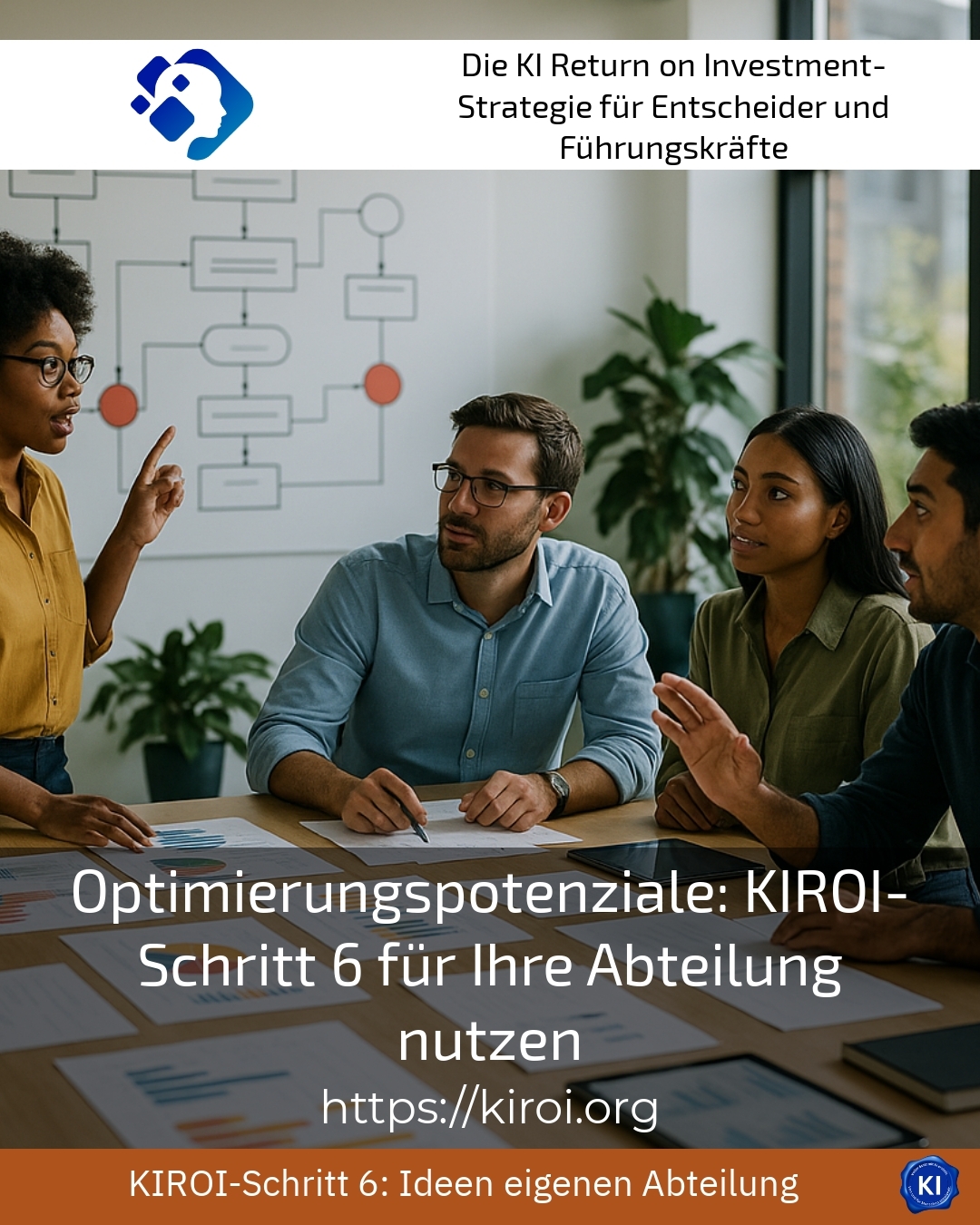
Recognising and exploiting Potential for optimisation is a crucial success factor for every department. Especially in the sixth step of the AIROI model, diverse opportunities arise to sustainably increase performance. Through targeted analysis and implementation of improvements, processes can be accelerated, resources used more efficiently, and synergies created within the organisation. In this article, you will learn in a practical way how you Optimization potential systematically identify and leverage within your department.
Identifying potential for optimisation – A starting point for sustainable development
Potential for optimisation often arises in areas where activities are redundant, time-consuming, or prone to error. Many companies report that administrative processes, for example, have been significantly improved through automation and digitalisation. For instance, a sales department optimised its data management by introducing a digital CRM system, which resulted in faster and more targeted processing of quotations.
HR departments similarly benefit from using digital HR management platforms, which make recruitment and hiring more efficient. The use of real-time data analysis enables them to identify and address bottlenecks in resource planning early on. Production also shows enormous potential for restructuring workflows. An example from manufacturing illustrates how improved line organisation and the use of lean methods minimise waste and increase productivity.
These diverse application cases demonstrate that the recognition of Potential for optimisation a continuous process that should be shaped through systematic analysis and employee involvement.
AIROI Step 6: Practical implementation of the identified potential
In the sixth step of the AIROI approach, the focus is on actively implementing improvements. A methodical, multi-stage approach is recommended here:
- Prioritisation of identified potentials based on effort and impact.
- Involvement of the affected teams through workshops and feedback sessions.
- Introduction of appropriate technologies or process changes.
- Continuous monitoring and adjustment of measures to ensure target achievement.
For instance, in a marketing department, the introduction of an automated newsletter dispatch tool not only reduced effort but also allowed for the systematic analysis and improvement of open rates. Similarly, in a logistics department, the implementation of a digital tracking solution increased supply chain transparency, leading to faster response times in the event of disruptions.
BEST PRACTICE with one customer (name hidden due to NDA contract) In a technical department, process mapping identified a recurring approval step that was slowing down project speed. Following targeted revision and redistribution of tasks, lead times were significantly reduced and employee satisfaction increased.
Technological aids for supporting optimisation potential
Modern technologies are essential tools in the strategic utilisation of optimisation potentials. The integration of automation software, AI-powered analysis methods, or cloud-based collaboration tools enables departments to accelerate processes and increase the quality of their work.
For example, a sales department has increased its planning accuracy by using predictive analytics in sales forecasting. Independently, digital workflows have been introduced in accounting, which have reduced manual sources of error and significantly shortened approval processes. In customer service, chatbots and automated ticket systems also facilitate quick responses to queries, leading to increased customer satisfaction.
Employee engagement as the key to unlocking potential
A key lever for unlocking optimisation potential is the active involvement of employees. Employees often provide valuable impetus, as they know processes from their own experience and can make suggestions for improvement.
For example, by regularly involving different teams in feedback rounds, an IT department has adapted its support process so that the processing time for requests has been almost halved. In a production department, the establishment of a Kaizen team not only led to the improvement of individual processes, but also to the establishment of a culture of continuous improvement.
My analysis
The systematic identification and use of Potential for optimisation represents a valuable opportunity to make departments more efficient and competitive. The AIROI Step 6 offers a structured framework for targeted implementation of identified potential. Practical examples from sales, production, or service demonstrate the positive effects even small changes can have. The combination of technological support and employee involvement creates sustainable improvements. This not only saves costs but also increases the satisfaction of those involved.
Further links from the text above:
Potential for optimisation – awork
Optimising your own department – how do you do that?
Potential for Optimisation – Definition and Methods
Examples of process optimisation – digiloth
Potential for Optimisation – REFA Lexicon
For more information and if you have any questions, please contact Contact us or read more blog posts on the topic Artificial intelligence here.







 Deutsch
  English (UK)