
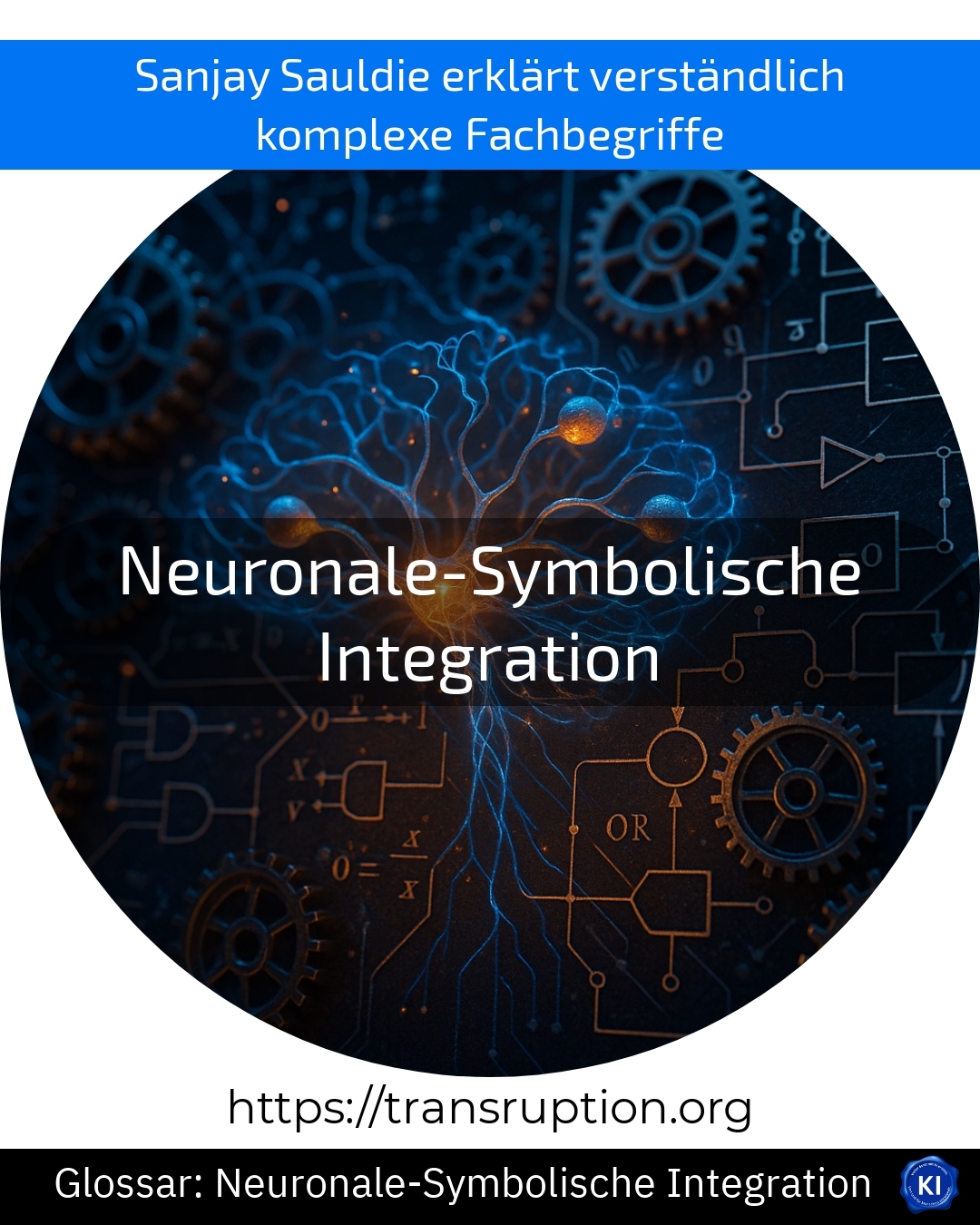
The term Neural-Symbolic Integration originates from the fields of Artificial Intelligence, Digital Transformation, and Big Data and Smart Data. It describes the approach of combining the advantages of two different types of artificial intelligence: machine learning (neural networks) and symbolic AI (rules and logic).
Neural networks are particularly good at recognising patterns in large datasets, for example, in image recognition. Symbolic AI, on the other hand, works with clear rules and can therefore better represent logical reasoning, for instance, when a decision is to be derived from „if-then“ rules.
Neural-symbolic integration combines these two methods: a system can both learn from data and explain and make its knowledge traceable. This is particularly important in areas such as medicine or finance, where decisions need to be justified.
For example: An intelligent assistant system in a hospital can analyse X-ray images using neural networks, but can also provide understandable explanations of the findings through medical rules. This way, both doctors and patients benefit from transparent, high-performance technology.










 Deutsch
  English (UK)