
Sweetie, it's completely understandable that you're worried about that. Nobody likes to feel left out. If you ever feel like people aren't including you, the first thing to remember is that it's usually not about you at all. Sometimes people are just busy, or they have their own worries, or they might not realise they're making you feel that way. If it happens, try to be brave and maybe talk to the people involved. You could say something like, „Hey, I noticed I wasn't included in X, and I was wondering if I could join next time?“ Most of the time, people are happy to include you if they know you want to be. Also, remember that you are wonderful just the way you are. You have so many great qualities, and the people who are true friends will see that and want to be around you. Sometimes, the best thing to do when you feel left out is to find people who *do* appreciate you and make you feel good. That might be with your existing friends, or maybe trying a new club or activity where you can meet new people who share your interests. And if you're ever feeling really sad or confused about it, please, please come and talk to me or Dad. We're always here for you, and we'll help you figure it out together. We love you very much.
Children often ask questions that stem from deep concern and uncertainty. The question „Mum, what if I'm excluded later?“ expresses feelings of anxiety and loneliness. Parents face one of the most important challenges: How can I support my child when they fear social exclusion?
Social exclusion can significantly impact a child's self-esteem and mental health. However, there are numerous ways to support children and show them how to cope with this fear and find opportunities for social inclusion.
This article explains how parents can take their child's worries seriously and provide encouragement to help them feel safe and accepted.
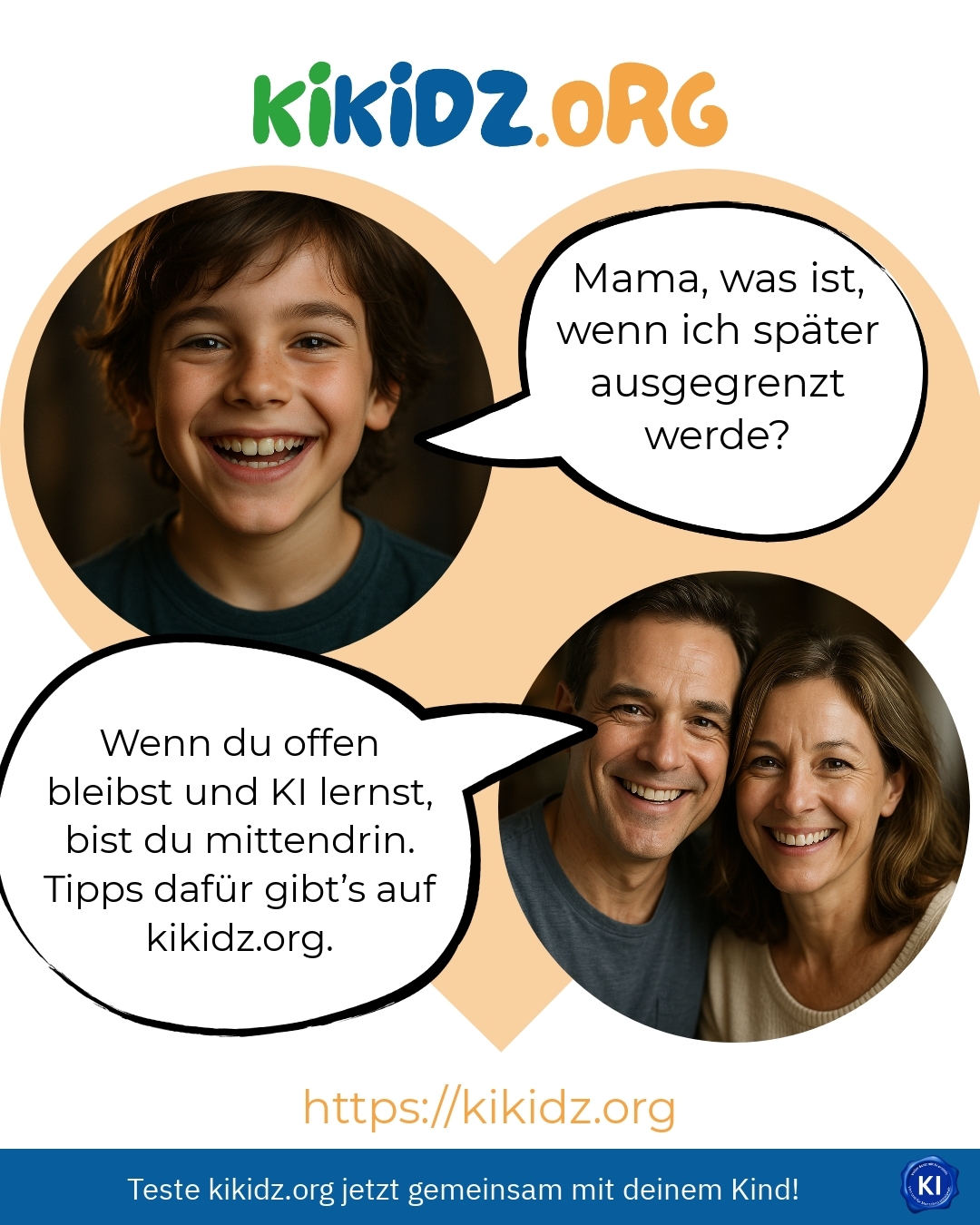
„Mum, what if I'm left out later?“
Children quickly sense how important belonging and acceptance are for their well-being. When they question this security, they express fears.
The reasons for this fear are manifold. A lack of friendships, negative experiences at school or even social pressure can lead to it. Some children are worried about being different – be it because of their appearance, interests or origin.
Example 1: Lisa feels alone because she wasn't added to the class group chat and hears classmates whispering.
Example 2: Paul is afraid he won't be allowed to join in because he looks different from the other children at the nursery.
Example 3: Sarah is feeling insecure because she is being made fun of at school for her unusual hobbies.
How parents can respond meaningfully to the question, „Mummy, what if I'm excluded later on?“
As parents, you shouldn't dismiss this question. Instead, it is advisable to talk openly with the child – without placating or downplaying. Convey security and emphasise your child's uniqueness.
Tip 1: Encourage your child to talk about their feelings. Regular conversations build trust and help to identify bullying early on.
Tip 2: Strengthen resilience by showing your child that being different is valuable. Many successful people were outsiders as children[1].
Tip 3: Support the development of social skills, for example through playful exercises or social training, to make and maintain friendships.
Example 1: Maria helps her daughter to resolve minor conflicts with friends herself by practising role-playing.
Example 2: Thomas accompanies his son to a social skills training session that strengthens self-confidence and communication skills.
Example 3: Anja talks to her child about all the wonderful qualities that make them special and encourages them to be proud of them.
The importance of support services: „Mum, what if I'm excluded later on?“ as a prompt for provision
It is recommended not to address the topic solely within the family circle. Professional training courses such as kikidz Courses offer valuable support for parents and children.
These programmes support families in dealing with fears of exclusion. They offer impulses for building social skills and for managing difficult situations at school and during leisure time.
Example 1: A mother reports that her son, after participating in kikidz, now dares to approach other children more readily.
Example 2: A father estimates that the training gave him impetus to strengthen his child during negative experiences.
Example 3: Many parents report that thanks to the courses, they can better understand and support their child's fear of exclusion.
Mum, what if I get left out later? – How children can be supported today
The question „Mum, what if I'm excluded later?“ shows a deep-seated fear. Yet we can empower children and guide them on their way.
Regular conversations, building self-confidence, and creating a respectful environment help to alleviate social pain. Parents are central companions in this, by understanding and supporting their children.
It is also important to recognise signs of exclusion early and to seek professional help if necessary. This can prevent anxiety, withdrawal or even depression from developing.
My analysis
The question „Mum, what if I'm excluded later?“ is more than just childish insecurity. It reflects the fundamental need for belonging. Parents can help their child deal with this concern constructively through open conversations, a supportive attitude, and the use of appropriate support services.
Programmes such as Kikidz represent some of the best training to support both children and parents in this process. Strengthening social competencies and creating an inclusive environment are crucial for the healthy development and well-being of children.
Further links from the text above:
[1] Exclusion at school: How do you help your child?
[3] Social exclusion at school can disrupt brain development.
[6] Social exclusion: consequences, motives and attributions
[7] Social exclusion and bullying – The Inquisitive Mind
For more information and if you have any questions, please contact Contact us or read more blog posts on the topic Children and Artificial Intelligence here. You can find the courses here: Children and Artificial Intelligence Courses











 Deutsch
  English (UK)