
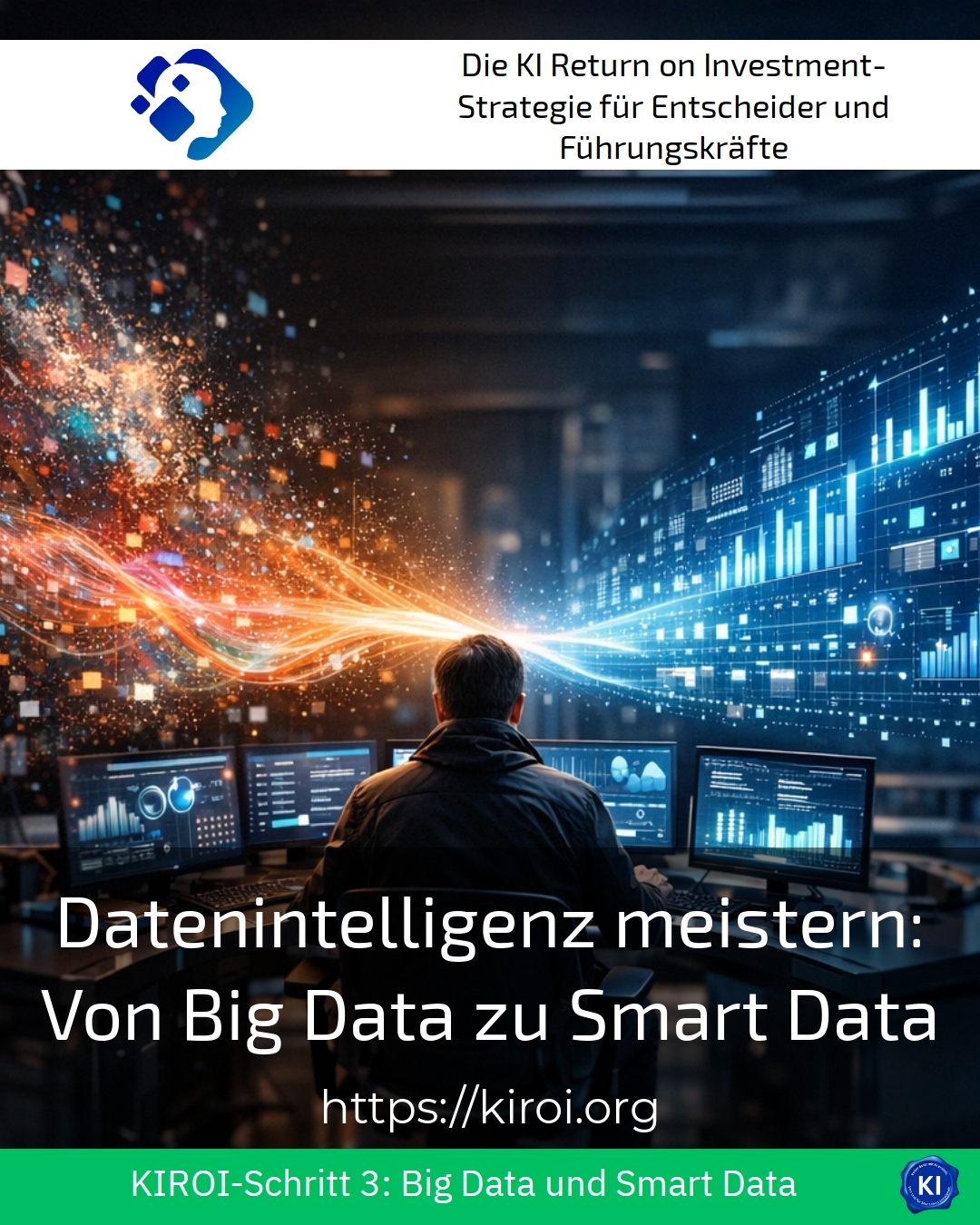
Have you ever wondered why some companies extract groundbreaking insights from the same data sets, while others drown in the sea of information and cannot see any clear added value? The difference lies not in the volume of collected information, but in the ability to, Mastering Data Intelligence to be able to do this and thus make the crucial leap from pure data collection to usable knowledge. In an era where digital information is growing exponentially, the art of intelligent data processing becomes the key success factor for any organization that wants to remain future-proof.
The transformation of data volumes into strategic knowledge
The history of data processing is like a fascinating journey. It begins with simple tables and ends in complex analysis systems. Today, companies collect more information than ever before in history. But the real challenge lies elsewhere. They must distill useful insights from this data mountain. This transformation requires not only technological tools. It also requires a profound change in corporate culture. Many organizations report significant difficulties in this process. The sheer volume of available information often overwhelms the available analytical capabilities. This creates so-called data graveyards where valuable information decays unused.
The healthcare sector offers illustrative examples of this challenge. Hospitals collect millions of patient data every day. They meticulously document vital signs, laboratory results, and treatment progress. However, linking this information to predictive insights often fails. A similar picture emerges in retail. Retailers know their customers’ purchasing behavior in minute detail. However, translating this knowledge into personalized offerings often remains superficial. In the manufacturing sector, too, machine data accumulates in gigantic databases. Predictive maintenance based on this information only works satisfactorily in a few pioneering companies.
Why the path to Smart Data requires real support
Converting raw data into usable knowledge requires a structured approach. Technology alone is not enough. Companies need a clear strategy and competent guidance. That Transruptions Coaching It positions itself as valuable support for digital transformation projects. It provides impetus for the systematic development of data competencies. Clients often report uncertainties regarding prioritizing their data projects. They do not know where to start. The guidance helps them find direction amidst the complexity.
In the energy sector, the benefits of intelligent data utilization are particularly evident. Utilities analyze consumption patterns and thereby optimize their network capacity. Wind farms use weather data for more accurate production forecasts. Building technology also benefits from intelligent sensor evaluation. Heating systems automatically adjust their output to usage profiles. The transportation sector also provides impressive use cases. Logistics companies optimize routes based on real-time traffic data. Airlines analyze maintenance records to prevent unplanned outages. These examples illustrate the transformative potential of intelligent data strategies.
Best practice with a AIROI customer
A medium-sized manufacturing company faced a typical challenge that many organizations encounter in a similar form and that extends across all industries. The company had accumulated enormous amounts of production data over the years, but was unable to use it meaningfully for optimization purposes. Although the machines continuously provided information about temperature, pressure, and vibration patterns, a systematic evaluation did not take place. As part of the AIROI mentoring program, the team initially developed a clear data strategy with defined goals and measurable indicators for success. The employees received training in interpreting analysis results and in deriving concrete recommendations for action based on the findings. The involvement of the production management in the entire transformation process was particularly important, as technical solutions without organizational anchoring can rarely have a lasting effect. After half a year of intensive support, the company was able to significantly reduce unplanned downtime and significantly improve product quality by early detection of deviations. The decisive success factor was not the technology itself, but the methodological approach and the consistent development of a data-driven corporate culture.
Master data intelligence through systematic competence building
The path to true data literacy involves several stages of development. The first stage involves the basic collection and storage of data. This involves technical infrastructure and processes. The second stage focuses on descriptive analyses. Companies learn to understand their historical data. In the third stage, the diagnostic phase begins. Teams explore the causes of observed patterns. The fourth stage enables predictive analyses. Algorithms predict future developments based on past data. The fifth and highest stage is prescriptive analytics. Systems recommend concrete actions to optimize results.
The financial sector illustrates these development stages by way of example. Banks began with the digital recording of transactions. They then developed reporting systems for management. Later, analyses for customer segmentation were added. Today, many institutions use predictive models for fraud detection. Some pioneers are already using prescriptive systems for automated credit decisions. Similar developments are evident in the insurance industry. Damage forecasts are becoming increasingly precise through machine learning. Agriculture is also transforming through intelligent data utilization. Sensors continuously collect soil moisture and nutrient content. Algorithms calculate optimal planting and harvesting times individually for each field.
Not forgetting the human component in digital transformation
Technology alone does not create sustainable change. People need to understand and accept the new tools. Often, resistance and fears arise. Employees fear for their jobs or feel overwhelmed. This Transruptions Coaching It supports organizations in addressing these human challenges. It accompanies leaders in communicating changes. Clients often report difficulties in bringing their teams along. The support provides impetus for participatory design processes.
In the education sector, these challenges are particularly evident. Teachers are expected to use learning analytics without having received the necessary training. School administrations collect data, but the understanding of how to interpret it is often lacking. In the healthcare sector, innovative analytical tools also encounter traditional working practices. Doctors and nurses must develop new digital skills. The public sector is also struggling with the integration of modern data analytics. Government agencies possess valuable information assets. However, the use of these assets often faces regulatory hurdles and a lack of expertise.
Best practice with a AIROI customer
An organization from the service sector approached the AIROI team with a complex problem that touched on the core of their data challenges while also encompassing cultural aspects. The senior management had made significant investments in modern analytics platforms, but the operational utilization remained far behind expectations. The employees perceived the new systems as control instruments and subtly refused to actively utilize the available capabilities. As part of the onboarding process, the team initially developed a deep understanding of the concerns and needs of the various stakeholder groups within the organization. Workshops were conducted in which the workforce was actively involved in defining relevant metrics and analysis goals. This participatory approach transformed the perception of the data platform from a monitoring tool to a valuable support tool for daily work. The employees recognized how data-driven insights could improve their own decisions and reduce their workload, rather than being an additional burden. After the completion of the coaching process, the usage rate of the analysis platform had multiplied and the employees’ satisfaction with using digital tools had significantly improved.
Mastering data intelligence strategies in practice
Successful data strategies begin with clear goals. Companies must define the questions they want to answer. The technology selection follows later. A common mistake is to acquire tools without a specific use case. Data quality forms the foundation of any analysis. Inaccurate or incomplete information leads to false conclusions. Establishing data governance structures ensures long-term quality standards. Furthermore, organizations need clear responsibilities for data management.
The media sector demonstrates successful implementation strategies impressively. Streaming services analyze user behavior for personalized recommendations [1]. Publishers optimize their content based on reader data. Advertising agencies use audience analysis for more precise campaigns. In tourism, innovative applications are also emerging. Hotels predict occupancy and adapt prices dynamically. Airports analyze passenger flows for more efficient processes. Tour operators personalize offers based on individual preferences. Sports is also transforming through intelligent data utilization [2]. Coaches analyze player performance for optimized training methods. Clubs use fan analytics for targeted marketing campaigns.
Consider ethical dimensions of intelligent data usage
With increasing analytical capabilities, so does the responsibility. Companies must ensure the privacy of their customers and employees. Transparency about data usage creates trust and acceptance. Algorithms can reinforce unconscious biases if they are not carefully developed. The discussion about fair and explainable artificial intelligence is gaining importance [3]. Organizations should establish ethical guidelines for their data activities. Transruptions Coaching It also accompanies companies in the development of such frameworks. It supports the balance between the drive for innovation and societal responsibility.
In human resources, ethical challenges are particularly evident. Algorithms support candidate selection but can discriminate. Employee analytics optimize productivity but compromise privacy. The balance between efficiency and dignity requires sensitive considerations. Ethical questions arise in the credit sector as well through automated decision-making. Scoring systems assess creditworthiness but their criteria often remain opaque. The healthcare sector struggles with protecting sensitive patient data while maintaining research interest. These tensions require thoughtful governance structures and continuous reflection.
My AIROI Analysis
The transformation of data volumes into actionable knowledge represents one of the central challenges of our time, going far beyond technical aspects and requiring profound organizational and cultural changes. My analysis shows that successful companies combine three key factors to master this transformation and generate sustainable value from their information assets. First, they have a clear strategic focus that links data initiatives with overarching business goals and defines concrete success criteria. Second, they consistently invest in the development of human competencies at all levels of the hierarchy because technology remains ineffective without appropriately empowered people. Third, they establish robust governance structures that ensure the quality, security, and ethical use of their data assets, thereby creating trust among all stakeholders.
The guidance provided by experienced partners such as the AIROI team can provide crucial impetus for this complex transformation and help organizations avoid common pitfalls. Clients often report significant time savings and improved orientation through the structured approach of the guidance. The journey from big data to smart data is not a one-time initiative but a continuous development process that requires patience, resources, and leadership commitment. Organizations that consistently embark on this journey can realize significant competitive advantages in the data-driven economy, while those that wait will increasingly fall behind. Investing in data competence is therefore not an optional addition but a strategic necessity for every future-oriented organization.
Further links from the text above:
[1] McKinsey Insights: Data Analytics and Business Value
[2] Gartner Research: Data and Analytics Leadership
[3] IBM: Understanding Data Intelligence
For more information and if you have any questions, please contact Contact us or read more blog posts on the topic Artificial intelligence here.









 Deutsch
 English (UK)