
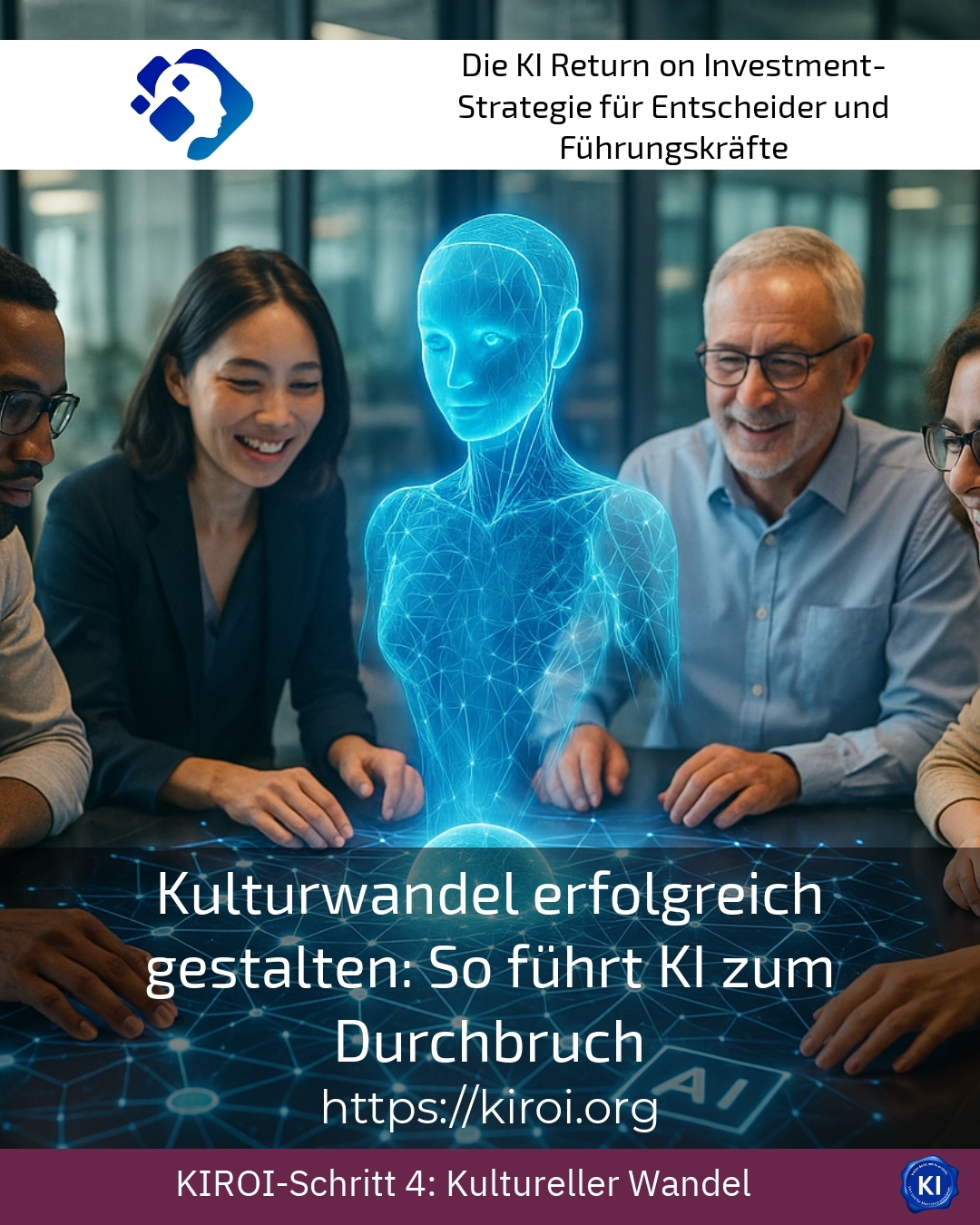
Imagine your entire company undergoing a fundamental transformation. Employees think differently, processes function anew, and old structures give way to modern mindsets. This is precisely what is happening everywhere organisations are embracing the Shaping cultural change successfully want to. But why do so many transformation projects fail? The answer often doesn't lie in the technology itself. It lies in the people and their willingness to change. Intelligent systems can act as a catalyst in this process. They support teams in realigning their way of working. However, every change requires clear guidance and well-thought-out impetus.
Why traditional approaches are often no longer sufficient
The business world has changed dramatically in recent years. Companies are facing challenges that can hardly be overcome with traditional methods. This is not just about new technologies or changing market conditions. It's about a fundamental realignment of the entire corporate culture. Clients often report enormous resistance in their teams. Employees feel overwhelmed and insecure in the face of so many changes. Leaders struggle with the balance between the tried-and-tested and the new.
A medium-sized mechanical engineering company faced precisely this problem. Their production ran efficiently, but digital transformation was stalling. The workforce was sceptical of new ways of working. Only when management began introducing intelligent assistance systems as support did the dynamic change. The systems took over routine tasks from the employees. This freed up their time for creative and value-adding activities. Slowly, a new work culture emerged.
A logistics company with several locations experienced a similar situation. The different departments had been working in isolation from each other for years. Knowledge transfer barely occurred, and innovations remained exclusive to individual teams. A change in mindset began with the introduction of intelligent knowledge management systems. Suddenly, all locations could benefit from the experiences of the others. The silo culture began to dissolve.
Best practice with a KIROI customer
An internationally active company from the manufacturing industry turned to transruptions coaching because internal communication between the various departments was becoming increasingly problematic. The management recognised that the digital tools they had introduced were not having the desired effect. As part of the coaching, a comprehensive analysis of the existing communication structures was first carried out. This revealed that the employees perceived the new systems as a control instrument and not as support. Workshops were then organised together with the teams in which the actual needs of the workforce were identified. The intelligent systems were then configured in such a way that they offered employees real added value. For example, they took over the automatic documentation of meetings and created summaries. This saved the teams valuable time and significantly increased acceptance of the new tools. Within a few months, cross-departmental collaboration improved measurably. Employees began to view the technology as a helpful companion rather than a threat.
Successfully shaping cultural change through intelligent guidance
Change processes rarely fail due to a lack of technology. They fail due to a lack of guidance and insufficient communication. People need time and support to internalise new ways of working. This is precisely where modern coaching approaches come in, combining technological innovation with human development. Transruption coaching supports organisations with exactly these complex projects. It is about more than just introducing new tools.
A trading company with over a thousand employees wanted to revolutionise its customer service. The management had ambitious plans for the use of intelligent systems. However, customer service employees felt threatened. They feared being replaced by automated systems. Only through intensive support and open discussions did the tide turn. The employees realised that the systems relieved them of routine queries. This allowed them to concentrate on complex customer concerns.
In another case, a financial services provider struggled with outdated processes. The compliance department was chronically overloaded and made errors under time pressure. The introduction of intelligent audit systems brought enormous relief to the employees. However, trust in the technology had to be built first. Through gradual integration and constant feedback, the transformation succeeded. The error rate dropped significantly and employee satisfaction increased.
An energy provider used intelligent systems to optimise its network maintenance. Field technicians were initially sceptical of the systems' new recommendations. Their attitude changed through practical demonstrations and positive experiences. Today, they greatly value the support in prioritising their assignments.
Shaping the Role of Leaders in Successful Cultural Change
Leaders play a crucial role in any transformation [1]. They must lead by example and embody the new ways of working themselves. At the same time, they need tools to effectively support their teams. Intelligent analytics systems can provide valuable insights here. They identify patterns in team dynamics and highlight areas requiring action. This allows leaders to respond more effectively to their employees' needs.
A pharmaceutical company trained its entire management level in the use of analytical systems. The managers learned to make data-driven decisions while not neglecting human factors. This combination proved to be extremely effective for the entire change process. The managers gained time through automated reports and were able to use this for personal conversations.
At a automotive supplier, intelligent systems significantly supported workforce planning. Shift managers were able to identify bottlenecks early and act proactively. This noticeably improved the working atmosphere and reduced staff turnover. Employees felt more seen and valued.
Best practice with a KIROI customer
A traditional family business from the industrial sector was looking for support with succession planning and the associated cultural reorganisation. The younger generation wanted to establish modern working methods, while the experienced employees wanted to stick to tried and tested processes. The transruptions coaching accompanied both sides over several months and built bridges between the generations. Intelligent systems were used specifically to document the knowledge of the older employees and make it accessible to the younger ones. At the same time, the experienced employees were able to benefit from the digital expertise of the junior staff. The result was a fruitful exchange that had a positive impact on the entire corporate culture. The systems took on a mediating function and made communication between the generations much easier. Today, young and old work together harmoniously in this company and consciously utilise each other's strengths. This transformation would hardly have been possible without the continuous support and intelligent support systems.
Practical steps for implementation
Every successful transformation begins with an honest assessment [2]. Where is the company currently, and where is the journey headed? What resistance can be expected, and how can it be overcome? These questions form the basis for every subsequent step. Intelligent analysis tools can help gain a realistic picture of the starting situation. They objectively identify the strengths and weaknesses of existing structures.
A telecommunications company used such tools for a comprehensive culture diagnosis. The results surprised management positively in many ways. It turned out that many employees were already more open to change than assumed. This insight had a lasting impact on the entire transformation strategy. Communication was adjusted accordingly, emphasising the existing willingness to change.
At an insurance company, intelligent systems helped identify key individuals. These informal leaders were specifically integrated into the change process. Their support proved crucial for the success of the transformation. They acted as multipliers, taking the new ideas back to their teams.
A healthcare provider implemented intelligent systems to optimise its patient care. Nurses received automated reminders and recommendations for action at critical junctures. This significantly improved the quality of care while simultaneously reducing the workload on staff.
Successfully managing cultural change in challenging times
Changes are particularly difficult in economically uncertain times. Employees long for stability and security during turbulent phases. Nevertheless, such times often require the greatest adjustments from organisations. Here, intelligent systems can be particularly valuable and act as a stabilising factor. They create transparency and help prioritise the most important measures.
A retailer had to completely change its business model during a crisis. The rapid adaptation was only successful through the consistent use of intelligent planning systems. Employees were informed about changes in real time and were able to react accordingly. Despite the enormous challenges, the mood in the company remained surprisingly positive.
A travel company experienced similar things when realigning its portfolio. Intelligent systems analysed customer preferences and quickly identified new business opportunities. Employees could rely on these insights and take targeted action. Thus, the crisis became an opportunity for fundamental renewal.
Best practice with a KIROI customer
A medium-sized manufacturer of consumer goods was going through a difficult period of change and was looking for external support to reorganise its corporate culture. The company had already undergone several unsuccessful attempts at transformation and the workforce was correspondingly disillusioned. The transruptions coaching initially focussed on intensive individual discussions with key people from all hierarchical levels of the company. These discussions helped to understand the actual causes of the previous failures and to learn from them. It turned out that the previous initiatives had been too technology-centred and had neglected the human component. In the new approach, intelligent systems were positioned from the outset as support tools for employees and not as an end in themselves. Employees were able to decide for themselves which tasks they wanted to delegate to the systems and thus retain control over their work. This personal responsibility led to a completely different level of acceptance and a genuine cultural change within the company, which continues to this day and has a positive impact on all areas of the business.
My KIROI Analysis
The accompaniment of numerous transformation projects has brought me valuable insights. The most important success factor is and remains the human element. Technology can support and accelerate change, but it cannot replace people. Intelligent systems only unfold their full potential when they are understood as tools. They must serve people and not work the other way around.
Organisations that successfully manage cultural change possess several common characteristics. They communicate openly and honestly about the goals and challenges of the transformation. They actively involve their employees in the process and take their concerns seriously. They purposefully use intelligent systems to alleviate burdens rather than to monitor their workforce.
Experience also shows that patience is a crucial factor. Cultural changes take time and cannot be forced or accelerated. Setbacks are part of the process and should be viewed as learning opportunities. It is important that the direction is correct and that leadership stays the course consistently.
Transruption coaching supports companies with precisely these complex change processes. It combines technological expertise with a deep understanding of human dynamics within organisations. This combination enables sustainable transformations that can truly lead to success. The examples described show that breakthrough is possible and many companies have already successfully navigated this path.
Further links from the text above:
[1] Harvard Business Review – Change Management
[2] McKinsey – Organisational Performance Insights
For more information and if you have any questions, please contact Contact us or read more blog posts on the topic Artificial intelligence here.











 Deutsch
  English (UK)