
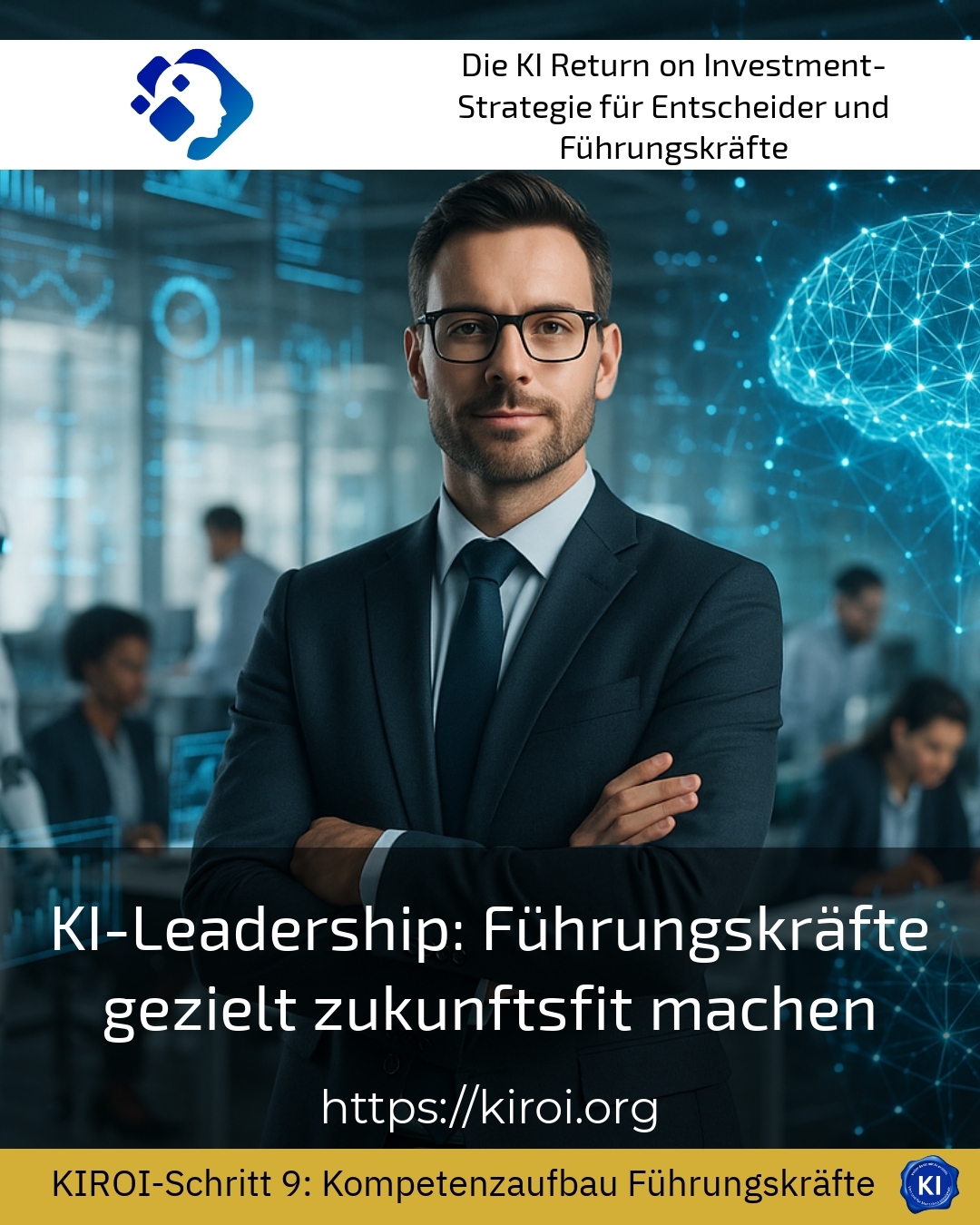
Digital transformation is changing companies at a breathtaking pace, and many leaders are facing the pressing question of how to navigate their teams through this period of change. AI Leadership This is becoming the decisive success factor for forward-thinking organisations. Those who set the right course today will secure their company's competitiveness tomorrow. But how is this transformation achieved in practice? And what skills do decision-makers truly need? This article provides well-founded answers and practical impulses for everyone looking to rethink their leadership role.
Understanding the New Reality of Leadership
Intelligent systems now permeate almost every business area of modern companies. From automated data analysis to predictive maintenance, algorithmic solutions are changing the way organisations function. Leaders often experience a degree of uncertainty because traditional management methods are no longer sufficient. The speed of technological developments overwhelms many established structures and processes.
In the financial industry, for example, banks are using intelligent algorithms for credit scoring and fraud detection. Insurance companies rely on automated claims assessment and personalised premium pricing. Asset managers work with robo-advisors that optimise investment strategies and adjust client portfolios in real-time. These examples clearly show how profound the transformation has already become.
Leaders face the challenge of combining technological innovation with human leadership. They must understand where automated systems create added value and where human expertise remains indispensable. At the same time, it is important to prepare teams for these changes and address anxieties. Transruption coaching supports decision-makers precisely with these complex questions and helps them to further develop their own leadership identity.
Developing AI Leadership as a Core Strategic Competence
The ability to strategically deploy intelligent technologies is becoming the key leadership competency of today. AI Leadership means far more than just technical understanding. Instead, it’s about the ability to reflect on ethical questions and make responsible decisions. Leaders must learn to assess opportunities and risks equally.
In healthcare, these requirements are particularly evident in clinical decision support. Doctors and clinical managers are increasingly working with diagnostic assistance systems that analyse imaging data. Care facilities are experimenting with robotics to support nursing staff. Pharmaceutical companies are significantly accelerating drug development through computer-aided drug analysis.
The development of these new leadership competencies requires systematic support and reflection. Many decision-makers report initial resistance within their teams. Others struggle with their own feelings of being overwhelmed by complex technological developments. Transruption coaching offers a protected space here for honest engagement with these challenges.
Best practice with a AIROI customer A medium-sized company in the logistics sector faced the challenge of preparing its management level for the use of predictive analytics tools. The management recognised early on that technical training alone would not be sufficient to create the necessary readiness for change. As part of a multi-month support process, we worked together with the management team to develop a clear vision for the use of technology. The managers learned to articulate their own concerns and to deal constructively with uncertainties. Particularly important was the development of communication strategies for the employees. The team gradually developed trust in the new systems and recognised their potential for reducing their own workload. Upon completion of the process, those involved reported increased confidence in their actions and improved team dynamics. The successful implementation of the analytics tools led to measurable efficiency gains in route planning and warehouse management.
Understanding ethical reflection as a leadership task
Intelligent systems make decisions that directly affect people and can have far-reaching consequences. Leaders bear the responsibility for ensuring that these decisions are made fairly and transparently. They must understand what data their systems use and how algorithms arrive at specific outcomes. This requirement necessitates a fundamental understanding of technical contexts.
In human resources, for example, companies are increasingly relying on automated application analyses and talent matching. Recruiting teams work with chatbots for initial candidate outreach. Performance management systems provide data-based recommendations for promotions and development measures [1]. These applications raise fundamental questions about fairness and equal opportunities.
Leaders must learn to ask the right questions and critically question things. What biases might be contained in training data? How are decisions made understandable to those affected? What control mechanisms are necessary? Transruption coaching supports decision-makers in systematically reflecting on these ethical dimensions and integrating them into their leadership practice.
Shaping and supporting change processes actively
The introduction of intelligent systems is fundamentally changing workflows, roles, and responsibilities. Leaders must actively shape these changes and guide their teams through transitional phases. It is important to take resistance seriously and address it constructively. Many employees worry about their professional future and need clear perspectives.
In the manufacturing industry, plant managers experience this dynamic particularly intensely when introducing predictive maintenance systems. Machine operators suddenly work with digital twins and sensor data. Quality managers use image recognition systems for automated inspection processes [2]. Maintenance teams adapt their working methods to algorithmic predictions.
Successful transformation requires continuous communication and genuine participation from those affected. Leaders should create spaces for dialogue and shared learning. They can use pilot projects to gain experience step by step. Transruption coaching supports these processes and provides impetus for effective change communication.
Strengthening AI leadership through continuous learning
The pace of technological development necessitates a fundamentally new attitude towards learning. Leaders cannot expect to apply knowledge gained once on a permanent basis. Instead, they must accept continuous development as an integral part of their role. This willingness to learn also serves as a role model for the entire organisation.
In retail, this need for learning is particularly evident in the use of customer data analytics. Store managers work with sales forecasts and personalised recommendation systems. E-commerce managers optimise prices and product ranges with algorithmic support. Those responsible for marketing use automated campaign management and audience segmentation for their daily work.
Learning new technologies is closely linked to personal development. Leaders often report initial apprehension, which is overcome through practical experience. Transruption coaching supports this learning process on an individual basis and helps to identify personal strengths and areas for development. This results in a sustainable increase in skills that extends far beyond purely technical knowledge.
Best practice with a AIROI customer A senior executive in the energy sector approached us with the objective of better preparing her department for the use of smart grid control systems. Initial analysis revealed that the primary deficit was not a lack of technical knowledge, but rather uncertainty regarding her own leadership role. In the coaching process, we initially focused on clarifying personal values and leadership principles. The executive developed a clearer understanding of which aspects of leadership would change and which should remain constant. Together, we developed strategies for dealing with sceptical team members and designing learning environments. Particularly valuable was the reflection on her own role as a role model in dealing with new technologies. After a few months, the executive reported significantly improved team communication and increased engagement in pilot projects. The department is now considered a pioneer for innovative working methods within the company.
Bringing people and technology into balance
AI Leadership ultimately means finding the right balance between technological efficiency and human appreciation. Intelligent systems can perform many tasks faster and more precisely than humans. Nevertheless, creativity, empathy and complex judgment remain irreplaceable. Leaders must recognise and specifically promote these strengths.
In the creative industry, agencies are already experimenting with generative systems for text, images, and videos. Design teams are using algorithmic support for draft variations and layout optimisation. Editorial departments are working with automated research tools and text analyses [3]. These developments are fundamentally changing creative work processes and necessitate new definitions of originality.
Leaders face the challenge of providing their teams with direction in this new world of work. They must clearly communicate where technological support is welcome and where human expertise makes the difference. Transruption coaching supports the development of this nuanced perspective and helps to formulate authentic leadership messages.
Establishing a future-proof leadership culture
A culture of experimentation and learning forms the foundation for successful technology integration. Leaders should view mistakes as learning opportunities and foster psychological safety within their teams. Only then can the necessary openness for innovation and change emerge. This cultural dimension is often underestimated but is crucial for sustainable success.
In the education sector, interesting approaches to this cultural development are emerging with the introduction of adaptive learning systems. School leaders are creating spaces for pedagogical experiments with intelligent tutoring systems. Universities are using data analytics to improve student success rates. Continuing education providers are personalising their offerings with the help of skills diagnostics.
Establishing a future-proof leadership culture requires time, patience, and consistent progress. Leaders must themselves embody what they expect from others. Transruption coaching supports this cultural change and provides impetus for effective interventions at team and organisational levels.
My AIROI Analysis
Accompanying numerous leaders in the integration of intelligent technologies has provided me with valuable insights. The most important success factor lies not in technical understanding, but in the personal willingness to develop further. Leaders who can reflect on their own insecurities gain authenticity and persuasiveness. They build trust in their teams and enable real transformation.
AI Leadership is evolving into an indispensable differentiating factor for successful organisations. Companies that specifically prepare their leadership for these demands gain sustainable competitive advantages. Investment in leadership development pays off in many ways through improved employee retention and increased innovation capabilities. This is less about quick fixes and more about a continuous development process.
My experience shows that coaching can make a significant difference in this demanding transformation. The combination of expert knowledge and personal support helps leaders find their own way. Every organisation is unique, and there are no standard solutions for complex leadership challenges. Transruption coaching offers a protected framework for individual development and sustainable change. The future belongs to those leaders who understand technology as a tool while keeping people at the centre.
Further links from the text above:
[1] McKinsey – AI in HR: A Real Killer App
[2] Forbes – The Amazing Ways Manufacturers Use AI And Machine Learning
[3] Harvard Business Review – How Generative AI Is Changing Creative Work
For more information and if you have any questions, please contact Contact us or read more blog posts on the topic Artificial intelligence here.








 Deutsch
  English (UK)