kiroi.org

KIROI - Artificial Intelligence Return on Invest
The AI strategy for decision-makers and managers

Business excellence for decision-makers & managers by and with Sanjay Sauldie

KIROI - Artificial Intelligence Return on Invest: The AI strategy for decision-makers and managers

KIROI - Artificial Intelligence Return on Invest: The AI strategy for decision-makers and managers

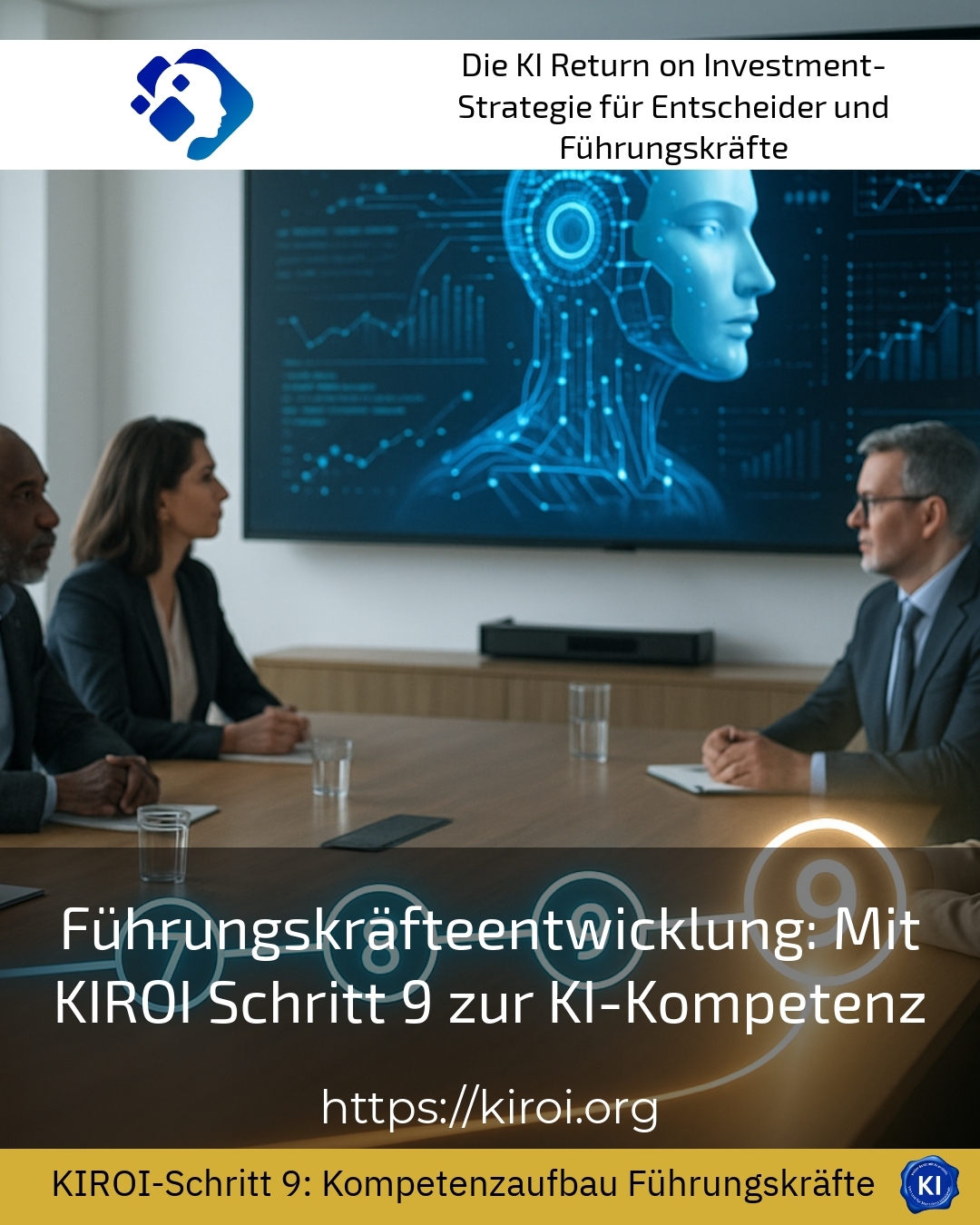
Start » Leadership Development: Step 9 to AI Competence with KIROI
1 May 2025

Leadership Development: Step 9 to AI Competence with KIROI

4.1
(1425)

Why leadership development means more than classic management today

Leadership development is no longer just about imparting classic management skills. In a world shaped by digitalization and artificial intelligence, leaders are confronted with new challenges. This is precisely why the integration of AI competence into leadership development is becoming increasingly important. To lead successfully today, alongside social and methodological competence, a thorough understanding of digital technologies and their applications in daily work is also required.

Many companies report that classic seminars alone are no longer sufficient to cover the future requirements for managers. Therefore, modern concepts are being developed that specifically target digital transformation, agile working methods, and competent handling of AI systems. One such approach is the KIROI model, which in Step 9 focuses on the development of AI competence in managers.

Leadership Development with KIROI Step 9: Practical Ways to Develop AI Competence

KIROI Step 9 is not grey theory, but delivers concrete, practical methods to qualify leaders for the demands of an AI-supported world of work. At its core, it is about leaders not only knowing how AI tools work, but also how they can integrate them into their teams and use them for strategic decisions[2][4].

For example, in practical workshops, participants learn how to conduct AI-supported market analyses and integrate the results directly into their decision-making processes. This leads to courses of action that genuinely improve day-to-day business operations. In a retail company, meanwhile, managers use AI systems to optimise supply chains. They receive targeted guidance on how to support their employees during the introduction of new technologies and how to take their needs into account [2].

Examples from practice

The benefits of AI-powered process monitoring are particularly evident in a production environment. Managers who have received targeted training use algorithms to optimise workflows while simultaneously boosting their team's innovative capacity. They learn not only to understand the technology but also to inspire their workforce to embrace change and actively shape transformation processes [6].

In the finance sector, we train leaders in the safe application of AI-driven risk analyses. This ensures compliance while simultaneously building trust in new technologies. AI tools are also becoming increasingly important in marketing for analysing customer behaviour and adapting marketing strategies based on data[2].

Another example is the optimisation of routines in the logistics sector. Here, we assist executives in utilising intelligent algorithms while simultaneously sharpening their analytical skills. This makes operational processes more efficient and fosters closer, more innovative collaboration between technical and administrative teams[4].

BEST PRACTICE with one customer (name hidden due to NDA contract) At a globally leading energy provider, we implemented a development programme following KIROI Step 9. The focus was on strengthening AI expertise through individual coaching, practical workshops, and direct application in day-to-day leadership. Participants learned how to combine technical know-how, social skills, and methodological approaches. The programme not only fostered a culture of innovation but also significantly improved interdepartmental exchange. Today, leaders report increased agility and greater team satisfaction. This creates measurable added value through targeted leadership development with an AI focus.

Strategic Building Blocks of Leadership Development

Truly sustainable leadership development goes beyond individual measures and opts for a systematic approach. This begins with a needs analysis to identify individual and organisational development goals[5]. Typical challenges include, for example, managing hybrid teams, leading through change processes, or integrating new technologies.

The measures planning directly follows on from the objective. For example, a multi-stage learning programme for area managers can consist of online modules, in-person workshops and peer coaching, in order to gradually strengthen their leadership maturity. Implementation is practice-oriented: Each module concludes with tasks that are implemented in everyday work. Monitoring and regular feedback ensure the transfer into practice. Finally, the effectiveness is measured through targeted evaluation and adjusted if necessary.

Method diversity as a success factor

Modern leadership development employs a variety of methods – from seminars and coaching to mentoring, job rotation, and action learning. Formats that combine theory and practice, for example through working on real projects or exchanging with experienced leaders, are particularly effective. This keeps learning close to requirements and promotes motivation.

In industry, innovative companies strategically focus on combining technical further training with social learning. For example, a car manufacturer is upskilling executives to digitalise production with the help of AI, while at the same time fostering a corporate culture that encourages openness to change. Another example is a chemical company offering digital-focused leadership programmes to drive the transformation to a data-driven organisation.

In the service sector, companies use 360-degree feedback to assess leadership performance from various perspectives and to specifically leverage potential. Through job rotation, managers also gain a holistic understanding of business processes and expand their network within the company.

Transruptions Coaching as a Companion in Leadership Development

Our clients often approach us with questions about digital transformation, AI strategies, or the development of agile leadership skills. This is where we specifically focus on Transruption Coaching, guiding leaders through change processes and providing impetus for sustainable development. The focus is on individual needs as well as organisational goals.

Typical topics include the introduction of new technologies, the design of innovation processes, or managing resistance within a team. Together, we develop practical solutions tailored to the specific company context. This creates a clear thread, extending from strategy to implementation, consistently linking leadership development with the demands of the digital world.

My analysis

Leadership development is a crucial factor for the success of companies wanting to survive in the digital age now more than ever. Those who specifically train their leaders gain a sustainable competitive advantage – especially when it comes to successfully integrating technological innovations like Artificial Intelligence. KIROI Step 9 demonstrates how practical and effective modern leadership development can be, strengthening both technical and social skills.

Companies achieve the best results by focusing on a mix of formal and informal training, regularly gathering feedback, and actively promoting the transfer of learning into daily work. This not only develops leaders' ability to shape change but also turns them into key pillars of an innovation-friendly corporate culture. Especially in times of rapid technological development, it is worthwhile to invest in targeted leadership development – for greater agility, motivation, and future viability throughout the entire company.

Further links from the text above:

For more information and if you have any questions, please contact Contact us or read more blog posts on the topic Artificial intelligence here.
How useful was this post?

Click on a star to rate it!

Average rating 4.1 / 5. Vote count: 1425

No votes so far! Be the first to rate this post.

Spread the love

transruption.org

The digital toolbox for
the digital winners of today and tomorrow

Business excellence for decision-makers & managers by and with Sanjay Sauldie

transruption
transruption

transruption: The digital toolbox for
the digital winners of today and tomorrow

Start » Leadership Development: Step 9 to AI Competence with KIROI
1 May 2025

Leadership Development: Step 9 to AI Competence with KIROI

4.1
(1425)

Why leadership development means more than classic management today

Leadership development is no longer just about imparting classic management skills. In a world shaped by digitalization and artificial intelligence, leaders are confronted with new challenges. This is precisely why the integration of AI competence into leadership development is becoming increasingly important. To lead successfully today, alongside social and methodological competence, a thorough understanding of digital technologies and their applications in daily work is also required.

Many companies report that classic seminars alone are no longer sufficient to cover the future requirements for managers. Therefore, modern concepts are being developed that specifically target digital transformation, agile working methods, and competent handling of AI systems. One such approach is the KIROI model, which in Step 9 focuses on the development of AI competence in managers.

Leadership Development with KIROI Step 9: Practical Ways to Develop AI Competence

KIROI Step 9 is not grey theory, but delivers concrete, practical methods to qualify leaders for the demands of an AI-supported world of work. At its core, it is about leaders not only knowing how AI tools work, but also how they can integrate them into their teams and use them for strategic decisions[2][4].

For example, in practical workshops, participants learn how to conduct AI-supported market analyses and integrate the results directly into their decision-making processes. This leads to courses of action that genuinely improve day-to-day business operations. In a retail company, meanwhile, managers use AI systems to optimise supply chains. They receive targeted guidance on how to support their employees during the introduction of new technologies and how to take their needs into account [2].

Examples from practice

The benefits of AI-powered process monitoring are particularly evident in a production environment. Managers who have received targeted training use algorithms to optimise workflows while simultaneously boosting their team's innovative capacity. They learn not only to understand the technology but also to inspire their workforce to embrace change and actively shape transformation processes [6].

In the finance sector, we train leaders in the safe application of AI-driven risk analyses. This ensures compliance while simultaneously building trust in new technologies. AI tools are also becoming increasingly important in marketing for analysing customer behaviour and adapting marketing strategies based on data[2].

Another example is the optimisation of routines in the logistics sector. Here, we assist executives in utilising intelligent algorithms while simultaneously sharpening their analytical skills. This makes operational processes more efficient and fosters closer, more innovative collaboration between technical and administrative teams[4].

BEST PRACTICE with one customer (name hidden due to NDA contract) At a globally leading energy provider, we implemented a development programme following KIROI Step 9. The focus was on strengthening AI expertise through individual coaching, practical workshops, and direct application in day-to-day leadership. Participants learned how to combine technical know-how, social skills, and methodological approaches. The programme not only fostered a culture of innovation but also significantly improved interdepartmental exchange. Today, leaders report increased agility and greater team satisfaction. This creates measurable added value through targeted leadership development with an AI focus.

Strategic Building Blocks of Leadership Development

Truly sustainable leadership development goes beyond individual measures and opts for a systematic approach. This begins with a needs analysis to identify individual and organisational development goals[5]. Typical challenges include, for example, managing hybrid teams, leading through change processes, or integrating new technologies.

The measures planning directly follows on from the objective. For example, a multi-stage learning programme for area managers can consist of online modules, in-person workshops and peer coaching, in order to gradually strengthen their leadership maturity. Implementation is practice-oriented: Each module concludes with tasks that are implemented in everyday work. Monitoring and regular feedback ensure the transfer into practice. Finally, the effectiveness is measured through targeted evaluation and adjusted if necessary.

Method diversity as a success factor

Modern leadership development employs a variety of methods – from seminars and coaching to mentoring, job rotation, and action learning. Formats that combine theory and practice, for example through working on real projects or exchanging with experienced leaders, are particularly effective. This keeps learning close to requirements and promotes motivation.

In industry, innovative companies strategically focus on combining technical further training with social learning. For example, a car manufacturer is upskilling executives to digitalise production with the help of AI, while at the same time fostering a corporate culture that encourages openness to change. Another example is a chemical company offering digital-focused leadership programmes to drive the transformation to a data-driven organisation.

In the service sector, companies use 360-degree feedback to assess leadership performance from various perspectives and to specifically leverage potential. Through job rotation, managers also gain a holistic understanding of business processes and expand their network within the company.

Transruptions Coaching as a Companion in Leadership Development

Our clients often approach us with questions about digital transformation, AI strategies, or the development of agile leadership skills. This is where we specifically focus on Transruption Coaching, guiding leaders through change processes and providing impetus for sustainable development. The focus is on individual needs as well as organisational goals.

Typical topics include the introduction of new technologies, the design of innovation processes, or managing resistance within a team. Together, we develop practical solutions tailored to the specific company context. This creates a clear thread, extending from strategy to implementation, consistently linking leadership development with the demands of the digital world.

My analysis

Leadership development is a crucial factor for the success of companies wanting to survive in the digital age now more than ever. Those who specifically train their leaders gain a sustainable competitive advantage – especially when it comes to successfully integrating technological innovations like Artificial Intelligence. KIROI Step 9 demonstrates how practical and effective modern leadership development can be, strengthening both technical and social skills.

Companies achieve the best results by focusing on a mix of formal and informal training, regularly gathering feedback, and actively promoting the transfer of learning into daily work. This not only develops leaders' ability to shape change but also turns them into key pillars of an innovation-friendly corporate culture. Especially in times of rapid technological development, it is worthwhile to invest in targeted leadership development – for greater agility, motivation, and future viability throughout the entire company.

Further links from the text above:

For more information and if you have any questions, please contact Contact us or read more blog posts on the topic Artificial intelligence here.
How useful was this post?

Click on a star to rate it!

Average rating 4.1 / 5. Vote count: 1425

No votes so far! Be the first to rate this post.

Spread the love

Other content worth reading:

Leadership Development: Step 9 to AI Competence with KIROI

written by:

Keywords:

#Big Data #compliance #Datenintelligenz #DigitaleTransformation #Ethikrichtlinien 1TP5Management development #InnovationDurchAchtsamkeit #AI expertise #yellow #artificial intelligence #Leadership2025 #Sustainability #SmartData #Unternehmenskultur #Verantwortungsketten

Follow me on my channels:

Questions on the topic? Contact us now without obligation

Contact us

[wpforms id="331781" title="false"]

More articles worth reading

    Leave a comment