
In today's dynamic business environment, **knowledge sharing** is gaining increasing importance. For decision-makers, the challenge is to structure this process effectively and thus achieve sustainable advantages for the organisation. The first step within the KIROI method, in particular, supports leaders and those responsible in initiating knowledge sharing in a structured and goal-oriented manner. In this article, you will learn how to lay the groundwork for successful knowledge sharing as a decision-maker, and what practical examples and stimuli can help.
The importance of knowledge sharing for organisations
Knowledge exchange describes the targeted exchange of information, skills, and experiences between individuals or teams. It encompasses both explicit knowledge, which can be documented and formally shared, and implicit knowledge, which involves personal insights and competencies and is often harder to transfer[1][2]. For companies, successful knowledge exchange means more than just improved communication: it fosters innovation, increases productivity, and supports adaptability to change.
For example, many project teams in the IT industry report that exchanging solution approaches for complex software requirements significantly accelerates product development. In mechanical engineering, too, knowledge is exchanged between development departments and production in order to implement practical improvements in manufacturing. In the service sector, in turn, knowledge transfer between customer service and marketing supports the creation of tailor-made offers.
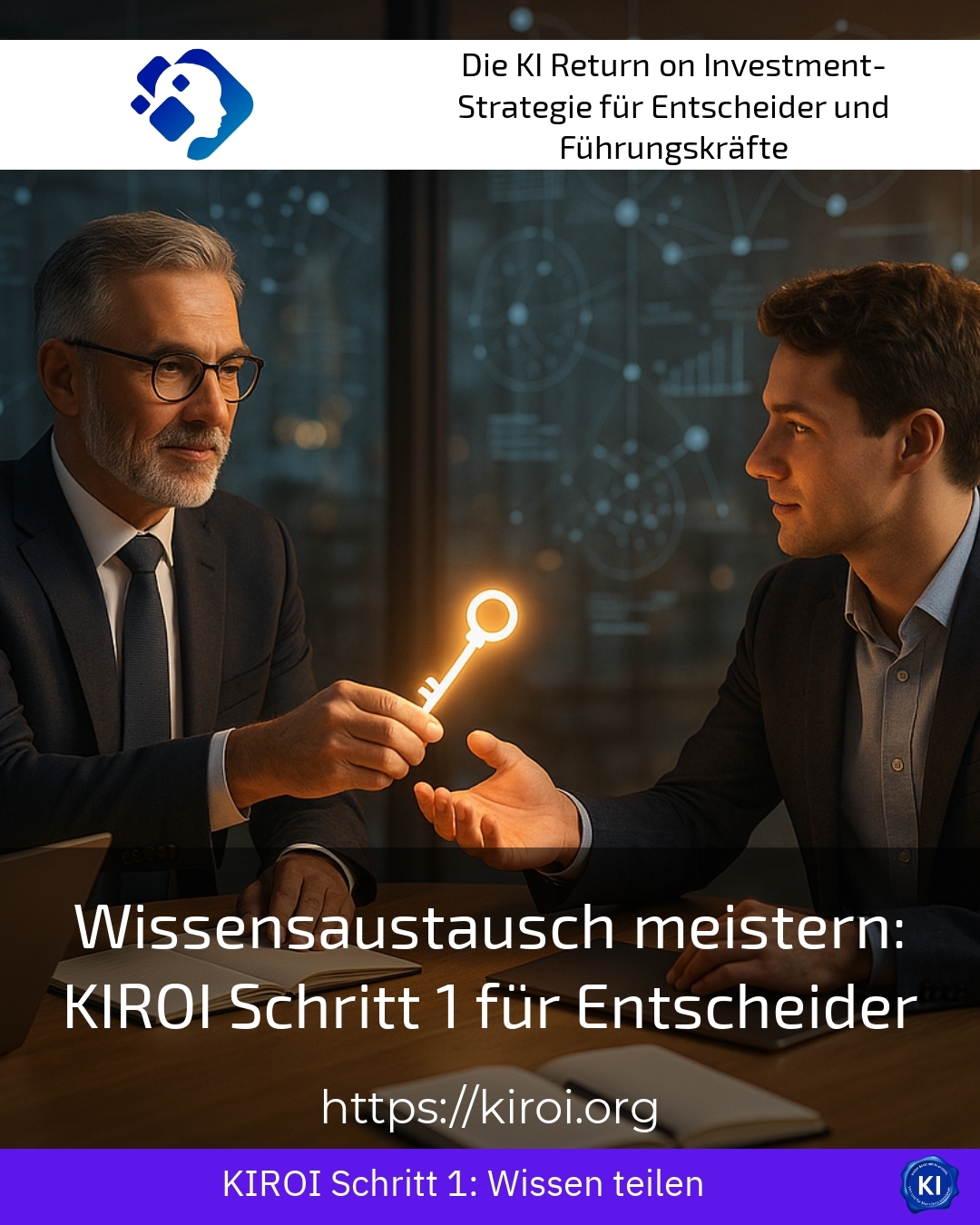
Mastering knowledge exchange: KIROI Step 1 for decision-makers
The introduction to the KIROI approach for supporting knowledge-sharing projects begins with a targeted analysis of the existing situation. Decision-makers should first assess the current level of knowledge within the company and identify key knowledge sources. It is helpful to consider both formal and informal communication channels and to recognise potential barriers. This allows individual and organisational obstacles, such as departmental boundaries or a lack of digital tools, to be addressed early on.
Companies from the financial sector that took stock at this stage were able to prevent critical expert knowledge from being lost during staff changes. A manufacturing company, on the other hand, realised that important experiential knowledge from long-serving employees had hardly been digitally recorded and shared until now. Service companies use this phase for workshops to foster personal exchange between different teams and locations.
Practical tips for decision-makers in the first step
For the first step in the knowledge exchange process to be effective, decision-makers should consider the following impulses:
- Conduct structured interviews with key individuals to make implicit knowledge visible.
- Use digital platforms, such as social intranets, for the central storage and exchange of explicit knowledge[1].
- Create incentives and a positive framework that foster an open culture of sharing and learning.
BEST PRACTICE with a client (name obscured due to NDA): As part of an AIROI project, an internal knowledge platform was established at a medium-sized industrial company. Parallel to this, regular exchange formats such as short presentations took place. This allowed employees to make their expertise more visible and use it across departments. This led to a noticeable improvement in the project workflow and stronger team dynamics.
Overcoming barriers – Challenges in knowledge sharing
Many decision-makers report that cultural hurdles, a lack of time, or insufficient trust make knowledge sharing difficult. To address these challenges, it is important to establish clear communication structures and create visible benefits for all involved. For example, in technology companies, targeted mentoring programmes lead to more implicit knowledge being openly exchanged. In administration, the introduction of collaborative tools like wikis results in improved documentation.
BEST PRACTICE with a client (name withheld due to NDA): A service company implemented KIROI techniques by establishing both awareness workshops and digital exchange formats. This helped to overcome initial reservations, and employees subsequently shared their knowledge regularly outside of structured meetings.
Fostering knowledge exchange long-term – Impulses for decision-makers
In addition to creating the technical prerequisites, culture plays a particularly significant role in sustainable success. Decision-makers can support the transition to an open knowledge culture through targeted guidance. Regular feedback rounds, transparent processes, and the integration of knowledge sharing into everyday work are important building blocks.
In research and development, for example, the combination of team meetings and knowledge bases establishes a consistent basis for exchange. In retail companies, the networking of sales and product teams generates new ideas for customer-oriented measures. In the healthcare sector too, professionals benefit from the fast and secure sharing of expertise to improve patient care.
BEST PRACTICE with a client (name withheld due to NDA): An international company used the KIROI method to create sustainable networks through structured knowledge-sharing forums for executives. These forums have since continuously supported the exchange of best practices and innovations within the company.
My analysis
The targeted and methodically supported introduction to **knowledge sharing** is crucial for overcoming knowledge barriers and utilising potential effectively. Decision-makers who plan and shape the first step carefully create a valuable foundation for collaborative learning and continuous progress. The right balance between technology, culture, and conscious support shapes success in this regard. In this way, knowledge sharing can serve as a catalyst for innovation and competitiveness in companies.
Further links from the text above:
Knowledge Exchange in Knowledge Management: Tools & Methods – tixxt
Knowledge transfer – Wikipedia
Knowledge Exchange: The Ultimate Guide – Easygenerator
3 Ways to Leverage Knowledge Sharing | The Workstream
For more information and if you have any questions, please contact Contact us or read more blog posts on the topic Artificial intelligence here.











 Deutsch
  English (UK)