
Why do so many leaders fail to actually translate their extensive expertise into measurable results?
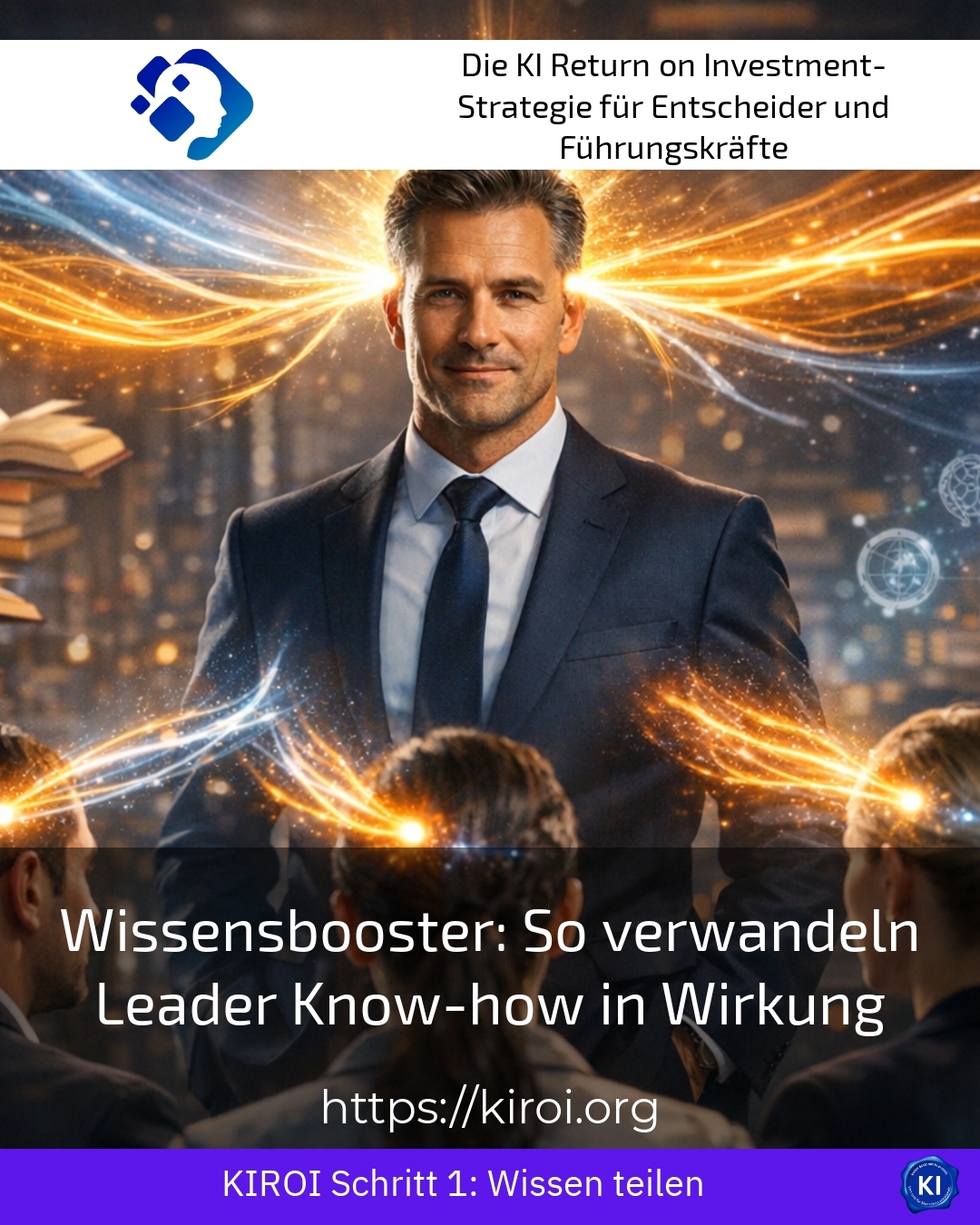
This question concerns decision-makers in almost all industries. The so-called Knowledge booster refers to a systematic approach. It helps leaders transform expertise into real impact. Many leaders possess impressive expertise. However, this knowledge often remains unused in their minds. The challenge lies in translating theoretical understanding into practical actions. This is where transruptive coaching serves as a support for projects. It helps leaders target their competencies. This leads to sustainable changes in organizations.
The hidden power of unused knowledge in companies
In modern organizations, a vast potential of untapped knowledge lies dormant. Executives accumulate valuable experience over the years. They attend seminars and continuously develop their skills. Yet many report a frustrating discrepancy. The acquired knowledge does not find its way into the workplace. A manager from the automotive industry aptly described this phenomenon. He had completed numerous management training courses. However, the methods learned there remained theoretical constructs. Only through targeted guidance did the practical implementation succeed.
Management professionals in the pharmaceutical industry regularly experience similar experiences. Research leaders possess excellent scientific expertise. However, transferring this expertise to team leadership and strategic decision-making does not happen automatically. One laboratory manager faced exactly this challenge. He was familiar with the latest developments in his field. However, his team’s motivation suffered under his leadership. The Knowledge booster-The approach helped him to connect the two worlds.
This problem is also evident in the financial sector. Portfolio managers master complex analytical methods perfectly. However, communicating their findings to clients presents them with difficulties. A bank director recognized this gap in her organization. She initiated a comprehensive development program for her management team. The results significantly exceeded all expectations.
Best practice with a AIROI customer
A medium-sized company in the mechanical engineering sector approached us with a particular challenge, as the management had invested significant sums in further training in recent years without seeing any measurable improvements in the corporate culture or in the company’s financial results. The management had extensive theoretical knowledge of modern management methods, but the practical application regularly failed in the day-to-day business. As part of our support, we first systematically analyzed the existing competencies and identified specific application areas in the daily work of the individual leaders. Together with the team, we developed individual implementation plans that provided for small but effective changes in the daily work. After six months of intensive coaching, the leaders reported noticeable improvements in team dynamics, and employee satisfaction increased by significant amounts according to internal surveys. Particularly noteworthy was the fact that no new knowledge had to be imparted, but only the already existing expertise was activated and translated into practical actions.
Knowledge boosters in the day-to-day management: Practical application areas
Transforming knowledge into action requires a systematic approach. Leaders face different challenges. These vary depending on the industry and corporate culture. In the technology industry, for example, technical expertise often predominates. Executives were promoted based on their professional competence. However, the associated leadership tasks often overwhelm them. A software development manager vividly described his situation. He was able to develop the most complex algorithms. However, leading a team of ten people still posed significant problems for him.
Similar patterns are evident in the healthcare sector. Doctors and clinic managers possess excellent medical expertise. The operational aspects of their leadership role often cause them headaches. One chief physician reported on her initial overwhelm. She suddenly had to manage budgets and make personnel decisions. Her medical studies had not prepared her for this. Through targeted support, she gradually developed the necessary skills.
The logistics industry faces its own unique challenges. Managers must understand and optimize complex supply chains. At the same time, they lead teams with diverse qualifications. A logistics manager had years of experience in process optimization. However, the emotional side of employee management was foreign to him. The approach of knowledge transfer helped him integrate both aspects.
Strategies for activating existing competencies
The activation of existing competencies begins with an honest inventory of existing knowledge. Leaders must first recognize what knowledge they actually possess. Subsequently, the identification of application areas in everyday life takes place. This phase requires time and reflection. Many leaders underestimate the breadth of their own knowledge. In the consulting industry, for example, senior consultants possess enormous methodological knowledge. However, the systematic transfer of this knowledge to younger colleagues rarely succeeds. An experienced corporate consultant recognized this problem. Together with his team, he developed new formats for knowledge transfer.
In retail, managers face other challenges. They must make quick decisions. At the same time, they must develop and motivate their team. A branch manager of a large retail chain described her situation. She had completed extensive training in customer service. However, implementing it in the hectic daily business did not work for her. It was only through regular reflection rounds that her behavior changed in a lasting way.
The energy industry is undergoing a fundamental transformation. Leaders must combine traditional know-how with new requirements. A regional manager of an energy provider faced this challenge. He had known the classic business for decades. However, the integration of renewable energy required completely new ways of thinking. The Knowledge booster-The process supported him in this transformation.
Best practice with a AIROI customer
An internationally operating business sought our guidance for a special project because the management of the various country-based companies had different areas of expertise and a systematic exchange of knowledge had not previously taken place. The German management brought deep knowledge of process optimization, while the French colleagues excelled in customer relationship management and the Scandinavian partners had developed innovative sustainability concepts. Our approach was to first systematically capture the existing knowledge across all units and then develop formats for mutual exchange that were adapted to the different cultures and working styles. We supported the management in recognizing, articulating, and making their own competencies accessible to others without acting as a mentor or provoking resistance. The project spanned eighteen months and led to a measurable increase in collaboration between the country-based subsidiaries as well as concrete improvements in the respective weaknesses of the individual units. Particularly gratifying was the feedback from the management themselves, who reported that through the process they not only shared their knowledge but also learned enormously themselves.
Knowledge boosters and the role of corporate culture
Corporate culture plays a crucial role in knowledge transformation. In some organizations, knowledge is viewed as a tool of power. Executives are reluctant to share their expertise. They fear losing their position. Such cultures significantly hinder the activation of existing competencies. In the insurance industry, we regularly encounter this phenomenon. Experienced insurance professionals store their knowledge. Younger colleagues are thus excluded from important information. A sales manager at a large insurance company recognized this problem. He initiated a cultural change in his department.
The media industry is currently undergoing fundamental changes. Traditional media companies must develop digital skills. At the same time, they possess valuable journalistic skills. A chief editor of an established magazine faced this challenge. She had to lead her team through the digital transformation. The existing expertise should not be lost in the process. The guidance helped her to connect the two worlds.
Similar dynamics are evident in the education sector. School principals and university deans possess pedagogical expertise. However, they are challenged by administrative and strategic tasks. A dean of a business faculty described his experiences. He had conducted successful research and taught for many years. Managing an entire faculty required entirely different competencies. Through systematic reflection, he achieved transformation.
The art of sustainable knowledge application
Sustainable knowledge application requires continuous practice and reflection. One-time workshops or seminars are not enough for this. Leaders need regular impulses and feedback. The aviation industry has long recognized this. Pilots undergo regular simulator training. Their theoretical knowledge is constantly applied practically. Similar approaches can be applied to leadership situations. A manager of a flight company adapted this concept. He established regular leadership simulations for his management team.
The chemical industry faces complex challenges. Managers must combine technical knowledge with safety aspects. At the same time, they are responsible for large teams. A plant manager of a chemical company reported on his development. Initially, he had great difficulties managing personnel. His technical expertise was excellent. However, he did not succeed in communicating with employees. Through continuous guidance, his leadership style changed fundamentally.
In the tourism sector, leaders must be particularly flexible. Seasonal fluctuations and unexpected events require quick adjustments. A hotel manager of a luxury hotel described his experiences. He had extensive knowledge of hospitality management. However, the application in crisis situations presented him with problems. The approach of systematic knowledge activation supported him in this.
My AIROI Analysis
The systematic transformation of knowledge into action represents one of the greatest challenges for modern leaders, and my analysis of numerous client projects clearly shows that the existing knowledge within organizations is often underestimated and inadequately utilized. Many companies invest significant resources in further training and education, without subsequently accompanying and supporting the practical application of the acquired knowledge, thereby wasting valuable investments. Knowledge booster-The approach offers a promising way here, by not primarily aiming to impart new knowledge but by activating the already existing expertise and translating it into concrete actions. The projects I have been involved in show that leaders are often surprised by how much untapped potential lurks within their teams and within themselves. The role of mentoring is not to dictate solutions but to provide impulses and trigger reflection processes that lead to sustainable behavioral changes. This approach is particularly effective in industries undergoing fundamental transformation and having to combine traditional expert knowledge with new requirements. In my opinion, the future of leadership development lies precisely in this combination of knowledge activation and practical mentoring, because only in this way can the enormous potential within organizations be effectively unlocked.
Further links from the text above:
[1] McKinsey Insights on People and Organisational Performance
[2] Harvard Business Review Leadership Articles
For more information and if you have any questions, please contact Contact us or read more blog posts on the topic Artificial intelligence here.








 Deutsch
 English (UK)