
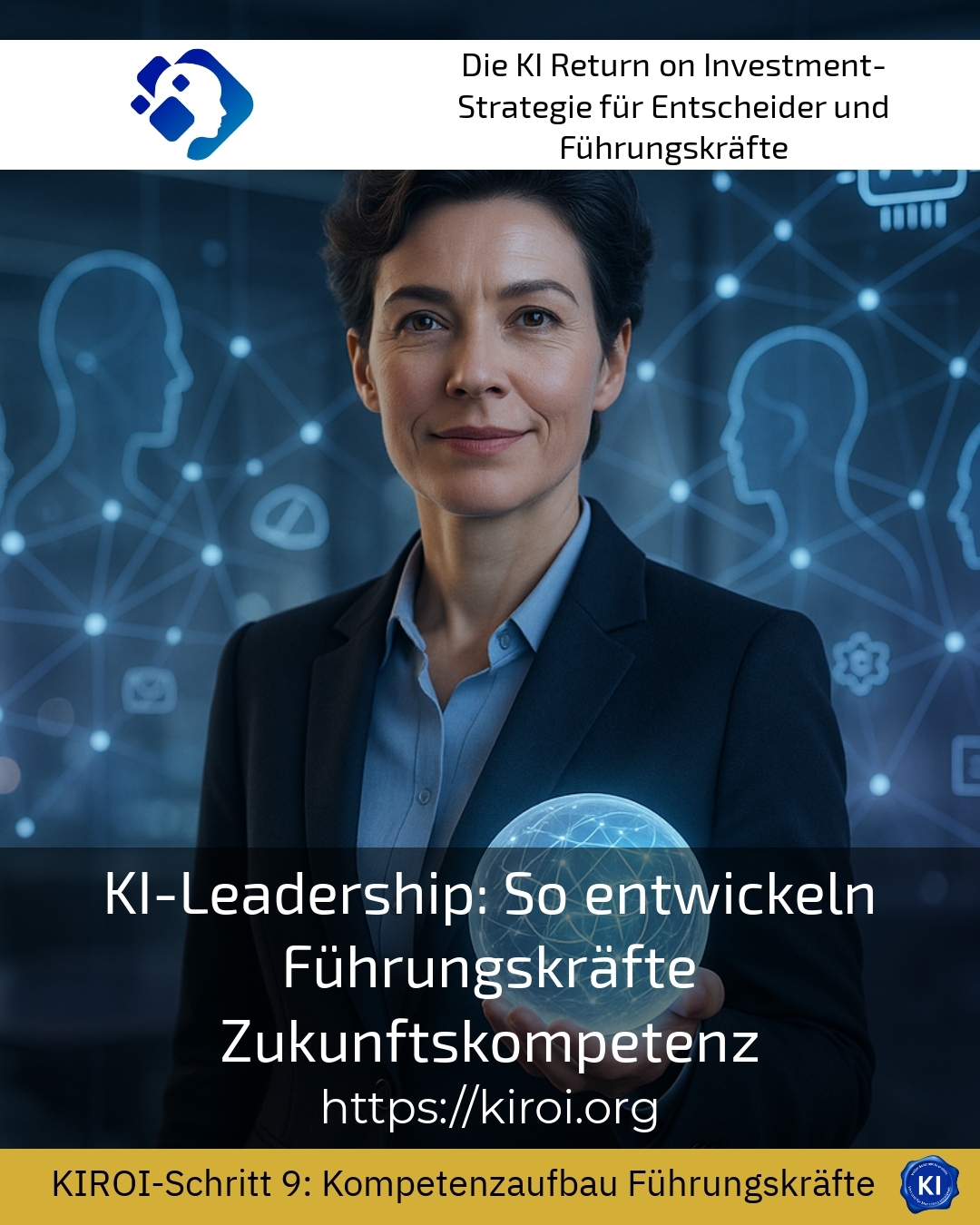
Will your decisions still be relevant in five years if intelligent systems think faster than you?
This question currently concerns countless executives in almost all industries and sectors of the economy, as the rapid development of algorithmic technologies is changing the requirements for modern leadership at a pace that overwhelms many executives and at the same time fascinates them. AI Leadership In this context, it refers to the competencies and skills that leaders need to navigate successfully in an increasingly intelligent system-driven work world, inspire teams, and make strategic decisions that optimally combine human and technological potential. Transruptive coaching specifically supports leaders in this transformation and provides valuable impulses for change.
Why traditional leadership models are reaching their limits
The classic leadership paradigms that were taught in management seminars over decades and practiced in boardrooms often rely on assumptions that need to be increasingly questioned in a digitized world. Hierarchical decision structures, in which information flows slowly through various levels, can hardly keep up with the speed of modern data processing. A mid-sized manufacturing company, for example, experienced this discrepancy firsthand when automated analysis systems detected quality issues, while the traditional reporting chain still required days to obtain the same insight. Similarly, a logistics company faced a similar situation, where its dispatchers were suddenly confronted with route suggestions that questioned their years of experience. A third example can be found in the financial sector, where portfolio managers had to learn to integrate algorithmic recommendations into their decision-making processes without sacrificing their own expertise.
These examples illustrate that leadership today is no longer primarily about knowing all the answers oneself. Instead, the goal is to ask the right questions and orchestrate various sources of information wisely. This requires a fundamental realignment of one’s own leadership understanding, which many experienced managers initially perceive as threatening before they recognize the enormous opportunities that arise from it.
Developing AI Leadership as a Core Strategic Competence
The development of AI Leadership As a strategic core competency, it requires a multidimensional approach that combines technical background understanding, ethical reflection, and human-centered leadership qualities. Leaders must not become programmers, but they should understand how algorithmic systems arrive at their results and what limitations these technologies have. An example from healthcare illustrates this vividly: a hospital administrator implemented a diagnostic support system and quickly realized that the real challenge was not in the technology, but in how doctors and nurses could integrate these new tools into their workflows. In retail, on the other hand, store managers had to learn to combine data-based assortment recommendations with their local market knowledge. And in the education sector, school principals faced the challenge of implementing adaptive learning systems in a way that teachers perceived them as support and not as a threat.
Best practice with a AIROI customer
A medium-sized machine-building company faced the challenge of preparing its entire leadership team to collaborate with intelligent systems without endangering ongoing operations or creating fear among employees. Together with the transruptive coaching approach, the company developed a step-by-step program that initially began with the team leaders in production and then expanded gradually to other areas. In weekly reflection rounds, the leadership team discussed their experiences and jointly developed strategies for dealing with resistance within the team. Particularly valuable was the realization that technical training alone was not enough; rather, emotional support for change was crucial. After about six months, the participants reported a significantly increased confidence in using data-based decision-making tools, and the initial skepticism had in many cases turned into genuine curiosity. The company also recorded a measurable improvement in employee satisfaction in the affected departments, because the management had learned to communicate changes transparently and actively involve their teams.
Technical basic understanding as the basis for sovereign decisions
Without a solid understanding of the technological possibilities and limitations, leaders cannot formulate realistic expectations for new systems or adequately guide their teams in their implementation. This does not mean that every leader needs to understand algorithms in detail. Rather, it is about being able to ask the right questions and critically assess the answers. In the insurance industry, for example, department heads had to understand why a claims settlement system marked certain cases for manual review and others for automatic processing. In human resources, HR managers learned to question the functioning of applicant screening systems and to identify potential biases. And in marketing, team leaders recognized that the recommendations of analytics tools could only be as good as the data on which they were based [1].
Ethical reflection in AI leadership practice
The ethical dimensions of technology use are gaining in importance, and leaders bear a special responsibility here. They must be able to reflect on the societal implications of automation decisions and communicate transparently with their stakeholders. For example, a telecommunications company faced the question of whether customer conversations could be automatically analyzed and how the insights gained should be used. A city administration, on the other hand, had to weigh which services could be replaced by automated systems and where human contact remained indispensable. And a media company was grappling with the question of how much algorithmic personalization was still conducive to the information mission [2].
Building future competence through continuous learning
The speed of technological developments makes it impossible to consider once acquired knowledge as permanently valid. AI Leadership Therefore, it requires a fundamental attitude of readiness to learn that goes beyond traditional forms of continuing education. Executives who want to develop this future-oriented competence must regularly engage with new developments and be willing to question their own beliefs. Transruptive coaching supports this continuous development and accompanies executives on their individual learning journey. For example, a construction company established monthly technology updates where executives were informed about current developments by internal and external experts. A pharmaceutical company established an internal network of technology scouts who identified and evaluated relevant innovations early on. And a retail company regularly sent selected executives to technology conferences and then expected a structured transfer of knowledge back to the company.
Best practice with a AIROI customer
An energy provider realized that traditional leadership development programs were no longer sufficient to prepare its managers for the digital transformation, and therefore sought innovative approaches for competency development. In collaboration with the AIROI-model, a hybrid learning format was developed that combined in-person workshops with digital self-study phases and individual coaching sessions. The executives worked on concrete projects from their daily work and received regular feedback on their progress. A particularly innovative aspect was the establishment of learning partnerships between experienced managers and younger employees with a high affinity for technology, which resulted in a mutual transfer of knowledge that benefited both parties. The older executives learned to understand new technologies more quickly, while the younger colleagues benefited from their partners’ leadership experience and gained insights into strategic decision-making processes. After completing the program, more than eighty percent of the participants reported that they felt significantly better prepared to prepare for technology-driven changes and had developed concrete ideas for their own areas.
Leading teams through technological change
One of the biggest challenges for leaders is to guide their teams through phases of technological change without compromising motivation and cohesion. Many employees react to the introduction of new systems with uncertainty or even fear for their jobs. Here, leaders with a strong sense of responsibility and commitment are crucial in ensuring that employees feel supported and safe. AI Leadership-Competence is required, one that can communicate transparently, set realistic expectations, and offer individual support. For example, an automotive supplier implemented extensive automation in quality control and accompanied the affected employees through a structured qualification program into new areas of responsibility. A bank, on the other hand, communicated early about planned changes in the customer service department and offered employees various development paths. And a logistics service provider actively involved its commercial employees in designing new work processes and used their practical knowledge to optimize the systems used [3].
Trust as the foundation of successful transformation
Without a stable relationship of trust between leaders and their teams, technological transformations can hardly succeed, because resistance and concerns are not openly communicated and secretly sabotage the process. Therefore, leaders must actively invest in building and maintaining trust relationships. For example, a chemical company introduced regular dialogue formats in which employees could directly address questions and concerns to the management. A software company established a culture of psychological safety in which even critical feedback on new technologies was welcomed. And a hospital created spaces for informal exchange between leaders and nursing staff to break down barriers and foster mutual understanding.
My AIROI Analysis
Developing future competencies for leaders is not a one-time task, but a continuous process that requires strategic planning, personal commitment, and professional guidance. The AIROI-model provides a structured framework for this, taking into account technological, human, and organizational aspects alike and enabling leaders to shape their individual development path. In my work with numerous companies across different industries, I have observed that the success of technological transformations is largely dependent on the quality of leadership and not primarily on the performance of the systems used. Leaders who are willing to question their own mindsets and develop new competencies can not only lead their organizations successfully through change, but also gain personal sovereignty and effectiveness. Transruptions coaching accompanies this process with proven methods and individual support, so that leaders can use the challenges of the digital transformation as an opportunity for their personal and professional development. The described examples show that successful AI Leadership It is not a question of age or technical background, but primarily a question of inner attitude and the willingness to continuously learn. Those who start building these competencies today will be better equipped tomorrow for a work environment that will continue to change fundamentally.
Further links from the text above:
[1] Harvard Business Review – Artificial Intelligence Insights
[2] McKinsey – AI and Analytics Insights
[3] MIT Sloan – Artificial Intelligence Research
For more information and if you have any questions, please contact Contact us or read more blog posts on the topic Artificial intelligence here.








 Deutsch
 English (UK)