
Why do so many transformation projects fail, even though the technical infrastructure is already in place and all systems are functioning flawlessly?
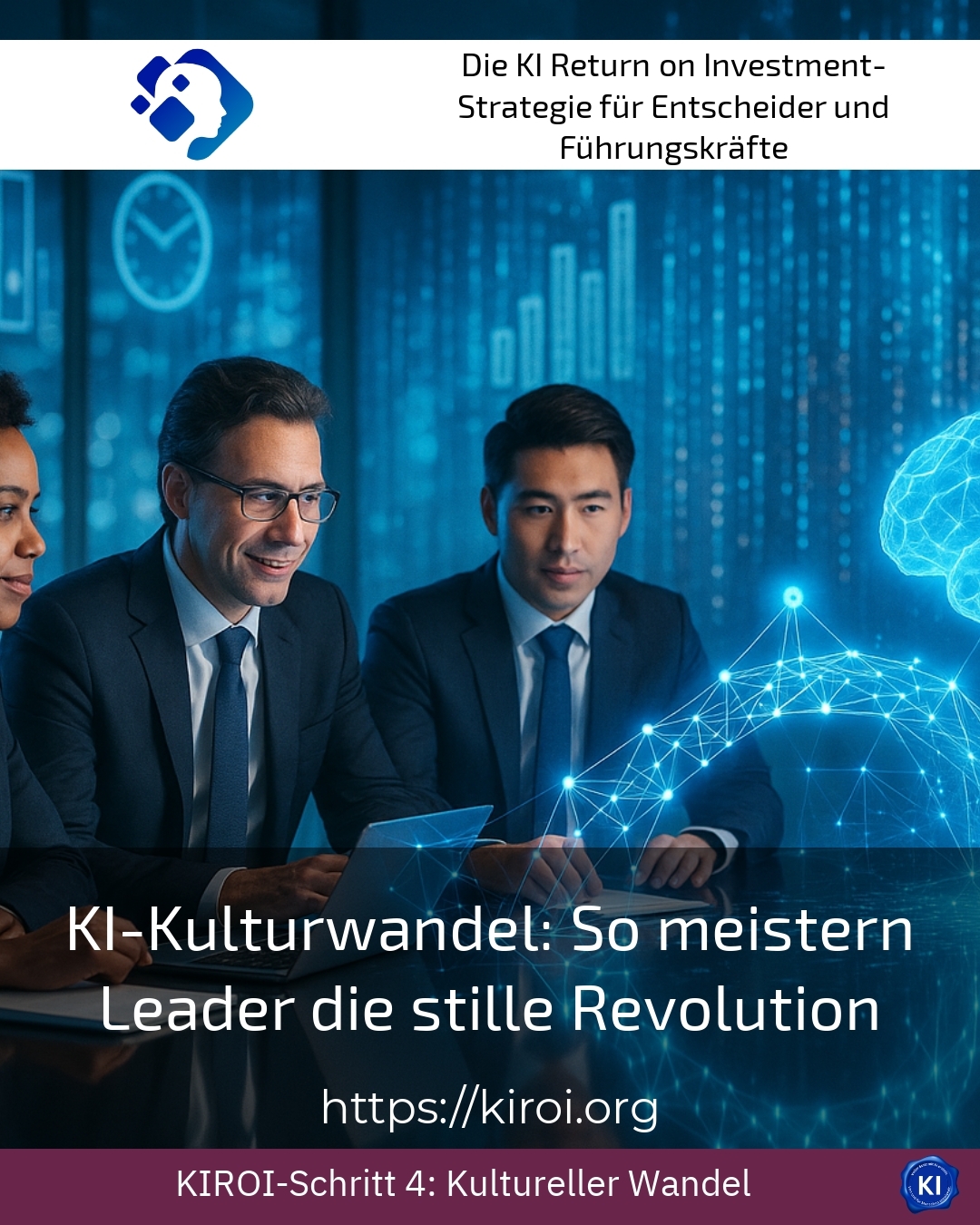
The answer rarely lies in the technology itself, but rather in the invisible currents that flow through every organization and that we commonly refer to as corporate culture. AI cultural change Describes that profound change that goes far beyond software implementations and process optimizations. Today, leaders face the challenge of guiding their teams through a phase of change that many employees initially perceive as threatening. This silent revolution not only changes workflows but also mindsets and communication structures. In this article, you will learn how experienced leaders can successfully orchestrate this transformation.
Understanding the invisible transformation
Before organizations adopt new technologies, they must take the human factor into account. Studies show that about 70 percent of all transformation projects fail [1]. The cause often lies not in inadequate technology but in cultural resistance. Employees feel left out and respond with passive resistance. Leaders regularly underestimate the emotional component of such changes.
In the financial sector, for example, clients often report fears regarding job security. Bank employees find that their years of expertise are suddenly in question. Insurance agents wonder if their advisory services are still needed. These concerns are justified and deserve serious attention.
Transruptions coaching helps leaders navigate such challenges. It provides a structured framework for dealing with cultural changes. The coaching process helps them understand resistance not as a hindrance but as valuable information.
Best practice with a AIROI customer
A medium-sized financial services company with about three hundred employees was faced with the introduction of automated customer support systems. The management initially chose a purely technical approach to implementation. After six months, usage rates stagnated at under twenty percent. Only through intensive cultural work involving all levels of management was the turnaround achieved. In workshops, we jointly identified the concrete concerns of the employees and developed transparent communication strategies. Team leaders were trained to become ambassadors of change and learned to take their teams’ concerns seriously. Within four additional months, active usage rose to over seventy percent. The key insight was that technical training alone is not sufficient to bring about lasting changes.
Developing leadership skills for the AI culture shift
Leaders today require different skills than a decade ago. The classic command-and-control mentality no longer works in the context of profound changes. Instead, they need empathic communication and the ability to tolerate uncertainty. Modern leadership means creating spaces for dialogue.
This is particularly evident in healthcare. Doctors and nurses bring years of experience. They understandably react skeptically to systems that provide diagnostic recommendations. Clinical management teams must be particularly sensitive here and clearly demonstrate the added value. For example, documentation time significantly decreases when speech recognition systems automatically capture findings [2].
Executives in the logistics industry also face similar challenges. Supervisors with twenty years of professional experience are suddenly expected to trust algorithmic route recommendations. Warehouse workers experience how automated systems change their work processes. Targeted coaching helps build bridges between the old and new work environments.
The art of active listening
Successful transformation begins with genuine listening. Leaders must understand what really drives their teams. Superficial employee surveys are not enough. Regular personal conversations and safe spaces for open criticism are needed.
A retail company introduced weekly dialogue rounds. Employees were able to express their concerns there without hierarchical pressure. After three months, the resistance had significantly decreased. The employees felt included and respected.
In the automotive industry, a similar pattern is evident. Production workers who have been working on the assembly line for decades initially face skepticism towards collaborative robotic systems. Supervisors who communicate on an equal footing achieve better results. They take the time to answer questions and personally demonstrate the new systems.
Creating structures for sustainable change
Cultural change requires systematic support from appropriate structures. One-time workshops are of little value if everyday life remains unchanged. Organizations must adapt their processes, incentive systems, and communication channels. Only in this way can a consistent environment be created for transformation.
AI culture change is particularly successful when companies create experimental spaces. In such protected areas, teams can try new working methods without having to fear mistakes. Pilot projects enable gradual learning and reduce pressure on all parties involved.
In the media industry, several publishers have set up so-called innovation labs. Editors can test new tools for content production there. The experiences are then gradually incorporated into the regular operations. This approach significantly reduces resistance.
Best practice with a AIROI customer
An internationally operating trading company with several thousand employees wanted to fundamentally modernize its purchasing processes. The experienced buyers initially viewed the planned changes as an attack on their expertise. As part of the transruptive coaching, we developed a communication strategy together that explicitly recognized the expertise of the employees. We organized workshops in which the employees themselves could define which tasks they would be happy to delegate and which they would not. The result positively surprised the management: The employees wanted relief from routine tasks such as order processing and documentation. At the same time, they wanted to use their time more effectively for supplier negotiations and strategic decisions. These insights were directly incorporated into the system design and significantly increased acceptance. After nine months, eighty percent of the shoppers reported an improved job satisfaction.
Communication as a key element in the cultural transformation of AI
Transparent communication forms the foundation of any successful transformation. Employees deserve honest information about upcoming changes. Rumors arise where official communication is lacking. Therefore, leaders must proactively inform employees, even if not all details are yet known.
In the energy industry, a provider has introduced regular town hall meetings. The management openly reports on the progress of the digitization projects there. Employees can ask questions directly and receive honest answers. This practice has significantly strengthened trust in the management [3].
The importance of good communication is also evident in the pharmaceutical industry. Researchers who are to work with data-driven analysis systems need clear information about the benefits. They want to understand how their work is enriched by new tools. Abstract promises of efficiency are not enough.
Constructively use resistance
Resistance to change is not a disorder; it contains valuable information. Critical voices often point out real problems that would otherwise be overlooked. Wise leaders actively encourage criticism and take objections seriously. In this way, better solutions emerge for all involved.
This is particularly evident in the field of legal advice. Lawyers with years of professional experience critically question new research systems in terms of law. Their objections often lead to important improvements in the tools used. Law firms that incorporate this expertise achieve demonstrably better results.
In the education sector, teachers are experiencing similar changes. They fear being replaced by automated assessment systems. This fear is understandable and deserves respect. Schools that involve teachers as partners in the development experience less resistance.
The tourism industry also offers instructive examples. Travel consultants often view booking platforms as a threat. However, intelligent integration creates added value for all parties. Consultants can focus on complex travel requests, while standard bookings run automatically.
My AIROI Analysis
After intensive consideration of the topic, several key insights have emerged that are crucial for successful transformation projects. First, it becomes clear that technical excellence alone is never sufficient to bring about sustainable change in organizations. The human dimension deserves at least as much attention as the technical implementation.
Executives regularly underestimate the time required for cultural change processes. While technical systems can be implemented in weeks or months, real cultural change often takes years. This discrepancy often leads to frustration on all sides. Realistic time plans and continuous support are therefore essential.
What is particularly striking is the importance of trust in transformation processes. Organizations with an already established trust culture manage change much more easily. However, where mistrust prevails, new technologies often exacerbate existing conflicts. Therefore, investing in relationship building pays off in the long term.
The most successful transformations combine technical innovation with cultural sensitivity. They honor existing expertise and create spaces for shared learning. Transruptions coaching offers a proven framework for this, providing inspiration and supporting development processes. Ultimately, it is not the technology that determines success; it is the way people deal with change.
Further links from the text above:
[1] McKinsey: Why do most transformations fail?
[2] Healthcare IT News: Voice recognition technology reducing clinician burden
[3] Harvard Business Review: Transparent Leadership During Transformation
For more information and if you have any questions, please contact Contact us or read more blog posts on the topic Artificial intelligence here.









 Deutsch
 English (UK)