
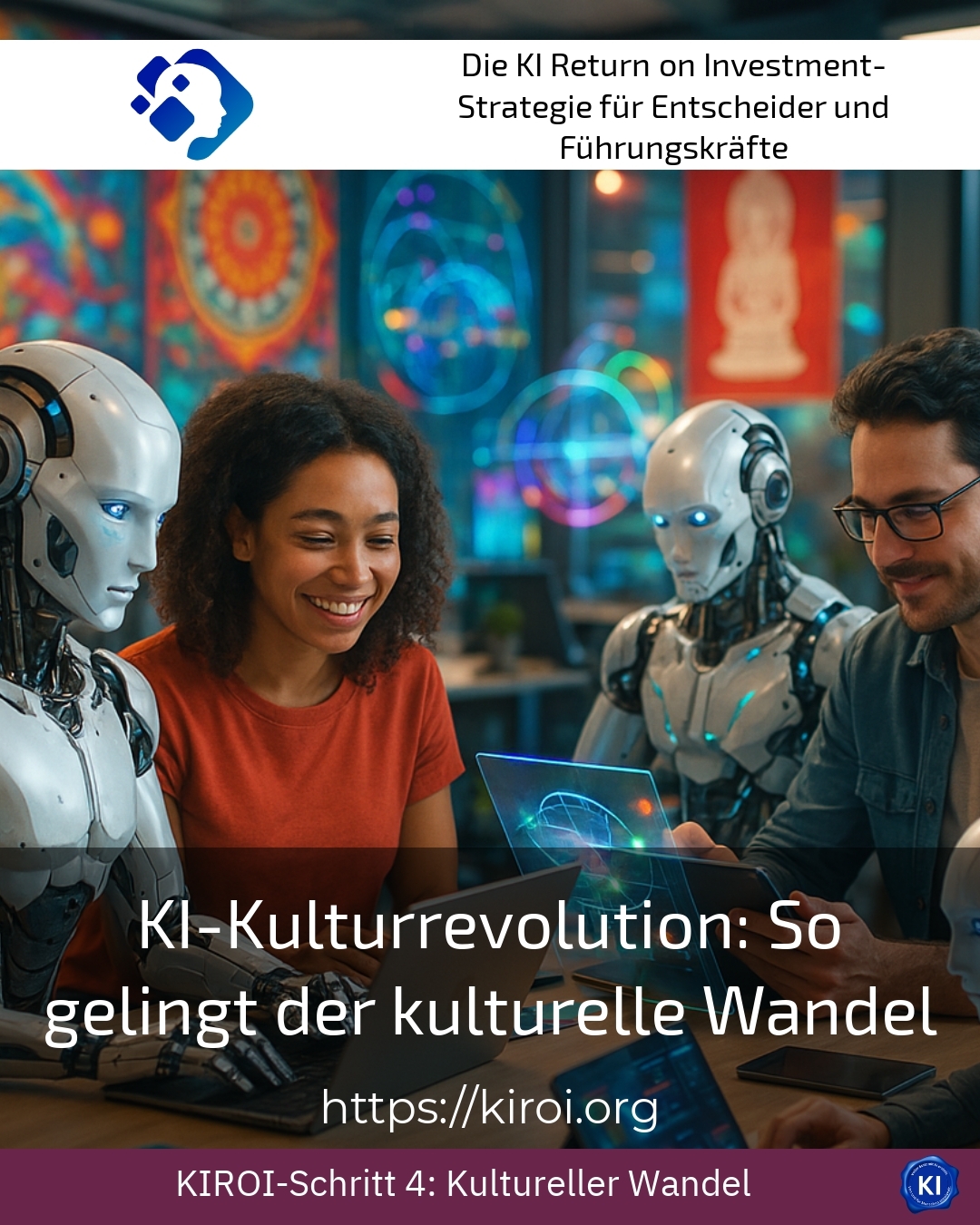
Imagine your entire organisation undergoes a fundamental change. Not just through new machinery or software. But through a completely new way of thinking, working and collaborating. The AI Culture Revolution is knocking at the door. Many companies have long recognised that technological innovations only fully unfold their potential when the people behind them are willing to embrace profound change. But how can this cultural shift actually be achieved? What are the stumbling blocks along the way? And why do so many organisations fail precisely at this challenge? In this article, you will learn which strategies have proven effective and how you can successfully lead your teams into a new era.
Understanding the foundations of the AI cultural revolution
Before we discuss specific actions, we need to understand the foundation. Cultural change within organisations always starts in the mind. It begins with beliefs, values, and behaviours. New technologies fundamentally alter these elements. They challenge established hierarchies. They question traditional ways of working. And they demand entirely new competencies.
A medium-sized manufacturing company in the mechanical engineering sector experienced precisely this challenge. The workforce consisted of experienced skilled workers with decades of expertise. Suddenly, intelligent systems were to support decision-making. The resistance was enormous at first. Many employees felt threatened and overlooked. Only when the management level began to actively involve the employees did the tide turn. The expertise of the skilled workers became valuable input for the new systems. This created a symbiosis of human expertise and technological support.
Another example comes from the healthcare sector. A large clinic chain wanted to optimise diagnostic processes. Initially, doctors were sceptical about algorithmic recommendations. Through targeted training and transparent communication, their attitudes changed. Today, many practitioners report finding the support to be an enrichment. They have gained more time for actual patient care.
Best practice with a AIROI customer
An internationally operating logistics company faced the task of transforming its entire warehouse logistics. The initial situation was characterised by uncertainty and resistance at all levels of the organisation. Transruption coaching intensively supported the company through this change process over a period of eighteen months. Initially, all managers were sensitised in workshops and prepared for their new roles. They learned how they could function as multipliers of change and which communication strategies had proven effective. Subsequently, so-called change ambassadors were identified and trained from among the workforce. These individuals enjoyed the trust of their colleagues and were thus able to build bridges between management and the shop floor. The establishment of experimental spaces, where teams were allowed to try out new ways of working, was particularly effective. Errors were explicitly defined as learning opportunities and not sanctioned. After twelve months, a clear improvement in the acceptance of new technologies was evident. Employee satisfaction increased measurably and staff turnover decreased noticeably. Today, the company is considered a role model for successful cultural change throughout the industry.
Leadership as the Key to the AI Cultural Revolution
Without committed leadership, every cultural change fails. Leaders must lead the way. They must learn themselves, experiment, and also admit mistakes. This role model function cannot be delegated. It requires courage and authenticity.
In the financial sector, we are observing interesting developments. One regional bank decided to redesign its customer advisory service. Branch managers were initially trained intensively. They learned how data-driven recommendations can improve the quality of advice. Subsequently, they passed this knowledge on to their teams. Success was achieved because the managers themselves were convinced of the possibilities.
A trading company took a different approach. Mixed teams were formed from experienced employees and younger digital natives. These teams jointly developed new processes for inventory management. The intergenerational exchange enriched both sides. The older employees brought their knowledge gained from experience, while the younger employees contributed their technical know-how.
In the educational sector, a similar pattern emerges. A private university fundamentally transformed its administrative processes. The deans actively took responsibility for the change. They communicated openly about challenges and progress. This transparency created trust and significantly reduced anxieties among the faculty.
Communication as the Foundation for Change
Successful communication determines success or failure. People need guidance in times of change. They want to understand why change is necessary. And they want to know what role they play in it. These questions deserve honest answers.
A pharmaceutical company developed an innovative communication strategy. Weekly video updates informed the workforce about progress. Questions could be asked anonymously. The answers were shared transparently. This created a continuous dialogue between management and employees [1].
A different approach has proven itself in the automotive industry. So-called dialogue forums have been set up there. Employees from all areas meet regularly. They discuss opportunities and risks of the transformation. These formats significantly promote mutual understanding.
An energy provider focused on storytelling. Success stories from within the company were widely communicated. Employees spoke about their positive experiences. These authentic voices were more convincing than any PowerPoint presentation.
Systematically design competence development
The AI Culture Revolution requires new skills at all levels. Basic technical understanding is becoming a fundamental competency. But social skills are also gaining importance. Critical thinking, creativity, and empathy cannot be automated. These human strengths are becoming more valuable than ever.
An insurance group invested heavily in further training. All employees received an individual learning budget. They could decide for themselves which skills they wanted to develop. This autonomy significantly increased motivation. The willingness to learn grew measurably.
Internal academies have been established in the media sector. Journalists there learn how to use data-driven research tools. At the same time, ethical questions are intensely discussed. The combination of technical knowledge and journalistic integrity is crucial.
A tax consultancy firm chose the path of peer education. Employees with specialist knowledge train their colleagues. This approach promotes knowledge sharing at eye level. It also strengthens team cohesion [2].
Best practice with a AIROI customer
A medium-sized family business in the food industry faced particular challenges with cultural transformation. The workforce was strongly influenced by traditional values, and many employees had worked at the company for decades. Transruption coaching developed a bespoke approach that took the company's unique culture into account. First, a comprehensive cultural analysis was carried out to identify existing strengths and use them as a starting point for change. The employees' high identification with the company proved to be a valuable resource for the transformation. In moderated workshops, the teams themselves developed suggestions for integrating new technologies into their work processes. This bottom-up participation created acceptance and ownership for the changes. Particularly effective was the involvement of employees nearing retirement as mentors for younger colleagues. Their experience and knowledge thus flowed into the design of the new processes, while also being preserved for the organisation. After the project was completed, the speed of innovation had tripled, while employee retention remained stable at a high level.
Adjust structures and processes
Cultural change requires appropriate conditions. Rigid hierarchies often significantly hinder innovation. Flexible structures enable faster adaptations. Agile working methods can support transformation. But they are not an end in themselves.
A technology company introduced cross-functional squads. These teams work together on concrete projects. They bring together different perspectives and competencies. The results often exceed expectations. Employees report higher satisfaction.
The structural shift is more challenging in the public sector. Nevertheless, a city administration experimented with new formats. Administrative employees and citizens are jointly developing digital services. This co-creation strengthens trust in the administration.
A construction company has fundamentally changed its decision-making processes. Decisions are now made closer to the construction site. Site managers have been granted more autonomy. This decentralisation speeds up projects and improves quality [3].
Constructively use resistance
Resistance to change is normal and human. It often contains valuable information. Critical voices point out blind spots. They deserve to be heard, not suppressed. Constructively dealing with resistance is an art.
A telecommunications company established so-called devil's advocate rounds. In these, planned changes are deliberately questioned critically. This institutionalised scepticism improves the quality of decisions. At the same time, critics feel taken seriously.
In the textile industry, concern hotlines were established. Employees can anonymously voice their concerns there. These are systematically analysed and processed. This gives management a realistic picture of the mood among the workforce.
A chemical company uses resistance as a source of innovation. Critical employees are specifically involved in pilot projects. Their scepticism protects against hasty decisions. At the same time, they become ambassadors if they can be persuaded.
The role of external support in the AI cultural revolution
Many organisations benefit from external support. A fresh outside perspective identifies blind spots. Experienced consultants bring knowledge from other industries. They can act as neutral mediators in conflicts.
Transruption coaching positions itself as support for projects involving cultural change. It provides impulses for new ways of thinking. It supports leaders with difficult decisions. And it accompanies teams through phases of uncertainty.
A mechanical engineer reported positive experiences with external support. The outside perspective helped to break through entrenched patterns. The consultants brought proven methods with them. At the same time, they adapted these to the specific company culture.
The combination of coaching and training is proving effective in retail. Managers receive individual support. At the same time, they receive further training in groups. This mix of individual and collective development shows a sustainable impact [4].
My AIROI Analysis
The AI Culture Revolution poses fundamental challenges for organisations. It demands far more than technological investment. It requires a profound rethink at all levels. Examples from various industries show that cultural change can be successful. The prerequisite is a smart strategy and consistent implementation.
The role of leaders seems particularly important to me. They must actively embody and communicate change. Without their authentic conviction, any initiative remains superficial. At the same time, they must not ignore employees' fears. These concerns often contain valuable insights for shaping the transformation.
Skills development deserves special attention. Technical knowledge alone is not enough. Social skills, creativity and adaptability are gaining importance. Organisations should invest generously in further training. The return on this investment is demonstrated in higher innovative strength and employee retention.
Finally, I would like to stress the importance of patience. Cultural change takes time. Quick successes are rarely sustainable. Organisations should plan for realistic timeframes. And they should accept setbacks as part of the learning process. With this attitude, cultural transformation can succeed and have a lasting positive impact.
Further links from the text above:
[1] Harvard Business Review – Change Management
[2] McKinsey Insights – People and Organisational Performance
[3] Gartner – Human Resources Research
[4] World Economic Forum – Future of Work
For more information and if you have any questions, please contact Contact us or read more blog posts on the topic Artificial intelligence here.










 Deutsch
  English (UK)