
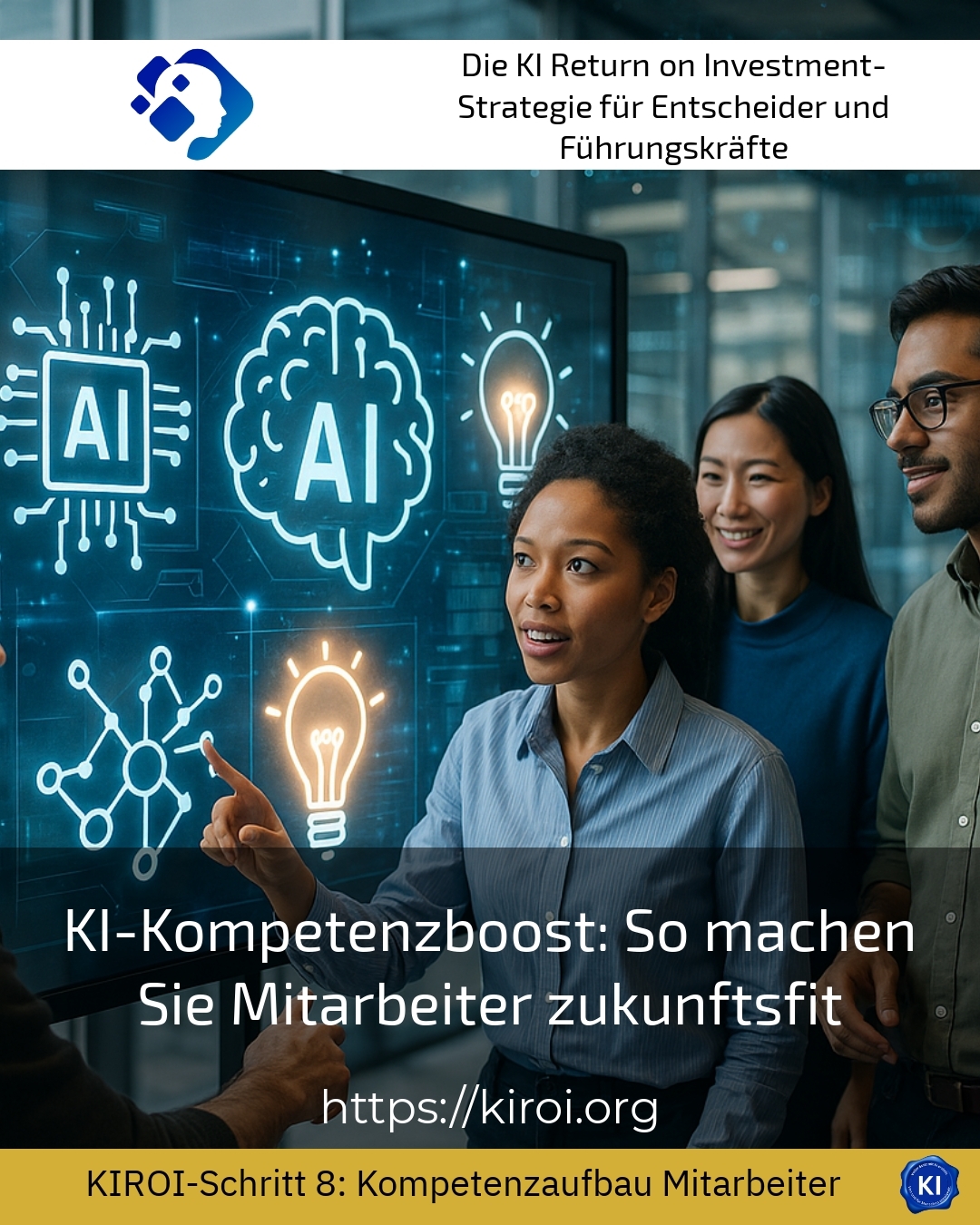
The digital transformation is changing our world of work at a breathtaking pace, and those who don't act today will lose out tomorrow. Companies face the immense challenge of preparing their workforce for a future in which intelligent systems become everyday tools. The AI Skills Boost: How to Future-Proof Employees is no longer an optional measure, but a strategic necessity for any organisation that wishes to remain competitive. Many leaders report uncertainty and anxiety within their teams when it comes to implementing new technologies. These concerns are understandable and relatable. At the same time, actively engaging with these tools holds enormous potential for growth and innovation. In this post, you will learn how to gently and effectively guide your employees on their journey into this new era.
Why the AI skills boost is becoming indispensable now
The integration of intelligent systems into operational processes is advancing relentlessly. Companies of all sizes are already experimenting with automated processes and data-driven decision support. In the manufacturing industry, networked sensors monitor production quality and predict maintenance needs. Logistics companies are optimising their supply chains through precise demand forecasting and dynamic route planning. The financial sector is using intelligent algorithms for fraud detection and risk assessment with impressive results. In healthcare too, image recognition systems are assisting doctors in the diagnosis of complex medical conditions.
These developments are creating a completely new working reality. Employees must learn to collaborate with these tools and critically assess their results. The purely manual execution of repetitive tasks is losing importance. Instead, analytical skills and creative problem-solving are gaining considerable significance. Those who develop these competencies will become indispensable partners to intelligent systems. Those who neglect them risk losing touch with modern working methods.
A medium-sized mechanical engineering company recently integrated predictive maintenance systems into its production halls. Technicians suddenly had to interpret data analyses and derive recommendations for action. A retail group introduced intelligent inventory management software, which fundamentally changed purchasing behaviour. An insurance company automated claims processing, requiring claims handlers to develop new consulting skills. These examples highlight the urgency of systematic skills development in all areas.
Best practice with a KIROI customer
A family business steeped in tradition, operating in the manufacturing sector, approached us with a complex situation. Management had made significant investments in intelligent manufacturing systems, but employee adoption remained alarmingly low. Many workers felt overwhelmed by the new technology and developed genuine avoidance strategies. The expensive systems were only being used superficially, meaning the hoped-for efficiency potential remained largely untapped. As part of a structured support process, we first analysed individual skill gaps and emotional resistance within the team. We then developed a tailor-made training programme that combined technical knowledge with practical application scenarios. The involvement of experienced employees as internal multipliers and contact persons was particularly important. After six months of intensive support, system usage increased by an impressive seventy percent. Employees reported growing confidence in using the new tools. The company was able to realise the projected efficiency gains for the first time and is now planning further digitalisation steps.
Strategies for a sustainable boost in AI competence within the company
Successful competence development begins with an honest assessment of existing skills and knowledge. Many companies significantly underestimate the potential already present within their teams. At the same time, they overlook critical gaps that could jeopardise the success of transformation. A systematic analysis therefore forms the indispensable foundation for all further measures.
A multi-stage approach with varying intensity levels and target groups is recommended. For the wider workforce, basic awareness measures and introductory training are often sufficient. Specialist departments, on the other hand, require in-depth knowledge in their specific areas of application. Managers must also develop strategic competencies to successfully manage transformation projects. This differentiated approach prevents both overload and wasted resources.
In retail, progressive companies are training their sales teams to use intelligent recommendation systems. In the construction industry, project managers are learning to use planning software with predictive functions. Law firms are training their lawyers in the use of automated document analysis. These industry-specific applications demonstrate the diversity of possible use cases and competence requirements.
Designing learning formats for diverse needs
The choice of appropriate learning formats is a key factor in the success of all training initiatives within a company. Traditional classroom-based training provides an intensive learning environment with direct interaction and immediate feedback. E-learning modules, on the other hand, allow for flexible learning at one’s own pace and in one’s preferred location. Blended learning approaches combine the advantages of both methods to create particularly effective comprehensive packages.
Practice-oriented workshops with real application scenarios from the employees' own work environment prove to be particularly effective. Employees do not learn abstractly, but by using concrete tasks and challenges from their everyday work. This transfer orientation increases motivation and significantly accelerates actual application in day-to-day business. Peer learning groups and internal mentoring programmes further enhance these positive effects through collegial exchange.
A telecommunications company set up so-called learning islands in its branches. There, employees can try out new systems in a protected environment and ask questions. A hotel chain developed playful learning modules for its reception teams. A logistics service provider organised regular exchange meetings between experienced and new users. These creative approaches sustainably increase the willingness to learn and reduce apprehension.
Recognising resistance and providing constructive support
Change processes almost always trigger resistance, which must and should be taken seriously. Employees worry about job security and fear losing their familiar routines. Some doubt their ability to learn or feel that the new demands are unreasonable. These emotional reactions are human and understandable; they deserve to be treated with respect.
Clients frequently report feelings of being overwhelmed and disoriented in the face of technological changes. They describe uncertainties regarding their future role within the company and their perceived value. Some express specific fears about job loss or being reduced to mere machine operators. These issues are brought into consultation and coaching sessions with us by individuals.
Transruptions-Coaching positions itself as empathetic support for projects involving technological transformation and skills development [1]. It offers space for reflecting on individual concerns and developing personal coping strategies. Coaches provide impulses for reorientation and support in discovering new strengths and possibilities. This individual support complements technical training by adding the important emotional dimension of change.
In the automotive industry, specialised coaches supported factory workers during the transition to networked production systems. A bank employed transformation facilitators as it shifted its customer advisory services to data-driven recommendation systems. A media company organised reflection workshops for editors who were to work with automated research tools. These examples illustrate the range of possible support measures in different contexts.
Best practice with a KIROI customer
A regional bank with several branches was facing a fundamental reorientation of its advisory services. The introduction of intelligent analysis tools was intended to enable personalised investment recommendations and significantly enhance the quality of advice. However, the experienced advisors reacted with unexpectedly strong resistance to these plans. They feared that their expertise, acquired over years, would be devalued and replaced by algorithms. The mood in the teams noticeably deteriorated, and initial threats of resignation were heard. In this tense situation, we supported the company with an intensive coaching programme. We worked with individual managers as well as entire teams on their concerns. It became clear that the technical change touched upon deep identity issues and required recognition. Through targeted reflection exercises and shifts in perspective, the advisors developed a new sense of self as experts with technological support. They recognised the systems as helpful tools that enrich their work rather than replace it. After the completion of the programme, acceptance of the new systems increased significantly. Today, the advisors report higher quality of work and more satisfactory customer conversations.
The AI competence boost as part of the company culture
Sustainable competence development is only successful when it is anchored in the company culture and can flourish there. One-off training measures quickly fizzle out if what is learned is not applied in everyday work. Managers play a crucial role model function through their own learning behaviour and openness to new things. A culture of willingness to experiment and constructive failure promotes the continuous development of all involved.
Successful companies establish learning routines and create structures for regular knowledge sharing in everyday work. They celebrate learning progress and acknowledge their employees' efforts to acquire new skills. They integrate skills development into performance agreements and development discussions as a matter of course. This systematic embedding ensures long-term learning success and the continuous advancement of the entire organisation.
A pharmaceutical company introduced weekly learning sessions where teams shared their experiences with new tools. An energy provider rewards employees who assist colleagues in onboarding with new systems. A management consultancy integrated technological competence as a fixed criterion in its promotion decisions. These cultural measures significantly and sustainably enhance the impact of individual training offerings.
Performance measurement and continuous optimisation
Every investment in skills development should be verifiable in terms of its effectiveness. Pure participant numbers and satisfaction ratings are not sufficient as indicators of success. Rather, it is crucial whether what has been learned is actually applied in practice and brings about measurable improvements. Meaningful key figures therefore include usage rates of new systems and qualitative changes in work processes.
Regular feedback loops enable the early identification of problems and adaptation needs in training measures. Employee surveys provide insight into perceived competence gaps and desired support services. The analysis of error patterns and support requests offers valuable information on common difficulties and issues with understanding. This data-driven management continuously increases the efficiency of all qualification activities [2].
An industrial company linked training data with productivity metrics for its production lines and teams. A hospital systematically analysed the quality of documentation before and after the introduction of voice-enabled input systems. A financial services provider closely monitored trends in the customer complaint rate in relation to new advisory tools. These measurement approaches provide a solid basis for informed decisions regarding further investment in skills development.
My KIROI Analysis
After intensive engagement with numerous transformation projects across diverse industries, some key insights have emerged. The success of technological changes depends far more on human factors than on the quality of the technology itself. Companies that involve and genuinely support their employees from the outset achieve significantly better results than those that rely purely on technical implementation. The emotional dimension of change deserves at least as much attention as functional training.
Organisations that view skills development as a continuous process rather than a one-off project are particularly successful. They create structures for regular learning and establish a culture of openness to new ideas. Leaders play a central role model function through their own visible learning behaviour and genuine enthusiasm. The combination of technical qualification and personal support proves to be particularly effective.
At the same time, my experience warns against overblown expectations and unrealistic timelines in transformation projects. Profound competence development requires time, patience, and continuous investment in people and structures. Quick training measures without sustainable anchoring regularly fizzle out without lasting effect. Companies should therefore plan for the long term and provide sufficient resources to support their employees. The AI Skills Boost: How to Future-Proof Employees requires strategic foresight and genuine commitment from senior management. Only then can it fully unfold its potential for the organisation and its employees alike.
Further links from the text above:
[1] Transruptions Coaching at RISAWAVE
[2] KIROI - Masterplan for Business
For more information and if you have any questions, please contact Contact us or read more blog posts on the topic Artificial intelligence here.











 Deutsch
  English (UK)