
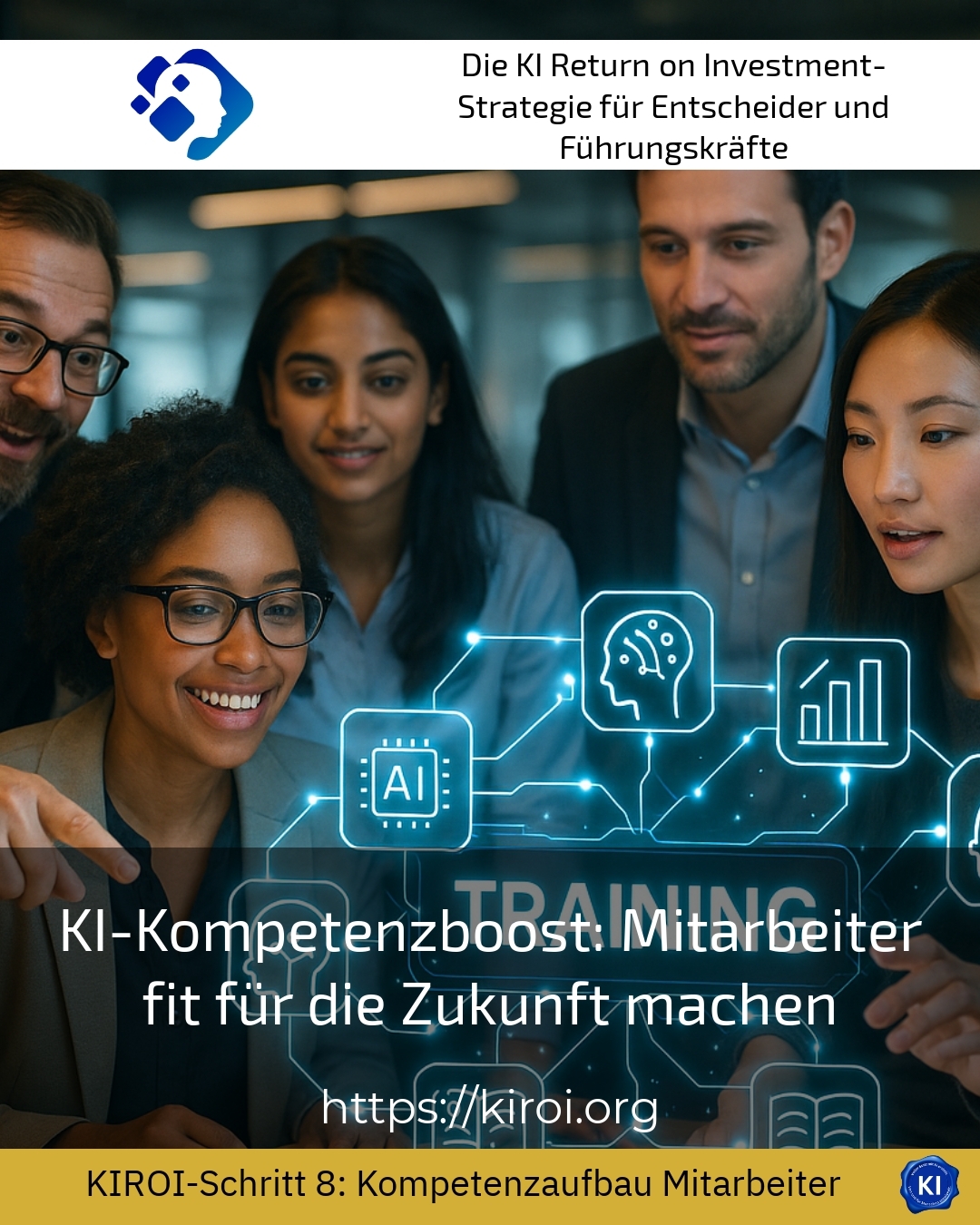
The digital revolution doesn't wait for those who hesitate – it rewards those who act and strategically prepare their teams for upcoming challenges. In an era where intelligent systems are increasingly permeating work processes, a central question arises for decision-makers: How can one succeed AI Skills Boost: Getting Employees Ready for the FutureThe answer lies not solely in the technology itself, but rather in the systematic development of human capabilities that enable effective use of these new tools. Companies that invest in upskilling their workforce today secure a crucial competitive advantage. They create resilient organisations that do not fear change, but rather see it as an opportunity.
The strategic importance of competence development in the digital age
The integration of intelligent technologies into business processes is fundamentally changing the skills employees need. Traditional qualification profiles are often no longer sufficient. Instead, analytical thinking and critical judgement are becoming more important. Employees need to understand how algorithmic decisions are made. They should be able to interpret and contextualise results. The ability to collaborate between humans and machines is becoming a key competency. This does not mean turning all employees into technical experts. Rather, teams need a fundamental understanding of the capabilities and limitations of intelligent systems [1].
In the manufacturing industry, this development is particularly evident. Production workers are increasingly collaborating with predictive maintenance systems. Quality inspectors use image recognition systems for error detection. Logistics specialists coordinate their work with autonomous transport vehicles. These new working realities require adapted competence profiles. In healthcare, intelligent assistance systems support diagnosis. Nursing staff document using voice-controlled interfaces. Administrative staff use automated processes for routine tasks. The financial sector is also experiencing profound changes through algorithmic analysis and advisory tools.
Why the AI skills boost: Making employees fit for the future must become a priority
Many organisations underestimate the time required for effective skills development. Technical implementations often happen faster than cultural adaptation. This discrepancy leads to frustration for employees and managers alike. Employees feel overwhelmed due to a lack of necessary training. Managers find that expensive investments do not yield the expected results. The solution lies in a holistic approach. Technical implementation and skills development must happen in parallel. Only then can sustainable benefits be realised for all involved [2].
Retail companies are increasingly relying on intelligent inventory management systems. Sales staff require new skills for interpreting forecasts. In the construction industry, algorithms support project planning and resource allocation. Architects and engineers are learning to integrate these tools into their workflows. Media companies are using automated content generation and curation. Journalists and editors are developing new working methods in collaboration with these technologies.
Best practice with a AIROI customer
A medium-sized mechanical engineering company faced the challenge of preparing its service technicians for the use of predictive maintenance systems. Management recognised early on that technical installation alone would not be sufficient. Together with transruptions-Coaching, the company developed a multi-stage qualification programme. Initially, all technicians received foundational training in algorithmic decision-making processes. They learned how the system predicts maintenance needs and what data is involved. In a second step, employees trained in the practical application in their daily work. Experienced colleagues mentored newcomers on their initial assignments. The programme included regular reflection sessions where experiences were shared. After six months, a significant increase in competence was evident. The technicians developed a deep understanding of working with the system. They were able to critically assess algorithmic recommendations and correct them if necessary. Customer satisfaction increased because maintenance work was carried out more strategically. The company established a learning culture that promotes continuous development.
Methodological approaches to sustainable competence development
Successful qualification programmes combine various learning formats and methods. Classic training often forms only the starting point. Approaches that integrate learning into daily work are more effective. Microlearning units enable continuous learning in small portions. Peer learning promotes knowledge exchange between colleagues. Mentoring programmes connect experienced users with newcomers. Simulation environments allow risk-free experimentation with new technologies. This diversity of methods takes into account different learning styles and preferences [3].
In the insurance industry, claims handlers are increasingly using automated damage assessment systems. Skills development in this area encompasses both technical and ethical aspects. Employees learn to review algorithmic decisions and, if necessary, override them. In the pharmaceutical industry, intelligent systems significantly support research processes. Scientists are developing new skills in collaboration with these tools. The use of data-driven decision support is also becoming widespread in agriculture. Farmers and agricultural advisors are qualifying for these new ways of working.
The Human Factor in the AI Competence Boost: Preparing Employees for the Future
Technical skills alone are not enough for successful transformation. So-called soft skills and change competence are at least as important. Employees must be able to tolerate uncertainty and try new things. Critical thinking is gaining importance in order to correctly classify algorithmic results. Communication skills are becoming more important in order to design human-machine interactions. Creativity remains a central human strength in the digital age. Empathy and social intelligence cannot be replaced by technology. These human qualities must be deliberately fostered [4].
Recruitment consultants use algorithmic pre-selection in candidate searches. They must learn to critically question these results. Marketing professionals collaborate with automated campaign optimisation systems. Creative conception, however, remains a human domain. Customer service agents cooperate with intelligent assistance systems when handling enquiries. Their empathy skills make the difference in complex customer concerns.
Best practice with a AIROI customer
A large insurance company wanted to prepare its claims adjusters for new assessment systems. The challenge was to combine technical understanding with existing subject matter expertise. The company opted for a participative approach. Employees were involved in the system development from the very beginning. They contributed their practical experience and identified critical use cases. In parallel, step-by-step training was carried out through practical workshops. Participants worked on real cases from their daily work. They learned to interpret and question algorithmic recommendations. The exchange between different departments and locations was particularly valuable. Experienced claims adjusters shared their knowledge with less experienced colleagues. The programme integrated regular feedback loops for continuous improvement. After completion, employees felt significantly more confident in using the system. They developed critical judgment for algorithmic decision proposals. The quality of claims processing improved measurably through this combination of human expertise and technical support.
Leaders as shapers of change
The role of leaders is fundamentally changing in the digital transformation process. They are becoming enablers and facilitators of learning processes. Their task is to create psychological safety for experiments and mistakes. Leaders must themselves be role models for continuous learning. They communicate the vision and the benefit of the change. At the same time, they take the fears and resistance of their teams seriously. A coaching leadership style effectively supports employees in competence development. This new leadership role requires its own qualification and reflection [5].
Production managers in the automotive industry are increasingly coordinating hybrid teams. People and robots work side by side. Retail managers are steering omnichannel strategies with data-driven decision support. They require new competencies in interpreting analytical results. Chief physicians in clinics lead teams that utilise diagnostic support systems. The balance between technical efficiency and medical duty of care lies with them.
Sustainable anchoring through transruption coaching
External support can significantly aid and accelerate transformation projects. Experienced coaches bring fresh perspectives and proven methodologies. They help to identify blind spots and address resistance constructively. transruptions-Coaching positions itself as a reliable partner for such undertakings. The support encompasses both strategic consulting and operational assistance, with a constant focus on people in all activities. Technology is understood as a tool intended to empower individuals. Clients frequently report lasting changes resulting from this support.
Energy providers are facing massive transformation requirements due to the energy transition. Smart grids require new skills for technicians and engineers. Logistics companies are optimising supply chains with algorithmic support. Dispatchers are learning to work effectively with these new planning tools. Banks are transforming their customer advisory services through data-driven analytical tools. Consultants are developing new communication skills for hybrid advisory scenarios.
Best practice with a AIROI customer
A logistics service provider implemented a comprehensive route planning system with algorithmic optimisation. Dispatchers initially harboured significant reservations about the new system, fearing their experience and expertise would be devalued. Management recognised the need for accompanying training measures in good time. Together with transruptions-Coaching, a programme was developed that addressed technical and emotional aspects. The dispatchers first gained a deep understanding of the system's optimisation logic. They learned to interpret algorithmic suggestions and adapt them when necessary. The message that their expertise remained indispensable was particularly important. The system can handle routine optimisations, but human judgement remains crucial. Gradually, the dispatchers developed trust in collaborating with the system. They realised that their work became more demanding and interesting instead of redundant. Complex special cases continued to require their experience and creativity. After implementation, the company recorded significant efficiency gains alongside high employee satisfaction.
Success factors for effective competence development
Various factors contribute to the success of qualification initiatives. Clear strategic anchoring at the management level ensures the necessary resources and attention are allocated. Involving employees from the outset increases acceptance and motivation. Practice-oriented learning formats guarantee the transfer into everyday work. Continuous support prevents newly acquired knowledge from being forgotten quickly. Recognition of learning progress motivates further development. A culture that tolerates mistakes enables experimentation without fear of sanctions. These success factors apply across industries for a wide range of qualification projects.
Telecommunications companies are training customer advisors in the use of intelligent assistance systems. The integration of chatbots requires new skills in handling escalations. Craft businesses are increasingly using digital planning and documentation tools. Master craftsmen and journeymen are qualifying for these new working methods. Automation is also progressing in the public sector. Administrative employees are learning to monitor and control automated processes.
My AIROI Analysis
The systematic development of competencies in the use of intelligent technologies is not an option, but a strategic necessity for future-proof organisations. My experience from numerous support projects shows that success is largely dependent on the quality of human preparation. Technical implementations rarely fail due to the technology itself, but frequently due to a lack of acceptance and missing competencies. The AI Skills Boost: Getting Employees Ready for the Future requires a holistic approach that equally considers technical, organisational, and emotional aspects.
Organisations that take this challenge seriously invest in multi-stage training programmes. They create opportunities for learning and experimentation within the day-to-day working environment. They develop leaders into facilitators and guides of change processes. People always remain at the heart of all these efforts. Intelligent systems are tools designed to complement and enhance human capabilities. This perspective shapes successful transformation projects across all industries. transruptions-Coaching supports organisations on this journey with experience and methodological expertise. Investing in the development of human capabilities pays off in the long term through higher productivity, employee satisfaction and innovation capacity. Companies that act today actively shape their future rather than passively enduring it.
Further links from the text above:
[1] McKinsey Global Institute: The State of AI
[2] World Economic Forum: Future of Jobs Report
[3] Gartner: Future of Work Trends
[4] OECD: Future of Work Initiative
[5] Harvard Business Review: Technology and Analytics
For more information and if you have any questions, please contact Contact us or read more blog posts on the topic Artificial intelligence here.







 Deutsch
  English (UK)