
Will your employees still be relevant in five years – or has the technology long since overtaken them?
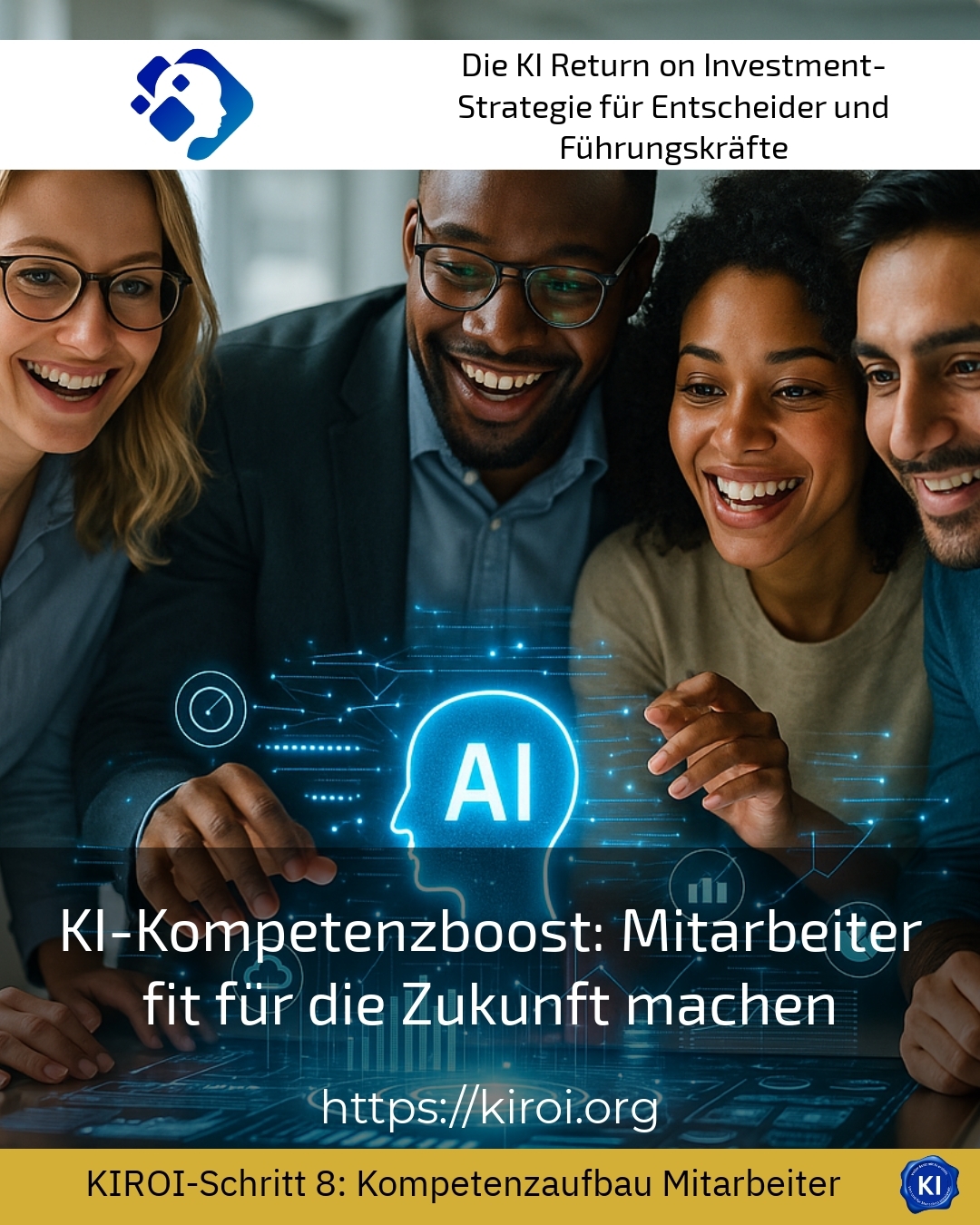
This question currently concerns decision-makers in almost all sectors of the economy. The rapid development of intelligent systems is fundamentally changing workplaces. A targeted AI Skills Boost This becomes a strategic necessity. Companies face the challenge of making their workforce future-proof. This is not about short-term training. Rather, a sustainable transformation of the corporate culture is needed. The following sections show ways in which this transformation can be achieved.
Why the AI skills boost becomes a matter of survival
The workplace is undergoing a profound transformation. Intelligent algorithms are increasingly taking on repetitive tasks. At the same time, entirely new fields of activity are emerging. Employees must therefore develop new skills. This development affects all levels of the hierarchy within the company. Executives also need support from operational teams.
In the financial sector, for example, the role of analysts is changing fundamentally. In the past, they spent hours compiling data. Today, systems do this work in seconds. Analysts must now interpret and contextualize results. They are becoming strategic advisors. This transformation requires completely different competencies.
Something similar happens in the customer service departments of many insurance companies. Chatbots answer standard inquiries automatically. Employees focus on complex cases. Therefore, they need higher problem-solving skills. Emotional intelligence is becoming more important than ever. The human factor remains indispensable.
These developments are also evident in the healthcare industry. Imaging diagnostics is increasingly supported by algorithms. Radiologists need to learn to work with these systems. They are becoming supervisors of intelligent technologies. Their medical expertise remains central.
AI Competency Boost: The Three Pillars of Successful Up-Skilling
Sustainable competence development is based on three fundamental pillars. These pillars complement each other and reinforce their effect. Only through a holistic approach is the desired change achieved.
Technical basic understanding as a basis
Employees need to understand how intelligent systems work. This does not require programming skills. Rather, they need a conceptual understanding. They should be able to assess possibilities and limits. Only then can they work meaningfully with the technology.
For example, a sales representative in a mechanical engineering company uses predictive analytics. He must understand what the forecasts are based on. He should recognize uncertainties in the predictions. Then he can advise customers competently. His sales conversations become more in-depth.
In the logistics industry, dispatchers work with route optimization systems. They need to understand which parameters are involved. Only then can they intervene meaningfully in the event of deviations. Their knowledge of the subject complements the algorithmic calculation. Together, they create better solutions.
Human resources managers in larger companies use applicant management systems. These systems suggest suitable candidates. HR employees must critically examine proposals. They should be able to recognize possible biases. Their judgment remains crucial.
Strengthening critical thinking and judgment
Technology provides suggestions and recommendations. However, the final decisions are made by humans. This responsibility requires outstanding judgment. Employees must be able to question results. They should consider alternative perspectives.
In a corporate legal department, systems support contract review. However, legal professionals must assess the overall context. They recognize nuances that algorithms miss. Their professional assessment remains indispensable. The technology relieves routine tasks.
Marketing teams in consumer goods companies use automated analytics. Campaign proposals are based on data. Creatives must evaluate whether the suggestions fit the brand. They bring intuition and experience. Man and machine complement each other ideally.
Quality managers in the manufacturing industry use anomaly detection. Systems automatically identify potential deviations. Experts determine the actual relevance. They distinguish between genuine problems and false alarms. Their expertise remains central.
Promote willingness to change and lifelong learning
The third pillar concerns the attitude of employees. Technologies are continuously evolving. What is considered valid today may be outdated tomorrow. Therefore, a culture of continuous learning is needed. Companies must create the appropriate framework conditions.
In the media industry, content production is changing rapidly. Editors must constantly explore new tools. They experiment with different approaches. Openness to new ideas becomes a core competency. Curiosity drives personal development.
Architects in design offices use generative design tools. These tools are constantly evolving. Professionals must adapt their working methods regularly. They remain relevant only through continuous education. The learning process never ends.
These developments are increasingly evident in the trades as well. Electricians integrate intelligent building technology. They must be able to understand and configure new systems. Traditional trades are combining with digital expertise. This combination creates added value.
Best practice with a AIROI customer
A medium-sized manufacturing company with about 800 employees faced a complex challenge in implementing intelligent production systems. Initially, the workforce showed considerable resistance to the planned changes. Many employees feared the loss of their jobs due to the new technologies. The transruptive coaching accompanied the transformation process over an 18-month period. First, we collaborated with the management to analyze the existing skill profiles of all departments. Based on this, we developed an individualized qualification program for different employee groups. Particularly important was the involvement of experienced skilled workers as multipliers in the change process. These colleagues received intensive training and subsequently passed on their knowledge to team members. The management communicated transparently about goals and anticipated changes in the work organization. Regular feedback rounds enabled the adaptation of the approach to the current needs of the workforce. After the completion of the project, 78 percent of the employees reported increased job satisfaction. Productivity increased measurably, and the error rate dropped by 34 percent.
Practical Implementation Strategies for an AI Skills Boost
Theoretical foundations are important. However, practical implementation is crucial. Companies need concrete recommendations for action. The following strategies have proven effective in practice.
Establishing Learning by Doing as a Core Principle
Adults learn most effectively through practical application. Theoretical training alone is not enough. Employees need opportunities to experiment. Protected spaces for mistakes are essential. Only in this way do they develop real competence.
In the banking industry, institutions establish so-called innovation labs. Employees can try out new technologies there. They develop their own application ideas for their work area. The experiences are then fed back into the overall organization. Innovation occurs decentralized.
Pharmaceutical companies use pilot projects for competence development. Small teams test new methods in specific areas. If successful, they scale up the approaches across the company. Failures provide valuable learning experiences. The innovation process is controlled.
Retail companies initially test new systems in individual stores. Staff members on site are trained to become experts. They later support the rollout in other locations. Peer learning significantly accelerates the development of expertise. Knowledge spreads organically.
Develop leaders as role models
Transformation is only possible with committed leaders. These must themselves demonstrate a willingness to change. Employees are highly influenced by the behavior of their superiors. Therefore, successful training at the top of the company begins with this.
In the automotive industry, executives undergo their own development programs. They learn about the potential and limitations of new technologies. This enables them to provide competent support for their teams. They become credible ambassadors of change. Their attitude shapes the corporate culture.
Telecommunications companies are adopting reverse mentoring programs. Younger employees pass on digital skills to experienced executives. At the same time, they benefit from the experience of the older generation. Both sides learn from each other. Hierarchies become more permeable.
Energy providers integrate technology topics into their leadership development. Managers must understand and be able to assess strategic implications. They make informed investment decisions. The quality of leadership increases measurably. Companies gain in competitiveness.
Typical challenges and how transruptional coaching supports them
Transformation rarely proceeds smoothly. Companies face various obstacles. However, these challenges are surmountable. Professional guidance can significantly facilitate the process.
Clients often report resistance within the workforce. Employees fear negative consequences for their positions. Fears of job loss are widespread. These concerns must be taken seriously. Open communication builds trust.
Other companies struggle with a lack of strategic focus. They try many initiatives at the same time. Resources are used in a fragmented way. transruptions-coaching provides important impulses for prioritizing here. Together, we develop a focused roadmap.
Sometimes there is a lack of suitable internal structures. Responsibilities are not clearly distributed. Decision-making processes take too long. Coaching helps create the organizational prerequisites. Change requires a solid foundation.
Best practice with a AIROI customer
A professional services company approached us with a specific problem as part of a transruptive coaching project. The management had made significant investments in new technologies and implemented modern systems. However, the expected productivity increases and efficiency gains remained elusive despite the extensive measures. The employees used the new tools only superficially and often reverted to old working methods. Our analysis revealed several interrelated causes for this unsatisfactory outcome of the previous efforts. The introduction was too technically focused and largely neglected human factors. Employees did not fully understand the personal benefits of the changes for their daily work. Furthermore, there were no opportunities to practice in a protected environment without performance pressure. We developed a comprehensive package of measures with various elements to address the identified vulnerabilities. Workshops highlighted concrete work improvements for each individual area of the organization. Learning partnerships enabled mutual support among colleagues in a familiar atmosphere. Six months later, the usage rate of the systems had tripled and satisfaction levels had significantly increased.
The role of corporate culture in skills development
Individual training measures are not enough. Sustainable change requires cultural change. The corporate mindset must support learning. Leaders shape this culture through their daily behavior.
In the consulting industry, continuous learning is part of the company’s DNA [1]. Employees are regularly given time for further training. Knowledge sharing is actively encouraged and rewarded. Curiosity is considered a valued trait. This culture attracts talented individuals who are eager to learn.
Technology companies in Silicon Valley cultivate a distinct culture of experimentation [2]. Failures are seen as learning opportunities. Employees encourage one another to try new things. Rapid failure and starting over are accepted. Innovation thrives in this environment.
Traditional industrial companies are also continuing to develop their culture. They are creating spaces for creative thinking. Hierarchies are being made flatter and more permeable. Dialogue across departmental boundaries is being promoted. Cultural change takes time and perseverance.
My AIROI Analysis
The development of human competencies remains the decisive success factor in technological transformations. Companies often invest primarily in hardware and software. They neglect the human factor severely. This approach regularly leads to unsatisfactory results despite high investments.
A systematic AI Skills Boost requires a holistic approach with a sense of proportion. Technical understanding forms only a foundation for success. Critical thinking and judgment are equally important for sustainable results. The willingness to learn throughout life must be actively promoted through appropriate measures.
Leaders bear special responsibility in this transformation process. They must be role models and leaders in the desired behavior. Their support is crucial for the success of qualification initiatives. Without their commitment, even the best programs will be ineffective.
Corporate culture forms the foundation for successful competence development. Where learning is encouraged, new skills and abilities flourish. Where mistakes are punished, fears and blockages arise among employees. Therefore, cultural change deserves the utmost attention from all those responsible.
Transruptions coaching can effectively guide companies through these complex challenges. We provide guidance and support in the practical implementation of measures. Transformation is a marathon, not a sprint, for all involved. However, patience and perseverance will be amply rewarded in the end.
Further links from the text above:
[1] McKinsey: Building Workforce Skills at Scale
[2] Harvard Business Review: Organisational Culture
For more information and if you have any questions, please contact Contact us or read more blog posts on the topic Artificial intelligence here.









 Deutsch
  English (UK)