
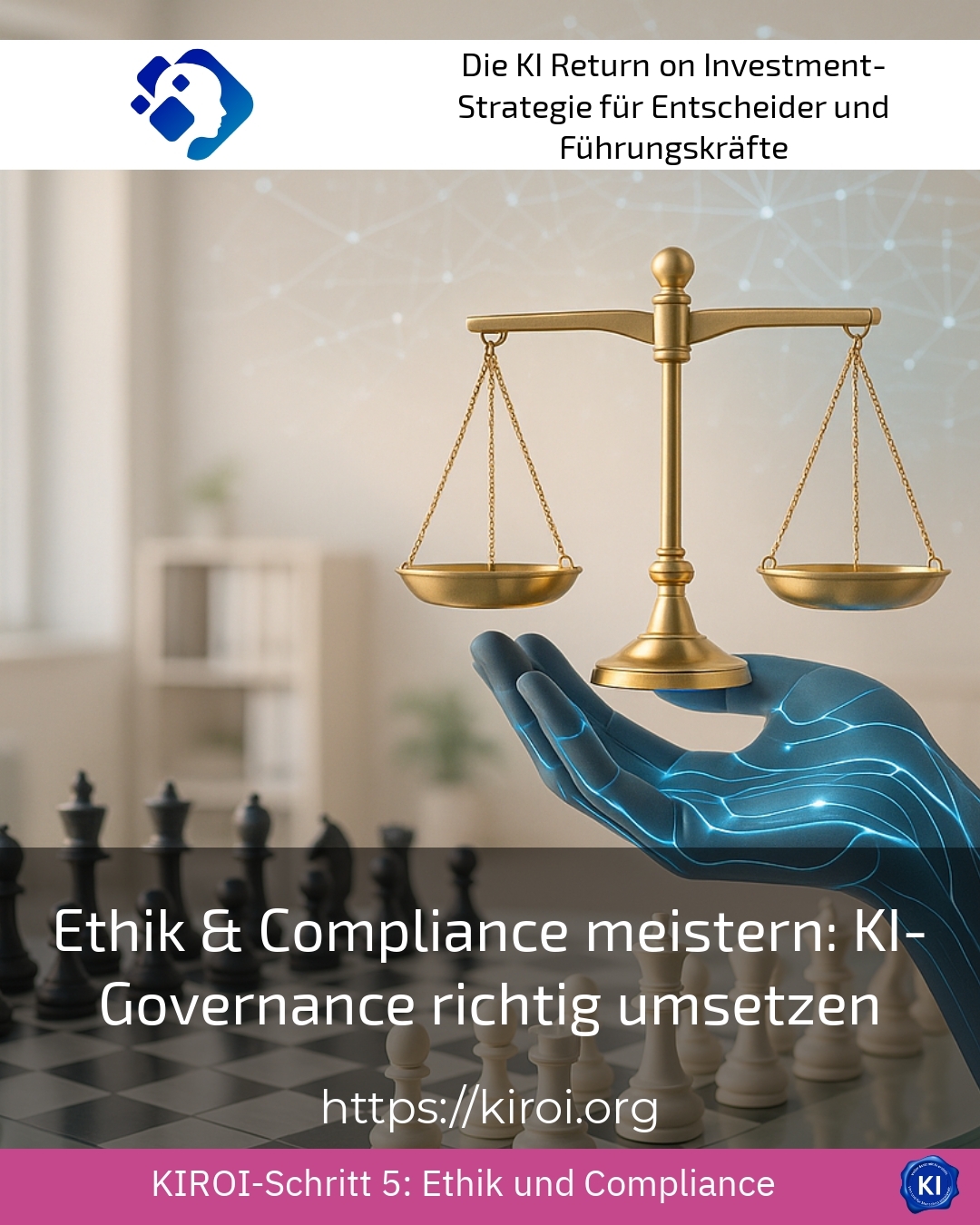
Imagine an intelligent system making thousands of decisions daily in your company. But who actually controls these digital decision-makers? The rapid development of algorithmic systems presents organisations with entirely new challenges. Implementing AI governance correctly means much more than technical compliance today. It's about the future of responsible corporate governance. Many executives report uncertainties when it comes to the ethical control of automated processes. This article shows you concrete ways through the complex regulatory jungle.
Why responsible technology governance is indispensable today
Digital transformation is fundamentally changing business models. Algorithms influence credit decisions, staff selection and strategic planning. These systems often act as invisible co-decision-makers in the background. However, companies bear full responsibility for all automated decisions. The need for clear control mechanisms is therefore growing exponentially.
In the financial industry, for example, institutions have been using algorithmic trading systems for years. These systems execute millions of transactions in milliseconds. An error here can have serious consequences for markets and customers. Banks have therefore developed extensive control mechanisms for their automated trading systems. Insurers are also increasingly relying on automated risk assessments when concluding contracts. The healthcare sector, in turn, is trialing diagnostic support systems in imaging. Each of these applications requires specific ethical guidelines and control structures.
European regulation now sets binding standards for high-risk applications [1]. Companies must prove that their systems operate without discrimination and transparently. These requirements affect almost all sectors with automated decision-making processes. However, implementation requires more than just technical adjustments. It demands a cultural shift throughout the entire organisation.
Implementing AI Governance Correctly: The Organisational Foundations
An effective governance structure begins with clear responsibilities. Many organisations today are establishing their own committees for technological ethics issues. These committees bring together different perspectives and promote balanced decisions. Representatives from technology, law, ethics, and business departments work hand in hand. This interdisciplinary composition prevents blind spots in evaluation.
For instance, in retail, large retail chains employ automated pricing systems. These systems dynamically adjust prices in response to demand and competition. Ethical questions arise here, for example, regarding potentially discriminatory pricing. A governance body can identify such risks early and initiate countermeasures. Similar structures are found in the logistics sector for automated route planning. The telecommunications industry also uses comparable approaches for its recommendation algorithms.
The documentation of all system decisions forms the foundation of comprehensible processes. Companies must be able to explain at any time how and why a system made a decision. This traceability protects both customers and the company itself. Modern logging systems today enable detailed insights into decision paths. This technical transparency simultaneously supports the continuous improvement of systems.
Best practice with a AIROI customer
A medium-sized manufacturing company faced the challenge of ethically responsibly managing its automated quality control systems. The existing processes had evolved over many years and lacked a systematic governance structure. Transruptions coaching supported the company in developing a comprehensive management framework. Together, we first identified all critical decision points within the automated process chain. Subsequently, we developed clear escalation levels for different risk categories. The company established a monthly ethics board with representatives from all relevant departments. The involvement of production line employees in the design process was particularly important. They knew the practical implications of system decisions firsthand and provided valuable input. After six months, the company reported significantly improved processes and increased employee trust. The clear structures also enabled faster adaptation to new regulatory requirements. This example impressively demonstrates how systematic support can enable sustainable change.
Risk assessment and classification of automated systems
Not all algorithmic applications require the same intensity of control. A differentiated risk assessment aids efficient resource allocation. Systems with direct influence on people require particular attention. Classification is guided by potential impacts on fundamental rights and security.
In the human resources industry, for example, many companies use automated pre-selection systems for applications. These systems filter candidates according to predefined criteria and significantly influence life chances. Incorrect programming can lead to systematic discrimination against certain groups of applicants. Such applications therefore belong in the highest risk category. The situation is different with automated scheduling systems in administration. While these affect service quality, they do not directly influence existential decisions. In the energy sector, algorithms control critical infrastructures with implications for public supply security.
The risk assessment should be updated regularly. Changed operational conditions can shift the risk classification of a system. Technical advancements also require a re-evaluation of existing systems. A dynamic assessment process responds flexibly to changing framework conditions.
Practical tools for transparent system decisions
The technical implementation of ethical principles requires specialised tools. Explainable methods enable insights into the decision-making logic of complex systems. This transparency builds trust with customers and regulatory authorities alike. Modern analysis tools visualise influencing factors and their weighting in decision processes.
In banking, for example, institutions must be able to justify credit decisions to applicants. Explainable models show which factors led to rejection or approval. This traceability is not only ethically required but also mandated by regulation. Similar requirements apply in the insurance industry for premium setting. In the public sector too, citizens are increasingly demanding transparency in automated administrative decisions.
Bias detection tools identify systematic biases in training data and model results. These tools continuously check for unintentional discrimination patterns. Early detection allows for timely corrections before deployment. Integrating such checks into development processes is increasingly becoming standard.
Implementing AI Governance Effectively through Continuous Monitoring
The one-time implementation of control mechanisms is not sufficient. Algorithms change their behaviour through continuous learning from new data. Without ongoing monitoring, originally fair systems can develop problematic patterns. Robust monitoring detects such drift phenomena in good time.
In the media industry, for example, recommendation algorithms personalise news feeds for millions of users. These systems can unintentionally amplify filter bubbles or favour polarising content. Continuous monitoring of recommendation patterns is therefore essential. Similar challenges exist with advertising delivery systems in the marketing industry. The e-commerce sector also struggles with potentially manipulative product recommendations.
Automated alerts immediately inform those responsible of anomalies. These early warning systems enable rapid responses to problematic developments. The combination of automatic monitoring and human review offers optimal security. This interplay is often referred to as a human-in-the-loop approach.
Best practice with a AIROI customer
An international service company was using automated systems for customer segmentation and personalised offer creation. The management reported uncertainties regarding the ethical implications of this practice. As part of the transruption coaching, we jointly analysed the existing segmentation criteria and their potential impact. In doing so, we identified several criteria that could indirectly lead to unintended disadvantages for certain customer groups. The coaching provided impetus for the development of a fair set of criteria incorporating ethical principles. We supported the implementation of a continuous monitoring dashboard with defined thresholds. This dashboard now visualises the distribution of offers across different customer groups and makes potential biases visible. Employees were trained and sensitised in workshops on interpreting the monitoring results. After the introduction, managers frequently reported increased awareness of the issue throughout the company. The systematic support provided by the transruption coaching enabled the sustainable integration of ethical considerations into the company's day-to-day business.
Training and cultural change as success factors
Technical solutions alone do not create responsible technology use. The human factor remains crucial for the success of all governance efforts. Employees must understand ethical principles and apply them in their daily work. Regular training promotes the necessary awareness of issues at all levels.
For example, in the automotive industry, teams are developing autonomous driving systems with complex ethical dilemmas. These developers need ethical decision-making skills that go beyond purely technical expertise. Training programmes provide structured approaches for difficult decision-making situations. Similarly, in the pharmaceutical industry, algorithmic study designs require ethically trained personnel. The education sector, in turn, is increasingly relying on adaptive learning systems that handle sensitive student data.
The company culture significantly influences whether ethical principles are actually lived. An open culture of error encourages employees to report problematic system decisions. Managers must embody and demand responsible behaviour. This cultural embedding is more important in the long term than any technical solution.
Stakeholder engagement and external perspectives
Affected parties should be involved in the design of control frameworks. Customers, employees, and other stakeholders bring valuable perspectives. This involvement increases acceptance and improves the quality of governance structures. External advisory boards or audits usefully complement internal assessments.
In healthcare, for example, diagnostic support systems directly affect patients. Their perspective on acceptable system use often differs from that of doctors. Patient advocacy groups can provide important impetus here for the design of usage guidelines. The situation is similar in social services for automated benefit decisions. Consumer protection organisations also provide valuable external perspectives on algorithmic practices.
Regular external audits by independent inspectors increase credibility. These examinations uncover blind spots and promote continuous improvement. Certifications according to recognised standards signal responsible conduct to stakeholders. Building such trust signals is increasingly important competitively.
My AIROI Analysis
The implementation of effective control structures for algorithmic systems is one of the central management tasks of our time. My analysis shows that successful organisations consistently combine three core elements. Firstly, they establish clear organisational structures with defined responsibilities and interdisciplinary committees. Secondly, they use technical tools for transparency, bias detection, and continuous monitoring of their systems. Thirdly, they invest sustainably in training their employees and in the cultural change of their organisation.
Particularly noteworthy, in my opinion, is the growing realisation that Implementing AI governance correctly not a one-off implementation process but a continuous development task [2]. Algorithms change, regulations evolve, and societal expectations rise. Organisations that build rigid structures today will already need to adapt tomorrow. The most successful companies therefore design adaptive governance frameworks that combine flexibility with stability.
In my observation, stakeholder involvement proves to be a frequently underestimated success factor. Many organisations primarily develop their control structures internally, missing out on valuable external perspectives. In doing so, those directly affected, such as customers or citizens, can provide crucial impetus for practical and accepted solutions. Investing in genuine participation ultimately pays off through increased trust and better system acceptance. Companies that consistently invest in responsible technology governance now secure a sustainable competitive advantage.
Further links from the text above:
[1] EU AI Act – European Legal Framework for Artificial Intelligence
[2] National Strategy for Artificial Intelligence – Federal Ministry for Economic Affairs
For more information and if you have any questions, please contact Contact us or read more blog posts on the topic Artificial intelligence here.









 Deutsch
  English (UK)