
Have you ever wondered why some companies thrive with intelligent systems while others get stuck in regulatory quagmires and lose millions in the process?
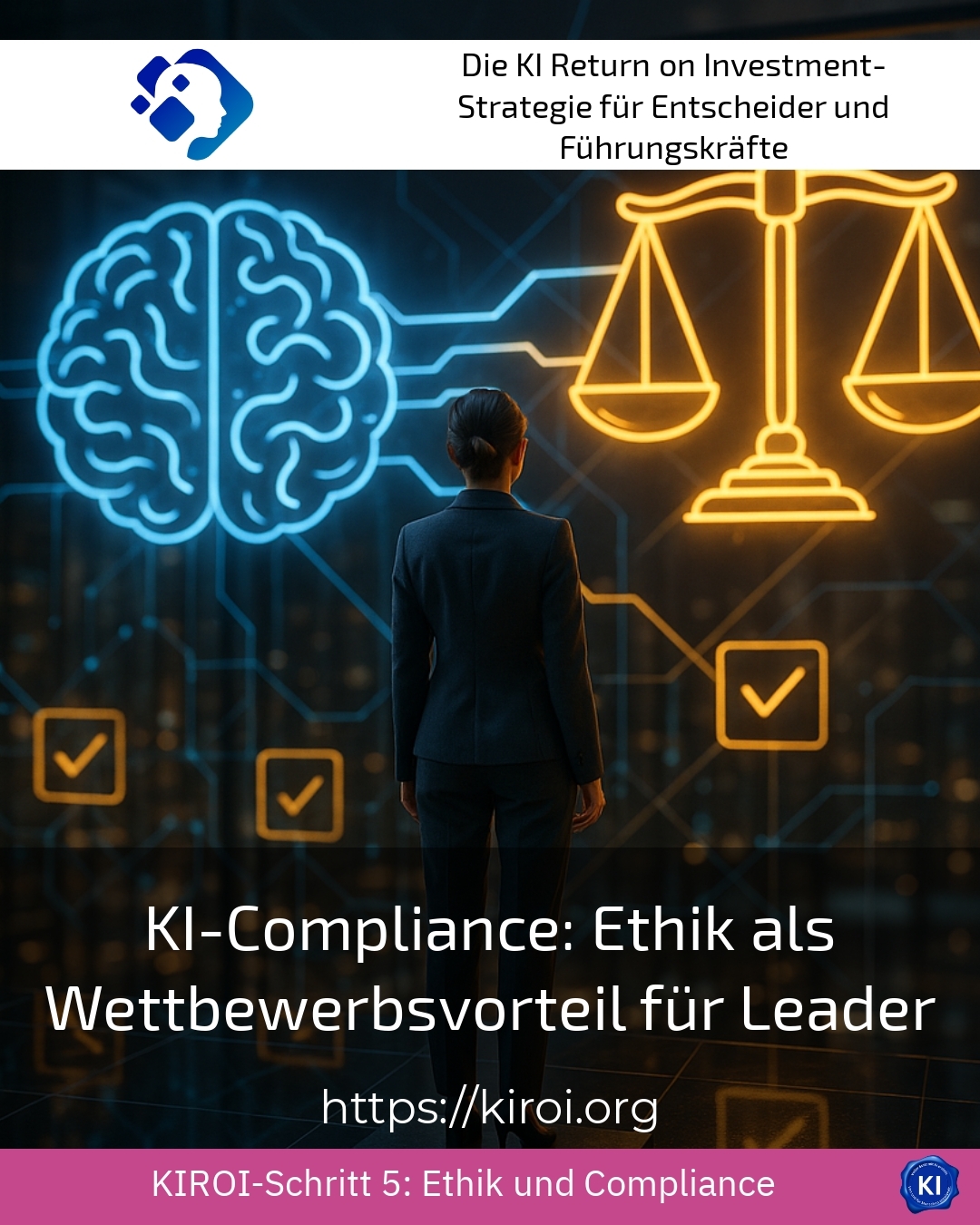
The answer lies not only in technological sophistication or invested budgets, but rather in an area that many executives still underestimate – the AI Compliance and its ethical dimension. In an economic world increasingly characterized by algorithmic decisions, the combination of compliant action and moral integrity proves to be a crucial differentiating factor. Companies that take the lead in this area not only gain the trust of their stakeholders but also secure a sustainable advantage over their competitors. This article explores how leadership can capitalize on this opportunity and why transruptive coaching provides valuable support in this context.
Why responsible technology leadership has become indispensable today
The rapid development of intelligent systems has ushered in a new era of corporate management in which traditional governance structures are no longer sufficient. Executives face questions that go far beyond classic compliance topics. They must understand how algorithm-based decisions are made and what impact they can have on various stakeholders. This complexity requires a rethinking at the highest level.
In the financial services industry, this is particularly evident in automated lending. Banks use intelligent systems for credit checks and risk assessment. They must ensure that no discriminatory patterns are hidden in the algorithms. A leading European credit institution discovered during an internal audit that its system systematically discriminated against applicants from certain postal code areas. The swift correction and transparent communication transformed a potential crisis into proof of trust.
In healthcare, we are facing similar challenges with diagnostic support systems. Hospitals are implementing technologies for the early detection of diseases and for optimizing treatment paths. The ethical dimension is evident here in issues of patient data sovereignty and the traceability of medical recommendations. A chain of clinics in the German-speaking region therefore developed a patient dashboard that enables those affected to understand the basics of algorithmic recommendations.
The insurance industry uses predictive models for claims settlement and premium calculation. Here arises the ethical question of how far individual behavioral profiles can be used to shape pricing. One insurance company deliberately chose not to use social media data for risk assessment and openly communicated this stance as part of its corporate philosophy.
AI compliance as a strategic lever for sustainable competitive advantages
The idea that ethical guidelines hinder technological progress turns out to be fundamentally mistaken when examined more closely. In fact, numerous studies show that companies operating with robust governance structures are more successful in the long run [1]. They avoid costly legal disputes and reputational damage. At the same time, they gain the trust of customers, employees, and investors.
In retail, this manifests itself in personalized recommendation systems and dynamic pricing. A large retail company decided against aggressive price discrimination, even though the technical capabilities were available. Instead, it implemented a transparency promise that informed customers about the factors that influence price recommendations. Customer retention increased measurably.
The automotive industry faces special challenges in autonomous driving systems. Manufacturers must make ethical policy decisions about how vehicles should react in crisis situations. A German premium manufacturer established an ethics committee that publicly discusses and documents such issues. This transparency significantly strengthened the brand image.
In human resources, companies use intelligent systems for candidate selection and employee development. The ethical dimension here includes issues of equal opportunity and data protection. A technology company conducted regular audits of its recruiting algorithms and published the results in its sustainability report.
Best practice with a AIROI customer
A medium-sized manufacturing company faced the challenge of modernizing its quality control through intelligent image recognition systems without disturbing the workforce or exceeding data protection regulations. As part of the transruptive coaching support, a comprehensive stakeholder analysis was first conducted, which not only identified technical requirements but also the employees’ ethical concerns. The project team collaborated with the employees to develop a governance framework that defined clear rules for the use of the new technology, explicitly stipulating that no personal performance data should be collected. Particularly noteworthy was the establishment of an internal ombudsman committee to which employees could turn if they had concerns regarding algorithmic decisions. Transparent communication throughout the entire implementation process resulted in a significantly higher acceptance of the new systems than in comparable projects in the industry. Today, the company reports improved product quality while simultaneously increasing employee satisfaction, because employees feel part of the transformation process and not just objects of it.
The role of AI compliance in transforming leadership cultures
Leaders who lead by example in ethical technology use shape the entire organizational culture in a sustainable way. They create an environment where critical questions are not seen as an obstacle to innovation but rather as a quality characteristic. However, this cultural transformation requires more than lip service and glossy brochures. It requires authentic commitment and the willingness to make even uncomfortable decisions.
In the telecommunications industry, this is evident in the use of customer data for network optimization and product development. A leading provider implemented a principle of data minimization, although more extensive data sets would have been more profitable in the short term. The long-term customer retention fully justified this decision.
The energy sector uses intelligent systems for load forecasting and grid control. Ethical questions arise here regarding the prioritization of electricity deliveries in crisis situations. An energy provider worked with citizens’ initiatives to develop guidelines for such scenarios, thereby creating a model for the entire industry.
The media industry uses algorithmic systems for content recommendation and moderation. The ethical dimension encompasses issues of diversity of opinion and protection from harmful content. One digital media company decided to design its recommendation algorithms in such a way that they consciously present diverse perspectives, rather than optimizing only engagement metrics.
Practical implementation of ethical governance structures
The theory of ethical technology leadership is quickly formulated, but its practical implementation poses significant challenges for many organizations. It is not enough to embed principles in corporate policies. They must be translated into concrete processes, training, and control instruments. In this context, transruptive coaching provides support in structured transformation as a companion.
The logistics industry faces complex optimization challenges in route planning and resource allocation. Ethical questions arise when algorithmic decisions affect drivers’ working conditions. A logistics service provider explicitly integrated breaks and ergonomic factors into its optimization models, rather than simply maximizing efficiency metrics.
In the education sector, institutions use adaptive learning systems and performance prognoses. The ethical dimension here concerns the risk of self-fulfilling prophecies and the autonomy of learners. A university implemented a system that provides students with full transparency about the basis of recommendations and enables them to actively influence them.
The pharmaceutical industry uses intelligent systems in drug research and clinical trials. Ethical aspects include the traceability of research results and the protection of sensitive trial data. One pharmaceutical company established an independent review panel for all algorithm-based research decisions.
Key elements of successful AI compliance strategies
Successful governance frameworks are based on several pillars that must interlock and reinforce each other. Transparency forms the foundation on which all other elements build. Accountability defines clear responsibilities for algorithmic decisions. Participation involves stakeholders in the design processes [2].
In the real estate sector, this is evident in the automated assessment of properties and the credit check of tenants. A real estate company developed a complaint system that allows prospective tenants to challenge algorithmic decisions and request human review.
The tourism industry uses intelligent systems for dynamic pricing and capacity planning. Ethical questions arise when using customer profiles to differentiate prices. A tour operator decided to implement a price guarantee to ensure that identical services are not offered at different prices.
Agriculture uses precision technologies to optimize yields and conserve resources. Ethical aspects involve the data sovereignty of farmers and the dependence on technology providers. One agricultural technology company grants farmers full control over their farm data and enables the export in standardized formats.
Best practice with a AIROI customer
An international trading company commissioned transruptive coaching to assist in implementing a comprehensive governance framework for its algorithm-based pricing and recommendation systems. The challenge was to harmonize different regulatory requirements in different markets while establishing a uniform ethical stance. In the coaching process, various stakeholder perspectives were systematically captured, ranging from customers to suppliers to regulatory authorities. Based on this foundation, the team developed a modular framework that combines an unwavering ethical core with market-specific adaptations. The establishment of a cross-functional ethics board, composed of representatives from different departments and external experts, was particularly valuable. It regularly reviews algorithmic systems for compliance with the established principles. The documentation of all decision-making processes creates transparency and serves as the basis for continuous improvements. Today, the company is considered a pioneer in its industry and is regularly cited as a reference in professional publications and regulatory discussions.
My AIROI Analysis
The intensive study of this subject area reveals a fundamental insight that many leaders have not yet fully internalized: AI Compliance And ethical technology leadership is not a cost factor or regulatory burden, but a strategic investment in the future viability of organizations. The numerous examples from different industries show that companies that take the lead in this area not only minimize risks but actively generate competitive advantages.
What is particularly impressive is the observation that ethical positioning is increasingly becoming a differentiating factor in attracting talent. Highly skilled professionals, especially those from younger generations, place great importance on working for organizations whose value system they can share. This development is continuing to intensify and will significantly shape labor markets in the future.
The complexity of the challenge should not be underestimated, however. It is not enough to proclaim ethical principles and hope that they will spread on their own within the organization. Rather, a systematic approach is needed that involves all levels of the organization and is supported by professional guidance. This is where transruptive coaching comes in, by helping leaders develop their individual vision of ethical technology leadership and translate it into concrete actions.
In conclusion, it can be stated that the integration of AI Compliance in the corporate strategy no longer represents an option but a necessity for all organizations that want to be successful in the long term [3]. The good news is that this path is by no means in conflict with economic success, but rather forms the foundation of it.
Further links from the text above:
[1] European Commission – European approach to artificial intelligence
[2] BSI – Artificial Intelligence and IT Security
[3] Bitkom – Artificial Intelligence
For more information and if you have any questions, please contact Contact us or read more blog posts on the topic Artificial intelligence here.











 Deutsch
 English (UK)