
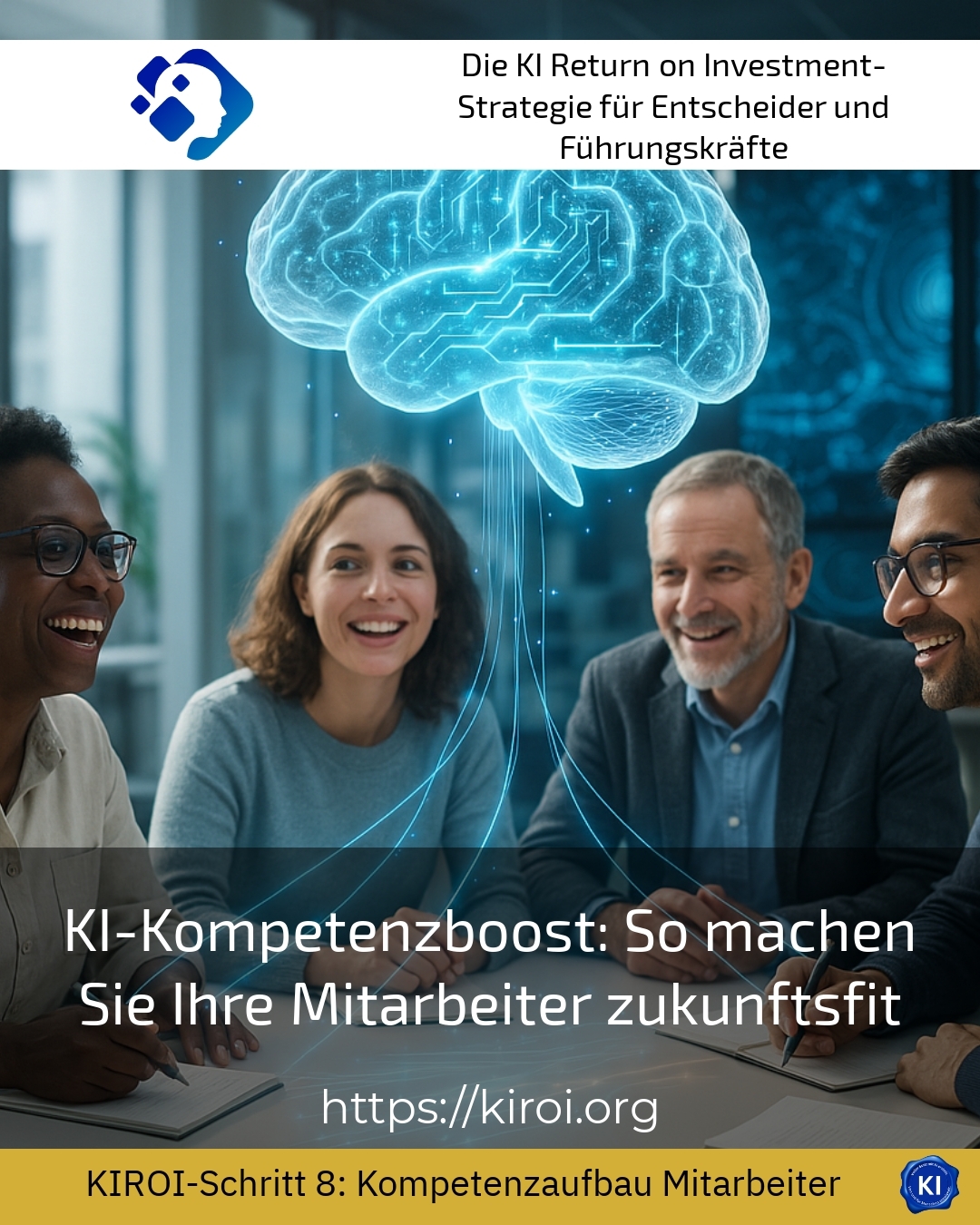
The rapid development of intelligent systems is fundamentally transforming every workplace. Companies are facing the pressing question of how they can prepare their workforce for this transformation. The AI Skills Boost This is no longer an abstract concept, but a concrete necessity for economic survival. Those who do not act now risk falling behind. At the same time, enormous opportunities are opening up for organisations that act proactively. However, seizing these opportunities requires more than just technical training. It is about a fundamental shift in mindset and work culture.
Why AI skills have become indispensable today
The world of work is undergoing a profound transformation. Intelligent algorithms are increasingly taking over repetitive tasks and analytical processes. As a result, the requirements for human workers are shifting dramatically. In the future, employees will need to possess different skills than they did just a few years ago. Creativity, critical thinking, and emotional intelligence are gaining importance. Technical understanding of automated systems is becoming a basic requirement. Many employees feel overwhelmed or unsettled by this development. This is where professional support comes in, to transform these fears into productive energy.
In the financial sector, for example, automated systems are already analysing loan applications within seconds. Case workers now need to learn to interpret and supplement these analyses. In healthcare, diagnostic algorithms support doctors with image evaluation. Nurses work together with intelligent monitoring systems. In the logistics industry, self-learning programmes optimise entire supply chains. Warehouse workers now control robots instead of forklifts. These examples clearly show that no professional field will remain excluded from this transformation.
Best practice with a KIROI customer
A medium-sized engineering company faced the challenge of qualifying its experienced skilled workers for new production processes. The workforce initially showed considerable reservations towards the planned changes. Many employees feared that their years of expertise could be devalued. As part of the transruption support, we jointly developed a phased introduction concept. First, we identified the existing strengths of each team member. Then, we demonstrated how these strengths could be even better showcased through technological support. The most experienced employees became internal mentors for the new way of working. Within six months, the sceptical attitude transformed into genuine enthusiasm. Productivity increased significantly, and the error rate dropped considerably. Continuous support throughout the entire process was particularly important. Clients often report that it is precisely this long-term support that makes the difference.
The five pillars of sustainable AI competency enhancement
Effective skills development is based on several supporting elements. These must be carefully coordinated. Firstly, a fundamental understanding of how intelligent systems work is needed. Secondly, practical application skills must be imparted. Thirdly, the development of a critically reflective attitude towards automated decisions is essential. Fourthly, ethical considerations play an increasingly important role. Fifthly, the human element must never be neglected.
Understanding the basics as a foundation
Without a solid understanding of the basics, all further measures remain superficial. Employees should understand how learning algorithms fundamentally work. They need to be able to recognise the strengths and limitations of this technology. In banking, this means, for example, being able to comprehend the logic behind automated credit scoring. In the insurance industry, this knowledge helps in assessing algorithm-based risk analyses. HR managers benefit from understanding automated applicant pre-selection. This foundational knowledge builds trust and significantly reduces diffuse anxieties.
Marketing teams today use intelligent systems for personalised campaigns. Sales representatives work with forecasting tools for customer behaviour. Product developers rely on automated design optimisation. All these applications require a minimum level of technical understanding. Only in this way can employees correctly interpret and utilise the results. They also learn when human intuition is superior to machine recommendations.
Developing practical application skills
Theoretical knowledge alone is not sufficient for everyday work. Employees must actually learn to master new tools. This is best achieved through guided practice in realistic scenarios. Typical work situations from one's own environment should be recreated. For instance, an accountant would practice with real data sets from their work area, while an HR officer would train with anonymised application documents. Customer advisors would simulate conversations with intelligent support in the background.
The real estate sector offers numerous application examples for this practical skills development. Estate agents use automated valuation tools and must be able to interpret their results. Property management companies rely on predictive maintenance systems for building technology. Project developers work with analysis tools for site assessments. In each of these cases, application competence determines the actual benefit. Without practical exercise, even the best tools remain unused.
Best practice with a KIROI customer
A large trading company wanted to prepare its purchasing department for data-driven procurement processes. The long-standing buyers possessed enormous experience and excellent supplier relationships. At the same time, they lacked confidence in automated demand forecasting and price analysis. Together, we developed a programme that brought both together. The buyers first learned to verbalise and document their own expertise. They then compared their assessments with the system recommendations, revealing that the combination of both approaches was superior. The human intuition for market trends perfectly complemented data analysis. The automated systems recognised patterns that even experienced buyers missed. Conversely, the professionals identified factors that no algorithm could capture. This realisation significantly increased acceptance of the new working methods, and purchasing conditions noticeably improved within a year.
Anchoring the AI competency boost in change management
Sustainable competence development requires more than individual training measures. It must be embedded within the entire company's development. Leaders play a crucial role model function in this. If supervisors themselves show trepidation, this is transferred to their teams. Conversely, open curiosity is contagious and motivating. Therefore, successful transformation always begins at the leadership level.
The pharmaceutical industry impressively demonstrates how far-reaching this change must be [1]. Researchers are working with systems that analyse and predict molecular structures. Regulatory departments use automated document checks for approval processes. Production staff monitor self-optimising manufacturing plants. Quality assurance specialists interpret continuously generated analysis data. This penetration of all company areas requires a coordinated approach.
This transformation is increasingly taking place in the public sector too. Case workers in authorities are working with automated application pre-checks. Urban planners are using simulation tools for traffic and environmental analyses. Librarians are relying on intelligent recommendation systems for users. Social workers are documenting and analysing cases with technical support. In all these areas, transruption coaching supports the introduction of new working methods.
Understanding and constructively using resistance
Resistance to change is a natural and understandable reaction. It often signals valid concerns that should be taken seriously. Experienced employees worry about the appreciation of their knowledge. Younger employees are concerned about their long-term career prospects. Managers' decision-making authority may be called into question. All these fears deserve attention and honest consideration.
In the media sector, journalists are experiencing the automation of news production with particular intensity. Sports reports and stock market information are already being produced fully automatically [2]. Editors must redefine their roles and produce higher-value content. Graphic designers collaborate with generative image tools. Translators use machine pre-translations as a starting point. These fundamental changes understandably create uncertainty. Professional support helps to discover and expand new strengths.
The hospitality industry offers further vivid examples of this development. Hotel receptions are increasingly using automated check-in systems. Restaurants are relying on intelligent ordering systems and kitchen management. Tour operators are working with personalised recommendation algorithms for customers. Event managers are planning with optimised resource planning tools. In each of these cases, the focus of human work is shifting. Personal interaction and emotional intelligence are gaining importance.
Future-proof learning formats for sustainable development
The way people learn is changing, just like the content they learn. Traditional in-person seminars are still relevant for certain topics. At the same time, digital formats enable more flexible and individualised learning. Microlearning units can be easily integrated into the daily workflow. Virtual practice simulations offer risk-free opportunities to practice. Peer learning groups promote the exchange of experiences among colleagues. The optimal mix of these formats depends on the specific context.
Educational institutions themselves face similar challenges to their customers. Universities are integrating intelligent tutoring systems into their curricula. Schools are experimenting with adaptive learning platforms for individualised support. Further education providers are using automated skills diagnostics for tailored curricula. Coaches and trainers are supplementing their work with technological tools. This development shows that lifelong learning is becoming the new normal.
Best practice with a KIROI customer
An energy provider faced the task of qualifying its network technicians for smart grids. The experienced professionals knew the physical infrastructure perfectly, but lacked an understanding of the new digital control layers. We developed a hybrid learning programme that combined in-person workshops with online modules. The practical exercises on a digital twin of the real grid were particularly effective. The technicians were able to play through various scenarios without taking real risks. Mistakes became valuable learning opportunities instead of causing consequences. In parallel, we established a mentoring programme between younger, digitally savvy employees and experienced practitioners. Both sides benefited enormously from this knowledge exchange. The younger employees learned practical tips that aren't found in any manual, while the older ones gained confidence in using new technologies. After a year, the team was fully operational for the new infrastructure, fault times decreased measurably, and customer satisfaction rose accordingly.
Shaping the individual learning path
Every person learns differently and brings different prior knowledge. Standardised training programmes rarely do justice to this situation. Personalised learning paths take into account prior knowledge, learning preferences and time budgets. They enable employees to progress at their own pace. Fast learners do not get bored, while slower learners are not overwhelmed. This individualisation significantly increases both motivation and learning success.
The automotive industry offers impressive examples of individualised skills development [3]. Design engineers learn how to use generative design systems. Production workers train on collaborative robot systems. Sales staff train with virtual car configuration tools. Service technicians work with augmented reality guides for complex repairs. Each of these groups requires tailored learning content and methods.
This change is also happening at an increasing pace in the trades. Electricians are using planning software for intelligent building technology. Heating engineers are working with networked thermal management systems. Carpenters are relying on computer-controlled manufacturing machines with optimisation functions. Painters are creating digital colour concepts and visualisations for customers. These examples show that no profession remains unaffected by the transformation.
My KIROI Analysis
Working with numerous organisations on their transformation projects has given me valuable insights. The AI Skills Boost This is only successful if it is holistically conceived. Technical training alone is definitely not enough. The connection between knowledge, skill and inner attitude is crucial. Employees must not only understand the change, but also be able to emotionally embrace it.
Clients often report that the biggest hurdle isn't learning new skills. Rather, they struggle to let go of familiar ways of working and self-perceptions. an accountant who has defined themselves through accuracy and speed for decades must rethink. Their new strength lies in interpreting and contextualising automated analyses. An administrator who was proud of their mountains of files finds new satisfaction. They now focus on complex cases that require human judgment.
Transruptions-Coaching accompanies people through precisely these transitions. It provides impulses for realigning professional identity. It supports the building of self-confidence in unknown territory. It fosters the discovery of hidden potential that is in demand in the new world of work. At the same time, it respects the pace that each individual requires for their development.
Investing in staff competence pays off in multiple ways. Qualified employees are more productive and innovative. They identify more strongly with their employer. Staff turnover decreases, and employer branding improves. Companies that invest in their people today secure their future competitiveness. AI Skills Boost is therefore not an optional measure, but a strategic necessity.
Further links from the text above:
[1] Pharmaceutical Journal: Artificial Intelligence in the Pharmaceutical Industry
[2] Deutschlandfunk: Automated Journalism
[3] VDA: Digitalisation in the Automotive Industry
For more information and if you have any questions, please contact Contact us or read more blog posts on the topic Artificial intelligence here.











 Deutsch
  English (UK)