
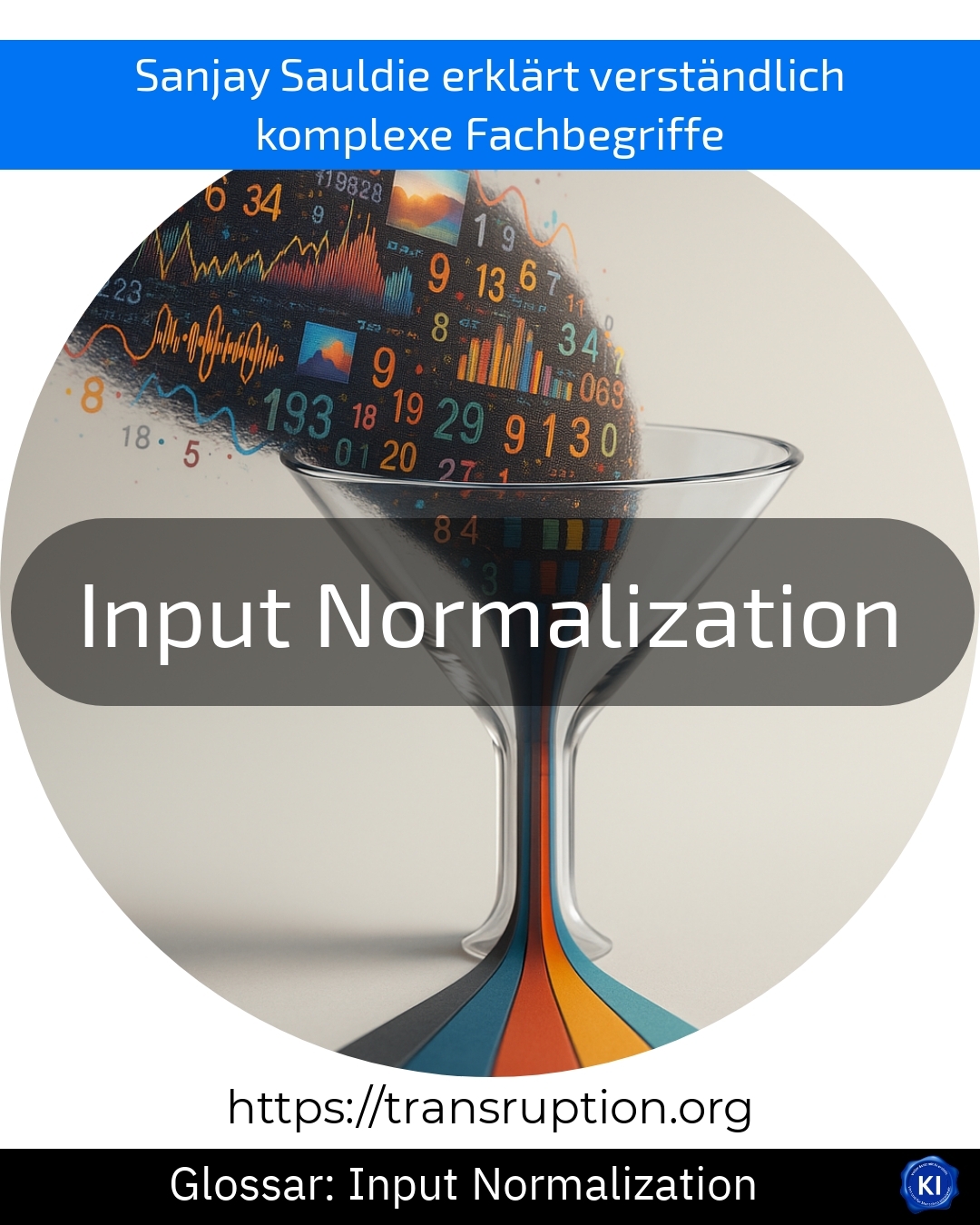
Input normalisation is used particularly in the areas of artificial intelligence, big data, smart data and digital transformation. This involves bringing different input data - for example texts, numbers or other formats - into a standardised form. This is important so that computers and algorithms can better process and compare the data.
Imagine you have a system that analyses customer data. Some users enter „01 May 1970“ as their date of birth, others „1 May 1970“. Input Normalisation ensures that both entries are converted into the same format, such as „1970-05-01“. This allows them to be processed reliably.
Input normalisation also plays an important role in artificial intelligence, for example in speech recognition. Regardless of whether someone writes „street“ or „road“, the system understands that both mean the same thing thanks to normalisation.
Input normalisation makes systems more stable, error-free and efficient - an indispensable basis for modern data analyses and successful digital projects.











 Deutsch
  English (UK)