
Why do so many brilliant ideas fail already in the concept phase, even though they have the potential to transform an entire company?
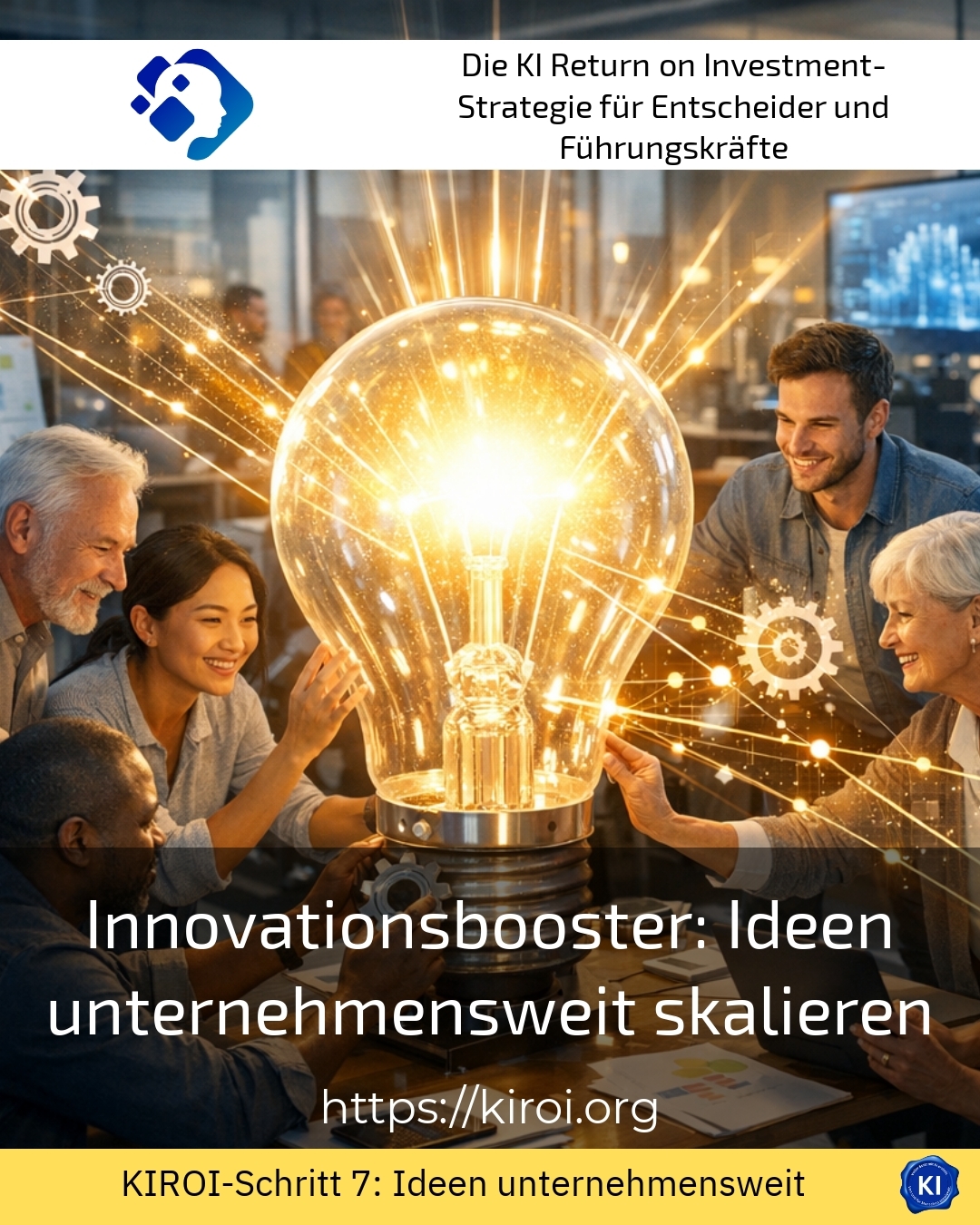
This question concerns both leaders and innovation managers. The true innovation booster lies not in generating ideas themselves. Rather, it lies in the ability to scale these ideas across the entire organization. Many organizations have creative employees with outstanding visions. However, these visions often end up in departmental silos or are hampered by bureaucratic hurdles. The challenge lies in creating systematic structures that enable the follow-up of innovative impulses from inception to widespread implementation.
The anatomy of successful scaling as an innovation booster
Successful companies differentiate themselves from their competitors through a crucial factor. They have understood that innovation is not a one-time event. Instead, it is a continuous process. This process requires both cultural and structural frameworks. In the automotive industry, this is particularly evident. Here, manufacturers must simultaneously optimize existing production lines and develop new mobility concepts. A large German automotive company, for example, has established internal incubators. These incubators allow employees to present and develop their own project ideas.
In mechanical engineering, we face similar challenges. Traditional production methods meet digital manufacturing technologies. A medium-sized machine tool manufacturer often reports on internal resistance. This resistance arises when new automation solutions are to be introduced. The solution often consists of a gradual approach. Pilot projects in individual plants serve as test environments. Successful concepts are then transferred to other locations.
The chemical industry also provides insightful examples. Here, safety aspects and regulatory requirements play a central role. One leading chemical company has implemented a structured innovation process. This process takes compliance requirements into account from the very beginning. In this way, promising ideas are not hindered by legal hurdles until later stages.
Best practice with a AIROI customer
An internationally operating company in the field of industrial manufacturing approached us with a specific problem. The organization had numerous locations in different countries and had observed that innovative solutions were often implemented only locally. Although individual plants had achieved impressive improvements in production processes, these findings were not systematically shared. As part of the transruptive coaching process, we first analyzed the existing communication structures between the locations. It became apparent that it was less a matter of technical capabilities than of clear responsibilities and incentive structures. Together, we developed an innovation network that connected local champions with central coordinators. These champions were tasked with identifying and preparing promising ideas. A digital idea management system supported the process through transparent evaluation criteria. After six months, the managers reported a significantly improved collaboration between the locations. Ideas that would have previously remained in individual units now found their way into enterprise-wide scaling.
Cultural prerequisites for the innovation booster
Technical systems and processes only form the foundation for successful innovation. The actual transformation takes place on a cultural level. Employees must feel safe to propose new ideas. This requires a culture of error, which understands experiments as learning opportunities. In the aerospace industry, this principle is particularly well established [1]. Here, errors are systematically analyzed and documented. The insights gained are incorporated into continuous improvement processes.
The energy sector is undergoing fundamental change. Traditional energy providers must rethink their business model. A major European energy company has therefore introduced agile working methods. Teams work cross-functionally on new services and products. The hierarchical structures have been dismantled in favor of network organizations. These changes enable faster decision-making processes and promote self-responsibility.
Similar developments are evident in the pharmaceutical industry [2]. The development of new active ingredients requires intensive collaboration between various disciplines. Researchers, regulatory experts, and marketing specialists must cooperate from the outset. One leading pharmaceutical company has established so-called innovation hubs. These hubs bring together different perspectives and significantly accelerate the development cycles.
The innovation booster in practice: Scaling ideas across the company
The practical implementation of scaling strategies requires a multi-stage approach. First, promising ideas must be identified and evaluated. Subsequently, a limited-scale pilot phase follows. Upon successful validation, the actual scaling begins. This process sounds simpler than it is in reality. Many companies fail to transfer pilot projects into regular operations.
The logistics industry provides illustrative examples of successful scaling. A large logistics company initially tested autonomous transport vehicles in a single warehouse. After a successful pilot phase, the concept was gradually expanded to other locations. A key factor was the close involvement of the employees on the ground. They were treated not as affected parties, but as participants.
In retail, we observe similar patterns. A well-known retail company initially implemented self-checkout systems in selected stores. The experiences from these pilot stores were incorporated into the company-wide implementation. Not only technical aspects were taken into account; training of employees and communication with customers also played key roles.
Best practice with a AIROI customer
A company in the financial services industry sought support to scale an innovative customer advisory solution. The original concept had been developed in a single branch office and had achieved impressive results there. The challenge now was to replicate this success across more than 200 branches. In transruptive coaching, we initially identified the critical success factors of the pilot branch. It emerged that the success was largely based on the commitment of individual employees. This intrinsic motivation could not simply be copied. Therefore, we developed an approach that allowed for local adjustments. Each branch received design leeway during implementation. At the same time, we defined binding core elements that had to be adhered to everywhere. The support included regular reflection rounds with the branch managers. During these rounds, the participants exchanged experiences about successes and challenges. This exchange of experiences proved particularly valuable for scaling up. After about a year, significantly more than half of the branches reported positive developments in customer advice.
Structural enablers for sustainable innovation
In addition to cultural transformation, companies need structural prerequisites. These include clear governance models for innovation initiatives. Resources must be provided reliably. Furthermore, there needs to be defined interfaces between innovation and the core business. In the telecommunications industry, leading providers have established their own innovation units [3]. These units operate with greater autonomy than the line organization.
The construction industry faces special challenges in scaling up innovation. Projects are often unique and location-specific. Nevertheless, a large construction company has successfully implemented digital planning methods. Building Information Modeling was initially tested on prestigious projects. Subsequently, the method was introduced as the standard for all new construction projects. A key factor was the investment in training and infrastructure.
In the food industry, we encounter similar challenges. A well-known food manufacturer wanted to introduce more sustainable packaging solutions. The pilot project for a specific product line was successful. However, scaling it up to the entire product range proved to be complex. Supply chains had to be adapted and production facilities had to be retrofitted. Nevertheless, the systematic approach enabled a successful implementation.
How the innovation booster overcomes resistance
Any change brings resistance. This is especially true for profound innovations. Employees fear the loss of skills or jobs. Executives worry about their spheres of influence. These resistances are human and understandable. However, they must not be ignored or overlooked.
The insurance industry offers insightful insights in this regard. One large insurer implemented automated claims processing. Initial skepticism among claims handlers was significant. Through transparent communication and training offerings, this skepticism was reduced. Today, many employees report an enhancement in their work. They are focusing on complex cases while routine tasks are automated.
Similar dynamics are observed in the healthcare sector [4]. The introduction of digital patient records initially met with resistance. Doctors and nurses feared additional documentation requirements. By involving staff in system design, these concerns could be addressed. The users became co-creators of the solution.
My AIROI Analysis
The systematic scaling of innovations represents one of the most challenging tasks for modern companies. Our experience from numerous mentoring projects reveals recurring patterns. Successful organizations are characterized by a combination of cultural openness and structural clarity. They create spaces for experimentation without losing focus on economic goals. The involvement of employees at all levels proves to be a critical success factor.
At the same time, we observe that many companies underestimate the complexity of scaling. The leap from a successful pilot project to enterprise-wide implementation requires different competencies than the initial idea development. Professional guidance can provide valuable insights and uncover blind spots. The transruptions coaching methodology helps organizations develop their individual scaling paths.
We consider it particularly important to recognize that there are no universal solutions. Each company must find its own path. The industry, corporate culture, and available resources shape the possibilities and limits. A differentiated analysis of the initial situation therefore forms the foundation of any successful scaling strategy. The true innovation accelerator lies ultimately in the ability to not only generate ideas but to systematically and sustainably embed them throughout the entire organization.
Further links from the text above:
[1] Federal Aviation Administration – Human Factors in Aviation Maintenance
[2] European Federation of Pharmaceutical Industries – Innovation in Medicines
[3] GSMA Future Networks – Innovation Labs Overview
[4] World Health Organization – Digital Health
For more information and if you have any questions, please contact Contact us or read more blog posts on the topic Artificial intelligence here.










 Deutsch
 English (UK)