
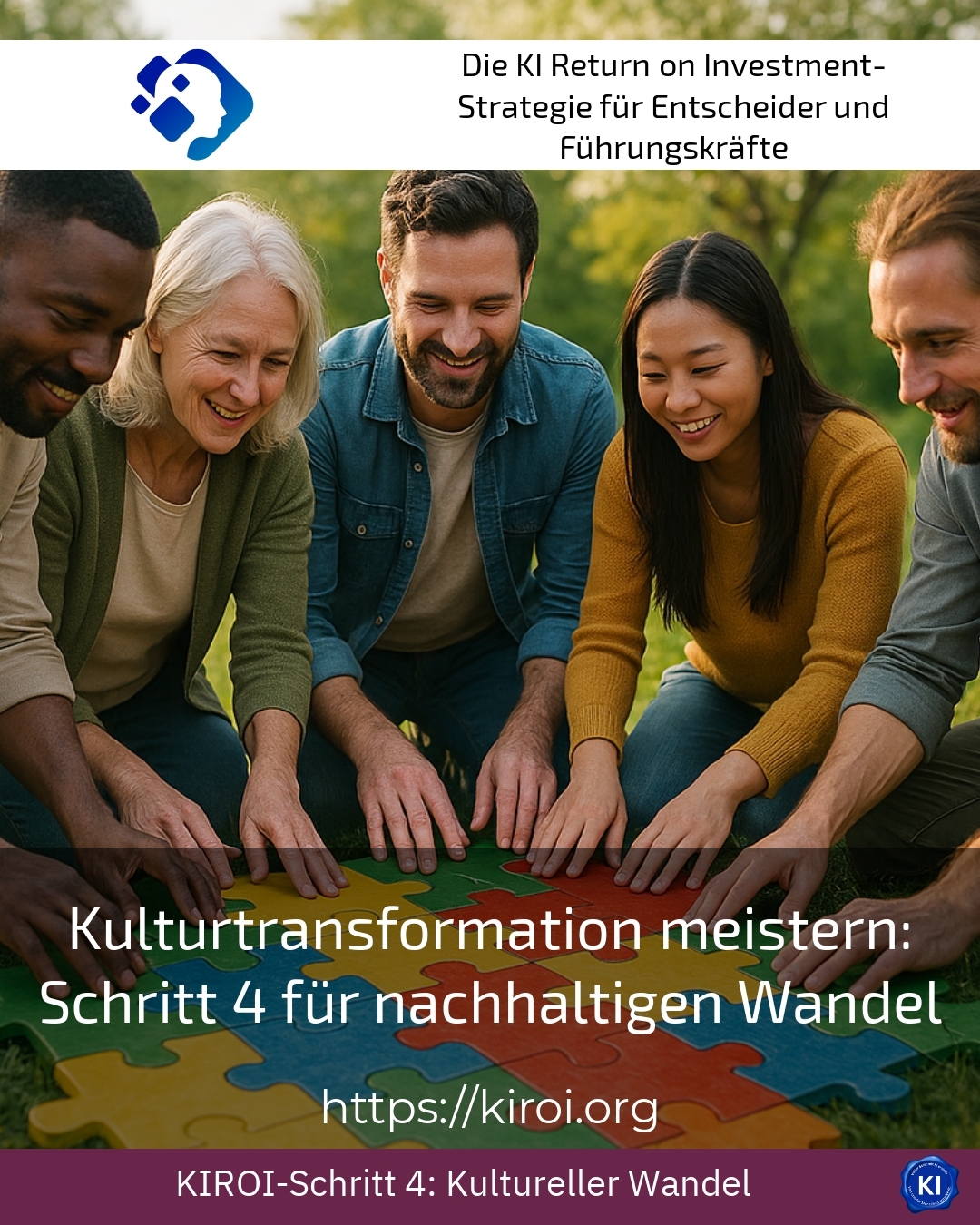
Cultural transformation is a complex process that goes far beyond superficial changes, deeply impacting an organisation's values, beliefs, and behaviours. Step 4 in this process plays a special role, as it's where sustainable change truly becomes tangible. To establish lasting change, concrete measures are needed that actively involve employees and begin to embed new ways of thinking and acting. In practice, it becomes clear that cultural transformation often falters without this targeted integration.
Step 4 of the culture transformation: Sustainable embedding and implementation
After analysing existing patterns, defining a target culture, and developing change strategies, step 4 is crucial: the transformation must become visible, tangible, and liveable. Only then can cultural impulses be integrated into everyday life and establish themselves sustainably. This includes, for example, regular reflection processes, supportive training, and feedback mechanisms.
In practice, companies often find that initial successes are achieved without these measures, but they are not sustainable. Particularly in the manufacturing sector, executives reported that new cooperation approaches and agile ways of working only endured if teams were continuously supported and motivated. Similarly, in the service industry, transparent communication and a clear division of roles ensure that employees do not revert to old patterns.
The IT sector provides another example, where cultural transformations often go hand in hand with the introduction of new technologies and agile methods. Here, it became apparent that deeper employee involvement in decision-making processes and the establishment of exchange formats are important steps in anchoring change. Without this participation, innovative impulses are rarely permanently incorporated into the corporate culture.
Practical tips for accompanying cultural transformation
To ensure culture transformations have a lasting impact, it is recommended to use several levers simultaneously:
- Clear communication: The goals of cultural change must be communicated in a way that is understandable and comprehensible.
- Promote participation: Employees at all levels should be actively involved in the change, for example through workshops or feedback sessions.
- Continuous professional development: New values and behaviours need to be supported through training and coaching.
- Making success visible: Achieved milestones and positive examples should be celebrated and communicated to boost motivation.
- Defining responsibilities: Clear roles and responsibilities prevent relapses into old patterns.
These measures help to make the cultural transformation consistent and effective. They support leaders in acting as role models and demonstrating the new behaviour themselves. This creates an organic movement that keeps the change alive.
BEST PRACTICE with one customer (name hidden due to NDA contract) The client from the financial sector integrated Step 4 through regular dialogue forums where employees could openly discuss problems and successes. In parallel, targeted coaching sessions for executives were established to strengthen their role-model function. Over two years, clients reported significantly increased identification with the new culture and a greater willingness to innovate within the team.
The importance of patience and continuity
Cultural transformation is not a sprint, but a marathon. Step 4 in particular requires patience, as new behaviours take time to become deeply embedded. It is typical for resistance to emerge after initial enthusiasm. This applies, for example, to large industrial companies wanting to break down existing hierarchies, or start-ups aiming to refine their values. Continuous support and openness to feedback are therefore crucial to keep the change alive, even in the face of setbacks.
In retail, for instance, cultural transformation is supported by regular team meetings where experiences from daily sales are discussed. This encourages reflection and strengthens cohesion. Therefore, Step 4 is strongly focused on practical implementation and transfer into daily life. Only then will sustainable change become an integral part of the culture.
Culture transformation as a guiding success factor
Actively shaping cultural transformation is more important than ever for organisations today. The fourth step brings the concept to life, ensuring that change is not just planned but actually lived. Organisations that succeed in cultural transformation benefit from being agile, innovative, and resilient. Clients often report that a lived cultural transformation leads not only to economic success but also to greater employee satisfaction.
Especially in times of rapid market and environmental changes, the ability to systematically transform culture is a key competence. The strategic integration of Step 4 helps to ensure that changes are sustainable and do not end up as a fleeting fad. This will protect companies from stagnation in the long term and promote their ability for self-determined change.
My analysis
Step 4 of the cultural transformation marks the transition from planning to vibrant implementation. It brings new values into everyday actions and anchors them in the organisation's behaviour. Open feedback, continuous support, and targeted promotion of participation are essential in this process. Companies that take this to heart increase their chances of mastering a sustainable and authentic cultural transformation. The challenge lies less in the „what“ and more in the „how“. This is because culture thrives on living together and the willingness to develop together.
Further links from the text above:
Successful culture transformation for businesses
Culture Change: 6 Effective Steps
How cultural change drives the success of sustainable transformation
For more information and if you have any questions, please contact Contact us or read more blog posts on the topic Artificial intelligence here.








 Deutsch
  English (UK)