
kiroi.org

KIROI - Artificial Intelligence Return on Invest
The AI strategy for decision-makers and managers

Business excellence for decision-makers & managers by and with Sanjay Sauldie

KIROI - Artificial Intelligence Return on Invest: The AI strategy for decision-makers and managers

KIROI - Artificial Intelligence Return on Invest: The AI strategy for decision-makers and managers

Start » Ideas Management: With KIROI Step 6 to Departmental Innovation
31 March 2025

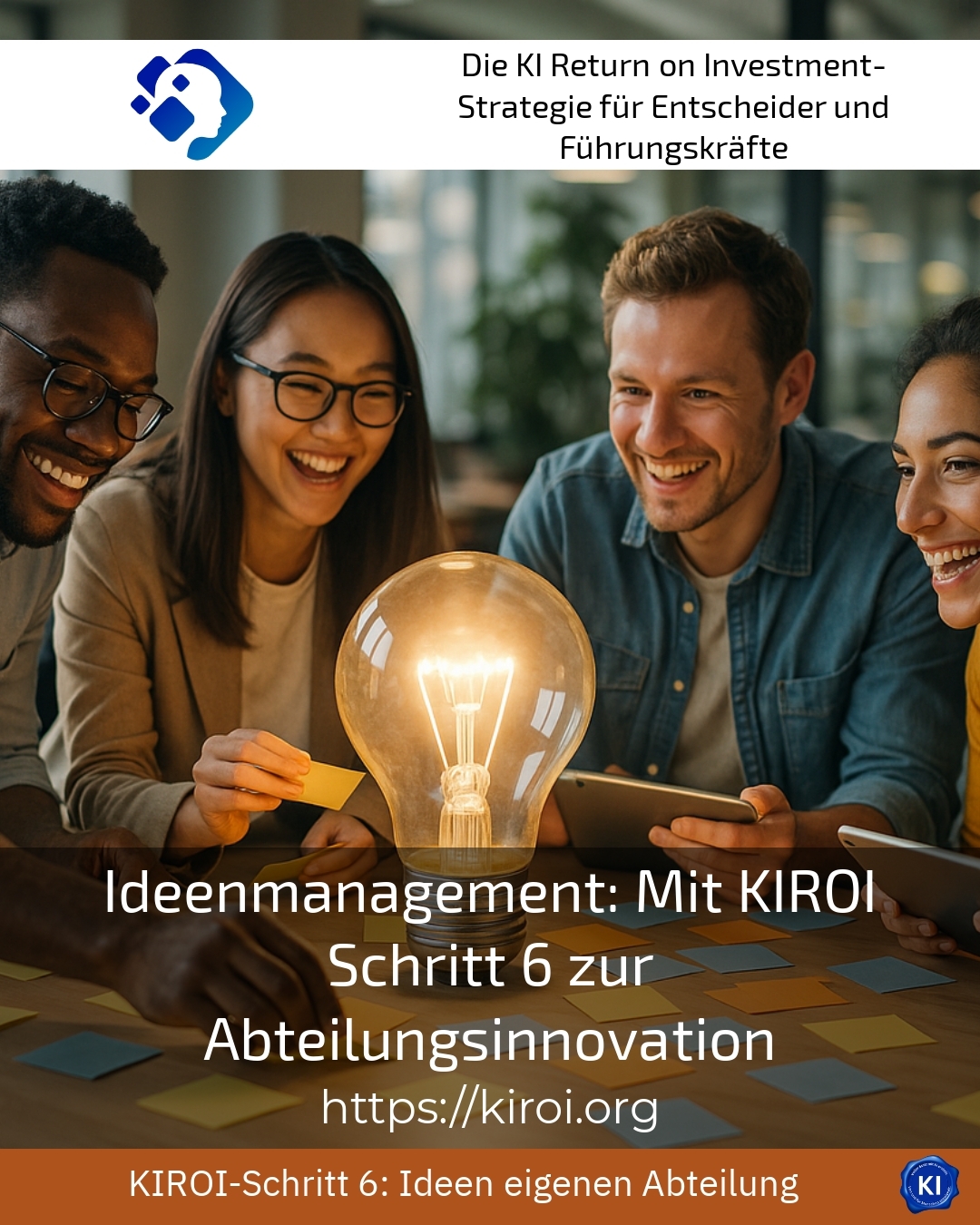
Ideas Management: With KIROI Step 6 to Departmental Innovation

4.8
(1373)

In today's competitive landscape, systematic idea management is a crucial factor in how companies continuously develop and remain innovative. Many organisations are looking for a clear, practical approach that actively and structurally guides them from initial concepts to cross-departmental innovations. With KIROI Step 6, this approach supports companies precisely with this challenge – specifically assisting with the scaling of ideas at department level.

The importance of idea management in modern organisations

Ideas management refers to the process of systematically collecting, evaluating, and implementing valuable suggestions. The goal is to leverage the creativity of all employees and transform successful impulses into improvements or innovations. The focus is not only on major radical innovations but also on seemingly small improvement suggestions, which can ultimately achieve a great deal.

For example, manufacturing companies often report that well-organised idea management contributes to process optimisations that reduce waste and thus save costs. Similarly, by involving customer feedback early on, service companies often succeed in developing new services that increase customer satisfaction. Even in administration, dynamic companies demonstrate how ideas from the team improve communication and strengthen collaboration.

KIROI Step 6: A Practical Guide to Departmental Innovation

A promising way to structure idea management is the systematic support through KIROI Step 6. This step focuses on departmental innovation and ensures that creative approaches do not go to waste, but rather bring about tangible changes.

In practice, it is often seen in the automotive industry, for example, how female employees contribute suggestions for new assembly processes that are developed into prototypes as part of KIROI Step 6. Similarly, in the IT department of a software company, structured feedback rounds enable the identification of customer requests for new features and their technical implementation. In retail, female employees develop ideas for store layouts that contribute to increasing purchase rates – all accompanied by targeted support throughout the process.

Elements of KIROI Step 6 in detail

KIROI Step 6 offers a clearly defined framework that includes the following key building blocks:

  • Systematic evaluation and prioritisation of the collected suggestions within the department
  • Close networking of idea generators with subject matter experts for further development of the concepts
  • Establishment of practical implementation plans with measurable target criteria

This is how companies can ensure that promising ideas are not only identified but also successfully implemented. The support facilitates change management and mitigates common barriers such as a lack of resources or unclear responsibilities.

Practical examples from various industries

BEST PRACTICE with one customer (name hidden due to NDA contract) In a medium-sized engineering company, KIROI Step 6 was used to specifically structure the ideas from the manufacturing department. The result was implemented suggestions for workplace optimisation, which changed the material flow and significantly shortened production time.

In the healthcare sector, a clinic utilised structured idea management to improve patient admissions processes through digital tools. The involvement of employees within the framework of KIROI Step 6 led to significant relief and improved patient satisfaction.

A technology company in the software sector integrated not only customer feedback but also internal improvement suggestions with KIROI Step 6, significantly reducing the time-to-market for new product versions.

Tips for successfully supporting innovation processes with KIROI Step 6

Companies should first create an open and communicative space. Employees must feel that their ideas are valued and taken seriously. KIROI Step 6 supports the department in establishing this culture and providing the right tools.

Furthermore, it is important to integrate continuous feedback loops. This keeps idea generators involved in the process and allows them to see how their suggestions are developing. This transparency promotes motivation and participation.

Furthermore, it is advisable to form interdisciplinary teams to examine ideas from different perspectives. The collaboration of various disciplines often leads to more holistic and implementable solutions.

My analysis

Ideas management is more than just a buzzword – it's a strategic tool for achieving sustainable improvements and innovations within companies. KIROI Step 6 specifically supports the implementation phase at departmental level, where creative approaches often make the crucial difference. The integration of systematic evaluation, feedback, and collaboration fosters a vibrant innovation culture and delivers measurable results.

Companies that take idea management seriously and work with targeted guidance can optimally develop their internal potential. This is how individual suggestions turn into real innovations that drive the entire company forward.

Further links from the text above:

Idea management – definition, methods and processes

Idea management: definition, tools and best practices

What is Ideation Management 2025: Introduction + Definition

For more information and if you have any questions, please contact Contact us or read more blog posts on the topic Artificial intelligence here.

How useful was this post?

Click on a star to rate it!

Average rating 4.8 / 5. Vote count: 1373

No votes so far! Be the first to rate this post.

Spread the love

transruption.org

The digital toolbox for
the digital winners of today and tomorrow

Business excellence for decision-makers & managers by and with Sanjay Sauldie

transruption
transruption

transruption: The digital toolbox for
the digital winners of today and tomorrow

Start » Ideas Management: With KIROI Step 6 to Departmental Innovation
31 March 2025

Ideas Management: With KIROI Step 6 to Departmental Innovation

4.8
(1373)

In today's competitive landscape, systematic idea management is a crucial factor in how companies continuously develop and remain innovative. Many organisations are looking for a clear, practical approach that actively and structurally guides them from initial concepts to cross-departmental innovations. With KIROI Step 6, this approach supports companies precisely with this challenge – specifically assisting with the scaling of ideas at department level.

The importance of idea management in modern organisations

Ideas management refers to the process of systematically collecting, evaluating, and implementing valuable suggestions. The goal is to leverage the creativity of all employees and transform successful impulses into improvements or innovations. The focus is not only on major radical innovations but also on seemingly small improvement suggestions, which can ultimately achieve a great deal.

For example, manufacturing companies often report that well-organised idea management contributes to process optimisations that reduce waste and thus save costs. Similarly, by involving customer feedback early on, service companies often succeed in developing new services that increase customer satisfaction. Even in administration, dynamic companies demonstrate how ideas from the team improve communication and strengthen collaboration.

KIROI Step 6: A Practical Guide to Departmental Innovation

A promising way to structure idea management is the systematic support through KIROI Step 6. This step focuses on departmental innovation and ensures that creative approaches do not go to waste, but rather bring about tangible changes.

In practice, it is often seen in the automotive industry, for example, how female employees contribute suggestions for new assembly processes that are developed into prototypes as part of KIROI Step 6. Similarly, in the IT department of a software company, structured feedback rounds enable the identification of customer requests for new features and their technical implementation. In retail, female employees develop ideas for store layouts that contribute to increasing purchase rates – all accompanied by targeted support throughout the process.

Elements of KIROI Step 6 in detail

KIROI Step 6 offers a clearly defined framework that includes the following key building blocks:

  • Systematic evaluation and prioritisation of the collected suggestions within the department
  • Close networking of idea generators with subject matter experts for further development of the concepts
  • Establishment of practical implementation plans with measurable target criteria

This is how companies can ensure that promising ideas are not only identified but also successfully implemented. The support facilitates change management and mitigates common barriers such as a lack of resources or unclear responsibilities.

Practical examples from various industries

BEST PRACTICE with one customer (name hidden due to NDA contract) In a medium-sized engineering company, KIROI Step 6 was used to specifically structure the ideas from the manufacturing department. The result was implemented suggestions for workplace optimisation, which changed the material flow and significantly shortened production time.

In the healthcare sector, a clinic utilised structured idea management to improve patient admissions processes through digital tools. The involvement of employees within the framework of KIROI Step 6 led to significant relief and improved patient satisfaction.

A technology company in the software sector integrated not only customer feedback but also internal improvement suggestions with KIROI Step 6, significantly reducing the time-to-market for new product versions.

Tips for successfully supporting innovation processes with KIROI Step 6

Companies should first create an open and communicative space. Employees must feel that their ideas are valued and taken seriously. KIROI Step 6 supports the department in establishing this culture and providing the right tools.

Furthermore, it is important to integrate continuous feedback loops. This keeps idea generators involved in the process and allows them to see how their suggestions are developing. This transparency promotes motivation and participation.

Furthermore, it is advisable to form interdisciplinary teams to examine ideas from different perspectives. The collaboration of various disciplines often leads to more holistic and implementable solutions.

My analysis

Ideas management is more than just a buzzword – it's a strategic tool for achieving sustainable improvements and innovations within companies. KIROI Step 6 specifically supports the implementation phase at departmental level, where creative approaches often make the crucial difference. The integration of systematic evaluation, feedback, and collaboration fosters a vibrant innovation culture and delivers measurable results.

Companies that take idea management seriously and work with targeted guidance can optimally develop their internal potential. This is how individual suggestions turn into real innovations that drive the entire company forward.

Further links from the text above:

Idea management – definition, methods and processes

Idea management: definition, tools and best practices

What is Ideation Management 2025: Introduction + Definition

For more information and if you have any questions, please contact Contact us or read more blog posts on the topic Artificial intelligence here.

How useful was this post?

Click on a star to rate it!

Average rating 4.8 / 5. Vote count: 1373

No votes so far! Be the first to rate this post.

Spread the love

Other content worth reading:

Ideas Management: With KIROI Step 6 to Departmental Innovation

written by:

Keywords:

#Abteilungsinnovation #Big Data #compliance #Datenintelligenz #Ethikrichtlinien #Ideenmanagement #InnovationDurchAchtsamkeit #yellow #artificial intelligence #Sustainability #SmartData #Unternehmenskultur #Verantwortungsketten

Follow me on my channels:

Questions on the topic? Contact us now without obligation

Contact us

[wpforms id="331781" title="false"]

More articles worth reading

    Leave a comment










