
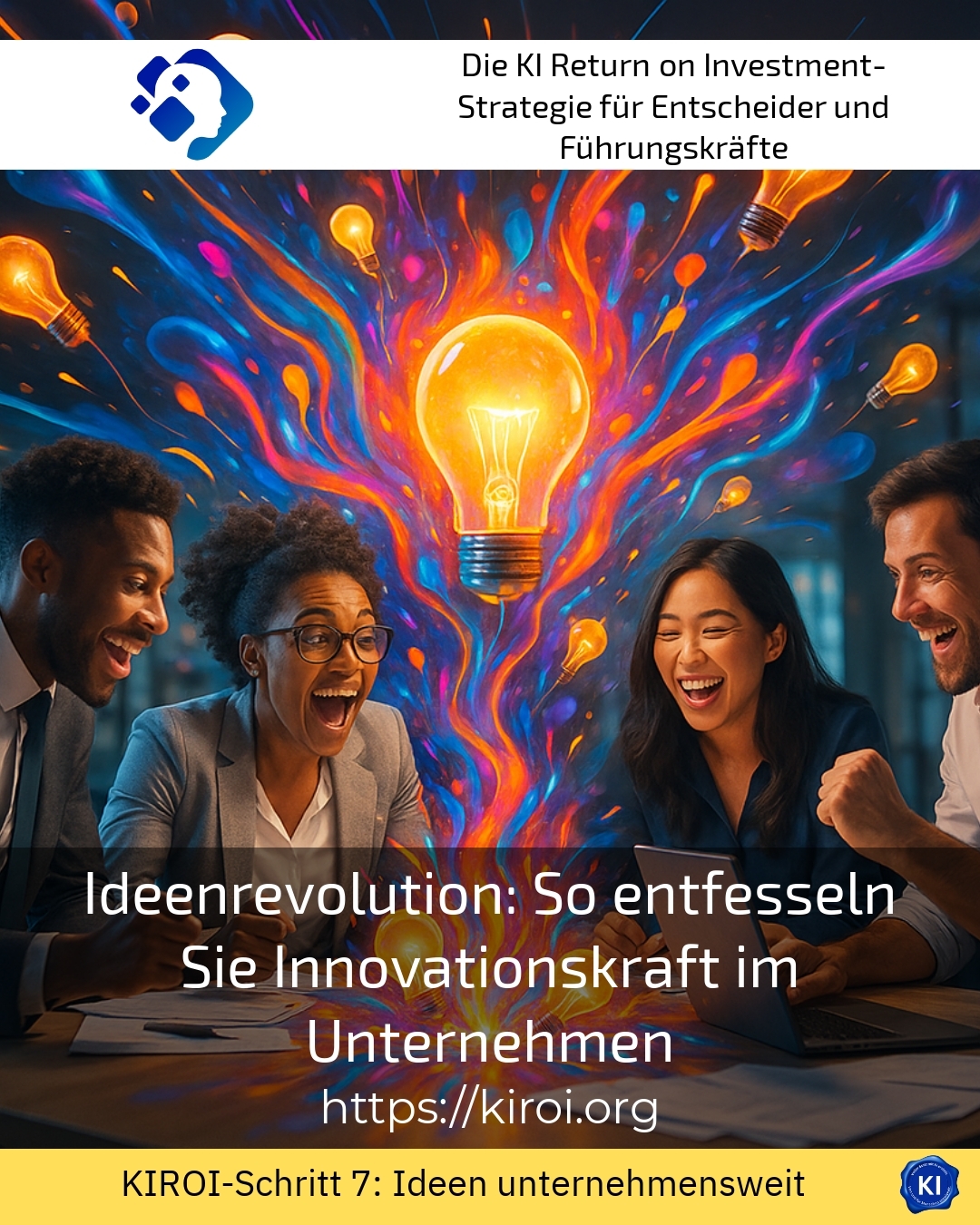
Imagine your company suddenly coming up with ideas that change markets and leave competitors astonished. The Idea revolution doesn't begin in distant future laboratories, but directly within your teams. Many leaders wonder how to unlock hidden potential. They are looking for ways to ignite creative energy. This post shows you how to systematically develop innovative strength. transruptions-coaching will accompany your projects as a reliable partner. Discover strategies that often provide noticeable impetus after a short time.
Why traditional structures block creative energy
Many organisations suffer from rigid hierarchies and entrenched processes which significantly hinder the free flow of ideas, as employees fear that unconventional suggestions will be rejected or even lead to career setbacks. This fear of failure is deeply rooted in a corporate culture that prioritises perfection over a willingness to experiment. Leaders often report that while their teams perform excellently in their professional duties, they rarely take the initiative to explore new avenues. The causes often lie in outdated reward systems that only acknowledge short-term successes.
A medium-sized mechanical engineering company, for example, recognised that its engineers developed brilliant technical solutions, but rarely shared them across departmental boundaries. The silo structure prevented valuable synergies between development, production, and sales. A logistics company experienced something similar, whose dispatchers found creative detours daily to overcome supply bottlenecks, but without systematically documenting these insights. A third example shows an insurance company that ignored innovative product ideas from its field staff for years because formal submission channels were lacking.
Transruptions-Coaching supports companies in identifying and gradually dismantling such structural barriers. The support includes both the analysis of existing communication channels and the development of new formats for the exchange of ideas. Clients often report that even small changes can have a big impact.
Best practice with a AIROI customer
A family-run business with a long tradition in industrial manufacturing approached us because management observed increasing stagnation in product innovation. The analysis revealed that creative suggestions from employees did exist but were getting lost in a bureaucratic approval process, which had originally been introduced for quality assurance purposes. Together, we developed a parallel fast-track procedure for promising ideas, which guaranteed initial feedback within two weeks. Additionally, we established monthly innovation breakfasts where employees from different hierarchical levels could share their thoughts in a relaxed atmosphere. Management deliberately took a listening role and refrained from immediate evaluations. After six months, the number of submitted improvement suggestions had tripled, and three of them were already in the pilot phase for new product lines. Employee satisfaction increased measurably because people developed the feeling of being truly heard and taken seriously.
The revolution of ideas begins with psychological safety
Psychological safety forms the foundation of every successful innovation culture because people can only truly think creatively when they don't fear negative consequences for unconventional suggestions. Research findings clearly show that teams with high psychological safety dare to conduct significantly more experiments and learn from mistakes more quickly [1]. This insight contradicts the widespread myth that pressure and competition produce the best results.
For example, one technology company introduced so-called Failure Fridays, where project teams openly reported on failed experiments and shared the lessons learned. Initial reluctance quickly gave way to a lively culture of discussion. A pharmaceutical company established an anonymous ideas portal that also allowed critical comments on existing processes. This brought to light suggestions for improvement that no one had dared to voice before. A retail company intensively trained its managers to react to new ideas with curiosity rather than scepticism initially.
Transruptions-Coaching supports leadership teams in developing an appreciative error culture. The methodology includes both individual reflection exercises and cross-team workshops where concrete behavioural changes are tested.
Practical tools for more idea revolution in everyday life
In addition to a strong cultural foundation, concrete methods and tools are needed that systematically foster creative thinking and integrate it into everyday work without creating additional stress or being perceived as a tedious duty. Design Thinking, for example, offers a structured framework that combines empathetic understanding of customer needs with rapid prototyping [2]. This methodology has proven its worth in a wide variety of industries.
An automotive supplier used Design Thinking to discover entirely new fields of application for its sensor technology. The cross-functional teams generated over thirty marketable concepts within one quarter. An energy supplier relied on regular innovation sprints, during which small groups developed functional prototypes within a week. A construction company established digital idea boards where employees could submit and comment on suggestions at any time.
The Idea revolution is particularly successful when different methods are combined. Transruption coaching helps to put together the right set of methods for your specific situation. We take into account both your company culture and available resources.
Best practice with a AIROI customer
A medium-sized medical technology company faced the challenge of adapting its product range more quickly to changing customer needs. The previous development time from the initial idea to market launch averaged eighteen months, which was increasingly becoming a competitive disadvantage in a dynamic market environment. We introduced a modular innovation system that combined various methods depending on the project phase. In the early idea phase, creative techniques such as brainwriting and morphological analyses were used. For validation, we established rapid customer feedback loops with simple paper prototypes. The development department received additional capacity for exploratory projects without immediate pressure for results. After one year, the average development time had shortened to eleven months, and the success rate for market launches improved significantly, as customer needs were captured earlier and more precisely.
Leaders as enablers of the idea revolution
The role of leaders is fundamentally changing when companies want to develop innovative strength, because classic control and management functions have to take a backseat in favour of coaching and facilitation tasks. Modern leadership primarily means creating spaces where other people can unfold their full potential. This transformation often requires a fundamental rethink by experienced managers.
The managing director of a software company reported that he had to learn to hold back his own ideas to make room for his employees' suggestions. A department head in a financial services company developed new discussion formats that fostered creativity rather than stifling it. A production manager in a chemical conglomerate introduced weekly innovation rounds where, explicitly, even crazy ideas were welcome.
Transruptions-Coaching offers specialised programmes for leaders who want to redefine their roles. Individual mentoring helps to reflect on old behavioural patterns and to gradually test new leadership approaches. Participants often report that this transformation initially seems uncomfortable but leads to greater satisfaction in the long term.
Digital tools to support creative processes
Modern technologies can significantly accelerate and enhance creative processes when used thoughtfully, not as an end in themselves, but by creating genuine added value for the people involved. Collaboration platforms, for example, enable the asynchronous exchange of ideas across time zones and locations [3]. Artificial intelligence can serve as a sparring partner for initial concept sketches.
An international consulting firm used virtual whiteboards to bring together globally distributed teams for creative workshops. The results significantly exceeded expectations. A consumer goods manufacturer used AI-powered trend analyses to identify promising innovation fields early on. A telecommunications provider experimented with gamification elements to increase participation in its internal ideas competition.
The Idea revolution benefits from digital tools, but always requires human interaction. Transruption coaching supports the selection and implementation of suitable technologies. We ensure that digital tools promote collaboration rather than fragmenting it.
My AIROI Analysis
The systematic development of innovation capacity is one of the most important strategic tasks for future-oriented companies, as it secures long-term competitiveness while simultaneously increasing attractiveness as an employer. Our analysis shows that successful innovation cultures rest on several pillars: psychological safety, suitable methods, transformed leadership, and supportive technologies. These elements must be carefully aligned with each other.
The Idea revolution doesn't happen overnight, but requires patient and consistent work on structures, processes, and above all, company culture. Transruption Coaching accompanies companies on this journey as a reliable partner, bringing both strategic perspectives and practical implementation competence. Our experience shows that even small changes can have a big impact if they address the right levers.
We recommend starting with an honest assessment of the current innovation culture and then introducing improvements incrementally. In doing so, you should aim for quick wins while also keeping long-term structural changes in mind. Investing in innovation capability is generally repaid many times over, as it not only generates new products and services but also motivates and retains employees.
Further links from the text above:
[1] Harvard Business Review: What is psychological safety?
[2] Interaction Design Foundation: Design Thinking Fundamentals
[3] McKinsey: The hidden value of organisational health
For more information and if you have any questions, please contact Contact us or read more blog posts on the topic Artificial intelligence here.










 Deutsch
  English (UK)